
A shipyard building a new vessel needs plates for the hull, angles for frames, and bulb flats for stiffeners. Sourcing these from different suppliers creates a nightmare of logistics, certification mismatches, and quality risks. I’ve seen projects stall waiting for a single missing steel profile.
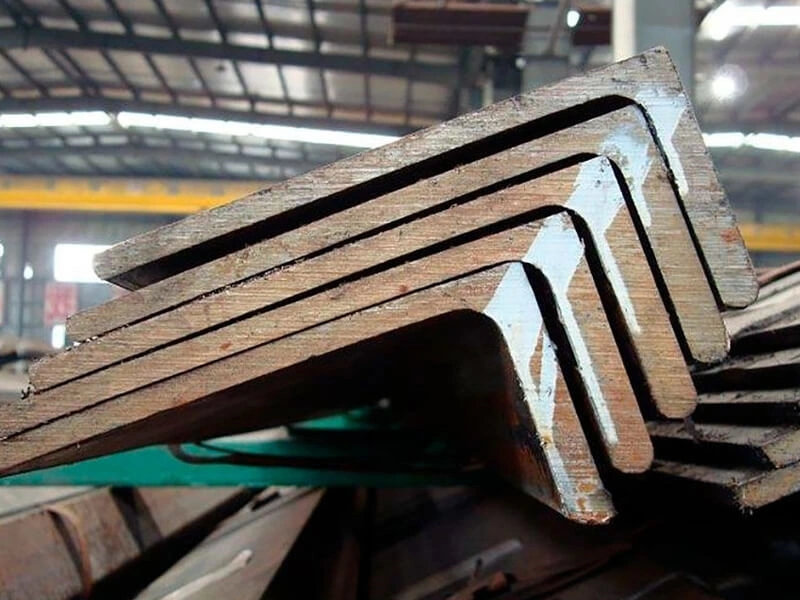
A one-stop solution for shipbuilding steel profiles provides a single reliable source for all key structural shapes—plates, L-angles, bulb flats, and other sections—with unified classification society certification (ABS, DNV, etc.), coordinated logistics, and consistent quality control, streamlining construction and ensuring material compatibility throughout the hull. This integrated approach eliminates procurement complexity and builds a stronger supply chain foundation.
For shipbuilders, large fabricators, and project managers, consolidating supply is a strategic advantage. It saves time, reduces risk, and ensures harmony in the most critical part of the project: the steel itself. Let’s explore what this solution entails, starting with the fundamental material at its core.
What kind of steel is used in shipbuilding?
Walk into any major shipyard, and you’ll see thousands of tons of steel. But this isn’t ordinary construction steel. It’s a specialized product engineered for a life at sea. Using the wrong steel can have catastrophic consequences, which is why classification societies1 exist.
Shipbuilding uses marine-grade carbon steel2 certified by classification societies1 like ABS, DNV, LR, or BV. This steel is categorized into ordinary strength grades3 (A, B, D, E) and high-strength grades4 (AH32, AH36, DH36, EH36), which are selected based on the required yield strength, toughness at low temperatures, and the specific location in the hull structure. Its chemistry is controlled for weldability5, and it must pass impact tests to prevent brittle fracture.

The Specialized Nature of Marine Structural Steel
This steel is defined by rules, not just a chemical formula. It’s a system of guaranteed performance.
1. The Role of Classification Societies:
These independent organizations (American Bureau of Shipping, Det Norske Veritas, etc.) are the gatekeepers. They:
- Approve the steel mills that can produce the material.
- Publish detailed rules for each grade’s chemical and mechanical properties.
- Require traceable Mill Test Certificates6 (MTCs) for every batch of steel.
- A ship cannot be classed without using steel from approved mills.
2. Understanding the Grade Designations:
- Ordinary Strength: Letter indicates toughness.
- Grade A: Basic grade.
- Grade B: Standard for general hull plating.
- Grade D & E: Enhanced toughness for colder service (-20°C, -40°C).
- High Strength: Letter + Number.
- AH36: "A" toughness, "H" for High Strength, "36" for 355 MPa yield strength.
- DH36: "D" toughness (-20°C), High Strength, 355 MPa yield.
3. Why This Specific Steel is Used:
The ocean presents unique challenges: dynamic loading (waves), potential impact, and corrosion. Marine steel is formulated to address these.
- It has the strength to handle global hull bending and local pressures.
- It has the toughness to deform rather than shatter upon impact, especially in cold water.
- It has the weldability5 to allow for efficient construction of massive, monolithic structures.
Application in Different Hull Zones:
| Hull Area | Typical Grade | Reason |
|---|---|---|
| Midship Bottom & Side | AH36 or DH36 | High stress area; high strength reduces weight. DH36 offers extra toughness. |
| Bow & Forward Sections | DH36 or EH36 | Subject to wave slamming; maximum low-temperature toughness is critical. |
| Main Deck (Cargo) | AH36 | High strength supports heavy loads with minimal structure. |
| Internal Bulkheads | Grade A or B | Lower stress; cost-effective. |
A one-stop supplier must provide these various grades across different product forms, ensuring the Grade B plate and the AH36 angle for the same section are chemically and mechanically compatible. This leads to the question: which specific grade is the workhorse?
Which type of steel is most commonly used in shipbuilding due to its strength and durability1?
While many grades are specified, one family stands out as the modern workhorse for commercial vessel hulls. It provides the optimal balance that shipowners and builders need. When clients ask us for a recommendation for a standard vessel, this is where we start.
High-strength marine steel2, specifically grades like ABS AH363 or DNV NV A36, is the most commonly used type in modern shipbuilding due to its excellent combination of strength (355 MPa yield) and durability1. Its higher strength allows for thinner, lighter hull structures, which directly increases cargo capacity and improves fuel efficiency, while maintaining the required toughness and weldability4. It represents the best value for performance in most ocean-going vessels.
The Economic and Engineering Dominance of High-Strength Steels
The shift from ordinary strength to high-strength steel is a key driver of modern maritime economics.
1. The Weight-Saving Advantage:
This is the primary reason for its dominance. Ship design is a constant battle against weight.
- Example: Using AH36 (355 MPa) instead of Grade B (~235 MPa) allows the designer to use thinner plates and smaller stiffeners for the same load.
- Result: A significant reduction in the hull’s structural weight.
- Benefit: This saved "lightweight" translates directly into increased deadweight5—the weight of cargo, fuel, and stores the ship can carry. For a large container ship, this can mean thousands of extra tons of payload.
2. Strength and Durability in Harmony:
It’s not just about being strong. AH36 must also be durable.
- Toughness: It must pass Charpy impact tests (typically at 0°C for ‘A’ grade). This ensures it can absorb energy from impacts without brittle fracture.
- Fatigue Resistance: The steel must withstand decades of cyclic loading from waves. Its clean chemistry and controlled rolling contribute to good fatigue life.
- Weldability: Its Carbon Equivalent is controlled, allowing for reliable, crack-free welding—the foundation of modern ship construction.
3. Why It’s More Common Than Ordinary Strength Grades:
While Grade B is still used, the economic incentive for high-strength steel is overwhelming for shipowners. The extra cost per ton of AH36 is easily offset by the revenue from additional cargo over the ship’s lifetime.
Comparison: High-Strength vs. Ordinary Strength in a Standard Design
| Design Aspect | Using Ordinary Strength (Grade B) | Using High-Strength (AH36) |
|---|---|---|
| Plate Thickness (for same stress) | Thicker | Thinner |
| Hull Structural Weight | Higher | Lower |
| Potential Cargo Capacity | Lower | Higher |
| Material Cost per Ton | Lower | Higher |
| Total Lifecycle Economic Value | Standard | Generally Superior |
For a one-stop solution provider, this means AH36 and its variants (DH36, EH36) must be the cornerstone of our inventory. We need to supply it not just as plate, but also rolled into the angles and bulb flats that form the stiffening framework. This framework must possess a specific, critical property to survive at sea.
What property is particularly important for shipbuilding steel to ensure it can withstand harsh marine environments?
Strength is vital, but a strong material that shatters on impact is useless at sea. The marine environment demands a property that ensures safety under sudden, extreme stress, especially in cold water. I recall a case where a vessel operating in northern waters suffered hull damage; the investigation focused on the steel’s performance at low temperature.
Toughness1, specifically notch toughness at low temperatures, is the most critical property for shipbuilding steel. It is measured by the Charpy V-notch impact test2, which determines the energy the steel can absorb before fracturing. High toughness ensures the material will bend and deform (ductile behavior) rather than crack catastrophically (brittle fracture3) upon impact from waves, collision, or in cold water conditions. This property is non-negotiable for safety.
The Science and Necessity of Toughness1
Toughness1 is the material’s ability to resist crack propagation. In a harsh marine environment, cracks can start from weld defects, corrosion pits, or sharp notches.
1. The Risk of Brittle Fracture:
Steel, like many materials, undergoes a ductile-to-brittle transition as temperature drops. A piece of steel that is ductile at room temperature can become glass-like and shatter at freezing temperatures.
- Historical Example: The catastrophic failure of Liberty ships during WWII was largely attributed to brittle fracture3 of notch-sensitive steel in cold waters.
- Modern Solution: Mandatory Charpy testing at specified low temperatures for all marine grades.
2. How Toughness1 is Guaranteed: Classification Society Rules4
The letter in the steel grade (A, B, D, E) directly specifies the toughness level.
- Grade A: Tested at a higher temperature (e.g., 0°C or +20°C). Basic requirement.
- Grade D5: Must absorb a minimum energy at -20°C. This is for ships operating in cooler seas.
- Grade E: Must absorb a minimum energy at -40°C. This is for Arctic operations.
- For high-strength steels, the letter prefix (A, D, E in AH36, DH36) carries the same meaning.
3. How This Affects Material Selection and Procurement:
When you specify "ABS Grade D5H36," you are not just ordering 355 MPa strength. You are ordering steel that has been proven to be tough at -20°C. The MTC6 must report the actual Charpy impact values (in Joules) from tests conducted at that temperature.
Toughness1 Requirements in Different Operating Zones:
| Vessel Operating Environment | Required Steel Toughness1 Grade | Charpy Test Temperature | Typical Application on Hull |
|---|---|---|---|
| Tropical Waters | Grade A or B | 0°C or +20°C | Midship hull, internal structures. |
| Temperate Oceans (North Atlantic, etc.) | Grade D5 | -20°C | Forward hull, sheer strake, areas subject to impact. |
| Arctic/Antarctic Operations | Grade E or F | -40°C or lower | Entire hull plating, especially forward sections. |
| Standard Commercial Vessel (Global trade) | Often Grade D5 or DH36 for forward sections. | -20°C | Provides a safety margin for unexpected cold snaps or route changes. |
A one-stop supplier must guarantee this property across all profiles. The AH36 plate, the DH36 angle, and the bulb flat must all come with MTC6s showing passing Charpy test results. This consistency is what builds a reliable hull. These profiles come in specific, standardized shapes.
What are the standard steel sections1 used in shipbuilding?
A ship’s hull is not made from flat plates alone. It is a complex grid, and that grid is built from a limited set of standard rolled steel sections. Knowing these sections is key to understanding what a complete supplier must provide. A fabricator in Mexico once struggled because their supplier could only provide plates, not the necessary bulb flats2.
The standard steel sections1 used in shipbuilding are plates (for shell, decks, bulkheads), angle bars3 (L-shaped for frames and stiffeners), bulb flats2 (for longitudinals and stiffeners), and to a lesser extent, flat bars4 and channels5. Plates form the skin, while angles and bulb flats2 create the internal skeleton that provides rigidity and strength to the thin plating. These profiles are hot-rolled to specific dimensions and material grades.

The Anatomy of a Hull: From Plates to Profiles
Each section has a specific structural role, and together they create an efficient, load-bearing assembly.
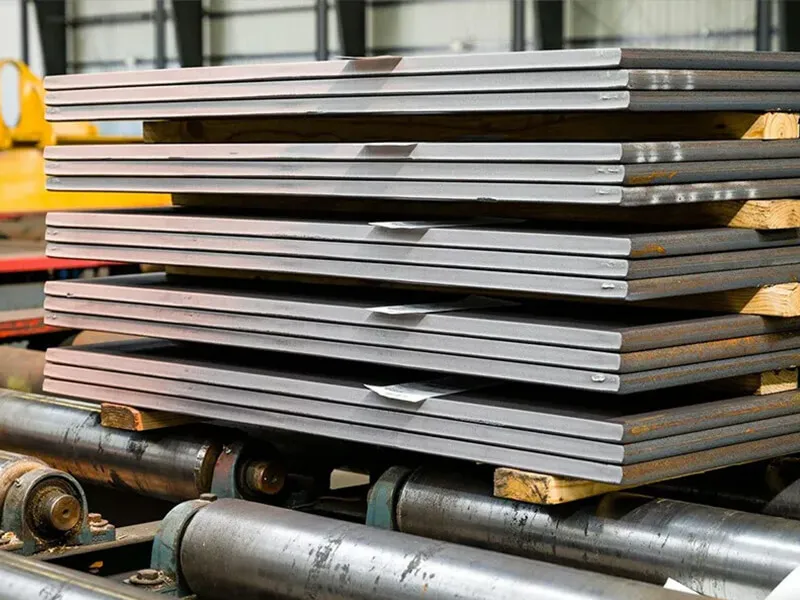
1. Steel Plates:
- Function: The primary skin of the ship. They form the watertight envelope (shell plating) and the major internal divisions (decks, bulkheads).
- Sizes: Vary greatly, from thin plates for non-structural partitions to thick plates (40mm+) for the keel and bottom.
- Supply in a One-Stop Solution: Provided in the required grades and thicknesses, often pre-cut to nesting shapes to reduce waste.
2. Angle Bars (L-Shaped Steel):
- Function: The versatile workhorse.
- Frames: The transverse ribs of the ship, giving it shape and transverse strength.
- Stiffeners: Welded to plates on bulkheads and decks to prevent buckling.
- Brackets and Connections: Used for joining other members.
- Types: Equal angles (both legs same length) and unequal angles.
- Supply in a One-Stop Solution: A full range of sizes (e.g., L150x150x12, L200x90x10) in all required marine grades (A, B, D, AH36, DH36).
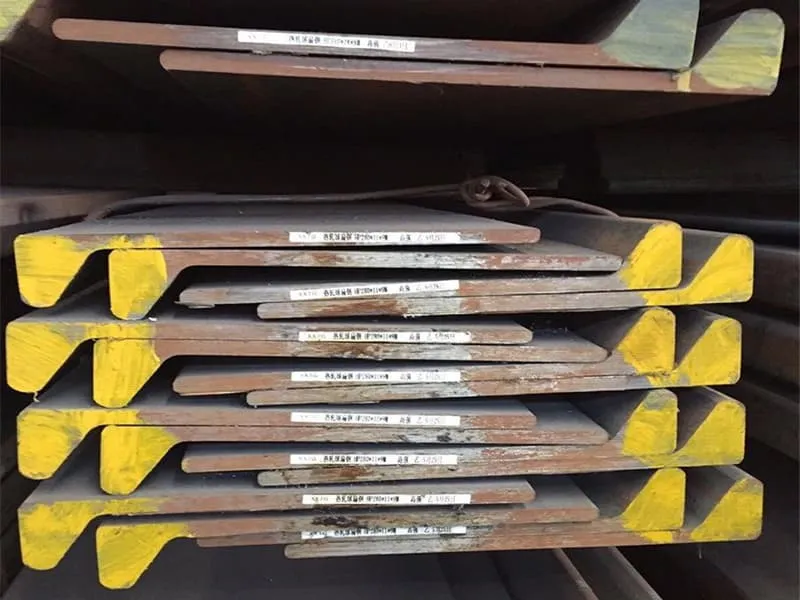
3. Bulb Flats:
- Function: High-efficiency stiffeners. They are primarily used as longitudinals—members that run fore-and-aft along the hull and decks.
- Advantage: The bulb at the tip places material further from the plate, giving it a higher section modulus (bending resistance) than a flat bar of the same weight. This makes the hull lighter and stiffer.
- Supply in a One-Stop Solution: Critical for modern hulls. Supplied in standard series (e.g., JIS G3192 sizes like 250×12, 300×12).
4. Other Sections:
- Flat Bars: Used for small stiffeners, edges, and bracketry.
- Channels (C-sections): Sometimes used for built-up girders or special supports.
Profile Selection Table for Hull Construction:
| Structural Member | Primary Standard Section Used | Why This Section is Used |
|---|---|---|
| Hull Shell Plating | Plate (various thicknesses) | Forms the continuous, watertight outer skin. |
| Transverse Frame (Rib) | Angle Bar (large equal angle, e.g., L250x250x18) | Provides transverse shape and strength; easy to fit to curved hull. |
| Deck Longitudinal | Bulb Flat (e.g., Bulb 300×12) | Efficiently supports deck plating against cargo loads with minimal weight. |
| Bulkhead Stiffener | Angle Bar (smaller equal or unequal angle) | Lightweight, easy to weld in a grid pattern to prevent plate buckling. |
| Centerline Girder | Built-up section from Plates or a large T-section | Must carry very high longitudinal stresses. |
A true one-stop solution6 means a shipyard can provide a single material list covering plates, angles of various sizes, and bulb flats2, and receive a coordinated shipment with consistent certification from one responsible partner. This simplifies everything from negotiation and quality control to logistics and customs clearance, allowing the builder to focus on the complex task of assembling these profiles into a seaworthy vessel.
Conclusion
A one-stop solution for shipbuilding steel profiles supplies the essential trio—certified plates, angles, and bulb flats—in the correct high-strength grades (like AH36) with guaranteed toughness, streamlining procurement, ensuring material harmony, and providing a solid foundation for efficient, safe vessel construction.
-
Understanding standard steel sections is crucial for anyone involved in shipbuilding, ensuring proper material selection. ↩ ↩ ↩ ↩ ↩ ↩ ↩ ↩ ↩ ↩ ↩ ↩
-
Bulb flats are essential for creating lightweight and stiff hulls; learn more about their advantages in ship design. ↩ ↩ ↩ ↩ ↩ ↩ ↩
-
Angle bars play a vital role in providing structural integrity; explore their various applications in ship construction. ↩ ↩ ↩ ↩ ↩
-
Flat bars are versatile components in shipbuilding; discover their specific applications and benefits. ↩ ↩ ↩ ↩
-
Channels are used for special supports; learn how they contribute to the overall structure of a ship. ↩ ↩ ↩ ↩ ↩ ↩ ↩ ↩
-
A one-stop solution simplifies procurement in shipbuilding; find out how it enhances efficiency and reduces costs. ↩ ↩ ↩ ↩