
You design a ship frame. You pick an L section. But you are not sure if it is the best choice. Too heavy wastes steel. Too light risks failure.
To optimize ship frame design using marine L sections, select the right size, thickness, and grade for your frame spacing and load. Choose transverse, longitudinal, or hybrid arrangements based on ship type. Use unequal leg L sections to save weight without losing strength. Add proper end details like snipes and brackets to improve fatigue life.
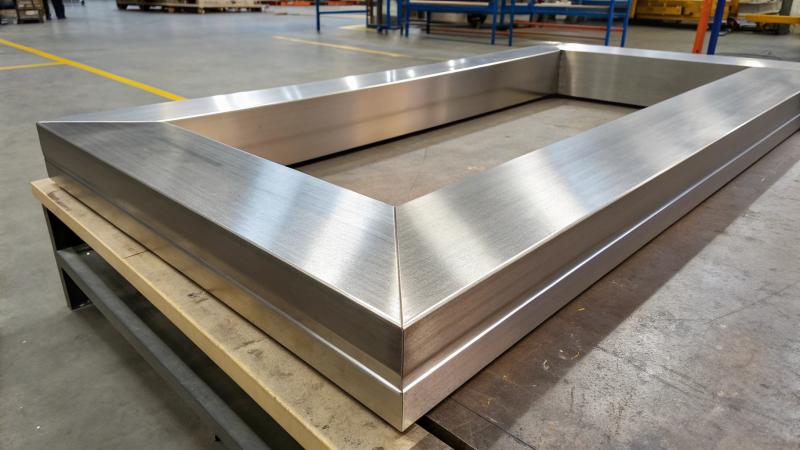
I am Zora Guo from cnmarinesteel.com. I supply marine L sections to shipyards and designers. I have seen many designs that are either over‑built (wasting steel) or under‑built (risking cracks). Let me show you how to get it right.
How to Select L Section Size, Thickness, and Grade Based on Frame Spacing and Design Load?
You open a class rule book. You see many sizes. You need a simple method to pick the right L section for your frame spacing and the load it must carry.
To select an L section, first calculate the required section modulus using the formula from ABS or DNV rules. The modulus depends on frame spacing (mm), design pressure (kN/m²), and frame span (m). Then look up an L section whose section modulus meets or exceeds the requirement. For higher loads or wider spacing, increase the leg length or thickness. For cold climates or high‑stress areas, choose a higher grade like AH36 or DH36 instead of A grade.
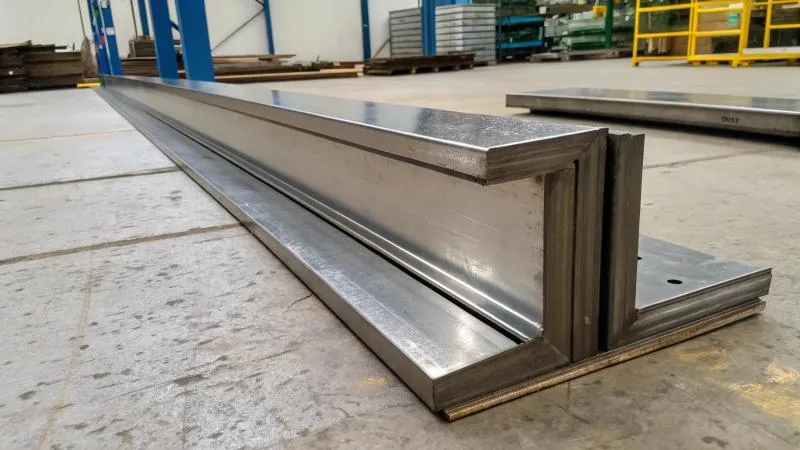
Let me walk you through the selection process step by step.
Step 1: Calculate the Required Section Modulus
Classification societies give formulas. For a simple stiffener (like a deck beam or side frame), the required section modulus Z is:
Z = 7.8 × p × a × l² / σ
Where:
- p = design pressure (kN/m²) – from rules (wave pressure, cargo load, etc.)
- a = frame spacing (m) – distance between adjacent frames
- l = frame span (m) – distance between supports
- σ = allowable stress (MPa) – typically 0.5 × yield strength for mild steel
Example for a bottom frame in a bulk carrier:
- p = 150 kN/m² (wave pressure + cargo)
- a = 0.7 m (700mm spacing)
- l = 4 m (span from inner bottom to tank top)
- σ = 175 MPa (for Grade A steel, yield 235 MPa, divided by 1.33 safety factor)
Z = 7.8 × 150 × 0.7 × 4² / 175 = 7.8 × 150 × 0.7 × 16 / 175 = 7.8 × 150 × 11.2 / 175 = 7.8 × 1680 / 175 = 13104 / 175 = 74.9 cm³
So you need an L section with Z ≥ 75 cm³.
Step 2: Look Up L Section Properties
Here are common marine L sections and their section moduli (approximate, for the leg welded to the plate):
| L section (unequal leg) | Thickness (mm) | Section modulus (cm³) | Weight (kg/m) |
|---|---|---|---|
| L100x75x8 | 8 | 55 | 10.4 |
| L125x80x10 | 10 | 85 | 15.0 |
| L150x90x12 | 12 | 120 | 20.9 |
| L200x100x14 | 14 | 210 | 30.5 |
For our example needing Z ≥ 75 cm³, the L125x80x10 (85 cm³) works. L100x75x8 (55 cm³) is too small.
Step 3: Check the Grade
Higher grades (AH32, AH36) have higher yield strength. This allows a smaller Z for the same load, because allowable stress is higher.
Example same load but using AH36 (yield 355 MPa, allowable ~266 MPa):
Z = 7.8 × 150 × 0.7 × 16 / 266 = 13104 / 266 = 49.3 cm³
Now you could use a smaller L section, like L100x75x8 (55 cm³). Weight saving from 15.0 kg/m to 10.4 kg/m is about 30%.
Step 4: Adjust for Corrosion Allowance
Add 2‑3mm to thickness for corrosion allowance over the ship’s life. If the design calls for 10mm thickness, specify 12mm. The section modulus will be higher, giving extra safety.
Real Example from a Tugboat Design
A naval architect in Vietnam designed a tugboat with frame spacing 600mm. He used L120x80x8. After calculating, he found the modulus was only 60 cm³ but needed 70 cm³. He increased to L125x80x10. The weight increased by 30 kg per frame, but the tugboat passed class approval without changes. A small increase for safety.
What Are the Best Frame Arrangements – Transverse, Longitudinal, or Hybrid – for L‑Section Stiffening?
You have three ways to arrange frames. Each has pros and cons. Your choice depends on ship size and type.
For small to medium ships (under 100m), transverse framing (rings spaced every 500‑700mm) is simplest and most common. For large ships (over 150m), longitudinal framing (long stiffeners with transverse webs every 3‑4m) is lighter and stronger. Hybrid arrangements use longitudinal stiffeners in the bottom and deck, with transverse frames in the sides. L sections work well in all three, but the size and orientation change.
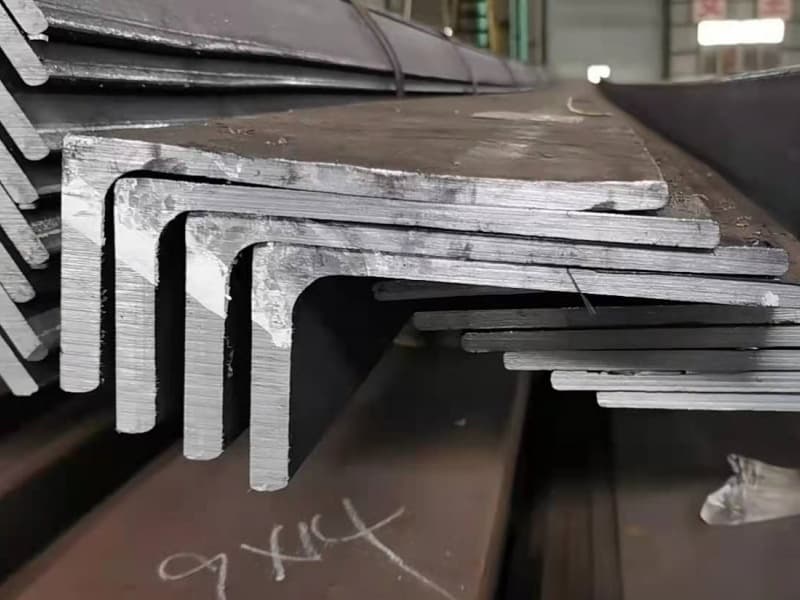
Let me explain each arrangement and where to use L sections.
Transverse Framing (Ring Frames)
In transverse framing, frames run vertically (or slightly angled) around the hull. They are spaced closely, typically 500‑700mm apart. The frames are connected to the deck beams above and the floor below.
Where used: Small vessels (fishing boats, tugs, coasters), and the side shells of larger ships.
L section role: The L section is welded with one leg to the shell plate, the other leg pointing inward. The inside leg acts as the stiffener.
Pros: Simple to design and build. Easy to repair. Works well for ships that don’t need extreme weight saving.
Cons: Heavier than longitudinal framing for the same strength on large ships.
Typical L section size for transverse frames: L120x80x10 to L200x100x14, depending on depth.
Longitudinal Framing
In longitudinal framing, long stiffeners run fore‑aft along the bottom, deck, and side shell. Transverse webs (large frames) are placed every 3‑4 meters to support the longitudinals.
Where used: Large ships (tankers, bulk carriers, container ships) over 150m.
L section role: L sections are used as the longitudinal stiffeners. They are welded to the inner bottom, underside of deck, or side shell plates.
Pros: Much lighter for the same hull strength (saves 15‑25% steel weight). Better for fatigue life because fewer stress concentrations.
Cons: More complex design and welding. Requires larger web frames every few meters.
Typical L section size for longitudinals: L150x90x12 to L250x100x16, often higher grades (AH36/DH36).
Hybrid Arrangement
Most modern ships use a hybrid : longitudinal framing in the bottom and deck (to resist hull bending), and transverse frames in the sides (for simplicity and collision resistance).
Where used: Most large commercial ships.
L section role: L sections are used for both the longitudinals (bottom/deck) and the side frames (transverse).
Pros: Best balance of weight saving and buildability.
Comparison Table
| Feature | Transverse | Longitudinal | Hybrid |
|---|---|---|---|
| Best for ship length | Under 100m | Over 150m | 100‑150m |
| Weight efficiency | Low | High | Medium |
| Build complexity | Low | High | Medium |
| Typical L section spacing | 500‑700mm | 600‑800mm (longitudinals) | Mixed |
| Common vessel types | Tug, fishing, small cargo | Tanker, bulker, container | Most modern ships |
What a Shipyard Owner Told Me
A yard in the Philippines builds both small fishing boats and large bulk carriers. For the fishing boats, they use transverse framing with L100x75x8. It is simple, cheap, and strong enough. For the bulk carriers, they use longitudinal framing with L200x100x14 on the bottom. They save 200 tons of steel per ship. That is a big cost saving.
How Can You Reduce Frame Weight Without Compromising Strength by Using Unequal Leg L Sections?
You want a stiff frame. A larger leg gives more bending strength. But you do not need both legs the same length. The leg welded to the plate does most of the work.
Use unequal leg L sections where the longer leg is welded to the plate. The longer leg increases the section modulus without adding much weight. For the same depth, an unequal leg L section (e.g., L150x90x12) is 15‑20% lighter than an equal leg one (L150x150x12) but provides similar bending strength. This is the easiest way to save weight on ship frames.
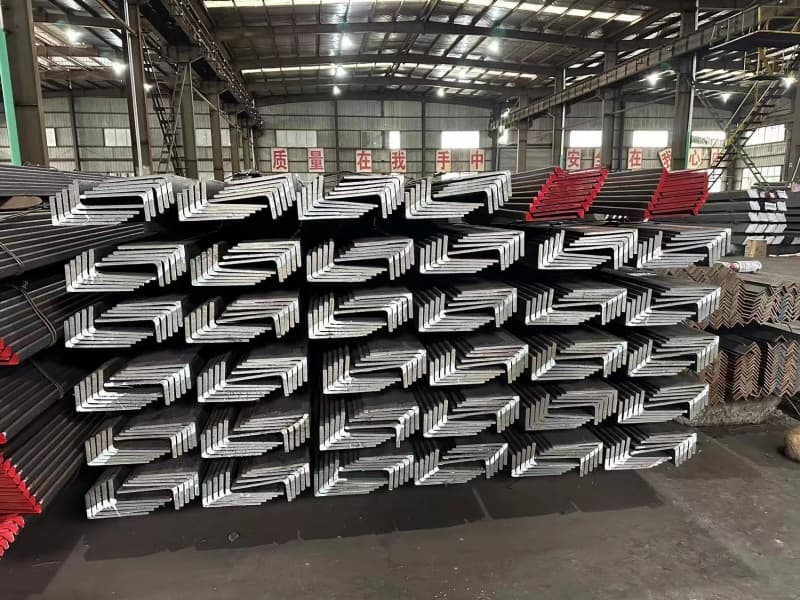
Let me show you the numbers.
Equal Leg vs Unequal Leg – Weight and Strength
| L section | Weight (kg/m) | Section modulus (cm³) | Strength‑to‑weight ratio |
|---|---|---|---|
| L150x150x12 (equal) | 27.1 | 140 | 5.17 |
| L150x90x12 (unequal) | 20.9 | 120 | 5.74 |
| L200x200x14 (equal) | 42.2 | 290 | 6.87 |
| L200x100x14 (unequal) | 30.5 | 210 | 6.88 |
The unequal leg L150x90x12 has only 86% of the strength of the equal leg L150x150x12, but at 77% of the weight. So the strength‑to‑weight ratio is actually better for the unequal leg.
How to Choose the Orientation
Place the longer leg against the plate (the plate you are stiffening). The longer leg gives a larger moment of inertia because it is farther from the neutral axis.
Example: For a deck beam, weld the longer leg (150mm) to the underside of the deck. The shorter leg (90mm) hangs down. This orientation gives the best stiffness for the weight.
If you reverse it (weld the short leg to the plate), the section modulus drops significantly. Never do that for primary stiffeners.
Other Weight Saving Tips
- Use higher grade steel – AH36 has 50% higher yield than Grade A. You can use a smaller L section.
- Reduce frame spacing – Closer spacing allows smaller L sections, but increases number of frames. Net weight effect varies. Run the numbers.
- Use intermittent welding – Instead of continuous welding on both legs, weld only the longer leg continuously, and weld the short leg with stitch welds (e.g., 50mm weld every 300mm). Check class rules – some allow this for secondary stiffeners.
A Real Example from a Passenger Ferry
A ferry operator wanted to reduce weight to increase speed. The original design used equal leg L150x150x12 for deck beams. Weight per beam was 27.1 kg/m. The naval architect switched to unequal leg L150x90x12, with the long leg welded to the deck. The section modulus dropped from 140 to 120, but that was still above the required 110. Weight dropped to 20.9 kg/m – a 23% saving. Over 200 beams, that saved over 1,200 kg. The ferry used less fuel.
What End Connection Details (Brackets, Snipes, Continuous Welds) Improve Frame Fatigue Life and Stiffness?
The middle of the L section is strong. The ends are where cracks start. Bad end details can ruin a good design.
To improve fatigue life, use sniped ends (notched cuts) at the ends of L section stiffeners. This reduces stress concentration by 50‑70%. At high‑load corners (like where a deck beam meets a frame), add triangular brackets (gussets) with a smooth radius at the toe. For welding, use continuous welds on the leg attached to the plate, but snipe the free leg. These details are shown in class society standard drawings and make your frame last the ship’s full life without cracking.
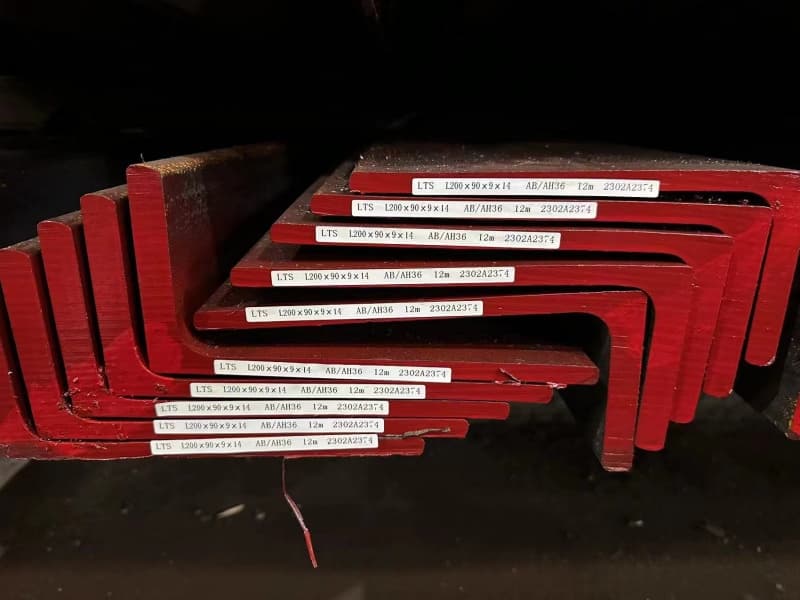
Let me explain three critical details.
Detail 1: Sniped Ends (Notches)
At the end of a stiffener where it meets a bulkhead or a floor, you cut away part of the free leg. This is a snipe.
How to do it:
- Cut the free leg back by 40‑80mm (depending on L section size).
- The leg welded to the plate remains full length.
- Weld only the full leg to the supporting plate.
Why it works: A straight cut creates a very stiff end. When the hull flexes, the end of the stiffener cannot move. Stress builds up at the weld toe. The snipe allows the free leg to flex a little, reducing peak stress.
Typical snipe dimensions: Length = 1.5 to 2 times the free leg thickness. Minimum 25mm.
Detail 2: Triangular Brackets (Gussets)
At a corner where a vertical frame meets a deck beam, the stress is high. Add a triangular steel plate (bracket) welded between the two L sections.
Bracket design:
- Thickness same as the L section leg (or slightly thicker).
- Leg lengths about 1.5 to 2 times the L section leg length.
- The corner where the bracket meets the L section should be a smooth radius (r ≥ 25mm), not a sharp point.
Why it works: The bracket distributes the load over a larger area. It prevents the weld from carrying all the stress.
Detail 3: Continuous Welds on the Attached Leg
Always weld the leg that is against the plate continuously (full length). Do not use intermittent welds on this leg. The attached leg carries the load into the plate. A continuous weld is stronger and less likely to crack.
For the free leg: You can use intermittent welds (e.g., weld 50mm, skip 150mm) for secondary stiffeners, but check class rules.
Summary Table of End Details
| Detail | When to use | Fatigue life improvement |
|---|---|---|
| Sniped end | All stiffener ends | 50‑70% |
| Triangular bracket | High‑load corners (e.g., engine room, hatch corners) | 100‑200% |
| Continuous weld on attached leg | All primary stiffeners | Base requirement |
| Ground weld toe | Very high‑stress areas (e.g., crane foundations) | 30‑50% |
A Real Example from a Bulk Carrier Repair
A bulk carrier had cracks at the ends of deck stiffeners after 8 years. The original design had no snipes. The repair yard cut snipes into the ends of the stiffeners and re‑welded them. The ship has sailed another 10 years with no cracks in that area. The cost of retrofitting snipes was small compared to the cost of future repairs.
Conclusion
Select L section size by required modulus. Use unequal leg for weight saving. Choose transverse or longitudinal framing based on ship size. Add snipes and brackets at ends. These steps make your frame design strong, light, and durable.