
A cargo ship owner recently asked me why his vessel’s steel plates cracked in cold waters. The problem was using the wrong steel grade for his operating route.
Shipbuilding steel grades include ordinary strength grades (A, B, D, E) and high-strength grades (AH32-40, DH32-40, EH32-40). The letter indicates impact test temperature capability, while numbers show yield strength in MPa. These grades ensure vessel safety in specific environmental conditions and loading scenarios.
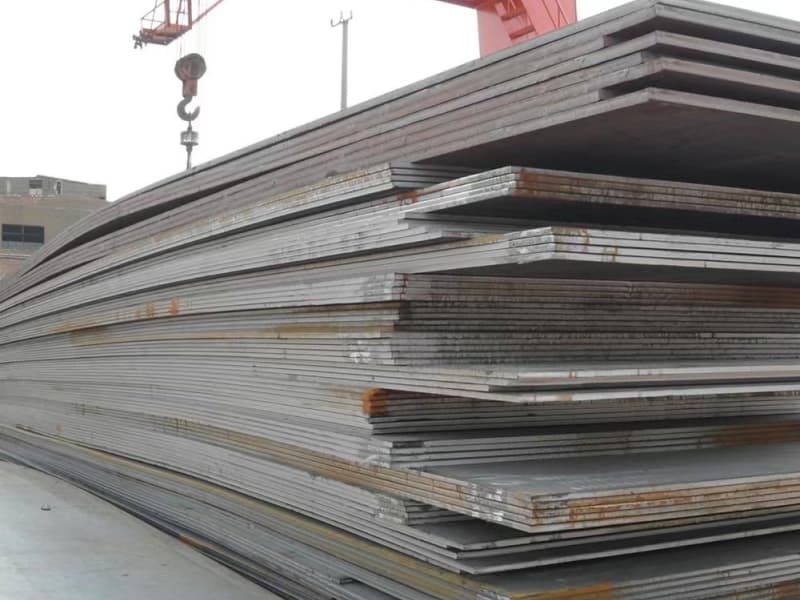
Choosing the correct steel grade affects your vessel’s safety, maintenance costs, and operational lifespan. Let me guide you through the complete classification system.
What are the grades of ship building steel?
Many new shipbuilders feel overwhelmed by the complex grading system. Understanding the basic categories simplifies material selection significantly.
Shipbuilding steel grades are categorized into ordinary strength1 (Grades A-E) and high strength2 (AH/DH/EH series3). Grade A4 has no impact requirements, while Grades D and E withstand -20°C and -40°C respectively. High-strength grades offer 315-390 MPa yield strength with similar temperature ratings.
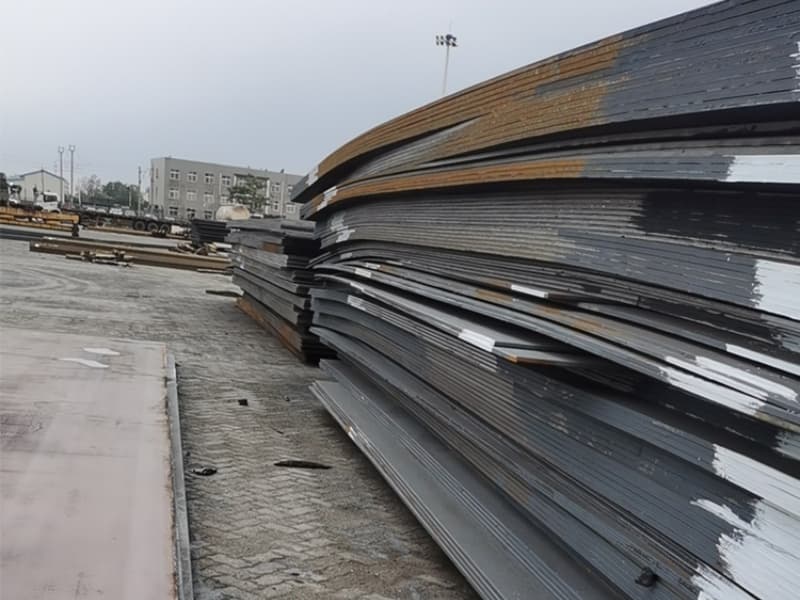
Comprehensive Breakdown of Shipbuilding Steel Grade System
The shipbuilding steel grading system follows logical patterns that reflect performance characteristics and application suitability.
Shipbuilding Steel Grade Specifications Table
| Grade Category | Yield Strength | Impact Test Temperature | Key Applications | Classification Standards |
|---|---|---|---|---|
| Grade A4 | 235 MPa | Not required | Non-critical areas, warm waters | ABS, LR, DNV, NK |
| Grade B | 235 MPa | 0°C | General hull plating | All major societies |
| Grade D5 | 235 MPa | -20°C | Cold water operations | LR, DNV, ABS |
| Grade E | 235 MPa | -40°C | Arctic vessels | DNV, RS, LR |
| AH32/DH32/EH32 | 315 MPa | 0°C/-20°C/-40°C | Medium strength requirements | ABS, BV, IRS |
| AH36/DH36/EH36 | 355 MPa | 0°C/-20°C/-40°C | Main hull structures | All classifications |
| AH40/DH40/EH40 | 390 MPa | 0°C/-20°C/-40°C | High-stress areas | LR, DNV, ABS |
Ordinary strength grades serve basic marine applications with 235 MPa yield strength. Grade A4 works for non-critical structures in tropical waters. Grade B offers improved quality for general hull plating. Grades D and E provide progressively better low-temperature toughness for vessels operating in cold environments. These grades represent the foundation of shipbuilding steel selection.
High-strength grades deliver improved mechanical properties with 315-390 MPa yield strength. The AH/DH/EH designation system combines strength and toughness requirements. AH grades handle standard temperature conditions, DH grades serve cold environments, and EH grades work in Arctic operations. The number indicates yield strength level, with higher numbers meaning greater strength.
Classification society approvals6 ensure international acceptance. Different societies like American Bureau of Shipping (ABS), Lloyd’s Register (LR), and Det Norske Veritas (DNV) maintain similar but not identical standards. Most shipbuilders choose grades approved by multiple societies for flexibility in vessel registration and operation.
Application guidelines help match grades to specific vessel areas. Grade A4 and B steels work well for interior structures and non-critical components. Grade D5 and E steels serve hull plating in cold waters. High-strength grades allow weight reduction in decks, bulkheads, and other primary structures where strength matters most.
Manufacturing requirements vary by grade level. Higher grades demand stricter process controls, more extensive testing, and tighter chemical composition ranges. These requirements increase production costs but ensure reliable performance in demanding marine environments.
What are the different grades of steel plates?
Steel plate grading systems extend beyond shipbuilding to cover construction, pressure vessels, and general structural applications. Understanding these differences prevents material misapplication.
Steel plate grades include structural grades1 (S235-S690), pressure vessel grades2 (P265-P460), shipbuilding grades3 (A-E, AH-EH series), and stainless grades4 (304, 316, 2205). Each system serves specific industries with tailored mechanical properties, chemical compositions, and testing requirements.
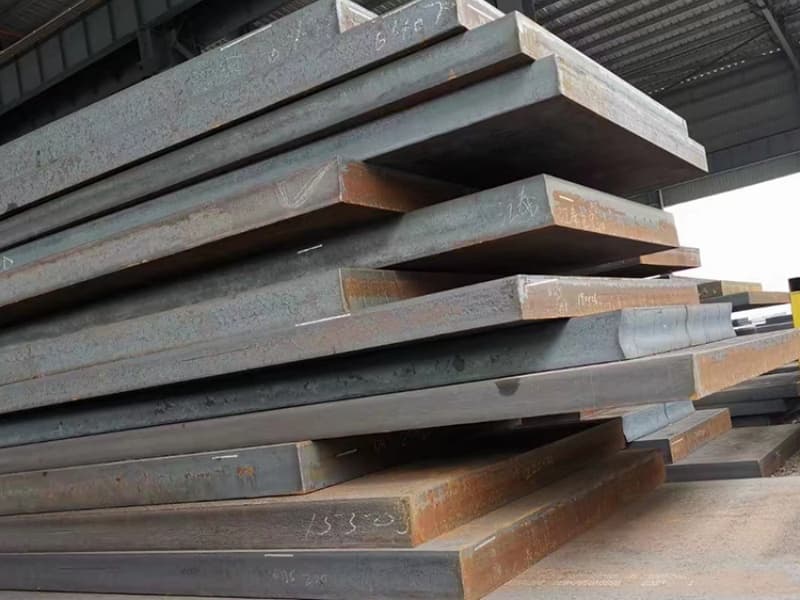
Analysis of Steel Plate Grade Classification Systems
Different industries developed specialized grading systems to meet their unique performance requirements and safety standards.
Steel Plate Grade Systems Comparison Table
| Grade System | Industry Application | Strength Range | Key Properties | Common Standards |
|---|---|---|---|---|
| S Series | Structural construction | 235-690 MPa | Weldability, toughness | EN 10025 |
| P Series | Pressure vessels | 265-460 MPa | High temperature strength | EN 10028 |
| Ship Grades | Shipbuilding | 235-390 MPa | Impact toughness, corrosion | IACS Unified |
| A36/A572 | General construction | 250-450 MPa | Cost-effectiveness | ASTM A36/A572 |
| Stainless | Corrosive environments | 190-690 MPa | Corrosion resistance | ASTM A240 |
Structural steel grades (S series) follow European standards for building and bridge construction. The number indicates minimum yield strength in MPa. S235 has basic properties for light structures, while S690 offers high strength for heavy construction. These grades prioritize weldability and availability in large quantities.
Pressure vessel grades (P series) handle contained pressure and elevated temperatures. The P designation indicates pressure application, with numbers showing tensile strength levels. These steels undergo strict quality control for internal soundness and have enhanced testing for safety-critical applications.
Shipbuilding grades focus on dynamic loading and environmental resistance. The classification society system ensures vessels withstand wave impacts, temperature variations, and corrosive seawater. Ship steels undergo extensive impact testing and have controlled chemical compositions for consistent performance.
General construction grades like A36 serve non-marine applications with cost-efficient production. A36 has broad chemical ranges and minimal testing requirements, making it unsuitable for shipbuilding despite adequate strength. A572 offers higher strength variants but lacks marine certification.
Stainless steel grades provide corrosion resistance for specific marine components. Grade 304 works for interior applications, while 316 handles saltwater exposure better. Duplex grades like 2205 offer superior strength and corrosion resistance for specialized marine applications.
Which steel is better, 204 or 304?
Stainless steel selection often confuses shipbuilders. The number difference seems small, but the performance gap is significant for marine applications.
304 stainless steel1 is significantly better than 204 for marine applications. 304 contains 18% chromium and 8% nickel, while 204 has lower nickel content with manganese substitution2. 304 offers superior corrosion resistance3, better weldability4, and longer service life in saltwater environments.
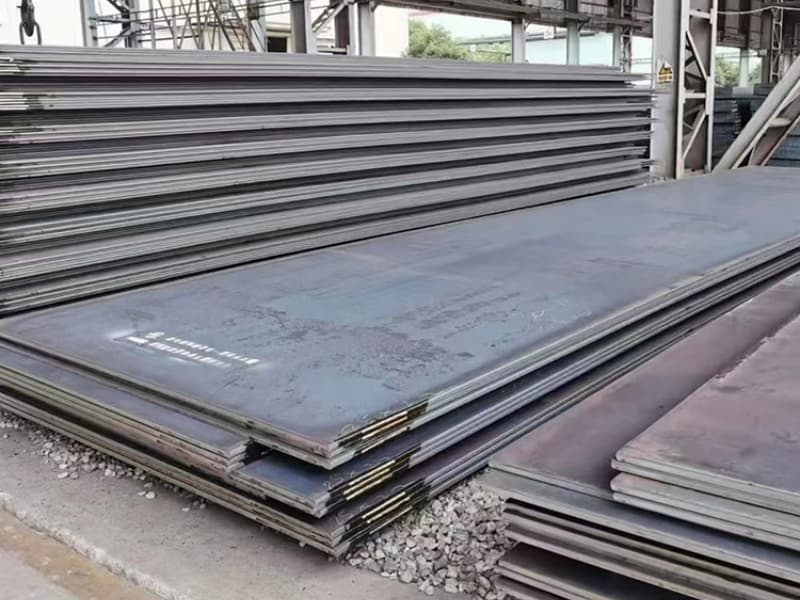
Detailed Comparison of 204 and 304 Stainless Steel Properties
The chemical composition differences between these grades create substantial variations in marine performance and application suitability.
204 vs 304 Stainless Steel Technical Analysis
| Property | 204 Stainless Steel | 304 Stainless Steel | Marine Performance Impact |
|---|---|---|---|
| Chromium Content | 16-18% | 18-20% | Corrosion resistance level |
| Nickel Content | 1-3% | 8-10.5% | Austenitic stability |
| Manganese Content | 7.5-10% | 2% max | Cost reduction substitute |
| Corrosion Resistance | Moderate | Good | Service life expectation |
| Weldability | Fair | Excellent | Fabrication quality |
| Cost Factor | Lower | Higher | Project budget impact |
| Marine Suitability | Limited | Good | Application range |
Chromium content establishes basic corrosion resistance3. Both grades contain sufficient chromium to form the passive oxide layer that prevents rust. However, 304’s higher chromium percentage creates a more stable and protective layer, especially in chloride-rich marine environments.
Nickel content determines austenitic structure stability. 304’s 8-10.5% nickel content maintains its austenitic structure through welding and forming operations. 204 uses manganese to partially replace nickel, reducing cost but compromising corrosion resistance3 and structural stability.
Manganese substitution affects long-term performance. 204’s high manganese content (7.5-10%) enables nickel reduction but increases susceptibility to stress corrosion cracking. This limitation makes 204 unsuitable for critical marine components under tension in saltwater environments.
Corrosion resistance levels dictate application ranges. 304 withstands moderate saltwater exposure well, making it suitable for deck fittings, railings, and interior components. 204 may suffer pitting and crevice corrosion in the same applications, particularly in welded areas or stress concentrations.
Weldability differences affect fabrication quality. 304 welds easily with standard procedures and maintains corrosion resistance3 in heat-affected zones. 204 requires careful welding techniques and may lose corrosion resistance3 near welds, creating potential failure points.
Cost considerations influence material selection. 204 costs approximately 20-30% less than 304, making it attractive for budget-conscious projects. However, the potential for earlier replacement and higher maintenance often makes 304 more economical over the vessel’s lifespan.
What is grade S2751 and S3552 steel?
Construction steel grades like S2751 and S3552 sometimes get confused with shipbuilding grades. Understanding their differences prevents inappropriate substitutions in marine projects.
S2751 and S3552 are structural steel grades with 275 MPa and 355 MPa yield strength3 respectively. They follow European standards for building construction but lack marine certification. Shipbuilding grades AH36 and DH36 have similar strength but include impact testing4 and classification society approval for marine use.
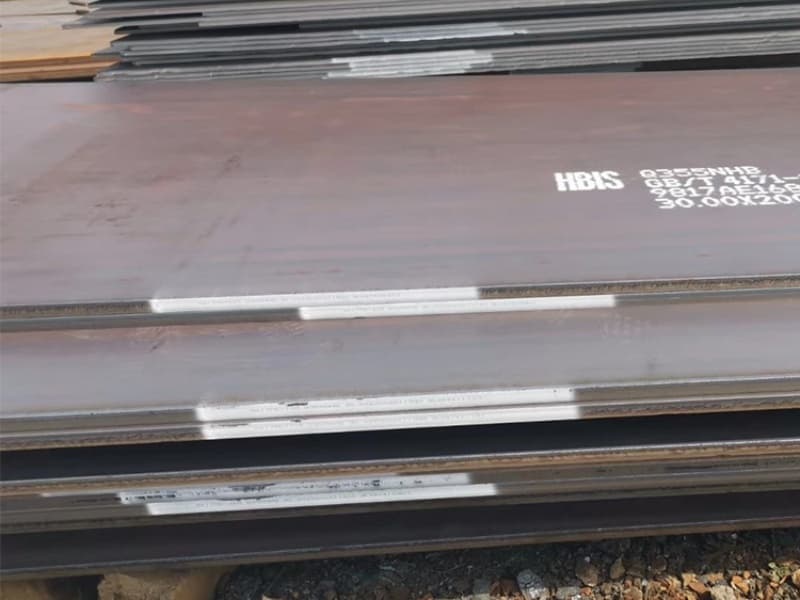
Comprehensive Analysis of S2751 and S3552 vs Marine Grades
While strength numbers appear similar, marine and structural grades have fundamentally different quality requirements and performance guarantees.
S2751/S3552 vs Marine Grade Comparison Table
| Characteristic | S2751 Structural Steel | S3552 Structural Steel | AH36 Marine Steel | Application Significance |
|---|---|---|---|---|
| Yield Strength | 275 MPa | 355 MPa | 355 MPa | Structural capacity |
| Impact Testing | Optional at +20°C | Optional at +20°C | Required at 0°C | Cold water performance |
| Chemical Control | Standard ranges | Standard ranges | Strict limits | Weldability assurance |
| Certification | Mill certificate | Mill certificate | Classification approval | Regulatory compliance |
| Surface Quality | Commercial | Commercial | Special cleaned | Coating adherence |
| Production Standard | EN 10025-2 | EN 10025-2 | IACS Unified | Quality consistency |
Yield strength comparison shows apparent similarities. S3552 and AH36 both offer 355 MPa minimum yield strength3, allowing similar structural design from a strength perspective. However, marine environments demand properties beyond basic strength, making the grades non-interchangeable despite similar strength numbers.
Impact testing requirements represent the critical difference. AH36 must pass Charpy V-notch testing at 0°C, ensuring toughness in seawater temperatures. S3552 typically has impact testing4 at +20°C if specified, but this doesn’t guarantee performance in cold marine environments where brittle fracture risks exist.
Chemical composition controls affect weldability and corrosion resistance. AH36 has strict limits on carbon equivalent (typically below 0.41%) for good weldability without preheating. S3552 has broader composition ranges focused on cost-effective production rather than marine performance optimization.
Certification processes ensure marine suitability. AH36 requires approval from classification societies who audit mills and verify testing procedures. S3552 needs only mill certification according to European standards, without third-party verification for marine applications.
Surface quality standards differ significantly. AH36 typically comes with improved surface preparation for better paint adhesion in marine coating systems. S3552 has standard mill surface conditions that may require additional preparation for long-term corrosion protection.
Production standards reflect different quality philosophies. AH36 follows International Association of Classification Societies (IACS) unified requirements with global consistency. S3552 adheres to European structural standards optimized for construction industry needs rather than marine environment challenges.
Conclusion
Understanding shipbuilding steel plate grades ensures proper material selection for vessel safety, performance, and regulatory compliance across different operating environments.
-
Explore this link to understand the properties and applications of S275 steel, crucial for construction projects. ↩ ↩ ↩ ↩ ↩ ↩ ↩ ↩ ↩
-
Learn about S355 steel’s characteristics and its significance in structural engineering by visiting this resource. ↩ ↩ ↩ ↩ ↩ ↩ ↩ ↩ ↩ ↩ ↩ ↩ ↩ ↩ ↩
-
Discover the importance of yield strength in steel grades and how it affects structural integrity. ↩ ↩ ↩ ↩ ↩ ↩ ↩ ↩ ↩
-
Find out why impact testing is essential for steel used in cold environments, ensuring safety and performance. ↩ ↩ ↩ ↩ ↩ ↩ ↩ ↩
-
Discover how Grade D enhances low-temperature toughness for vessels operating in cold waters. ↩ ↩
-
Understanding these approvals is crucial for ensuring compliance and flexibility in vessel registration. ↩