
You are designing a ship’s hull or a stiffening frame. You need a strong, efficient profile. You see "bulb flat" and "flat bar" on the material list. They look similar on a drawing, but choosing the wrong one wastes money and compromises strength.
The main difference is in their profile and structural efficiency. A flat bar is a simple, solid rectangle of steel. An HP (High Performance) bulb flat has a similar flat section but with a rounded "bulb" or thickened edge along one side. This bulb adds significant strength and stiffness without much extra weight, making it the preferred choice for critical marine stiffeners.
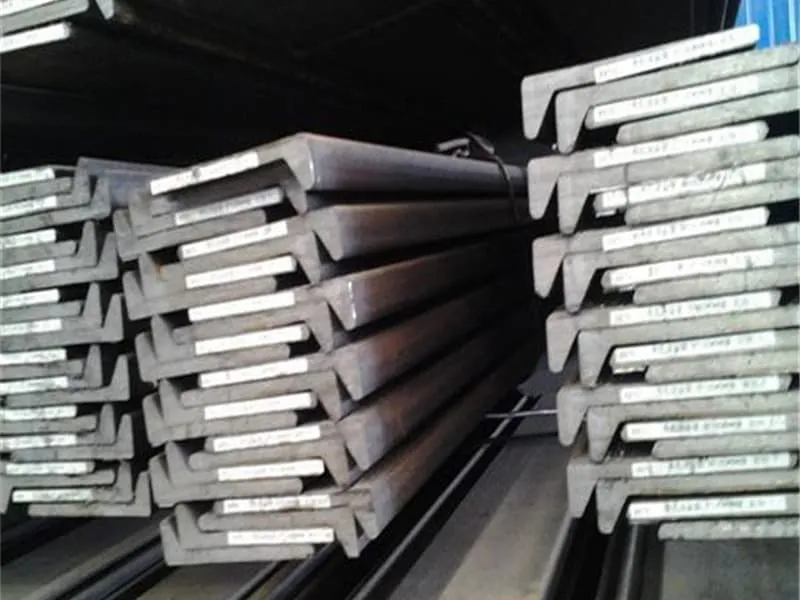
This choice is not just about shape. It affects the weight of your vessel, its fuel efficiency, and its structural integrity. I have spoken with naval architects who regret using standard flat bars to save cost upfront. They later face issues with excessive deflection or need to add more material, which increases weight. Understanding these two products in detail will help you make the right decision for your project from the start.
What is the difference between flat plate and flat bar?
Many people use "plate" and "bar" interchangeably. This is a mistake. The difference is in their dimensions and their primary use in construction. Mixing them up can lead to design errors.
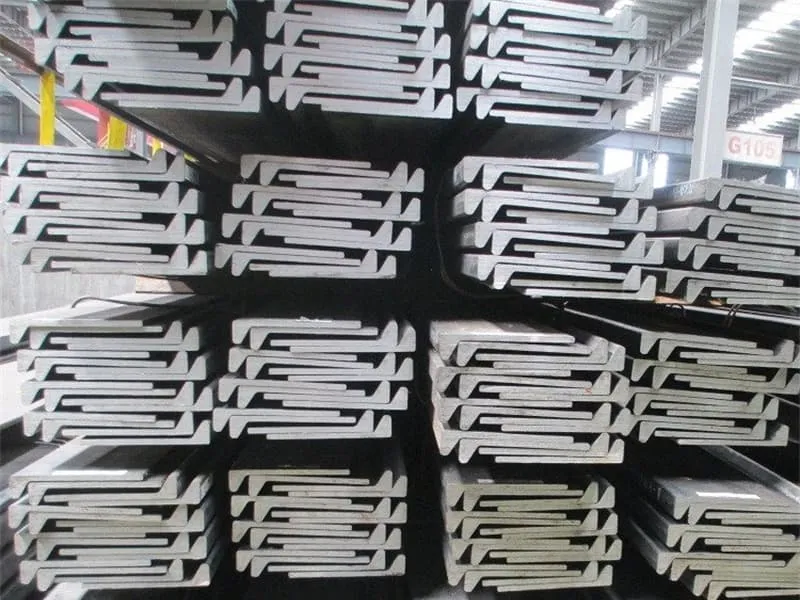
The key difference is thickness and width. A flat plate is a wide, flat sheet of steel, typically over 150mm wide and over 4.5mm thick. A flat bar is a narrower, long product with a rectangular cross-section, where the width is much greater than the thickness. Plates are used for large surfaces like hulls and decks, while bars are used for stiffeners, brackets, and trim.
Defining Plate and Bar by Form and Function
The distinction between plate and bar goes beyond simple size. It is rooted in manufacturing standards and engineering application. Let’s break down the technical and practical differences.
First, we look at the official dimensional boundaries. Industrial standards provide clear definitions. For example, according to many standards, including common mill practice:
- Steel Plate: This is generally considered to be a product with a thickness of 4.5mm or more, and a width of 150mm or more. Plate is often sold in large sheets or cut-to-size pieces. The focus is on providing a broad, continuous surface.
- Steel Flat Bar: This is a "long product." Its width is usually between 10mm and 150mm, and its thickness is between 3mm and 50mm. The width-to-thickness ratio is high, but the absolute width is limited. It is sold in long, straight lengths, typically 6 or 12 meters.
Second, their production processes can differ. Both start as slabs of steel. However, plates are rolled on a plate mill to achieve their large width and varying thickness. Flat bars are often rolled from billets on a bar mill or a section mill. This difference in milling affects the mechanical properties and available sizes.
Third, and most importantly, their structural roles are completely different. You cannot substitute one for the other without redesign.
- The Role of Plate: Plate is the "skin" or primary load-bearing surface. In shipbuilding, the hull, deck, and bulkheads are made from marine-grade steel plates. These plates must withstand water pressure, distribute global loads, and provide a watertight barrier. Their strength is evaluated over large areas.
- The Role of Flat Bar: Flat bar is a "linear stiffener" or "connecting element." It is welded perpendicularly onto plates (as a stiffener) to prevent the plate from buckling under pressure. It is also used for brackets, frames, and edges. Its strength is evaluated as a beam bending along its length.
Here is a table to summarize the core distinctions:
| Characteristic | Steel Plate | Steel Flat Bar |
|---|---|---|
| Primary Dimensions | Thick (≥4.5mm) and Wide (≥150mm). Example: 10mm thick x 2000mm wide. | Narrower width (e.g., 20mm-150mm) with comparable thickness. Example: 10mm thick x 100mm wide. |
| Form | Large sheets or cut pieces. | Long, straight lengths (e.g., 6m, 12m). |
| Main Application | Primary structural surfaces: Hull plating, deck plates, bulkheads. | Secondary structural elements: Stiffeners, trim, brackets, small framing. |
| Load Behavior | Resists in-plane tension/compression and out-of-plane pressure. | Acts as a beam to resist bending; provides stiffening to plates. |
| Common Marine Grades | AH36, DH36, EH36 for high-strength hull plates. | Often A36, or the same grade as the plate it is attached to (e.g., AH36 flat bar for AH36 plate). |
| Ordering Focus | Focus on thickness, width, length, and grade. Often requires cutting patterns. | Focus on thickness, width, length, and grade. Ordered in specific linear lengths or cut to size. |
A practical example from our clients: A shipyard in Vietnam was building a bulk carrier. They ordered a large quantity of 12mm thick steel. They used 12mm x 2000mm wide plates for the side shell. They also ordered 12mm x 100mm flat bars. They welded these flat bars vertically onto the inside of the hull plate as stiffeners. The plate carries the water load over a large area. The flat bar helps the plate carry that load without bending inward. Using a 12mm thick, 2000mm wide "plate" as a stiffener would be impossible and absurdly heavy. Understanding this difference is fundamental to marine design and procurement.
What is bulb flat?
If you look at the edge of a ship’s frame, you might see a profile that looks like a flat bar with a small, rounded bump along one edge. That bump is the secret to its superior performance.
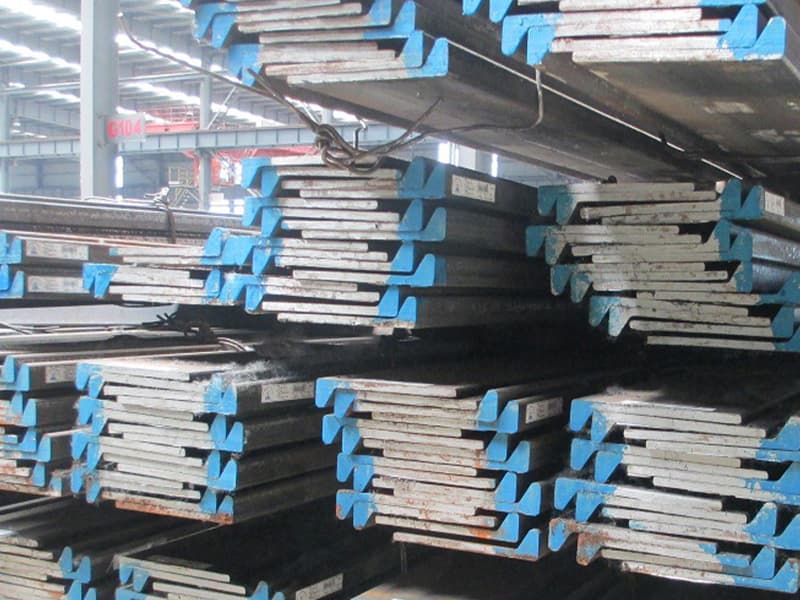
A bulb flat is a specialized steel profile with a flat section and a rounded bulb (like a half-circle) integrated along one of its longer edges. The full name is often "HP bulb flat," where "HP" stands for "High Performance." It is designed specifically as a stiffener for ship hulls and other marine structures.
The Engineering Behind the Bulb
The bulb is not just an added piece of metal. It is a clever engineering solution to a common problem: how to make a stiffener stronger without making it much heavier or taller.
First, let’s understand the geometry. A bulb flat is defined by several key dimensions:
- Height (H): The total height from the bottom of the flat part to the top of the bulb.
- Width of Flat (B): The width of the flat, web-like section.
- Thickness of Web (t1): The thickness of the flat part.
- Bulb Dimensions: The bulb itself has a radius or a defined shape. Its cross-sectional area adds to the overall strength.
The profile is hot-rolled as a single, continuous piece. The bulb is formed during the rolling process. It is not welded on later.
Second, we must talk about the "Section Modulus." This is the key engineering property. The section modulus (often denoted as ‘Z’) measures a beam’s resistance to bending. A higher Z means the beam is stiffer and can carry more load before it starts to deflect. The brilliant thing about the bulb is its location. By placing extra material at the extreme edge (the tip of the bulb), far from the neutral axis, it dramatically increases the section modulus with minimal added weight. Compared to a standard flat bar of the same height and weight, a bulb flat has a significantly higher Z. This means it is a much more efficient stiffener.
Third, let’s see its application. Bulb flats are the standard stiffener in modern shipbuilding. They are used as:
- Longitudinal Stiffeners: Running fore and aft along the hull and decks.
- Transverse Frames: The ribs of the ship.
- Stiffeners on Bulkheads and Doors.
Their high efficiency allows for lighter ship structures. A lighter ship needs less fuel to operate. This is critical for both cost savings and environmental regulations. For example, a shipyard in Romania building a container ship will use HP bulb flats extensively in the cargo hold area to withstand the loads from containers, while minimizing steel weight.
Here is a technical comparison of two hypothetical stiffeners of similar weight:
| Profile Type | Dimensions (Approx.) | Weight per Meter | Section Modulus (Z) – Approx. | Efficiency Note |
|---|---|---|---|---|
| Standard Flat Bar | 250mm high x 12mm thick | ~23.5 kg/m | Z = 120 cm³ | Baseline for comparison. |
| HP Bulb Flat | 250mm high (incl. bulb) x 11mm web | ~23.5 kg/m | Z = 155 cm³ | ~29% higher Z for the same weight. Much stiffer. |
| Alternative Flat Bar | 300mm high x 12mm thick | ~28.2 kg/m | Z = 180 cm³ | To match bulb flat’s Z, you need a taller, heavier flat bar. |
From a supplier’s perspective, bulb flats are a precision product. They are rolled to strict tolerances defined by classification society rules (like LR, DNV, ABS). The grade of steel is also crucial. Common grades are AH32, AH36, DH36, etc. The straightness of the bulb flat is very important for easy welding to the plate. When our client Gulf Metal Solutions inquired about "spherical flat steel," they were referring to bulb flats. We explained the specifications and provided mill certificates showing compliance with ABS standards for their marine projects in Saudi Arabia. This technical support built their confidence in our expertise.
What does "flat bar" mean?
In the world of steel, "flat bar" sounds simple. But its simplicity is its greatest strength. It is one of the most versatile and widely used basic steel shapes.
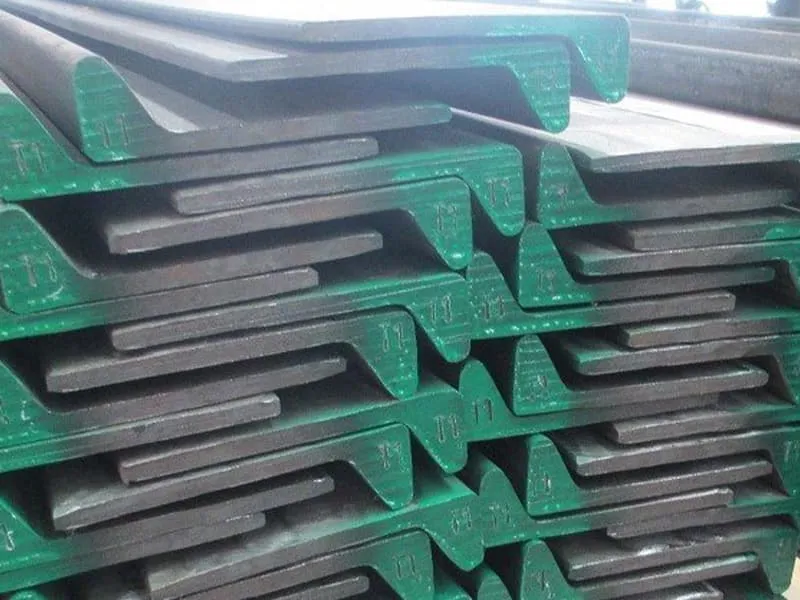
A flat bar is a long, solid piece of steel with a simple rectangular cross-section. It has a specified thickness and width. It has no additional features like bulbs, angles, or channels. Its flat surfaces make it easy to weld, bolt, or machine.
The Ubiquitous Workhorse of Steel
The flat bar is a fundamental building block. Its meaning extends beyond its shape to its countless uses and the reasons for its popularity.
First, let’s define it by what it is not. A flat bar is not a plate (too wide), not a square bar (width equals thickness), and not a round bar (circular cross-section). It sits in its own category of "flattened long products." Its defining characteristic is that the width is greater than the thickness, creating two broad, flat faces and two narrow edges.
Second, we can categorize flat bars by their production method and finish.
- Hot-rolled flat bar: This is the most common type. The steel is shaped at high temperatures, resulting in a scaled surface. It is strong and cost-effective for structural purposes.
- Cold-rolled flat bar: The steel is further processed at room temperature to achieve tighter dimensional tolerances, a smoother surface, and increased strength. It is often used for precision machining or decorative applications.
- Cut-to-size from plate: Sometimes, a flat bar can be produced by longitudinally cutting a wider steel plate. This is useful for obtaining very thick flat bars or specific widths not standard on a bar mill.
Third, the applications of flat bar are almost endless. Its simplicity makes it adaptable. In marine and industrial contexts, you will see it used as:
- Stiffeners and Braces: For lighter-duty applications where a bulb flat is not required.
- Brackets and Gussets: The go-to choice for creating strong, simple connections between beams and columns.
- Trim and Edging: To cover and protect the edges of plates or other materials.
- Machined Parts: As raw material for making bolts, washers, keys, and other components.
- Framework for Grating and Platforms: As support members.
Why is it so popular? The reasons are straightforward:
- Easy to Fabricate: Its flat sides are simple to weld, drill, and cut.
- Predictable Strength: Engineers can easily calculate its properties.
- Readily Available: It is a stock item in almost every steel supplier’s inventory.
- Cost-Effective: The simple rolling process makes it one of the more economical steel shapes.
To understand the range of flat bars, consider this table of common specifications:
| Aspect | Typical Range / Options | Consideration for Your Order |
|---|---|---|
| Thickness | 3mm, 5mm, 6mm, 8mm, 10mm, 12mm, 16mm, 20mm, up to 50mm+. | Determines the bar’s strength in the "vertical" bending direction. |
| Width | 20mm, 25mm, 30mm, 40mm, 50mm, 65mm, 75mm, 100mm, 150mm. | Determines the contact area for welding or the breadth of the part. |
| Length | Standard lengths of 6m, 9m, 12m. Can be cut to your exact size. | Affects transportation cost and fabrication waste. |
| Steel Grade | Mild steel (e.g., A36, S235), Carbon steel (1045), Marine grades (AH36). | Chosen based on required strength, weldability, and corrosion resistance. |
| Surface Condition | Hot-rolled (black, with mill scale), pickled and oiled, sandblasted, primed. | Affects weld preparation needs and corrosion resistance before painting. |
A note on sourcing: For large B2B buyers like our clients, flat bar is often ordered in bulk lots by specific size and grade. A project contractor in the Philippines might order 50 tons of 10mm x 100mm A36 flat bars cut to 3-meter lengths for specific bracket fabrication. We coordinate this with the mill to ensure a single, consistent heat batch for uniform quality. While it seems like a simple product, attention to detail in straightness, dimensional tolerance, and grade certification is what separates reliable supply from problematic supply.
What is another name for a flat bar1?
The steel industry uses many names for the same product. This can cause confusion in orders and communication. Knowing all the terms ensures you get exactly what you need.
A flat bar1 is also commonly called a "flat," a "rectangular bar2," or simply "bar stock3." In some contexts, especially in older terminology or specific regions, it might be referred to as "mild steel flat4" or "MS flat."
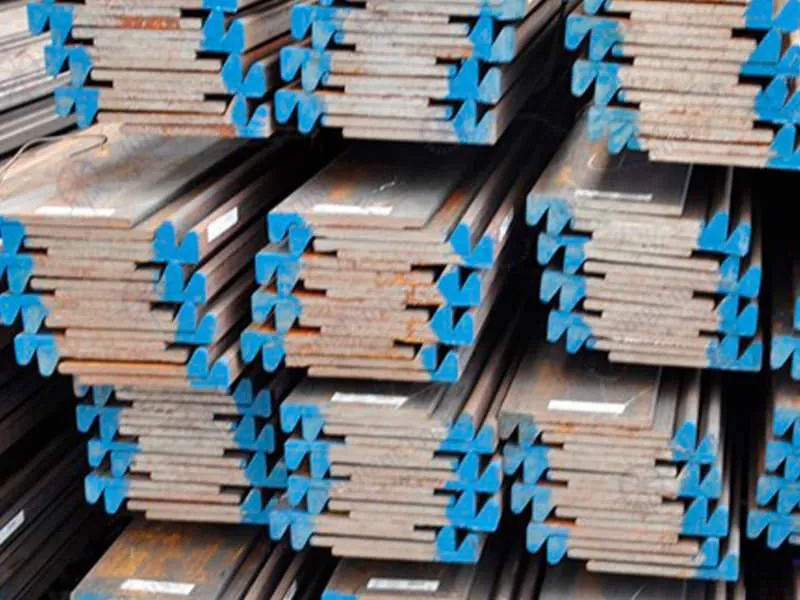
Navigating the Vocabulary of a Basic Shape
The variety of names reflects the product’s long history and wide use across different trades and countries. Understanding these synonyms is part of professional procurement.
First, let’s categorize the alternative names by their origin.
- Descriptive Technical Names: These names focus on the geometry.
- General Industry Slang: These are shortened, informal terms used on shop floors and in quick conversations.
- "Flat": This is the most common shorthand. A fabricator might say, "We need more 1-inch flat." They mean flat bar1.
- "Strip": This term is sometimes used, especially for thinner and/or narrower flat bar1s. The line between a "flat bar1" and a "strip5" can be blurry, but "strip5" often implies a product closer to coiled sheet in terms of thinness.
- Material-Specific Names: These names include the type of steel.
- Mild Steel Flat (MS Flat): Very common in Asia and the Middle East. "MS" stands for "Mild Steel," a low-carbon steel with good weldability.
- Carbon Steel Flat Bar: Specifies the material more precisely than "mild steel."
- HR Flat Bar: "HR" stands for "Hot-Rolled," specifying the manufacturing process.
Second, the name can hint at the standard or measurement system. In countries using the imperial system, you will hear sizes in inches: "1/4 x 2 flat bar1" means a bar 1/4-inch thick and 2-inches wide. In metric countries, sizes are in millimeters: "10×100 flat." The name "flat bar1" is universal, but the dimensions following it tell you the measurement system.
Why does this matter for an international supplier like us? Clarity prevents costly errors. A client from Myanmar might send an inquiry for "MS flats." A client from Mexico might ask for "barra plana6" (Spanish for flat bar1). A client from the USA might use the term "rectangular bar2r stock](https://en.wikipedia.org/wiki/Bar_stock)[^3]." We need to understand they are all asking for the same basic product. Our job is to confirm the exact dimensions, grade, and standard.
Here is a guide to translating common names:
| Common Name Used | Typical Context / Region | What to Clarify in Your Inquiry |
|---|---|---|
| Flat Bar | International, technical drawings, modern procurement. | The standard term. Always specify Thickness x Width x Length and Grade. |
| MS Flat | Common in India, Middle East, Southeast Asia. | Confirm the grade is indeed mild steel (e.g., A36, S235JR) and not a higher carbon steel. |
| Rectangular Bar | More formal engineering or machining contexts. | Same as flat bar1. May imply tighter tolerances. |
| Bar Stock | Machine shops, fabrication workshops. | You must specify "flat" shape and dimensions, as it could also mean round or square bar. |
| Strip | For thinner gauges, sometimes in coil form. | Confirm if it is supplied in straight lengths or coils, and the exact thickness/width. |
| Flats | Shortened slang on-site or in quick quotes. | Never assume the size. Always request a full written specification. |
A real-world example: We received an email from a new wholesaler in Thailand. The subject was "Quotation for MS Flats." The body just listed sizes: "25×3, 40×5, 50×6." This is a common but incomplete inquiry. Our sales rep responded quickly (within two hours, as is our standard) asking for:
- Required length (6m standard or cut?).
- Preferred grade (Did they want standard A36 or a specific Thai standard?).
- Quantity in metric tons for each size.
- Surface condition (black hot-rolled or cleaned?).
This proactive clarification prevents misunderstandings. It shows professionalism and saves time for both parties. It is the same approach we used with Gulf Metal Solutions, building a relationship based on clear communication and reliable delivery. Knowing that "flat bar1" has many names is the first step to clear communication in the global steel market.
Conclusion
Choosing between HP bulb flat and flat bar depends on your need for structural efficiency versus simplicity and cost. Always base your decision on the engineering requirements of the application.
-
Understanding the definition of a flat bar is crucial for accurate communication in the steel industry. ↩ ↩ ↩ ↩ ↩ ↩ ↩ ↩ ↩ ↩ ↩
-
Exploring this distinction can help clarify product specifications and avoid order errors. ↩ ↩
-
Learning about bar stock can enhance your knowledge of metal types and their applications. ↩ ↩
-
Discovering the properties of mild steel flat can inform your material choices for projects. ↩
-
Clarifying this difference can help in selecting the right material for specific applications. ↩ ↩
-
Translating industry terms like barra plana can improve communication with international clients. ↩