
A ship’s frame fails not from a single storm, but from the slow fatigue of uncertified materials. I’ve seen projects delayed for months because the bulb flats arrived without the right paperwork. In marine construction, the certificate is your first line of defense.
Certification for bulb flat steel is a non-negotiable requirement. It provides documented proof that the material meets specific chemical, mechanical, and dimensional standards set by classification societies like ABS, LR, or DNV. This ensures the structural integrity, safety, and regulatory compliance of the ship’s framing system.
%[Official mill test certificate next to a stack of bulb flat steel](https://cnmarinesteel.com/wp-content/uploads/2025/11/Flat-steel-ball-27.webp”Bulb Flat Steel Mill Test Certificate")

Without a proper certificate, a bulb flat is just a piece of shaped metal. You cannot prove its strength, its toughness, or even its origin. For shipyards, contractors, and inspectors, this uncertainty is a major risk. Let’s explore why this specific profile demands such rigorous documentation.
What is a flat bar1 used for?
In general engineering, a flat bar1 is a versatile basic shape. But in the marine world, its use is highly specialized and critical. Using the wrong type of flat bar1 in a ship can compromise the entire hull’s stiffness.
A flat bar1 is a long, rectangular strip of steel. In marine applications, it is primarily used for secondary stiffening2. You will find it as stiffeners behind bulkheads, as brackets (knees) to connect structural members, and for building small fabrications like ladders, platforms, and handrails onboard vessels.
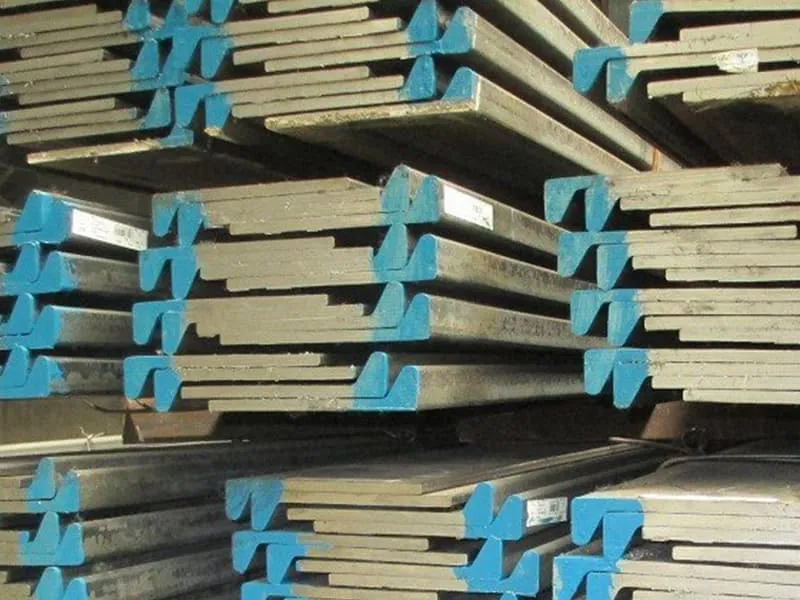
The Critical Role of Flat Bars in Marine Structures
While plates form the skin of a ship, and bulb flat3s form the primary skeleton, flat bar1s are the connective tissue and reinforcement. Their role is often underestimated, but their failure can lead to localized collapse, noise, vibration, and accelerated corrosion.
Primary Marine Applications:
- Secondary Stiffening: This is the most common use. Large areas of steel plate (like bulkheads and decks) are prone to flexing and vibrating under load. To prevent this, a grid of stiffeners is welded to the back of the plate. For many non-critical areas or smaller vessels, flat bar1s serve as these stiffeners. They are welded perpendicular to the plate, creating a "T" section that dramatically increases bending resistance.
- Brackets and Knees: Ships are full of corners and intersections where beams, frames, and bulkheads meet. A flat bar1, cut and bent to the correct angle, is used as a gusset or bracket to reinforce these joints. These brackets transfer loads and prevent stress concentration at the welds.
- Non-Structural Fabrications: A vast amount of flat bar1 is used for outfitting. This includes:
- Safety and Access: Handrails, ladder rungs, step treads, and platform edges.
- Support Systems: Clamps for piping, brackets for cable trays, and supports for equipment foundations.
- Finishing Trim: Edge trim for doors, hatches, and wall panels.
Why Certification Still Matters for Flat Bars:
You might think, "It’s just a handrail bracket, does it need a class certificate?" The answer is often yes, and here’s why:
- Material Compatibility: Even a non-structural flat bar1 welded to the hull becomes part of the structure. If it is made from a cheap, non-weldable steel, the weld can crack. This crack can then propagate into the primary structure. Certified material ensures weldability and corrosion compatibility4.
- Regulatory Compliance: Classification society rules (like SOLAS – Safety of Life at Sea) often specify that all permanent steelwork on a vessel must be made from approved marine-grade material5. This includes outfitting items. During a survey, an inspector can question uncertified steel anywhere on the ship.
- Traceability and Quality: A certified flat bar1 comes with a known chemical composition. This is important for predicting its behavior in a fire (for safety equipment) and for ensuring it has adequate toughness so it doesn’t shatter upon impact.
The Distinction from Bulb Flat:
It is crucial to understand the difference. A flat bar1 is a simple rectangle. A bulb flat3 is a specialized profile with a bulb at one edge. They are not interchangeable.
- Flat Bar: Used for lighter-duty stiffening and general fabrication. Less efficient in bending resistance per unit weight.
- Bulb Flat: Used for primary framing—the ship’s ribs (frames) and longitudinal stiffeners. The bulb adds mass at the edge, making it far more efficient at resisting bending, which is the primary load on a ship’s frame.
Therefore, when sourcing flat bar1s, you must still specify the correct marine grade (e.g., AH, DH) and require the appropriate mill certificate. This avoids the risk of contaminating your project with sub-standard material that could cause problems during construction or, worse, during the vessel’s operational life.
What is flat steel1 used for?
The term "flat steel1" is broad. It can refer to sheet, plate, or flat bar. In a marine procurement2 context, when we talk about "flat steel1," we are often distinguishing it from sections like angles or beams. Its primary use is for creating large, continuous surfaces and for cutting into specific components.
Flat steel, in the forms of plate and flat bar, is used to construct the main body and internal structure of a ship. Plates form the hull, decks, and bulkheads—the watertight envelope3. Flat bars cut from plates are used for stiffeners, brackets, and other fabricated parts that support this structure.
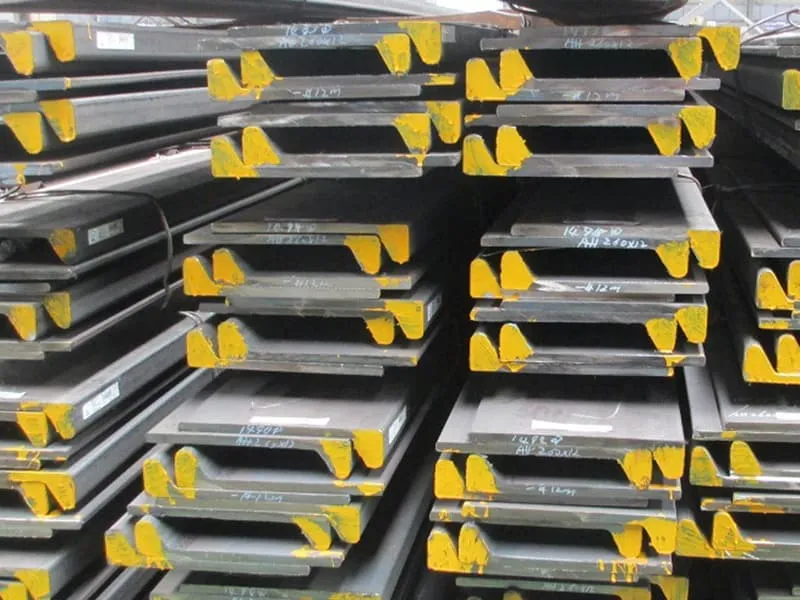
The Backbone of the Vessel: Differentiating Plate, Flat Bar, and Their Certified Uses
"Flat steel" is the raw canvas of shipbuilding4. Its use is everywhere, but the specific type, grade, and certification5 change based on its location and function. Confusing these can lead to using an over-specified (expensive) material in one place and an under-specified (risky) material in another.
Categorizing Flat Steel in Marine Construction:
We can break down the use of flat steel1 into three main tiers, each with escalating certification5 and performance requirements.
| Tier | Product Form | Primary Marine Use | Typical Grade & Certification Need | Why Certification is Critical |
|---|---|---|---|---|
| Tier 1: Primary Structure | Thick Plate (e.g., 15-50mm) | Hull plating, inner bottom, strength deck, transverse bulkheads. | High-grade (e.g., DH36, EH36). Mandatory Class Certificate. | These are load-bearing, watertight structures. Failure means flooding or hull break-up. Certification verifies strength, toughness, and weld integrity. |
| Tier 2: Primary Framing | Bulb Flat, Angle Bar | Frames, longitudinals, girders—the skeleton that supports the plating. | Specific grades (A, B, D, AH, DH). Mandatory Class Certificate. | These members carry bending and compressive loads. They prevent buckling of the hull plating. Certified properties are essential for structural calculations. |
| Tier 3: Secondary & Outfitting | Thin Plate, Flat Bar | Non-watertight bulkheads, tank tops, stiffeners, brackets, platforms, handrails. | Lower grades (A, B) may be acceptable in some areas, but often still require mill certification5 to a standard. | Ensures weldability, material compatibility, and general quality. Prevents use of unknown, potentially brittle steel that could fail in a secondary role and affect primary structure. |
The Journey of Flat Steel in a Shipyard:
- Storage and Conditioning: Certified plates and flat sections arrive with their MTCs6. The yard’s quality department checks the certificates against the purchase order before the material is even unloaded.
- Cutting and Shaping: Flat plate is cut using CNC plasma7 or oxy-fuel cutters into the precise shapes needed for hull blocks. Flat bar is cut to length for stiffeners. The certification5 follows the material through this process via heat or lot number traceability.
- Forming: Plates are pressed or rolled into curved hull sections. Flat bars might be bent into brackets. The certification5 assures the steel has the ductility to undergo this forming without cracking.
- Assembly and Welding: Components are assembled into blocks. Here, the certification5 of both the plate and the attaching stiffener (flat bar or bulb flat) is crucial. It confirms they are compatible for welding, ensuring strong, sound joints.
- Inspection and Survey: At each stage, surveyors from the classification society can request to see the MTCs6 for the steel used in the block. No certificate often means a work stoppage until the material is verified or replaced.
The Cost of Uncertified "Flat Steel":
A supplier might offer cheaper "flat steel1" without full certification5. The apparent savings are an illusion.
- Risk of Rejection: The shipyard’s QC or the class surveyor can reject the entire batch, causing massive delays.
- Testing Costs: You may be forced to pay for retrospective testing of the material, which is more expensive and disruptive than having the proper MTC upfront.
- Liability: If a failure occurs and is traced back to uncertified material, the legal and insurance liabilities are enormous.
For rational buyers like our client in Saudi Arabia, the demand for "SGS inspection support8" is a direct reflection of this understanding. They don’t just want a certificate; they want independent verification that the flat steel1 they receive—whether plate or bar—matches the certification5 and the project specification exactly.
Which is better, 500D or 550D steel?
This isn’t a simple question of "better." It’s a question of which one is correct for the specific design requirement. 500D and 550D refer to minimum yield strength1 in MPa. Choosing the wrong one can lead to an overweight ship or an under-strength structure.
Neither 500D nor 550D steel is universally "better." 500D has a minimum yield strength1 of 500 MPa, while 550D has 550 MPa. 550D is stronger, allowing for lighter structures, but it is typically more expensive and may have slightly different weldability2 requirements. The choice is dictated by the structural design calculations and classification society rules for the vessel.
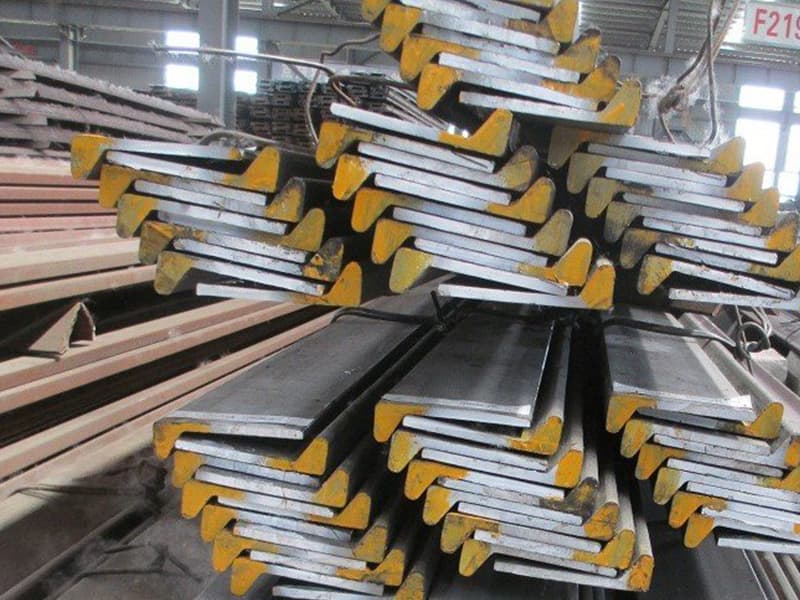
Selecting High-Strength Steel: A Balanced Analysis of 500D vs. 550D
The "D" in 500D/550D often denotes a specific grade within a classification society’s rules, like LR or DNV, indicating a high-strength steel3 with verified impact toughness. The choice between them is a classic engineering trade-off between weight, cost, and performance. Let’s analyze the factors that guide this decision.
Understanding the "D" Grade in Marine Context:
First, we must clarify the naming. In systems like Lloyd’s Register, grades are often designated by yield strength and a quality suffix:
- 500D: Means a minimum yield strength1 of 500 N/mm² (MPa) with "D" quality impact toughness (tested at -20°C).
- 550D: Means a minimum yield strength1 of 550 N/mm² (MPa) with "D" quality impact toughness.
The "D" toughness is a key part of the specification. You could also have 500A, 500B, etc., with different toughness levels. For primary structure, "D" or higher ("E", "F") is common.
Comparative Analysis: 500D vs. 550D
| Parameter | 500D Steel | 550D Steel | Implication for Choice |
|---|---|---|---|
| Yield Strength | 500 MPa | 550 MPa | 550D is ~10% stronger. For the same load, a 550D member can be thinner/lighter. |
| Weight Savings | Baseline | Potential 5-10% weight saving in structural members. | Critical for high-speed vessels, ferries, or the upper decks of offshore platforms where reducing topside weight is valuable. |
| Material Cost | Baseline | Typically 5-15% more expensive per ton. The premium varies with market and mill. | Higher upfront material cost. The business case depends on whether the weight saving translates to operational savings (more cargo, less fuel). |
| Weldability | Generally good for its strength level. Carbon Equivalent (CE)4 is controlled. | May have a higher Carbon Equivalent (CE)4 due to alloying for strength. This can require stricter welding procedures (pre-heat, specific consumables). | Increases fabrication complexity and cost. Requires more skilled welders and procedure qualification. |
| Availability | Very common for high-strength applications. Widely produced. | Less common than 500D. May have longer lead times or require sourcing from specific mills. | Impacts project scheduling and supplier options. |
| Design Flexibility | Standard choice for many high-strength requirements. | Allows for more slender, optimized designs where weight is a primary constraint. | Used in advanced designs for naval vessels, advanced offshore structures5, or specific areas of large container ships. |
Decision Framework for Shipbuilders and Designers:
The choice is not arbitrary. It follows a calculated process:
- Structural Scantling Calculation: Naval architects use software and classification rules to calculate the required thickness of plating and the section modulus of stiffeners/frames. These calculations use the material’s yield strength as a key input. For a given design load, using 550D will result in a smaller required thickness or section size than 500D.
- Weight Optimization Study: The design team runs scenarios. Does the weight saving from using 550D allow them to carry more cargo? Does it improve the vessel’s stability or speed? They compare the value of this weight saving to the increased cost of the steel and potential welding costs.
- Fabrication Capability Assessment: Can the shipyard weld 550D reliably? Do they have the procedures and qualified personnel? If not, the risk of welding defects might outweigh the benefit of weight saving.
- Classification Society Approval: The chosen grade (500D or 550D) must be submitted to and approved by the vessel’s classification society. The society’s rules will have specific requirements for each grade.
Practical Recommendation:
For most commercial shipbuilding (bulk carriers, tankers), 500D is the workhorse high-strength grade. It offers an excellent balance of strength, cost, and fabricability. 550D is a specialist grade. It is "better" only when the design is explicitly driven by extreme weight reduction and the shipyard is equipped to handle it. The certification for both is equally critical—it’s the proof that the steel delivered actually meets the 500 or 550 MPa yield strength promise, along with the required "D" toughness.
What is the strength of a flat bar steel?
The strength is not inherent to the shape. A flat bar can be made from weak, mild steel or very high-strength alloy steel. Its strength is defined by the material grade it is made from, not by the fact that it is a "flat bar."
The strength of a flat bar steel depends entirely on its material grade. For marine applications, common grades range from normal strength (e.g., Grade A, 235 MPa yield) to high strength (e.g., AH36, 355 MPa yield). The strength values are verified by tensile testing documented in the mill certificate, not assumed from the bar’s shape.
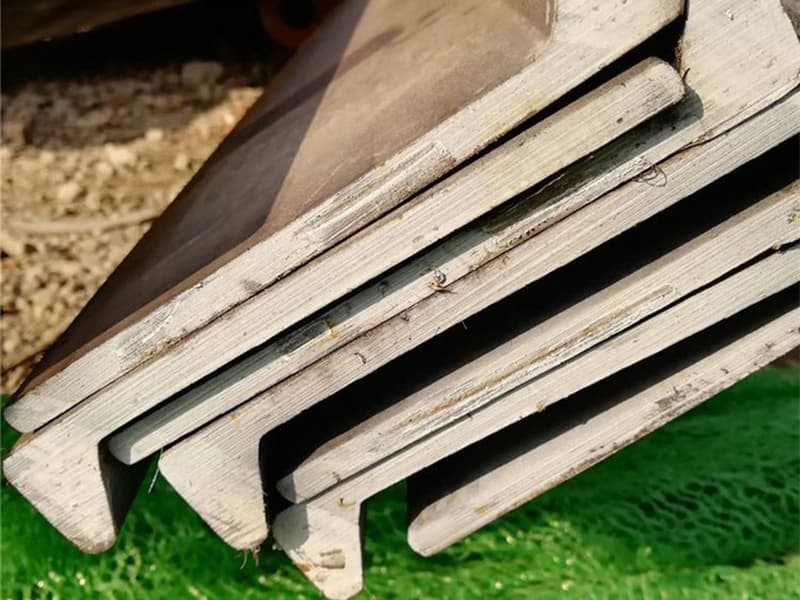
Demystifying Strength: Grade, Shape, and Certification
A common misconception is that a thicker bar is automatically "stronger." While a thicker bar has a larger cross-sectional area and can carry more total load, the intrinsic strength of the material is a separate property. This distinction is fundamental for safe and efficient design.
Defining "Strength": Two Key Properties
When engineers ask for the "strength" of a flat bar, they need two specific numbers from a tensile test:
- Yield Strength (ReH): This is the most important for structural design. It is the stress at which the material begins to deform permanently. Designing within the yield strength ensures the bar returns to its original shape after the load is removed. For marine steels, this is the number in the grade name (e.g., 355 in AH36).
- Tensile Strength (Rm): This is the maximum stress the material can withstand before it fractures. The ratio between tensile and yield strength indicates the material’s reserve capacity and ductility.
How Shape Influences Structural Performance:
The flat bar’s geometry determines how it uses the material’s inherent strength.
- Bending Strength: When used as a stiffener, a flat bar is loaded in bending. Its resistance to bending is called the section modulus. For a flat bar, the section modulus is calculated as (Width x Thickness²) / 6. Notice that the thickness is squared. This means doubling the thickness makes the bar four times stronger in bending. This is why choosing the right thickness is often more effective than choosing a higher-grade material for stiffener applications.
- Buckling Resistance: A long, slender flat bar under compression can buckle sideways. Its resistance to buckling depends on its moment of inertia and its effective length. A wider bar will resist buckling better than a narrow bar of the same cross-sectional area.
The Interplay of Grade and Certification in Sourcing:
When you procure flat bars, you are responsible for specifying the required strength. This is done through the grade.
Example Scenario:
You need flat bar stiffeners for a bulkhead.
- Option 1: You order "10mm x 100mm flat bar." The supplier sends A36 mild steel (Yield 250 MPa). No certification is provided.
- Option 2: You order "10mm x 100mm flat bar, Grade AH36, with MTC." The supplier sends steel with a guaranteed Yield Strength of 355 MPa, proven by a test certificate.
Option 2 is over 40% stronger in material yield strength. For the same size bar, it can safely carry a much higher load. Or, to carry the same load, you could potentially use a smaller bar of AH36, saving weight.
Why You Cannot Guess Strength Without Certification:
- Visual Deception: Two identical-looking flat bars can have vastly different strengths. One could be made from recycled scrap with unknown properties; the other could be a controlled marine grade.
- The "Mild Steel" Trap: The term "mild steel" is not a formal specification. It can cover a wide range of properties. A mill certificate replaces this vague term with hard numbers.
- Heat Treatment Effect: Some flat bars might be supplied in a hardened condition for wear resistance (e.g., for grader blades). This steel would be very hard but also brittle, making it completely unsuitable for a structural weldment on a ship.
Conclusion for Buyers:
Never ask a supplier, "What is the strength of your flat bar?" Instead, tell them: "I require flat bar to Grade [e.g., DH36], with full Mill Test Certification confirming yield strength, tensile strength, and chemical composition." This shifts the responsibility onto the supplier to provide material that meets a defined standard. The certificate is your legal and technical proof of strength. It transforms a generic commodity into a certified component, ensuring it will perform as required in your marine structure.
Conclusion
Certification is the essential thread of trust and traceability in marine steel supply. For bulb flats and all structural components, it is the documented guarantee of safety, quality, and regulatory compliance that protects your project from start to finish.
-
Understanding minimum yield strength is crucial for selecting the right steel for structural integrity. ↩ ↩ ↩ ↩ ↩ ↩ ↩ ↩ ↩ ↩ ↩ ↩ ↩ ↩ ↩ ↩ ↩ ↩ ↩ ↩ ↩ ↩
-
Weldability is key in fabrication; knowing the differences can help avoid costly welding issues. ↩ ↩ ↩
-
High-strength steel offers advantages in performance and efficiency, making it a key material in shipbuilding. ↩ ↩ ↩ ↩
-
Understanding CE helps in assessing the welding and fabrication challenges of different steel grades. ↩ ↩ ↩ ↩
-
Exploring advanced structures can provide insights into innovative design and engineering practices. ↩ ↩ ↩ ↩ ↩ ↩ ↩ ↩ ↩ ↩
-
Learn about MTCs and their significance in verifying material quality and compliance in construction projects. ↩ ↩
-
Explore the technology behind CNC plasma cutting and its advantages in precision metal fabrication. ↩
-
Find out how SGS inspection support ensures the quality and compliance of steel materials in construction. ↩