
Feeling overwhelmed by a new marine steel project? You’re not alone. Missing one critical step in planning can lead to months of delays, budget overruns, and quality failures that put the entire vessel at risk.
A marine steel project planning checklist is a sequential guide to ensure you select the right material, source it correctly, and manage delivery. It covers everything from defining technical requirements and choosing the correct steel grades to supplier qualification, logistics, and final inspection.
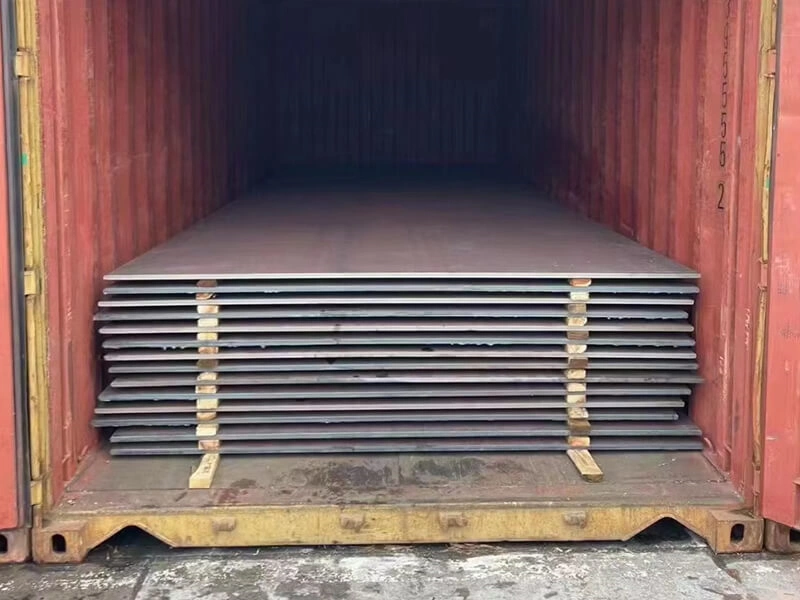
This checklist is your roadmap. It turns a complex process into manageable steps. Before we dive into the list itself, we need a solid foundation. The first step of any checklist is understanding exactly what you are buying. Let’s start by clearly defining the core material.
What is marine steel1?
Many buyers think "marine steel1" is just any steel that goes on a ship. This vague definition is the first and most common planning mistake. It leads to ordering the wrong material entirely.
Marine steel is a specialized category of structural steel certified for shipbuilding. It is designed with specific chemical compositions and mechanical properties to withstand harsh ocean environments, including high strength, good weldability, and guaranteed toughness at low temperatures.

Understanding this definition is the absolute first box to check on your project plan. Let’s break down what makes marine steel1 unique and why each characteristic is non-negotiable.
The Defining Characteristics of True Marine Steel
Marine steel is not a single product. It is a family of products governed by strict rules. Your checklist must verify these characteristics.
1. Certification by Classification Societies2
This is the most important point. Marine steel is not marine steel1 without proper certification.
- The Role of Class Societies: Organizations like ABS (American Bureau of Shipping), LR (Lloyd’s Register), DNV (Det Norske Veritas), and others set the rules for ship construction.
- The Mill Approval: Steel mills must be approved by these societies to produce plates and sections that carry their grade stamp (e.g., ABS AH36). This approval involves rigorous audits of the mill’s production and quality control processes.
- Your Checklist Action: The first question for any supplier must be: "Is this steel produced at a mill approved by [Your Required Class Society]?" The Mill Test Certificate (MTC)3 is your proof.
2. Controlled Chemical Composition4 for Weldability and Toughness
The chemical "recipe" is optimized for the marine environment.
- Carbon Equivalent (CE): This calculated value predicts how hard the steel will become in the heat-affected zone after welding. A low CE means better weldability and lower risk of cracking. Marine grades have strict CE limits.
- Low Sulfur and Phosphorus: These elements can cause brittleness. Marine steels keep them at very low levels.
- Alloying for Toughness: Elements like Manganese, Nickel, and Niobium are added to refine the grain structure, ensuring the steel remains tough (not brittle) even in icy water.
3. Guaranteed Mechanical Properties5
The MTC will list tested values that must meet minimum standards.
- Yield Strength6 (e.g., 355 MPa for Grade 36): The stress at which the steel begins to deform permanently.
- Tensile Strength: The maximum stress the steel can withstand before breaking.
- Elongation: A measure of ductility—how much it can stretch before breaking.
- Impact Toughness (Charpy V-Notch)7: This is critical. The test measures the energy absorbed by the steel at a specific low temperature (e.g., -20°C for DH grade, -40°C for EH grade). This guarantees resistance to brittle fracture.
4. Specific Product Forms for Shipbuilding
Marine steel comes in forms designed for hull construction:
- Marine Steel Plate8: The primary material for the hull shell, decks, and bulkheads.
- Marine Angle Steel9 (L-shaped): Used for brackets, frames, and stiffeners.
- Bulb Flat Steel: A specialized bar with a bulb at one end, used as a stiffener for plates. It is very efficient and common in shipbuilding.
- Other Sections: Channels, tees, and custom profiles.
Here is a checklist table for the "Define Material" step:
| Checkpoint | Question to Ask | Documentation Required | Common Mistake to Avoid |
|---|---|---|---|
| Grade Specification | Is the exact class grade defined? (e.g., ABS EH36) | Project technical specifications from the naval architect. | Using generic terms like "shipbuilding steel" or "Grade 36" without the prefix (A, D, E). |
| Certification | Is the mill approved by the required classification society? | Valid mill approval certificate from the class society. | Assuming all steel from a country is certified. Certification is mill-specific, not country-specific. |
| Key Property Verification | Are the Yield Strength6, Toughness, and CE values suitable for my service temperature and welding process? | Detailed Mill Test Certificate (MTC)3 for the proposed supply. | Only checking the grade name and not the actual test values on the MTC. |
| Product Form | Have we listed all required shapes? (Plates, Angles, Bulb Flats) | Complete Bill of Materials (BOM) with shapes and dimensions. | Forgetting to order ancillary sections like angles, leading to last-minute scrambling. |
Starting your project with this clear definition prevents foundational errors. You cannot plan correctly if you don’t know what you are planning to buy. Once you know what marine steel1 is, the next step on the checklist is choosing the right subtype for specific applications, especially for corrosion resistance10.
Is 304 or 316 better for saltwater?
Your checklist includes items like railings, fasteners, or piping. You know you need stainless steel. The choice between 304 and 316 seems small, but in saltwater, it’s the difference between long life and premature failure.
For saltwater (marine) applications, 316 stainless steel1 is definitively better than 304. The key reason is the addition of 2-3% Molybdenum in 316, which dramatically increases its resistance to pitting and crevice corrosion2 caused by chloride ions3 in seawater.
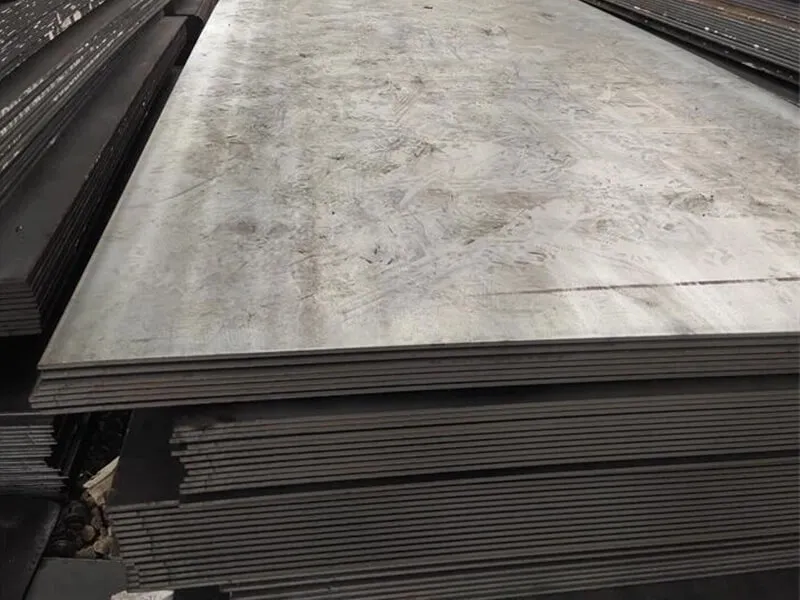
This is a critical checkpoint. Choosing 304 to save cost in a marine environment is a classic planning error that leads to rust, leaks, and expensive replacements. Let’s examine why the molybdenum4 makes such a difference and when this rule applies.
The Decisive Role of Molybdenum in Marine Environments
The marine atmosphere and seawater are among the most corrosive natural environments for metals. The choice between 304 and 316 must be informed by science, not just price.
1. The Corrosion Mechanism: Chloride Attack
Stainless steel resists corrosion because of a thin, invisible layer of chromium oxide on its surface. This "passive" layer protects the iron underneath.
- 304’s Weakness: Chloride ions in saltwater are aggressive. They can locally break down the chromium oxide layer on 304 stainless. Once broken, the small exposed area becomes an anode, and the large passive surface becomes a cathode. This creates a strong galvanic cell that causes rapid, localized pitting corrosion5.
- 316’s Defense: The molybdenum4 in 316 alloy strengthens the passive layer. It makes it much more stable and resistant to chloride attack. Molybdenum also helps to repassivate (reform the layer) in damaged areas more quickly.
2. Understanding the Applications: Where 316 is Non-Negotiable
Your checklist should flag any component exposed to salt for 316 specification.
- Exposed Deck Hardware: Cleats, bollards, railings, ladder frames.
- Marine Fittings: Hatches, windows, door frames.
- Piping Systems: Seawater intake lines, cooling lines, ballast system components, sink drains.
- Splash Zone Components: Any item constantly wet with salt spray.
3. The Limits of 316 and Planning for Harsher Conditions
Checkpoint: Even 316 has limits. Your checklist must account for severity.
- Crevice Corrosion: In tight, stagnant spaces (under washers, inside threaded fittings), even 316 can corrode. Good design (avoiding crevices) and maintenance are part of the plan.
- Warm, Stagnant Seawater: In tropical marinas or slow-moving water, corrosion rates increase. For critical applications here, consider 316L6 (low carbon version, better for welding) or advanced grades like Duplex 22057.
- Fully Submerged, High-Stress Applications: For propeller shafts or underwater fittings, even stronger materials may be needed.
Checklist Guidance for Stainless Steel Selection:
| Application Environment | Recommended Grade | Key Reason | Planning Action |
|---|---|---|---|
| Inland, Dry Interior | 304 | Adequate, cost-effective. | Specify 304 only for non-critical, dry interior trim. |
| Coastal / General Marine Exposure | 316 / 316L6 | Essential for chloride resistance. | Default choice for all exterior marine hardware. |
| High Splash, Warm Waters, Crevices | 316L6 or Duplex 22057 | Enhanced resistance to crevice & pitting. | Consult with materials engineer for critical components. |
| Fabricated/Welded Components | 316L6 | "L" means Low carbon, prevents weld decay. | Specify "L" grade for any item that will be welded. |
By including this specific material selection checkpoint, you prevent a very visible and costly form of failure. The right stainless steel choice ensures the vessel’s fittings and systems last as long as the hull itself. Next, your checklist needs to address a more fundamental strength question for the main structure.
Which is stronger, MS or SS?
For the main hull, you’re deciding between carbon steel (often called Mild Steel1 or MS) and stainless steel (SS). A common misconception is that "stainless" is automatically stronger. This mistake can distort your entire project’s budget and design.
For structural applications like a ship’s hull, carbon/mild steel (MS) is stronger in terms of yield and tensile strength for a given thickness and is vastly more cost-effective. Stainless steel (SS) is not typically chosen for its strength but for its superior corrosion resistance2, which comes at a much higher material cost.
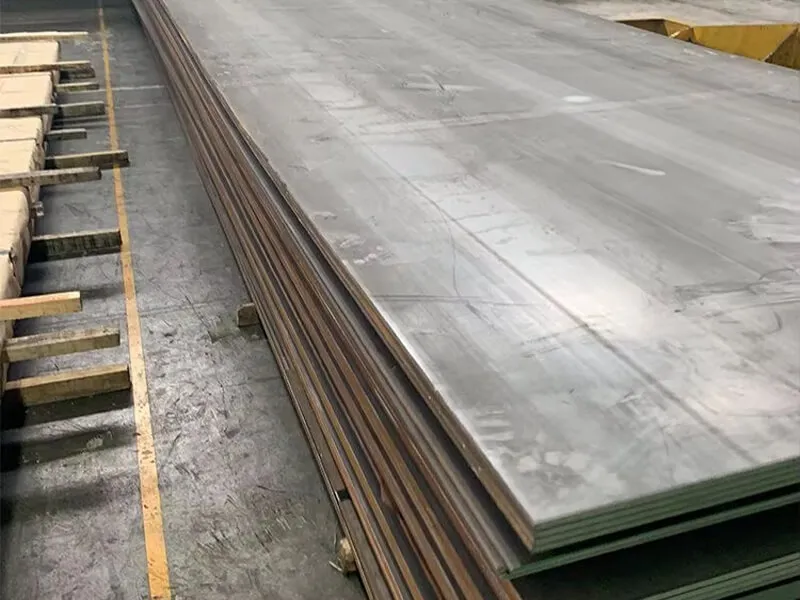
This is a crucial planning decision. Using stainless steel for primary hull structure is generally not feasible for commercial ships due to cost. Your checklist must guide you to use the right material for the right job.
Comparing Strength and Economics for Hull Materials
Strength is not a single number. We must compare it against weight, cost, and the need for corrosion protection.
1. Strength-to-Weight and Strength-to-Cost Ratios
- Yield Strength Comparison:
- Standard Marine MS (AH36): Minimum Yield Strength = 355 MPa.
- Common Austenitic SS3 (304/316): Minimum Yield Strength = 205-210 MPa (Annealed condition).
- Result: To achieve the same load-bearing capacity, you would need a much thicker section of stainless steel compared to marine-grade carbon steel. This adds weight and reduces cargo capacity.
- Cost Comparison:
- The price of 304/316 stainless steel plate is typically 3 to 5 times higher per ton than AH36 marine plate.
- Because you might need more of it (thicker sections), the total material cost for a stainless hull could be 10-15 times that of a carbon steel hull. This is economically unviable for cargo vessels.
2. The True Role of Each Material in Shipbuilding
Your checklist should allocate materials based on their primary advantage:
- Carbon/Mild Steel1 (MS – AH/DH/EH grades): Primary Material for Hull Structure. Its advantages are high strength, good toughness, excellent weldability, and low cost. Its disadvantage is that it rusts easily, requiring a robust system of protective coatings (paint) and cathodic protection (sacrificial anodes).
- Stainless Steel4 (SS – 316/L): Specialist Material for Corrosion Resistance. Used selectively where corrosion is a major issue and coating maintenance is difficult: seawater piping, deck hardware, tank linings for certain chemicals, and sanitary systems.
3. The "Strength" of Stainless is in Corrosion Resistance, Not Load-Bearing
The "strength" of stainless steel for marine projects is its ability to maintain integrity in corrosive environments without needing paint. For a seawater pump impeller, this corrosion resistance2 is its functional strength. For a 300-meter hull girder, the load-bearing strength5 of carbon steel is what matters.
Planning Checklist Decision Matrix:
| Component | Primary Requirement | Recommended Material | Rationale |
|---|---|---|---|
| Hull Plating, Decks, Frames | High Load-Bearing Strength, Toughness, Weldability, Cost Control. | Marine Carbon Steel (AH36/DH36) | Optimized for primary structural function. Corrosion is managed by coatings. |
| Deck Railings, Ladders | Corrosion Resistance, Aesthetics, Low Maintenance. | Stainless Steel4 316 | Withstands salt spray without constant painting. |
| Seawater Piping | Corrosion Resistance to flowing seawater. | Stainless Steel4 316L or CuNi Alloy | Material must survive constant contact with seawater. |
| Ballast Tanks | Cost, Weldability, Coating Compatibility. | Marine Carbon Steel | Coated internally. Stainless cost is prohibitive for such large volumes. |
This checkpoint prevents a catastrophic misallocation of budget. You invest in high-strength, certified marine carbon steel6 for the hull. You then strategically invest in stainless steel only where its corrosion resistance2 provides essential value. Once you’ve decided on 316 stainless for an application, the next checklist item is specifying the exact variant.
What is the difference between 316 and 316L1 marine steel?
You’ve checked the box for "316 Stainless." But your checklist isn’t done. If the component will be welded, you must specify 316L1. Overlooking the "L" is a subtle but serious error that can lead to weld failure2 in service.
The key difference between 316 and 316L1 stainless steel is the carbon content. 316L1 is the "Low carbon" version, with a maximum of 0.03% carbon, compared to 0.08% max in standard 316. This low carbon content prevents "sensitization3" and subsequent weld decay (intergranular corrosion4) in the heat-affected zone after welding.
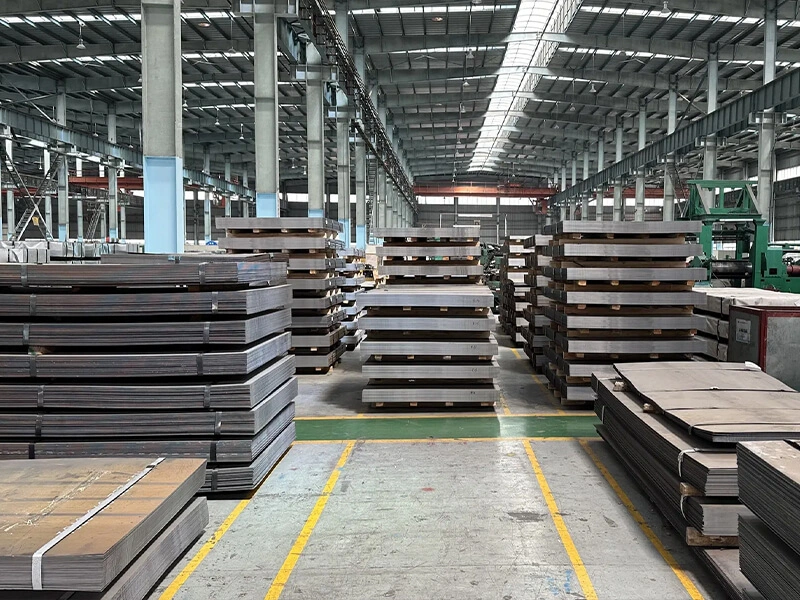
This is a final, detailed checkpoint in material specification. It ensures that the excellent corrosion resistance of 316 is not ruined by the very process used to fabricate it.
Why the "L" Matters: Preserving Corrosion Resistance After Welding
When you weld stainless steel, you subject it to high heat. This heat can change the material’s microstructure in a harmful way if the carbon content is too high.
1. The Problem: Sensitization and Weld Decay
- The Process: When standard 316 (with higher carbon) is heated in the range of 425-850°C during welding, carbon atoms diffuse to the grain boundaries. There, they combine with chromium to form chromium carbides.
- The Consequence: This depletes the chromium in the area immediately adjacent to the grain boundaries. Since chromium is essential for forming the protective passive layer, these chromium-depleted zones become highly susceptible to corrosion. This is called "intergranular corrosion4" or "weld decay." It can cause the metal adjacent to a weld to corrode and crumble over time, even if the weld itself is sound.
2. The Solution: 316L1 (Low Carbon)
- By strictly limiting the carbon content to 0.03% or less, there is simply not enough carbon available to form significant amounts of chromium carbides during welding. The chromium stays in solution, and the corrosion resistance of the heat-affected zone (HAZ) is preserved.
- Rule of Thumb: If the stainless steel component will be welded, you must specify 316L1. For components that are used in the as-supplied condition (like a pre-made bolt or a rolled bar), standard 316 may be acceptable, but 316L1 is often used as the safe default for all marine applications5.
3. Other Considerations: "H" Grades for High Temperature
Note that for high-temperature service6 (not typical for marine), you might see 316H. The "H" denotes higher carbon for improved high-temperature strength. This is the opposite need of marine welding. Your checklist should guard against accidentally specifying an "H" grade for a welded marine part.
Final Material Specification Checklist Table:
| Parameter | Standard 316 | 316L1 ("Marine Grade") | Checklist Directive |
|---|---|---|---|
| Max Carbon Content | 0.08% | 0.03% | For welded parts, verify C ≤ 0.03% on MTC7. |
| Primary Advantage | General corrosion resistance. | Resistance to weld decay. | Default to 316L1 for all fabricated marine components. |
| Typical Marine Use | Non-welded fasteners, some fittings. | Welded railings, piping, fabricated tanks, hull penetrations. | Specify 316L1 on all fabrication drawings8 and POs. |
| Proof in Documentation | MTC7 may show C around 0.05-0.07%. | MTC7 must show C at 0.03% or lower. | Do not accept 316 MTC7 for a 316L1 order. |
Completing this level of detail in your specification is what separates a professional project plan from an amateur one. It shows you understand not just what to buy, but how it will be used and how to preserve its properties during construction. With these fundamental material checkpoints complete, your planning can confidently move to supplier selection, logistics, and quality assurance phases, ensuring every piece of steel that arrives is fit for its purpose.
Conclusion
A thorough marine steel project checklist, starting with precise material definitions and grade selections, is your best defense against delays, cost overruns, and quality failures, ensuring a smooth path from plan to launch.
-
Explore the unique properties of 316L stainless steel, especially its low carbon content, which enhances corrosion resistance. ↩ ↩ ↩ ↩ ↩ ↩ ↩ ↩ ↩ ↩ ↩ ↩ ↩ ↩ ↩ ↩ ↩ ↩ ↩
-
Understanding the causes of weld failure can help you avoid costly mistakes in your projects. ↩ ↩ ↩ ↩ ↩ ↩
-
Learn about sensitization and how it affects the integrity of welded stainless steel components. ↩ ↩ ↩ ↩ ↩
-
Discover effective strategies to prevent intergranular corrosion in welded stainless steel. ↩ ↩ ↩ ↩ ↩ ↩ ↩ ↩
-
Find out which stainless steels are best suited for marine environments to ensure durability and longevity. ↩ ↩ ↩ ↩
-
Gain insights into high-temperature service requirements and how they differ from marine applications. ↩ ↩ ↩ ↩ ↩ ↩ ↩ ↩
-
Understanding MTCs is crucial for verifying the quality and specifications of steel materials. ↩ ↩ ↩ ↩ ↩ ↩ ↩
-
Learn why fabrication drawings are essential for ensuring accurate and compliant construction. ↩ ↩
-
Find out how marine angle steel is used in ship construction for added strength and support. ↩
-
Explore the methods and materials that enhance the corrosion resistance of marine steel. ↩