
You search online for bulb flat steel and get hundreds of supplier listings. Prices vary wildly. How do you find a reliable manufacturer and avoid costly mistakes when you can’t visit the factory?
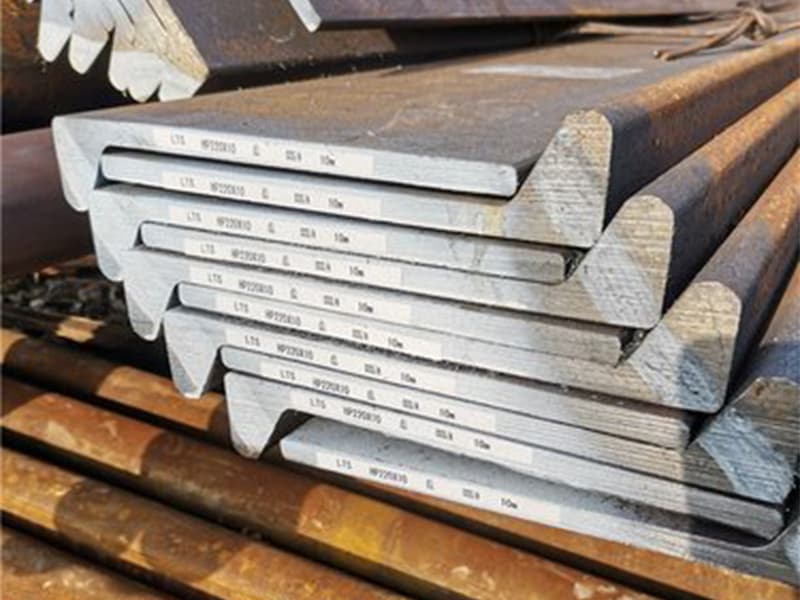
To buy bulb flat steel online from China successfully: verify supplier legitimacy, specify marine-grade certifications (ABS/DNV), insist on third-party inspection (SGS), understand the correct HS code for customs, and clarify all costs (price, freight, duties). Building a relationship with a specialized export agent is more reliable than dealing with unknown traders.
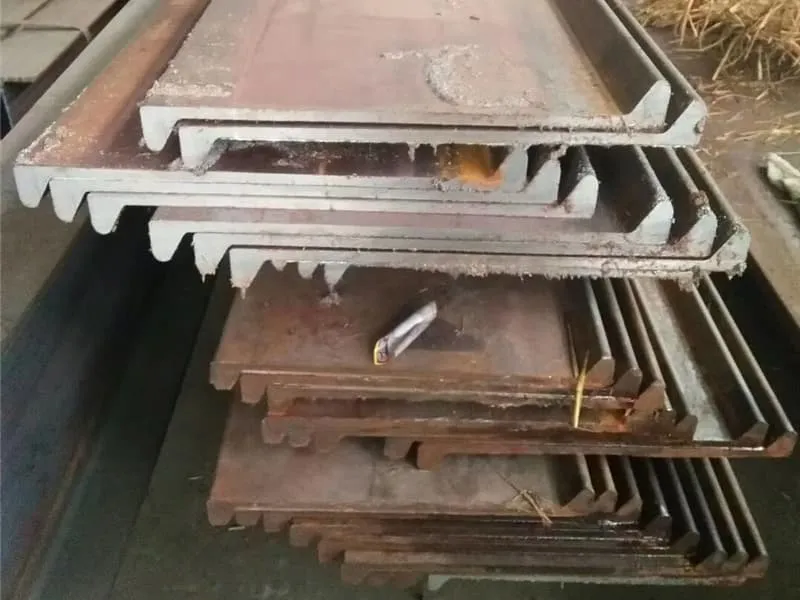
Online procurement offers access and price advantages, but it also hides risks. The process requires careful steps and specific knowledge. I’ll guide you through the critical considerations, starting with the most fundamental question about Chinese steel quality.
Is Chinese steel good quality?
You hear conflicting stories. Some say Chinese steel is inferior, others rely on it for major global projects. The truth is not simple. Quality exists on a wide spectrum, and your job is to find the right tier for your project.
Chinese steel quality ranges from world-class to substandard. It depends entirely on the specific mill, its technology, quality controls, and certifications. For marine applications like bulb flat steel, selecting mills certified by international classification societies (ABS, DNV, LR) guarantees high quality comparable to global standards.
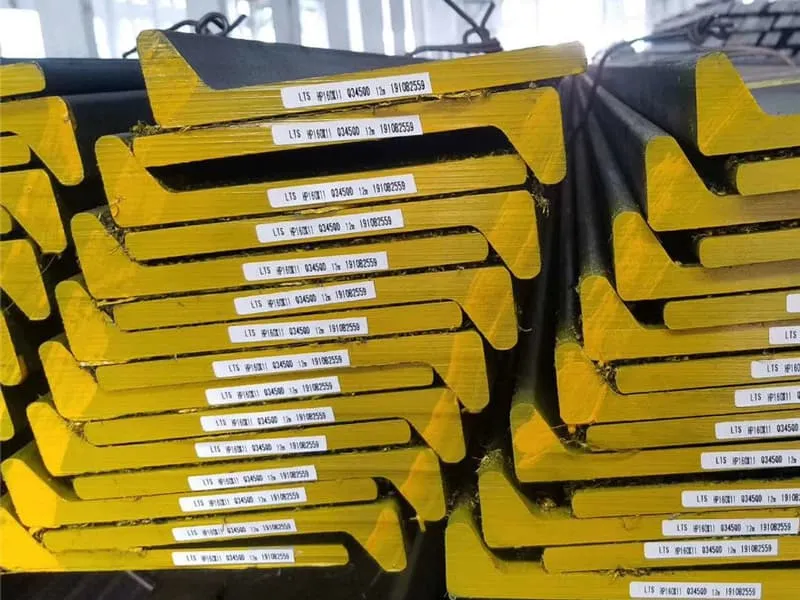
Navigating the Quality Spectrum: From Commodity to Certified
The question "Is Chinese steel good?" is like asking "Are German cars good?" The answer depends on whether you’re looking at a premium sedan or a basic economy model. China produces over half the world’s steel, across all quality levels. Your success depends on navigating this spectrum correctly.
The Three Tiers of Chinese Steel Quality:
-
Tier 1: World-Class, Export-Oriented Mills.
- Who they are: Large, modern, often state-owned or major private mills (e.g., Baowu, Ansteel, Shagang). Many have integrated facilities (iron ore to finished product).
- Quality: They operate advanced equipment, employ strict process control, and hold numerous international certifications (ISO 9001, API, and crucially, approvals from ABS, DNV, Lloyd’s Register, etc.). Their products are used in critical global infrastructure, shipbuilding, and advanced manufacturing.
- How to buy: Usually through their official export departments or authorized agents for large orders. This is the tier that produces true marine-grade bulb flat steel.
-
Tier 2: Competent Domestic/Regional Mills.
- Who they are: Medium-sized mills supplying the vast domestic construction and manufacturing market. They produce to Chinese national standards (GB).
- Quality: Generally good for their intended purpose but may not have consistent chemistry control, advanced rolling technology, or the specific certifications for marine use. Dimensional tolerances and surface finish may be looser.
- Risk: Steel from these mills might be sold as "marine steel" by traders, but it lacks the guaranteed impact toughness and traceability. This leads to the "inconsistent quality" pain point our clients like Gulf Metal Solutions faced.
-
Tier 3: Small, Outdated, or Unregulated Producers.
- Who they are: Smaller, often privately-owned mills using older technology. They focus on low price for the domestic commodity market.
- Quality: Highly variable. May use scrap of unknown origin. Chemical composition and mechanical properties are not reliable. This steel is a major risk for any structural application.
The Role of Certification as Your Filter
For bulb flat steel, you must demand proof of quality. This proof is Classification Society Certification.
- A mill approved by ABS to produce bulb flats means ABS surveyors have audited the mill’s entire process—from melting to testing—and conduct regular checks. Each batch of steel is tested, and a Mill Test Certificate (MTC) is issued.
- This certification is your shortcut to Tier 1 quality. It answers the quality question definitively for your specific order.
Practical Implications for Your Online Search:
When you see an online supplier, ask these questions to assess quality tier:
- "Which specific mill will produce this bulb flat steel? Can you share their ABS/DNV approval certificate?"
- "Can you provide a sample MTC for a previous order of similar material?"
- "Do you offer SGS or BV inspection before shipment?"
A Tier 1 supplier or agent will answer these immediately. A trader selling lower-tier steel will be vague or avoid the question.
This table summarizes the decision path:
| Your Requirement | Acceptable Chinese Quality Tier | Key Evidence to Demand | Risk if Wrong Tier is Used |
|---|---|---|---|
| Marine Shipbuilding (Hull Stiffeners) | Tier 1 Only. | ABS/DNV/LR Mill Approval, Grade-specific MTC (e.g., AH36). | Catastrophic: Brittle fracture, structural failure, failed class survey. |
| General Construction, Non-Critical | Tier 2 (with proper GB standard). | MTC showing compliance with GB/T 1591 (e.g., Q355B). | Higher maintenance, possible early replacement, but not immediately dangerous. |
| Lowest Cost, Non-Structural Use | Tier 3 (if you must). | Essentially no reliable evidence. | High risk of failure, dimensional problems, poor weldability. |
Therefore, Chinese steel can be excellent quality, but you must actively select it. For bulb flat steel, this means ignoring suppliers who cannot prove their connection to Tier 1, certified mills. Your first tip is to use certification as your primary filter.
What is the HS code for bulb flat steel?
You need to calculate import duty and prepare customs documents. Using the wrong HS code causes delays, extra costs, or even seizure of your goods. The code must precisely describe the product.
The correct HS (Harmonized System) code for bulb flat steel is typically 7216.50.00 (within the 6-digit global level). This falls under: "Angles, shapes and sections, of iron or non-alloy steel, not further worked than hot-rolled, hot-drawn or extruded." For alloy steel bulb flats (like AH36), code 7228.70.00 may apply. Always verify with your local customs authority.
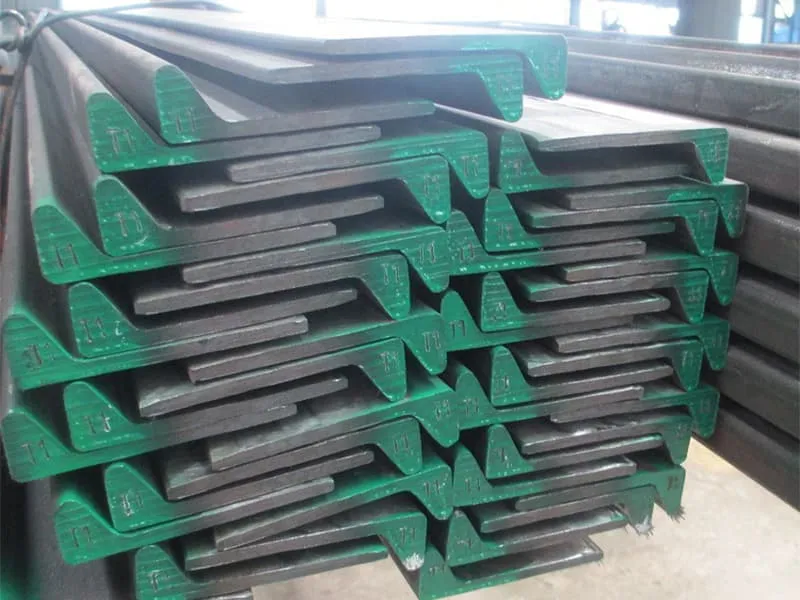
The Language of Global Trade: Why the HS Code Matters
The HS Code is a universal product classification system. It is used by customs authorities in every country to identify products, apply tariffs, and collect trade statistics. Getting it right is a non-negotiable part of international procurement.
Finding the Correct Code: A Step-by-Step Breakdown
The HS code is a 6-digit number agreed internationally. Countries can add extra digits for more detail (e.g., 8-digit or 10-digit codes).
- Identify the Material: Bulb flat is made of steel.
- Identify the Form: It is a "profile," "shape," or "section." It is not a plate, bar, or coil.
- Identify the Process: It is hot-rolled. This is the standard production method.
- Identify the Alloy Status: Is it "non-alloy" (ordinary carbon steel) or "alloy" steel? Marine grades like AH36/DH36 are technically "alloy steel" because they contain specific amounts of manganese and other elements to achieve strength and toughness.
Following this logic:
- Chapter 72: Iron and Steel.
- Heading 72.16: Angles, shapes and sections, of iron or non-alloy steel.
- Subheading 7216.50: Other angles, shapes and sections, not further worked than hot-rolled, hot-drawn or extruded.
- For Alloy Steel: Look under Heading 72.28. Subheading 7228.70 often covers similar hot-rolled alloy shapes.
Why the Distinction Between Non-Alloy and Alloy Matters:
- Duty Rates: The import duty (tariff) can be different for non-alloy vs. alloy steel in your country.
- Quotas or Restrictions: Some countries have quotas or anti-dumping duties that apply specifically to certain codes.
- Documentation: The commercial invoice and packing list must state the HS code. The Bill of Lading may also require it.
Practical Advice for Buyers:
- Do Not Rely Solely on the Supplier: A Chinese supplier will give you the Chinese export code. Your country’s import code might have more digits. You are responsible for the import classification.
- Consult Your Freight Forwarder or Customs Broker: They are experts in your country’s import regulations. Provide them with a detailed product description: "Hot-rolled bulb flat steel, profile FB 250 x 12, made of alloy steel grade AH36 for shipbuilding."
- Use it in Your Contract: Specify the agreed HS code in your proforma invoice (PI) and purchase order. This aligns both parties.
- For Marine Grade: Typically, the alloy steel code (e.g., 7228.70.xx) is more accurate for grades like AH36, as they are not simple carbon steel.
Here is a simplified reference guide:
| Product Description | Likely 6-Digit HS Code (Starting Point) | Key Determining Factor |
|---|---|---|
| Bulb Flat, Hot-Rolled, Standard Carbon Steel (e.g., S235) | 7216.50.00 | Non-alloy steel, hot-rolled shape. |
| Bulb Flat, Hot-Rolled, High-Strength Low-Alloy Steel (e.g., AH36, DH36) | 7228.70.00 | Contains alloying elements (Mn, etc.) for specific properties. |
| Cold-Formed Bulb Flat | 7216.61.00 or others | Different process (cold-formed). Less common for marine. |
Mistakes with HS codes lead to customs delays, storage demurrage charges, and potential fines. Taking the time to verify the correct code with a local expert is a crucial tip that saves time and money upon arrival of your bulb flat steel.
What is the GST rate on bulbs?
You are calculating the total landed cost. You know the FOB price and sea freight, but local taxes like GST (Goods and Services Tax) or VAT are a final, significant cost. The rate is not universal; it depends on your country and the product classification.
The GST (or VAT) rate on imported bulb flat steel varies by country and is applied to the sum of the CIF value (Cost, Insurance, Freight) plus any applicable customs duty. There is no global rate. For example, in India, the GST rate on most steel products is 18%, but you must confirm the exact rate with your country’s tax authority based on the correct HS code.
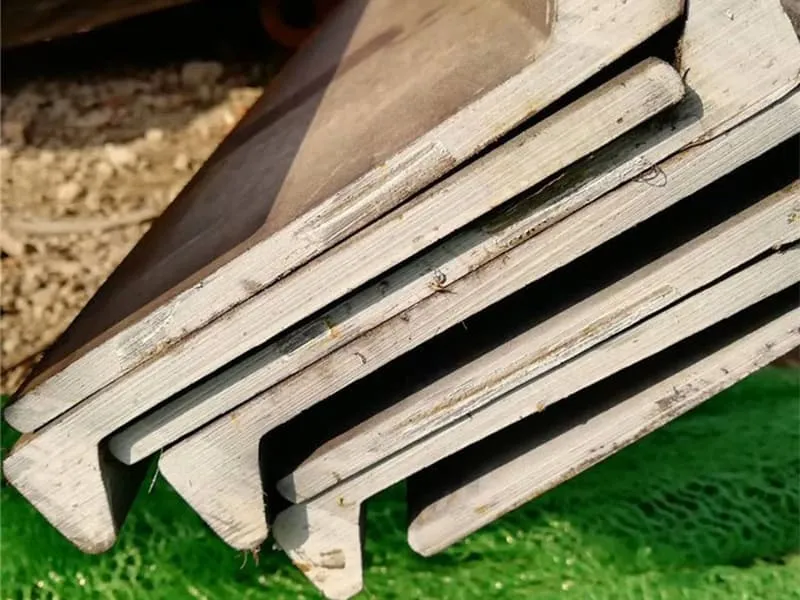
Demystifying Local Taxes: A Cost You Must Calculate
GST, VAT, Sales Tax—these are consumption taxes levied by your government when goods are imported or sold domestically. For importers, it’s a critical part of the "landed cost" calculation. Not factoring it in can destroy your project’s margin.
How It Works: The Landed Cost Formula
Your total cost to have the bulb flat steel delivered to your warehouse is:
Landed Cost = FOB Price + Ocean Freight + Insurance + Customs Duty + GST/VAT + Port & Local Handling Charges
GST/VAT is typically calculated on the Assessable Value, which is usually the CIF value (Cost + Insurance + Freight) plus the customs duty.
Example Calculation:
Assume you import bulb flat steel to a country with a 10% customs duty and a 15% GST rate.
- FOB China Price: $10,000
- Ocean Freight & Insurance (CIF): $2,000
- CIF Value = $12,000
- Customs Duty (10% of CIF): $1,200
- Assessable Value for GST = CIF + Duty = $12,000 + $1,200 = $13,200
- GST (15% of $13,200) = $1,980
Here, the GST adds nearly $2,000 to your cost, on top of the $1,200 duty.
Why You Can’t Rely on a Generic Answer:
- Country-Specific: Each country sets its own GST/VAT rate. In Saudi Arabia, it’s VAT at 15%. In Malaysia, it’s SST. In Australia, it’s GST at 10%. In some countries, certain essential industrial inputs might have a lower rate.
- Product-Specific: The rate may depend on the HS code. Some countries have lower tax rates for raw materials or capital goods.
- Importer Status: If you are a registered business, you may be able to claim back the GST/VAT paid on imports as an input tax credit (ITC) when you sell the processed steel or use it in a taxable project. This is a cash flow issue, not a final cost, but you must budget for the initial payment.
Actionable Tips for Buyers:
- Consult a Local Customs Broker or Accountant: Before you finalize the purchase, ask them: "What is the full duty and tax breakdown for importing hot-rolled alloy steel bulb flats under HS code XXXXX?"
- Factor it into Your Budget: Do not make the mistake of only budgeting for the FOB price and freight. The "landed cost" is your true cost.
- Ask Your Supplier for Help: A professional export agent should be able to explain how the CIF value is calculated and what documents (like the Commercial Invoice and Packing List) are needed for your customs clearance, which affects tax assessment.
- Understand Deferred Payment Schemes: Some countries allow large importers to defer duty and tax payments. Check if you qualify.
Being prepared for this cost prevents nasty financial surprises and allows you to compare supplier quotes on a true total-cost basis, not just on the attractive FOB price some online suppliers might advertise.
What is the HS code 4903000000?
You see this code mentioned somewhere. Confusing it with your steel product’s code would be a serious error. This highlights the importance of precise code selection.
HS code 4903.00.0000 is for "Children’s picture, drawing or colouring books." It has absolutely no relation to steel products. This example underscores the critical importance of using the exact, correct HS code for your specific product (bulb flat steel) to avoid major customs clearance errors and penalties.
A Cautionary Tale: The Cost of Code Confusion
Mentioning code 4903.00.0000 is a deliberate way to highlight a common and costly pitfall in international trade. Using an incorrect HS code is not a minor paperwork error; it is misdeclaration, which customs authorities take very seriously.
Consequences of Using the Wrong HS Code:
- Customs Seizure and Delays: Your shipment will be held. You will need to submit corrected documents, which takes days or weeks. During this time, demurrage (port storage) charges accrue daily.
- Underpayment of Duty/Tax: If you use a code with a lower duty rate, you are evading tax. This can result in back-payment of the difference plus substantial fines and penalties.
- Overpayment of Duty/Tax: If you use a code with a higher rate, you pay more than necessary. Reclaiming overpaid duties is a difficult process.
- Loss of Trust: Frequent errors can flag your company for increased scrutiny on future shipments.
- Legal Risk: In severe cases, intentional misdeclaration can lead to legal action.
How to Ensure You Get the Right Code for Bulb Flat Steel:
The error with code 4903 is extreme, but more subtle errors are common—like confusing "non-alloy" with "alloy" steel, or "hot-rolled" with "cold-formed."
- Provide Detailed Product Specifications to Experts: Don’t just say "bulb flat." Give the full description: "Hot-rolled bulb flat steel section, profile FB 300 x 13, made of high-strength low-alloy steel grade DH36 for shipbuilding structures."
- Use Reliable Resources:
- Your National Customs Website: Most publish searchable tariff databases.
- World Customs Organization (WCO) Trade Tools: Provides the international 6-digit framework.
- Professional Advice: This is the best method. A licensed customs broker in your country will classify your goods for a fee. It’s an investment that saves money and hassle.
- Cross-Check with Your Supplier: A reputable supplier should know the common export code. Their suggestion is a good starting point for your broker to verify against your country’s import schedule.
The Bigger Lesson for Online Buying:
This issue highlights the difference between a savvy buyer and an unprepared one. When you buy bulb flat steel online, you are responsible for the logistics chain from the supplier’s yard to your door. Understanding and correctly managing elements like HS codes, duties, and taxes is as important as negotiating the product price.
A professional supplier will assist you by providing accurate product descriptions and standard documentation. However, the final responsibility for import compliance lies with you, the importer of record. This is a key reason to work with an export agent who understands the process and can guide you, rather than a trader who simply wants to sell and ship.
In summary, successful online purchasing is not just about finding the lowest price. It’s about total project management: ensuring quality through certification, ensuring smooth logistics through correct documentation (HS codes), and accurately budgeting for all costs (including taxes). Mastering these elements turns the risk of online buying into a strategic advantage for your business.
Conclusion
Buy bulb flat steel online from China by filtering for certified quality, verifying the correct HS code, budgeting for all taxes and duties, and partnering with a knowledgeable export agent, not just a low-price trader.