
You receive a shipment of L-shaped steel. You start cutting and welding. Then the surveyor says: “This steel does not meet the rules.” Your project stops.
The acceptance criteria for marine L-shaped steel cover four areas: dimensional tolerances (leg length, thickness, angle), surface quality (no cracks or laminations), mechanical and chemical properties (yield, tensile, impact, composition), and traceability (heat number matching class society certificate). I have used these criteria to inspect steel for shipyards in Vietnam, Mexico, and Saudi Arabia.
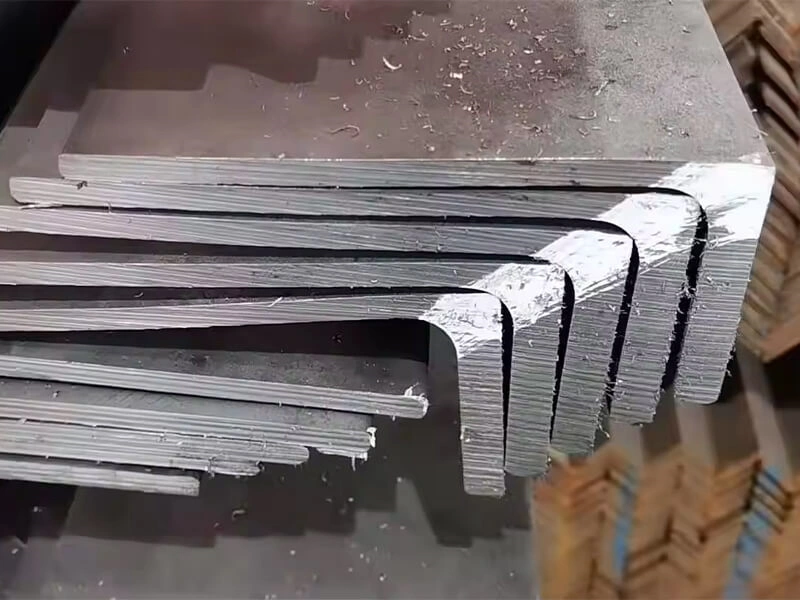
You need a clear checklist. Let me walk you through exactly what to check, how to check it, and what numbers to accept or reject.
What Dimensional Tolerances Are Allowed for Marine L-Shaped Steel Legs and Thickness?
You order 150x150x12mm angle steel. The supplier sends steel with legs that are 148mm and 152mm. Is that okay? Only if you know the tolerance rules.
The allowed dimensional tolerances1 for marine L-shaped steel2 follow standards like EN 100563 or ASTM A64. For leg length, the tolerance is typically ±1.5mm for sizes up to 100mm and ±2.0mm for larger sizes. For thickness, the tolerance is ±0.3mm to ±0.5mm depending on the nominal thickness. The angle between legs must be 90° ± 1°. Any deviation beyond these limits means rejection. I rejected 5 tons of angle steel in Pakistan last year because the legs were 3mm too short.
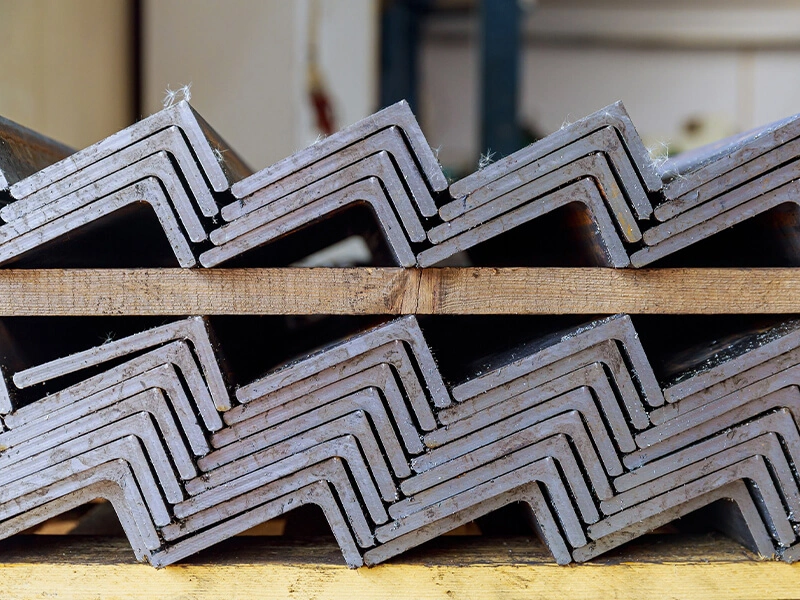
Let me break down each dimensional requirement.
I am Zora Guo. I have supplied marine L-shaped steel to shipyards for over 10 years. One of my buyers in Malaysia once received a shipment from another supplier. The certificate said 150x150x12mm. But his workers measured the legs. One leg was 146mm. The other was 154mm. The angle was 88 degrees. He could not use the steel for his hull frames. The supplier refused to take it back. He lost $8,000.
So here are the exact tolerances you should enforce.
Leg length tolerance
The leg length is the distance from the corner to the outer edge of each leg. For equal-leg angle steel (both legs the same size), the tolerance depends on the nominal size.
| Nominal leg length (mm) | Allowed minus tolerance (mm) | Allowed plus tolerance (mm) |
|---|---|---|
| Up to 50 | -0.5 | +1.0 |
| 50 to 100 | -0.8 | +1.5 |
| 100 to 150 | -1.0 | +2.0 |
| 150 to 200 | -1.5 | +2.5 |
| Over 200 | -2.0 | +3.0 |
What does this mean? If you order 150x150mm angle, the legs can be between 149.0mm and 152.0mm. Any leg shorter than 149.0mm is a reject. Any leg longer than 152.0mm is also a reject (unless your design allows it).
For unequal-leg angle (e.g., 200x150mm), each leg has its own tolerance based on its nominal size.
Thickness tolerance
The thickness is measured at the middle of each leg, not at the corner. The tolerance follows EN 10056 or the class society rules.
| Nominal thickness (mm) | Minus tolerance (mm) | Plus tolerance (mm) |
|---|---|---|
| Up to 6 | -0.3 | +0.4 |
| 6 to 10 | -0.4 | +0.5 |
| 10 to 15 | -0.5 | +0.6 |
| 15 to 20 | -0.6 | +0.7 |
| Over 20 | -0.8 | +0.8 |
For a 12mm thick angle, the acceptable range is 11.5mm to 12.6mm. If the steel is thinner than 11.5mm, reject it. Thinner steel means weaker frames.
Angle tolerance
The two legs of L-shaped steel meet at a corner. That corner should be 90 degrees. The allowed deviation is ±1 degree. That means 89 to 91 degrees is acceptable. Anything outside that range will cause fit-up problems when you weld the frame to the hull plate.
How to check: Use an angle gauge or a digital protractor. Place it against the inside corner. Read the angle.
Straightness tolerance
The steel should not be bent along its length. The allowed bow (bend) is 3mm per meter, up to a maximum of 6mm total for any 6m length. Use a straight edge and a feeler gauge.
How to measure correctly
- Measure leg length at three points: near both ends and the middle.
- Measure thickness at the same three points.
- Measure the angle at both ends.
- Measure straightness along the full length.
Here is a quick acceptance table for a typical 150x150x12mm angle:
| Parameter | Nominal | Acceptable range | Reject if |
|---|---|---|---|
| Leg length | 150mm | 149.0 – 152.0mm | 152.0mm |
| Thickness | 12mm | 11.5 – 12.6mm | <11.5mm |
| Angle | 90° | 89 – 91° | 91° |
| Straightness | 0mm | 3mm per meter |
I send this table to every buyer. One buyer in Thailand printed it out and gave it to his warehouse team. They caught a bad batch before it went to the cutting shop. That saved him $15,000 in rework.
How to Inspect Surface Quality and Detect Cracks or Laminations?
The steel looks clean from far away. But up close, there could be cracks that will grow into big problems after welding.
Surface quality inspection1 starts with a visual check of every piece. Look for cracks, scabs, rolled-in scale, and deep pitting. Then use magnetic particle inspection (MPI) to find surface cracks that are invisible to the eye. For internal defects like laminations, use ultrasonic testing (UT). The acceptance criteria: no cracks, no laminations larger than 10mm, and no scabs that reduce thickness by more than 10%. I found a lamination in a batch for a buyer in Romania using UT. The supplier replaced 20 pieces for free.
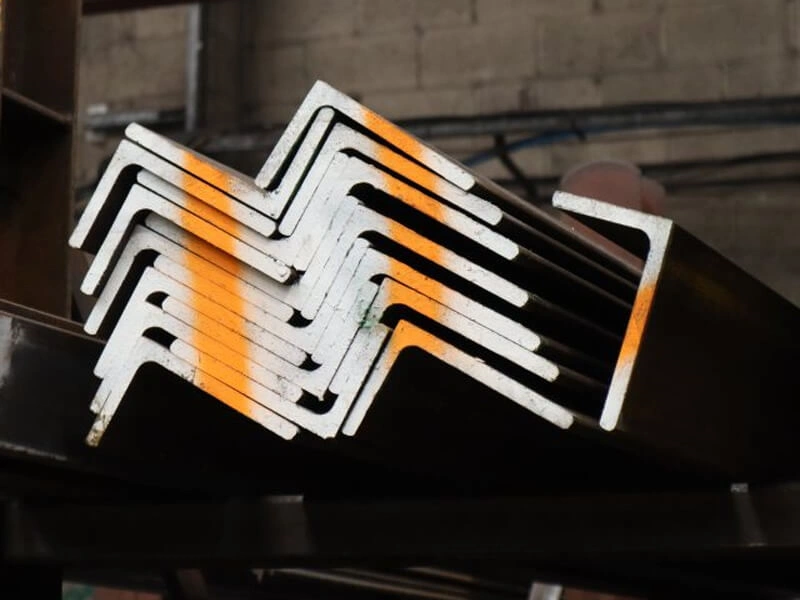
Let me show you the inspection steps and what to look for.
I am Zora Guo. A buyer in the Philippines once told me: “The steel looks fine.” I asked: “Did you do UT?” He said no. Three months later, he called me. His welder found a lamination inside the steel while cutting. The whole piece was scrap. He had to order a replacement and pay for air freight. That cost him $3,000 for one piece. After that, he always does UT.
Visual inspection2 (100% of pieces)
Walk along each piece of L-shaped steel. Look for:
Cracks – Any line or separation in the steel surface. Even a small crack is a reject. Use a magnifying glass if needed.
Scabs – Rough, scaly patches where the surface has lifted. Small scabs (less than 2mm deep and less than 20mm long) can be ground out. Deep or large scabs are a reject.
Rolled-in scale – Black, flaky material stuck to the surface. Light scale is normal. Heavy scale that flakes off is a reject because it hides defects underneath.
Pitting – Small holes from corrosion. Shallow pits (less than 0.5mm deep) are okay. Deep pits that reduce thickness are a reject.
Surface laminations3 – Thin layers peeling off the surface. Any lamination is a reject.
Magnetic particle inspection (MPI)4 for surface cracks
MPI finds cracks that you cannot see with your eyes. It works on magnetic steel (which marine L-shaped steel is). You spray a liquid with iron particles onto the steel. Then you run a magnet over it. The particles gather at cracks, showing a dark line.
When to use MPI:
- On every piece for critical structures (bottom frames, side shell frames)
- On a 10% sample for less critical areas
- Always on the corner of the angle (where cracks often start)
Acceptance: No cracks allowed. If you find a crack, the piece is rejected.
Ultrasonic testing (UT)5 for internal laminations
UT uses sound waves to see inside the steel. A probe sends a pulse. If there is a lamination (a separation inside the steel), the sound bounces back early.
When to use UT:
- On all pieces for large vessels (over 100m)
- On a 10% to 20% sample for smaller vessels
- Always on pieces that will be welded in high-stress areas
Acceptance: No lamination larger than 10mm in diameter. If you find a lamination, reject that piece. If you find laminations on more than 5% of the sample, reject the whole heat.
How to document defects
Take a photo of every rejected piece. Put a ruler next to the defect. Write down the piece number, heat number, and defect type. Keep this record for your claim.
Here is a summary table:
| Defect type | Inspection method | Acceptance |
|---|---|---|
| Surface cracks | Visual + MPI | None allowed |
| Scabs | Visual | Grind if <2mm deep; reject if deeper |
| Rolled-in scale | Visual | Light scale ok; heavy scale reject |
| Pitting | Visual + thickness gauge | 10mm |
I learned the hard way: never skip UT. It costs a little money upfront. But it saves you from scrapping a whole frame later.
What Mechanical and Chemical Tests Must the Mill Certificate Show?
You have a mill certificate1. It has many numbers. Which numbers matter? And what values are acceptable for shipbuilding?
The mill certificate must show four mechanical test results: yield strength2 (minimum 355 MPa for AH36, 235 MPa for Grade A), tensile strength3 (490-620 MPa for AH36), elongation (minimum 22% for AH36), and impact toughness4 (minimum 34 Joules at specified temperature). It must also show chemical composition5: carbon (max 0.18% for AH36), manganese (0.90-1.60%), phosphorus (max 0.035%), sulfur (max 0.035%), and silicon (0.15-0.50%). Any value outside these ranges means the steel is not suitable for ship hulls.
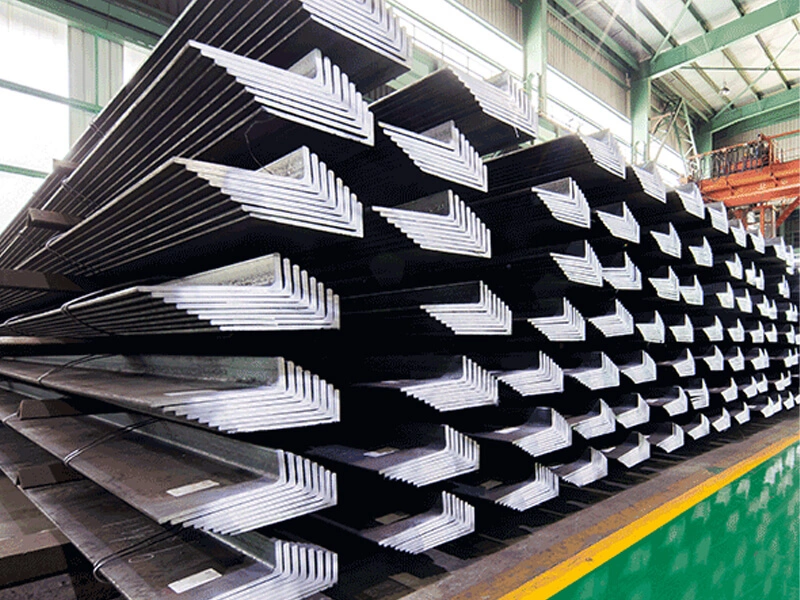
Let me explain each test and the acceptable limits.
I am Zora Guo. A buyer in Vietnam once sent me a mill certificate from another supplier. The certificate looked official. But the yield strength was listed as 420 MPa. That seemed high. I asked: “What grade is this?” The supplier said AH36. But AH36 has a minimum yield of 355 MPa, not a fixed number. 420 MPa is possible, but it usually means the steel has too much carbon. That hurts weldability. I recommended a third-party test. The real yield was 430 MPa, but the CEV was 0.48% (too high). The buyer rejected the steel.
So here are the numbers you need to check.
Mechanical test requirements for AH36 (most common marine grade)
| Property | Test method | Minimum required | Typical range |
|---|---|---|---|
| Yield strength (0.2% offset) | Tensile test | 355 MPa | 380-450 MPa |
| Tensile strength | Tensile test | 490 MPa | 520-580 MPa |
| Elongation (on 5.65√S) | Tensile test | 22% | 24-30% |
| Impact toughness (Charpy V-notch) | Impact test at 0°C | 34 Joules | 50-100 J |
For DH36 (cold regions), the impact test is done at -20°C. For EH36, at -40°C. The minimum is still 34 Joules.
For Grade A (mild steel), the requirements are lower: yield 235 MPa, tensile 400-520 MPa, elongation 22%, impact not usually required.
Chemical composition requirements for AH36
| Element | Maximum allowed (unless noted) | Why it matters |
|---|---|---|
| Carbon (C) | 0.18% | Too much carbon makes steel hard to weld |
| Manganese (Mn) | 0.90 – 1.60% | Increases strength and toughness |
| Phosphorus (P) | 0.035% | Too much makes steel brittle |
| Sulfur (S) | 0.035% | Too much causes cracking during welding |
| Silicon (Si) | 0.15 – 0.50% | Deoxidizer, improves strength |
| Copper (Cu) | 0.35% | Improves corrosion resistance |
Carbon Equivalent Value (CEV)6
CEV is a formula that combines carbon and other elements. It tells you how weldable the steel is.
Formula: CEV = C + Mn/6 + (Cr+Mo+V)/5 + (Ni+Cu)/15
For AH36, CEV should be below 0.42%. If CEV is above 0.42%, the steel needs special pre-heating and post-weld treatment. If CEV is above 0.45%, reject the steel.
How to check the certificate
- Make sure the certificate is EN 10204 Type 3.2 (signed by mill and witnessed by class society).
- Check that the heat number on the certificate matches the steel stamp.
- Verify that the test results meet the minimums for your grade.
- Look at the date of the test. It should be within 6 months of delivery.
Here is a quick checklist for your quality team:
| Item | Acceptable for AH36 | Reject if |
|---|---|---|
| Yield strength | ≥355 MPa | <355 MPa |
| Tensile strength | 490-620 MPa | 620 |
| Elongation | ≥22% | <22% |
| Impact (0°C) | ≥34 J average, one allowed 27 | Average <34 or two pieces 0.18% |
| CEV | ≤0.42% | >0.42% |
I give this checklist to every buyer. One buyer in Qatar told me: “I used to just look at the grade. Now I check every number. I caught a certificate with carbon at 0.22% last month. The supplier tried to hide it.”
How to Verify Heat Number Traceability and Class Society Approval?
You have a certificate. You have steel. But are they connected? Without traceability, the class society1 will reject your work.
To verify heat number traceability2, match the heat number stamped on the steel to the heat number on the mill certificate. Every piece of marine L-shaped steel3 must have a clear stamp. The certificate must be EN 10204 Type 3.24 with a class society stamp5 (ABS, DNV, LR, CCS, BV, NK, or RINA). Then call or email the class society to confirm the certificate number is real. I do this verification for every shipment to Saudi Arabia and Romania. It takes 10 minutes and prevents fraud.
Let me walk you through the verification steps.
I am Zora Guo. A buyer in Mexico once received a beautiful certificate with an ABS stamp. The steel looked fine. But I suggested he call ABS to verify the certificate number. The ABS office said: “We never issued that number.” The certificate was fake. The buyer cancelled the order. He lost a week of time, but he saved himself from using untested steel.
Step 1 – Find the heat number on the steel
Every piece of marine L-shaped steel has a stamp. Look on the inner corner of the angle, near one end. The stamp shows:
- Mill name or logo
- Steel grade (e.g., AH36)
- Heat number (a combination of letters and numbers, like H22035)
- Sometimes the size and class society mark
If the stamp is missing, blurry, or unreadable, reject the piece. No stamp means no traceability.
Step 2 – Find the heat number on the certificate
The EN 10204 Type 3.2 certificate has a section called “Heat number” or “Cast number.” It should match the stamp on the steel. If the certificate shows a different heat number, the steel and the paper are not connected. Reject the entire shipment.
Step 3 – Check the class society stamp on the certificate
Look for the stamp of one of these class societies:
- ABS (American Bureau of Shipping)
- DNV (Det Norske Veritas)
- LR (Lloyd’s Register)
- CCS (China Classification Society)
- BV (Bureau Veritas)
- NK (Nippon Kaiji Kyokai)
- RINA (Registro Italiano Navale)
The stamp must have a signature and a date. If the stamp is a photocopy or a low-resolution print, be suspicious. Real stamps are original ink or high-resolution digital.
Step 4 – Verify the certificate online
Go to the class society’s website. Most have a “certificate verification” page. Enter the certificate number. The system will show the original certificate. Check that:
- The buyer name matches your company
- The steel grade matches your order
- The quantity matches your shipment
- The date is recent
If the number does not work, the certificate is fake.
Step 5 – Call the class society office
If you are still unsure, call the local office of the class society. Give them the certificate number and the heat number. They can check their internal records. This is the most reliable method.
Step 6 – Keep a traceability log6
For every piece of steel that passes inspection, record:
- Heat number
- Certificate number
- Class society
- Date received
- Project name
Then when the class society surveyor comes, you can show him the log and the certificates. He will be happy.
Here is a sample traceability log:
| Piece ID | Heat number | Certificate number | Class society | Grade |
|---|---|---|---|---|
| L-001 | H22035 | ABS-2024-001 | ABS | AH36 |
| L-002 | H22035 | ABS-2024-001 | ABS | AH36 |
| L-003 | H22118 | ABS-2024-015 | ABS | AH36 |
What to do if you find a mismatch
If the heat number on the steel does not match the certificate, stop all work. Contact your supplier immediately. Demand a replacement or a refund. Do not use the steel. I had a buyer in Thailand who found a mismatch. He called me. I helped him contact the mill. The mill admitted they sent the wrong certificate. They sent the correct one within 24 hours. The buyer lost one day. That is much better than losing a whole project.
Conclusion
Check dimensions, surface, mechanical tests, and traceability. Use these four acceptance criteria to protect your shipbuilding project.
My Personal Insights (from 10+ years in marine steel export)
I am Zora Guo. My team in Liaocheng supplies marine L-shaped steel with full EN 10204 Type 3.2 certificates from ABS, DNV, LR, and CCS. We support third-party inspection and heat number verification. Send me an email at sales@chinaexhaustfan.com or visit cnmarinesteel.com. Tell me your required size, grade, and class society. I will send you a sample certificate and a delivery quote.
-
Understand the roles of various class societies in ensuring the quality and safety of steel products. ↩ ↩ ↩ ↩
-
Understanding heat number traceability is crucial for ensuring the integrity of steel products and preventing fraud. ↩ ↩ ↩ ↩
-
Find detailed specifications for marine L-shaped steel to ensure compliance with industry standards. ↩ ↩ ↩ ↩
-
Explore this link to learn about the importance of EN 10204 Type 3.2 certification in steel quality assurance. ↩ ↩ ↩ ↩
-
Discover the significance of class society stamps in verifying the authenticity of steel certificates. ↩ ↩ ↩
-
Explore best practices for maintaining a traceability log to enhance accountability in steel procurement. ↩ ↩