
Is your marine project facing delays due to unstable material supply or rising costs? You’re not alone. The market for marine L-shaped steel, also called angle bar, is shifting rapidly. Understanding these trends is key to securing your project’s future and budget.
The global marine L-shaped steel market for 2025–2026 is shaped by rising demand in Asian shipbuilding, a push for higher-grade corrosion-resistant materials, and volatile raw material costs. Suppliers who offer certified quality, flexible logistics, and stable pricing will gain a significant advantage in this competitive landscape.

As someone who deals with international clients every day, I see these trends not just as data points, but as real challenges and opportunities for businesses like yours. The questions you ask about "L-shaped steel" are fundamental, and the answers reveal why this simple product is so complex in today’s market. Let’s explore the core concepts first, and then I’ll share my direct observations from the front lines of the supply chain.
What is L-shaped metal called?
Do you find different names for the same steel profile confusing when sourcing? This confusion can lead to ordering mistakes and project delays. Knowing the correct terminology is the first step to clear communication with any supplier.
An L-shaped metal profile is most commonly called "Angle Steel1" or "Angle Bar2." In technical and trade contexts, it is formally known as an "L-shaped section steel" or an "equal/unequal leg angle," referring to the two legs that form a 90-degree angle.
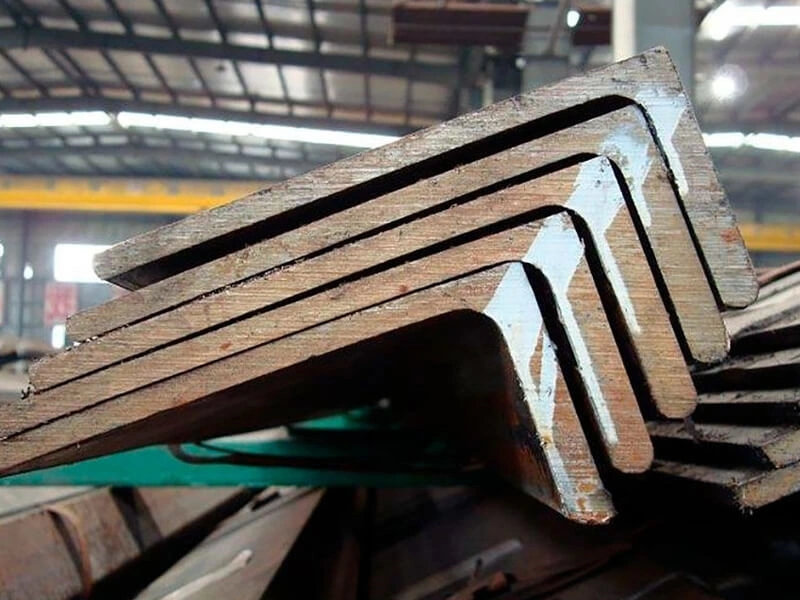
A Deeper Look at Naming Conventions and Global Standards
The name might seem simple, but in the global B2B market, using the right term is crucial. From my daily conversations with buyers from Vietnam to Saudi Arabia, I notice that terminology varies slightly but generally converges on a few key terms. Let’s break this down.
The most universal and practical term is "Angle Steel1" or "Angle Bar2." This is the term you would use in casual inquiries or when searching on platforms like Alibaba. It’s understood by everyone in the industry, from fabricators to project managers.
For technical specifications and official purchase orders, the formal name "L-shaped Section Steel" is used. This term aligns with engineering drawings and classification society standards. It precisely describes the shape, distinguishing it from other sections like I-beams (H-shaped) or channels (C-shaped).
The specification gets more detailed with the terms "Equal Angle3" and "Unequal Angle4." This is a critical distinction that affects the material’s application and cost.
- Equal Angle3: Both legs (the vertical and horizontal sides) are of the same length (e.g., 50×50 mm). This is the most common type used for general structural support and framing in ship compartments.
- Unequal Angle4: The legs have different lengths (e.g., 100×75 mm). This type is often used in specific applications where the load distribution is not symmetrical, such as in certain bracket designs or where space constraints exist.
Here is a simple table to clarify the naming conventions and their primary use cases:
| Common Name | Technical Name | Key Feature | Typical Marine Application |
|---|---|---|---|
| Angle Bar2 | Equal Leg Angle | Both legs are the same length. | Bulkhead stiffeners, deck framing, general structural reinforcement. |
| L-shaped Steel | Unequal Leg Angle | Legs are of different lengths. | Specialized brackets, custom fabrications where space is limited. |
| Angle Iron5 | Mild Steel Angle | A colloquial term, often for lower-grade mild steel. | Non-critical, secondary structures (less common in modern marine builds). |
My personal insight here comes from solving a recurring problem. A client from the Philippines once sent us a drawing asking for "L-bar." Our engineering team confirmed it was a standard unequal angle. If we had shipped a common equal angle based on the vague term, it would have caused a fabrication halt. This is why we always double-check the technical drawing or leg dimensions. The trend I see for 2025 is towards even more precise specification requirements. Buyers are moving beyond just "angle steel" to specifying the exact grade (like AH36/DH36), the leg dimensions, the thickness, and the required certification upfront. This reduces errors and builds trust from the very first inquiry.
What is L in steel?
When you review a material certificate, does the alphabet soup of steel grades leave you unsure about the actual performance? The "L" symbol is one of the most important letters to understand for marine applications, as it directly relates to your structure’s longevity.
In steel grades, particularly for marine and low-temperature applications, the letter "L" stands for "Low Temperature1." It indicates that the steel is specially manufactured to maintain high toughness and resist brittle fracture2 in cold environments, such as Arctic waters or refrigerated cargo holds.

Demystifying the "L" Grade: From Chemistry to Critical Application
The inclusion of an "L" in a steel grade is not arbitrary. It represents a specific set of chemical compositions and manufacturing processes designed to combat a silent threat: brittle fracture. From our production partners in certified mills, I’ve learned that producing "L" grade steel requires tighter control.
At its core, brittle fracture2 is when steel, which is normally ductile, cracks suddenly with little deformation under stress in cold conditions. For a ship’s hull or offshore structure, this is catastrophic. The "L" grade steel is engineered to prevent this.
The key is how the steel behaves at its Charpy V-Notch (CVN) Impact Test3 temperature. This test measures the energy a material can absorb before fracturing at a specified low temperature.
- A standard structural steel might be tested at 0°C or 20°C.
- An "L" grade steel, such as AH36 L4, is guaranteed to meet strict impact energy requirements at much lower temperatures, typically -20°C or even -40°C or -60°C (which would be designated as AH36 L44 or AH36 L46).
The chemical composition is adjusted to achieve this. Mills carefully control elements like carbon, manganese, and add micro-alloying elements like niobium and vanadium. They also use specific heat treatment processes like Thermo-Mechanical Control Process (TMCP)5 to refine the grain structure, which is crucial for low-temperature toughness6.
Let’s look at a practical comparison of how this translates to ordering:
| Steel Grade | Typical Impact Test Temperature | Key Property | Best Suited For |
|---|---|---|---|
| AH36 | 0°C | High strength at ambient temperatures. | General ship hulls for temperate/tropical routes. |
| AH36 L4 | -20°C | Good low-temperature toughness6. | Ships operating in cold waters (e.g., North Atlantic, North Pacific). |
| AH36 L44 / L6 | -40°C / -60°C | Excellent low-temperature toughness6. | Ice-class vessels, Arctic offshore platforms, LNG carrier containment systems. |
My direct experience with a client in Romania illustrates this perfectly. They were building barges for use on the Danube, where winters are harsh. Their initial specification was for a general grade. We advised them to consider an "L" grade for critical structural members, explaining the risk of brittle fracture2 during winter. They appreciated the proactive advice and amended their order. This trend is growing. As global trade routes and energy exploration push into colder regions, the demand for certified "L" and "L4/L6" grade steels is rising sharply. In 2025, specifying the correct low-temperature grade is no longer just for specialized vessels; it’s becoming a standard part of risk management for any project exposed to seasonal cold.
What does L mean in steel?
Beyond grade names, you might see "L" on a drawing or in a bill of materials. Could this single letter cause a misunderstanding that derails your entire fabrication schedule? Clarity in documentation is as important as the material quality itself.
In steel drawings and dimensioning, the letter "L" is commonly used as an abbreviation for "Length." It specifies the total longitudinal measurement of a steel piece, such as an angle bar, beam, or plate, that needs to be cut or supplied.
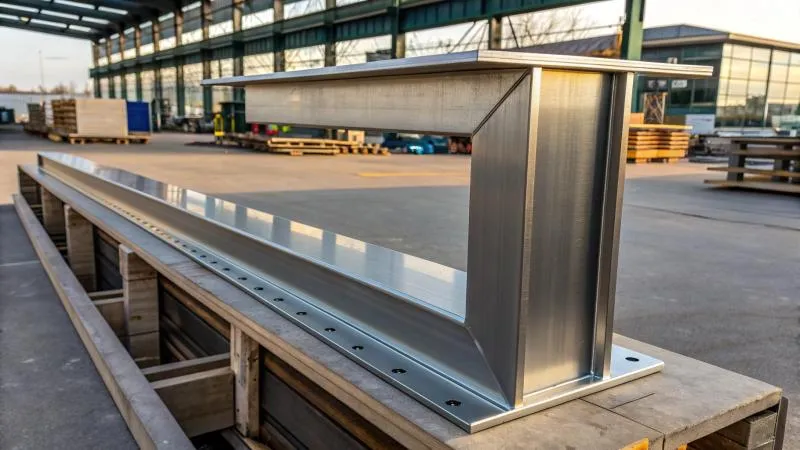
Navigating Drawings and Orders: The Practical Meaning of "L"
This usage of "L" is fundamental to the workshop floor and the procurement process. A misunderstanding here doesn’t affect material properties, but it can lead to costly waste, rework, and delays. Based on the countless drawings we process for clients in Mexico and Thailand, standardization is key.
On a technical drawing for a steel structure1, dimensions are the language. "L=" followed by a number and unit (e.g., L=12000 mm) clearly tells the workshop the cut length2 for a specific member. For long products like angles, channels, and beams, the length is often the most critical purchase dimension after the profile size itself.
It’s important to distinguish this from other dimension letters:
- L = Length3: The longest dimension, usually along the direction of rolling/primary load path.
- W = Width: For plates, the dimension across the rolling direction. For angles, it can refer to leg length.
- H = Height or Depth: The vertical dimension of a profile, like the web height of an I-beam.
- T or t = Thickness: The material thickness.
For angle bars4 specifically, a complete description must include:
- Leg Dimensions (e.g., 100 x 100 mm)
- Thickness (e.g., 10 mm)
- Length (e.g., L = 12,000 mm)
This is where confusion can happen. A buyer might send an email: "We need 100x100x10 angle, L=12m." This is clear. But sometimes, we receive: "We need L100 steel." This is ambiguous. It could be misinterpreted as a 100mm leg equal angle, or it could be a reference to a length of 100 meters. We always follow up to confirm.
Here’s a table to show how "L" fits into a complete material description:
| Component | Symbol/Abbreviation | Example in an Order | Why It’s Important |
|---|---|---|---|
| Profile Type | "Angle" or "L" | Equal Angle | Defines the cross-sectional shape. |
| Leg Size | A x B | 150 x 150 mm | Determines the section modulus and strength. |
| Thickness | t | t = 12 mm | Directly affects load-bearing capacity and weight. |
| Length | L | L = 11,800 mm | Determines how many pieces are needed, impacts shipping, and minimizes on-site waste. |
| Grade | Grade | AH36 L | Defines mechanical properties and suitability. |
My insight from handling logistics is that optimal length is a growing concern. Clients like Gulf Metal Solutions in Saudi Arabia often ask about standard mill lengths versus custom cut length2s. Supplying random lengths can increase their fabrication waste5. Our solution is to ask for their detailed cutting list. We then work with the mill to produce "optimized lengths6" that match their needs, reducing their scrap rate from maybe 15% to under 5%. This adds tangible value beyond just price. In 2025, with steel prices fluctuating, efficient material utilization is a major trend. Smart buyers are not just asking for price per ton; they are asking for suppliers who can help them minimize total project cost through intelligent sizing and logistics planning.
What is an L-shaped beam called?
You need a strong, weight-efficient beam for a ship’s keel or a large hatch coaming. An I-beam is too heavy, a hollow section is hard to connect. Is there a specific L-shaped solution for these major load-bearing tasks?
A large, heavyweight L-shaped steel beam designed for primary structural support1 is most accurately called a "Bulb Flat2" or "Bulb Plate." It features a flat plate (the web) with a bulbous thickening (the bulb) at one edge, forming an "L" profile that provides exceptional strength-to-weight efficiency3 for longitudinal framing.
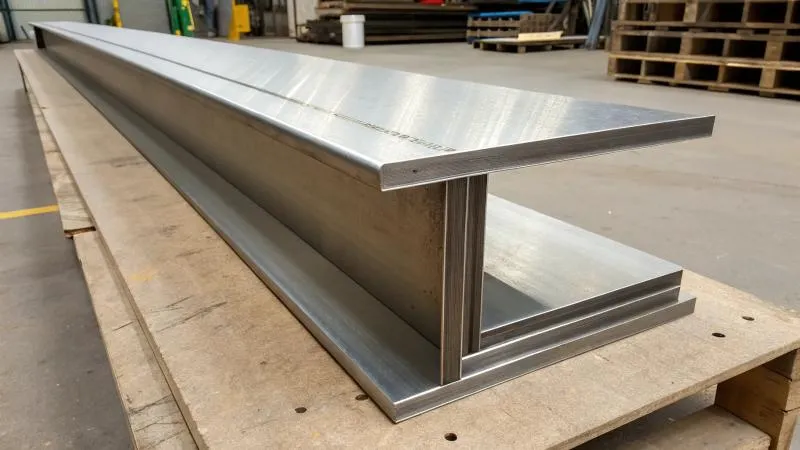
Bulb Flat: The Unsung Hero of Ship Longitudinal Strength
While standard angle bars are the workhorses for stiffening, the bulb flat is the backbone. It is a specialized marine section4 that many general steel suppliers don’t stock. From our long-term cooperation with mills producing bulb flats, I understand its unique role.
The key to the bulb flat’s performance is its design. The bulb at the free edge concentrates material where it’s most effective in resisting bending forces. This makes it much more efficient than a simple flat bar of the same weight. It’s the preferred choice for longitudinal stiffeners5 in a ship’s hull, deck, and bottom.
Let’s compare it to other beam-like sections to see why it’s dominant in shipbuilding:
| Beam Type | Profile Shape | Primary Advantage | Typical Marine Use |
|---|---|---|---|
| Bulb Flat2 (Bulb Plate) | L with a bulb | Excellent strength/weight ratio, easy to weld to plate. | Primary longitudinal stiffeners5 (keel, side frames, deck longitudinals). |
| I-Beam (H-Beam) | I or H | Very high bending strength in both axes. | Often too heavy and complex for ship framing; more common in land-based construction. |
| Flat Bar | Simple rectangle | Easy to fabricate, low cost. | Low-stress applications, minor stiffening. Very inefficient for primary loads. |
| Angle Bar | Simple L | Good for bidirectional stiffening. | Transverse frames, brackets, secondary stiffening (bulkheads). |
Ordering bulb flats requires precise specification. Unlike standard angles, there is a wide range of standardized bulb flat sizes (e.g., HP 100 x 7, HP 180 x 10, where HP often denotes "Hull Profile," followed by the height and thickness). The "L" shape here is integral to its function, but you would never call it an "L-beam" in the industry, as that would cause confusion with angle bars.
A case study from our work with a shipyard in Vietnam highlights this. They were constructing a new bulk carrier and needed bulb flats for the entire hull longitudinal system. Their previous supplier had inconsistent delivery, causing production line stops. We leveraged our mill partnership to guarantee a phased delivery schedule that matched their production plan. We also provided the full mill certificates and arranged for pre-shipment inspection. The stability of the bulb flat supply became a critical path enabler for their project. The trend for 2025-2026 is clear: as shipbuilding activity6 picks up, especially for bulk carriers and container ships, the demand for these specialized, high-value sections will surge. Suppliers with reliable access to certified bulb flat production lines will be crucial partners for shipyards.
Conclusion
Navigating the marine L-shaped steel market requires understanding its language, grades, and key trends. Focusing on certified quality, precise specifications, and suppliers who offer logistical stability will be your strongest strategy for 2025 and beyond.
-
Gain insights into the importance of primary structural support for the safety and durability of ships. ↩ ↩ ↩ ↩ ↩
-
Explore the unique design and advantages of Bulb Flats, essential for efficient ship structural support. ↩ ↩ ↩ ↩ ↩ ↩ ↩ ↩ ↩ ↩
-
Discover how strength-to-weight efficiency influences material selection and structural integrity in engineering. ↩ ↩ ↩ ↩ ↩
-
Understand the significance of marine sections like Bulb Flats in shipbuilding and their applications. ↩ ↩ ↩ ↩ ↩ ↩ ↩ ↩ ↩
-
Learn about the critical role of longitudinal stiffeners in enhancing ship hull strength and stability. ↩ ↩ ↩ ↩ ↩
-
Stay updated on the future trends in shipbuilding and the increasing demand for specialized materials. ↩ ↩ ↩ ↩ ↩