
You found a supplier with a good price. You are ready to place the order. Stop. A mistake in bulb flat procurement is expensive and hard to fix. The material is specialized. The certification is critical. If you miss a key check, your project stops. The time to verify is now, before you commit.
Before ordering bulb flat steel, buyers must systematically verify five critical areas. 1) The exact dimensional specification and standard. 2) The steel grade and its classification society certification. 3) The supplier’s mill source and production capability. 4) The surface quality and packaging for marine transport. 5) The documentation package, including traceable mill certificates. Skipping any step invites project delays.
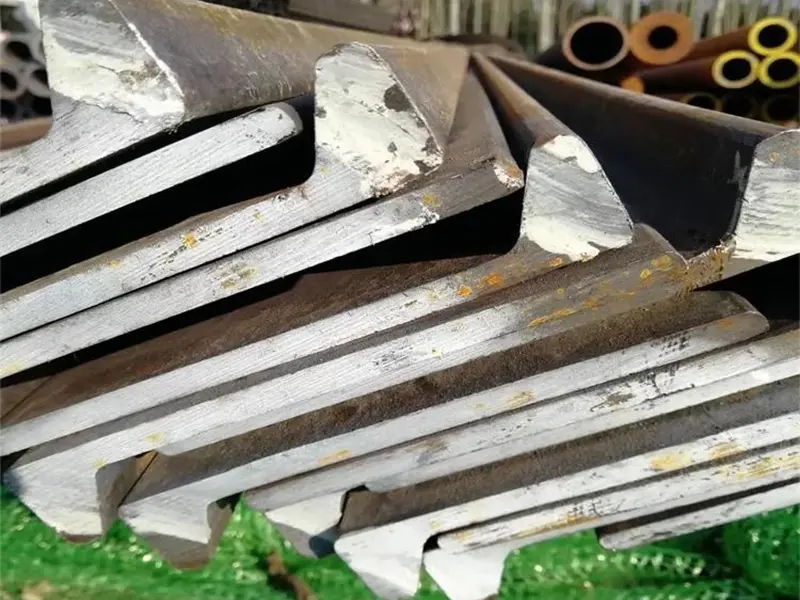
Placing an order feels like progress. But real progress comes from receiving the right material, on time, with the right paperwork. To ensure that happens, you need to check specific technical and commercial details. Let’s start with the most fundamental choice: the bulb itself.
What are the factors to be considered when you select a bulb?
Your design calls for a specific bulb flat size. But is that size the best choice for your project? Selection is not just about reading a drawing. It is about understanding how the bulb’s geometry interacts with the hull plate, the welding process, and the overall structural performance. Make the wrong choice, and you introduce inefficiency or weakness.
When selecting a bulb flat profile1, the key factors are the required section modulus2 for strength, the web height3 and thickness for fit-up with plating, the steel grade4 for toughness, and the profile’s availability from certified mills. The selection must balance structural needs with practical procurement realities to ensure a cost-effective and timely project.
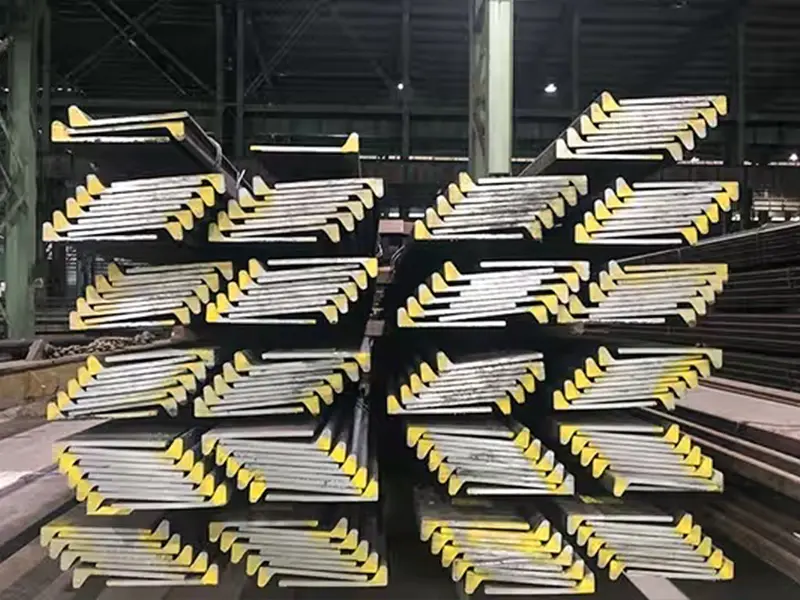
A Systematic Approach to Bulb Selection
Selection is a multi-step process that connects engineering and procurement. Let’s break it down.
1. Structural Requirements: The Non-Negotiable Foundation.
- Section Modulus (Z): This is the primary structural property. The naval architect calculates the required resistance to bending (Z) for each stiffener location. The selected bulb flat must have a section modulus2 equal to or greater than this value. Using a smaller profile creates a weak point.
- Web Height (h): This is the height of the flat part. It determines how far the stiffener projects from the plate. It must be compatible with the plate thickness and the space available within the hull compartment.
- Thickness (t): The web thickness must be sufficient for local strength and to allow a good weld connection to the hull plate. It also affects the section modulus2.
2. Material Grade: Matching the Environment.
The steel grade4 determines the material’s behavior.
- Strength Level: Normal strength (Grade A) or high strength (AH36, DH36)? High strength allows for a smaller, lighter profile to achieve the same section modulus2.
- Toughness: Based on the vessel’s operating temperature. Grade A for tropical, Grade D/E or DH/EH for cold climates. This is dictated by classification society rules.
- Weldability: The grade must have a controlled carbon equivalent (CE) to be weldable using the shipyard’s standard procedures.
3. Procurement and Logistics: The Practical Reality.
A perfect engineering choice is useless if the material is unavailable.
- Mill Availability: Not every size and grade is available from every mill. Some sizes are "rolling favorites" and have shorter lead times. Obscure sizes may require a special mill run, which is expensive and slow.
- Standardization: Using standard sizes5 from recognized norms (like EN 10067 or JIS G 3192) simplifies sourcing and reduces cost. Custom profiles are rarely justified.
- Total Length: The project needs a certain total length. Mills produce bulb flats in standard lengths (e.g., 12m). You must check your cut plan against these lengths to minimize waste.
4. Table: Bulb Selection Decision Matrix.
| Selection Factor | What to Check | Why It Matters | Procurement Action |
|---|---|---|---|
| Section Modulus (Z) | Calculated value from design vs. supplier’s table. | Ensures structural integrity. | Request supplier’s section property tables for verification. |
| Web Height (h) & Thickness (t) | Compatibility with plating and welding. | Affects fit-up and fabrication speed. | Confirm with welding engineers. |
| Steel Grade (e.g., AH36) | Certificate of mill approval from class society. | Mandatory for class. Material traceability. | Inspect the classification certificate. |
| Standard & Size Availability | Is it a common rolled size per EN/JIS? | Impacts lead time and cost. | Ask supplier for "usual rolling schedule" and lead times. |
| Surface Condition | As-rolled, shot-blasted, or primed? | Prevents corrosion, saves yard prep time. | Specify in purchase order. |
My Insight from the Field
A shipyard in Mexico was designing a new fishing vessel. Their engineer selected a bulb flat size based on an old European standard. The size was not commonly rolled anymore. Their local supplier quoted a 6-month lead time and a high price. They contacted us. We worked with our mill to find a modern equivalent size (slightly different web height3) that had the same or better section modulus2. We provided the property data. The engineer re-checked his calculations and approved the substitution. We delivered in 3 months at a standard price. This experience taught me that bulb selection is a conversation between design and supply. A good buyer facilitates that conversation, not just processes an order.
Is a checker plate1 stronger than flat steel?
You are designing a walkway or a deck plate. You see checker plate1 with its raised pattern. It looks tough. You might assume it is stronger than a simple flat steel plate2. This assumption can lead to over-design or the wrong material choice for the wrong reason. Strength comes from thickness and grade, not surface texture.
No, a checker plate1 is not structurally stronger than a flat steel plate2 of the same thickness and grade. The raised pattern (lug) is for slip resistance3, not for adding strength. The structural capacity of the plate is determined by its base thickness and the yield strength of the steel. A flat plate and a checker plate1 with the same nominal thickness have nearly identical strength.
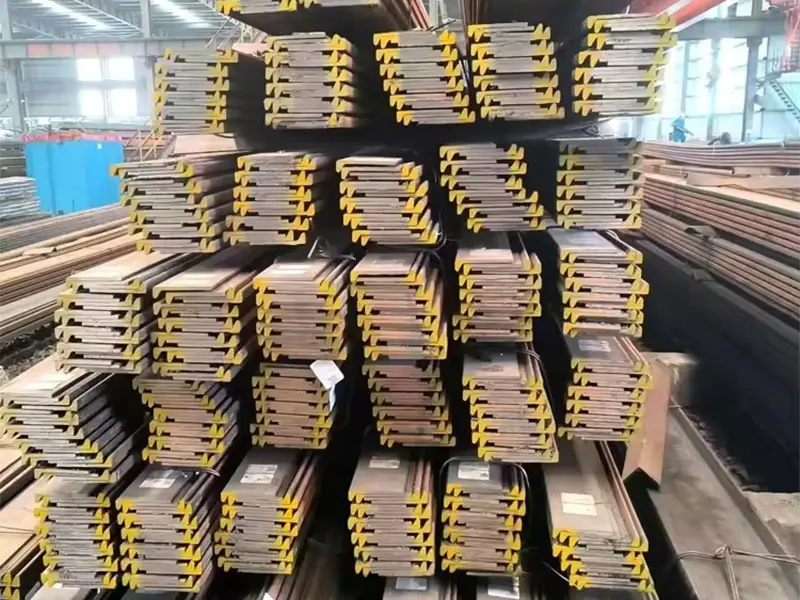
Understanding Checker Plate: Form vs. Function
This is a common misconception that can affect material selection and cost.
1. The Purpose of the Pattern.
- Slip Resistance: The raised diamonds, tears, or lugs are designed to provide traction underfoot, especially when the surface is wet or oily. This is a safety feature for walkways, stairs, and platforms.
- No Structural Contribution: The pattern adds negligible bending strength. In some cases, the pattern is formed by rolling, which can slightly thin the base material under the lug. The structural thickness for calculations is the base thickness, not the overall height including the lug.
2. Strength Comparison.
- Same Thickness, Same Grade, Same Strength: A 6mm thick checker plate1 made from Grade A steel has the same yield and tensile strength as a 6mm flat plate of Grade A steel.
- Weight Consideration: Checker plate is slightly heavier per square meter than flat plate of the same nominal base thickness because of the added material in the pattern. This is important for weight-sensitive designs like ship decks.
- Application: Use checker plate1 where people walk. Use flat plate where structural strength4 is the primary need, and the surface will be covered or is not a walking area.
3. Why This Matters for Procurement.
- Specification Clarity: If you need a structural deck plate that also serves as a walkway, you specify the required thickness and grade (e.g., "6mm Grade A steel plate, checker pattern"). The supplier knows to provide a plate with a 6mm base thickness plus the pattern.
- Cost: Checker plate typically costs slightly more per ton than flat plate due to the additional rolling step. Using it where slip resistance3 is not needed adds unnecessary cost.
My Insight from the Field
A client in Qatar was building a small service platform for a port. They ordered "heavy duty checker plate1" because they thought it was stronger. They specified a 12mm thick checker plate1, which was very expensive and heavy. We asked about the application. It was a storage platform, not a main walkway. We suggested using 10mm flat plate, which was structurally adequate and cheaper. They saved money and reduced the dead load on their structure. This simple question—asking about the use—added value. It reminded me that buyers sometimes default to a product they know without questioning if it is the right tool for the job.
What is the difference between flat and plate steel?
You are on the phone with a supplier. You ask for "flat steel." They ask, "Do you mean flat bar or steel plate?" This confusion happens constantly. Using the wrong term in your purchase order can result in receiving a box of small bars when you need large sheets for a hull. The difference is fundamental to steel procurement.
In steel industry terminology, "flat" can mean two different things. Flat steel is a broad category including plates, sheets, and coils. Steel plate is a specific product within that category: flat steel that is thick, typically over 6mm or 1/4 inch. Flat bar is a different product: a long, narrow piece of steel with a rectangular cross-section, usually less than 150mm wide. Knowing the difference prevents ordering errors.
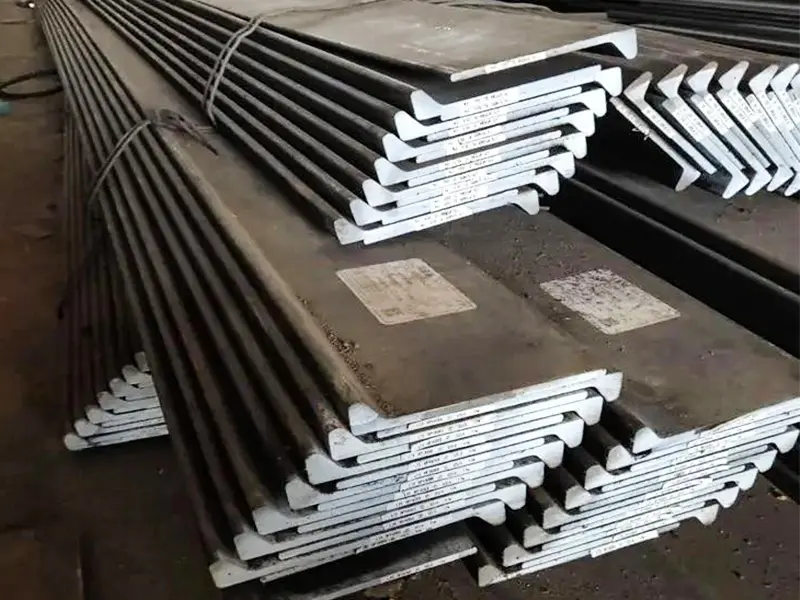
Clearing Up the Terminology Confusion
This distinction is critical for anyone ordering steel, especially for marine projects.
1. Defining the Categories.
- Flat Steel1 (The Umbrella Term): This includes any steel product that is flat in shape, as opposed to long products like beams, pipes, or rebar. Under this umbrella, we have:
- Steel Plate2: Thick, wide, flat steel. Width is much greater than thickness. Used for hulls, decks, bulkheads. Widths can be several meters.
- Steel Sheet/Coil3: Similar to plate but thinner (usually less than 6mm).
- Flat Bar4: A long, narrow strip. Width is typically from a few centimeters up to about 150mm. Thickness can vary. It is considered a long product, not a flat product, in mill terminology. It is used for brackets, frames, and stiffeners.
2. The Overlap and Confusion.
The confusion arises because a "flat bar" is flat in shape, but in the steel mill production flow, it is a long product made on a different mill (a section or bar mill) than steel plate (which is made on a plate mill).
- Plate Mill: Takes a slab and rolls it into a wide, flat sheet (plate).
- Section/Bar Mill: Takes a billet and rolls it into a long shape with a consistent cross-section, like a flat bar, angle, or bulb flat.
3. Table: Key Differences for Buyers.
| Feature | Steel Plate2 | Flat Bar4 |
|---|---|---|
| Shape | Wide, flat sheet. Width >> Thickness. | Narrow, long strip. Width is limited. |
| Typical Width | From 600mm to over 4000mm. | From 10mm up to about 150mm. |
| Typical Thickness | From 3mm to over 150mm. | From 3mm to 50mm (or more). |
| Production Mill5 | Plate mill (rolling slabs). | Section/bar mill (rolling billets). |
| Common Use | Hull plating, deck plating, bulkheads. | Stiffeners (non-bulb), brackets, framing. |
| Procurement Unit6 | Tons, with dimensions (L x W x T). | Tons, with size (Width x Thickness) and total length. |
| Example Inquiry | "Need ABS Grade A plate, 20mm x 2000mm x 6000mm." | "Need AH36 flat bar, 100mm x 12mm, 6000mm length." |
My Insight from the Field
A procurement officer in the Philippines sent us an inquiry for "Flat Steel1 12mm thick." We asked for clarification. Did they need plate (wide sheets) or flat bar (narrow strips)? They were building a small barge and needed both: 12mm plate for the hull and 12mm flat bar for internal framing. By clarifying the terms, we were able to quote for both products correctly. If we had assumed "plate," they would have received wide sheets, which they would have had to cut into strips for framing, wasting labor and material. If we had assumed "flat bar," they would have lacked the hull material. This simple clarification saved them time and money. It is now a standard question we ask on every inquiry.
What are the 4 classification of steel?
You are reading a material certificate. It says "ABS Grade AH361." What does this mean? Where does it fit? Steel is not one material. It is a family of materials with different properties. Understanding the basic classification system helps you read certificates, specify correctly, and ensure you get the right product for the marine environment.
Steel can be classified in four main ways: 1) Chemical Composition2 (Carbon Steel, Alloy Steel, Stainless Steel). 2) Manufacturing Process3 (Basic Oxygen, Electric Arc, Continuous Casting). 3) Deoxidation Practice4 (Killed, Semi-Killed, Rimmed Steel). 4) Application and Quality Standards5 (Structural Steel6, Marine Steel7 classified by societies like ABS/LR/DNV). For marine buyers, the fourth classification is the most critical.
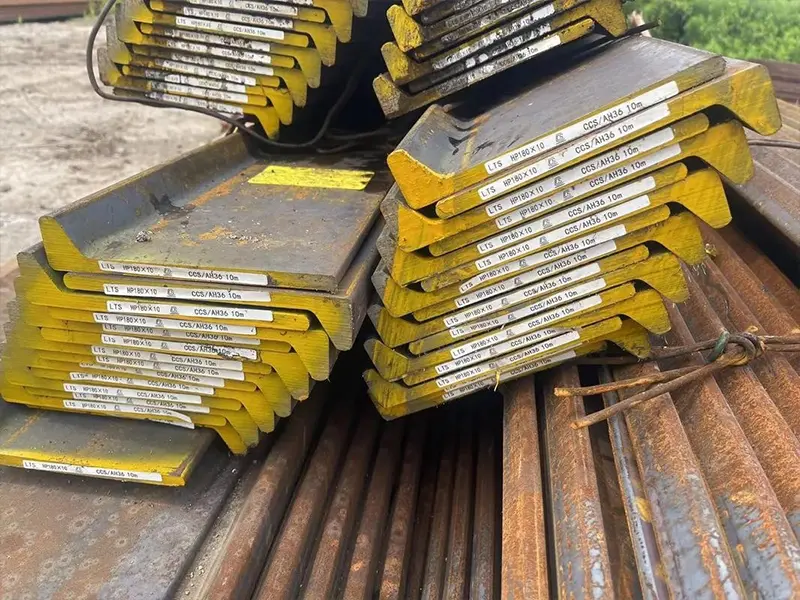
Navigating the Four Classification Systems
Each classification system gives you different information about the steel. A complete specification combines them.
1. Classification by Chemical Composition2.
This is the most fundamental. It defines the steel’s family.
- Carbon Steel: The most common. Strength comes primarily from carbon content. Low-carbon steel (mild steel) has less than 0.25% carbon. High-carbon steel has more.
- Alloy Steel: Contains significant amounts of other elements (manganese, chromium, nickel, molybdenum) to improve properties like strength, hardness, or corrosion resistance. Marine grades like AH36 are High-Strength Low-Alloy (HSLA) steels8.
- Stainless Steel: Contains at least 10.5% chromium, which forms a protective oxide layer for corrosion resistance. Used for specific marine applications like fittings or chemical tanks.
2. Classification by Manufacturing Process3.
This tells you how the steel was made, which can affect quality and cost.
- Basic Oxygen Furnace (BOF): Uses iron ore and coke. The dominant method for large-scale production of high-quality plate.
- Electric Arc Furnace (EAF): Melts scrap steel. Used for many long products and increasingly for plates, especially with "green" goals.
- Continuous Casting: Most modern steel is continuously cast into slabs or billets, improving quality and consistency.
3. Classification by Deoxidation Practice4.
This is a technical detail that affects internal soundness and weldability.
- Killed Steel: Fully deoxidized with elements like silicon or aluminum. It has a uniform composition and is used for most high-quality marine steels. "Killed" means there is no gas evolution during solidification.
- Semi-Killed & Rimmed Steels: Less deoxidation. Used for less critical applications. You will rarely see these specified for primary marine structures.
4. Classification by Application and Quality Standard (The Marine Buyer’s Focus).
This is the system you must master. It groups steels by their intended use and the quality level required. This is where classification societies come in.
- Structural Steel6: General construction steels like ASTM A36. Not suitable for primary marine structures.
- Pressure Vessel Steel9: For boilers and tanks.
- Marine Steel7: Produced to meet the rules of classification societies. This is not a single standard, but a set of requirements covering chemistry, mechanical properties, and testing. Examples:
- ABS (American Bureau of Shipping): Grades A, B, D, E (normal strength); AH32, DH32, EH32, AH36, DH36, EH36, etc. (high strength).
- Lloyd’s Register (LR): Similar grade designations.
- DNV (Det Norske Veritas): Uses a different code but equivalent properties.
5. Table: Marine Steel7 Grades by Application Classification.
| Classification Society | Normal Strength Grade | High Strength Grade (315 MPa) | High Strength Grade (355 MPa) | Typical Application |
|---|---|---|---|---|
| ABS | Grade A | AH32 | AH36 | Hull plates, bulb flats, angles for general shipbuilding. |
| LR | Grade A | AH32 | AH36 | Same. The grade requirements are harmonized. |
| DNV | NV A | NV A32 | NV A36 | Same. |
| Key Requirement | Impact tested10? (Grade A may not be) | Impact tested10 at 0°C or -20°C. | Impact tested10 at -20°C or -40°C. | Ensures toughness at operating temperature. |
My Insight from the Field
A new buyer in Malaysia asked us for a quote on "steel angle, high strength." This was too vague. We explained the need to specify the exact classification. We asked, "Is this for a classed vessel? Which society? ABS, LR, or DNV?" We also asked about the vessel’s operating route to suggest the appropriate toughness grade (AH36 vs DH36). They appreciated the guidance. Their previous supplier had just sent them a generic high-strength angle without proper certification. It was rejected by their client. Our questions prevented this. The lesson is that the "classification by application" is the most important check for a marine buyer. It ties the material directly to the project’s regulatory requirements.
Conclusion
Before ordering bulb flat steel, your checklist must be complete. Verify dimensions, grade, certification, and the supplier’s mill source. Understanding steel classification and terminology protects your project from costly errors and delays.
-
Understanding ABS Grade AH36 is essential for ensuring compliance with marine construction standards. ↩ ↩ ↩ ↩ ↩ ↩ ↩ ↩ ↩ ↩ ↩ ↩
-
Understanding chemical composition is crucial for selecting the right steel for specific applications. ↩ ↩ ↩ ↩ ↩ ↩ ↩ ↩ ↩ ↩ ↩
-
The manufacturing process can significantly influence the quality and cost of steel, making it essential to know. ↩ ↩ ↩ ↩ ↩ ↩ ↩
-
Deoxidation practices impact the internal quality of steel, affecting its performance in critical applications. ↩ ↩ ↩ ↩ ↩ ↩ ↩
-
Familiarity with application standards ensures compliance with safety and performance requirements in marine environments. ↩ ↩ ↩
-
Structural steel is fundamental in construction, and knowing its properties helps in selecting the right materials. ↩ ↩ ↩
-
Marine steel is specifically designed for marine applications, ensuring durability and safety in harsh environments. ↩ ↩ ↩
-
HSLA steels offer enhanced strength and are vital for structural applications in marine engineering. ↩
-
Pressure vessel steel is critical for safety in boilers and tanks, making its specifications vital for engineers. ↩
-
Impact testing ensures that steel can withstand harsh marine conditions, which is crucial for safety. ↩ ↩ ↩