
Bad steel arrives. You pay for it. Then your project stops. That is a nightmare.
Buyers must check four things: mill certificates and approvals, correct dimensions and tolerances, surface defects and corrosion risks, plus packaging and loading supervision.
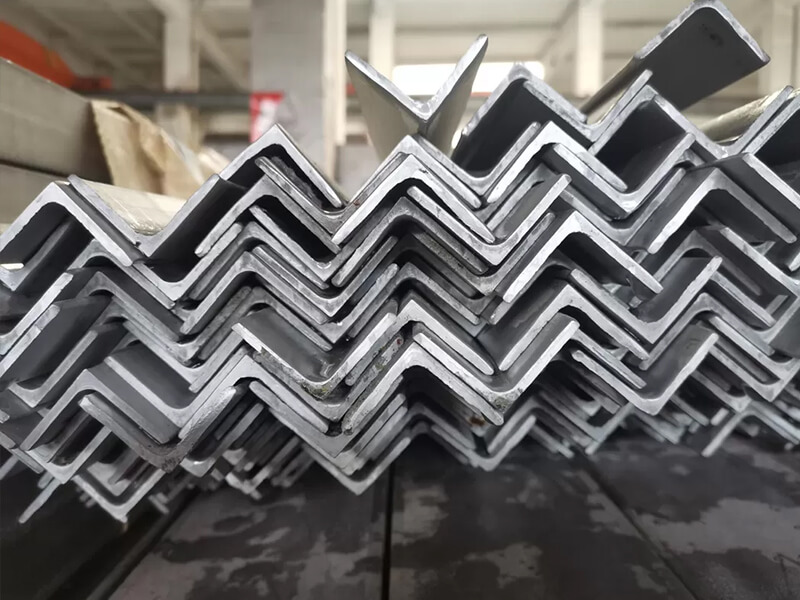
I have seen too many buyers make the same mistakes. They trust a cheap price. They skip the checks. Then they call me for help. Let me walk you through the real checks that work. I use these checks for my own clients. You can use them too.
How to Verify Mill Test Certificates and Classification Society Approvals?
A fake certificate is easy to print. Many buyers never check the details. Then they fail the port inspection.
You verify by matching the heat number1 on the certificate to the steel. You also confirm the classification society (ABS, DNV, LR, etc.) is real and active.
[^2] and classification approval document](https://cnmarinesteel.com/wp-content/uploads/2025/10/Marine-angle-steel-16.jpg)
Why a piece of paper can save your project
I had a buyer from Thailand. He sent me a certificate from his previous supplier. It looked perfect. But when I checked the heat number online, nothing showed up. The classification society logo was also wrong. The font was off. That steel was not certified at all. He had already paid for 200 tons. He lost his money.
So do not just look at the certificate. Dig into it.
Step one: Check the mill test certificate (MTC). A real MTC has these items:
- Heat number (unique for each batch)
- Chemical composition (C, Mn, Si, P, S, etc.)
- Mechanical properties (yield strength, tensile strength, elongation)
- Mill name and address
- Signature and stamp
Ask your supplier for a scanned copy before you pay. Then call or email the mill to confirm the heat number. I do this for my clients. I can show you a real MTC from our partner mills.
Step two: Verify the classification society approval2. Different ships need different approvals. Here is a simple table:
| Classification Society | Common Abbreviation | Typical Ship Types We Supply |
|---|---|---|
| American Bureau of Shipping | ABS | Bulk carriers, container ships |
| Bureau Veritas | BV | Oil tankers, LNG carriers |
| China Classification Society | CCS | General cargo, coastal vessels |
| Det Norske Veritas | DNV | Offshore vessels, tankers |
| Korean Register | KR | Bulk carriers, container ships |
| Lloyd’s Register | LR | All ship types |
| Nippon Kaiji Kyokai | ClassNK | Bulk carriers, car carriers |
| Registro Italiano Navale | RINA | Passenger ships, tankers |
I always ask my clients which society they need. Then I get the steel from a mill that has that approval. Do not assume one approval fits all.
Step three: Use third-party inspection3 to confirm everything. SGS or TÜV can check the steel and the certificates at the same time. They will take samples. They will test the material. Then they give you a report. This costs money. But it is much cheaper than rejecting a whole container later.
One of my clients from Saudi Arabia uses SGS for every order. He told me that one good inspection saved him from three bad suppliers before he found me.
What Dimensions and Tolerances Should You Measure Before Shipment?
Steel that looks right can be wrong by a few millimeters. Those millimeters cause welding problems and weak spots.
You must measure the leg length, leg thickness, radius, and straightness. Compare them to the standard tolerance like ASTM A6 or JIS G3192.
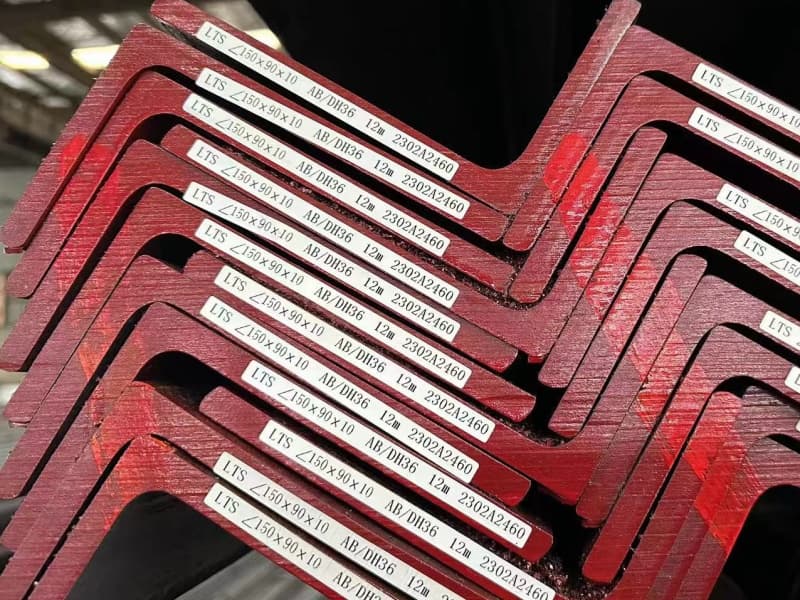
Small differences create big trouble
I remember a buyer from the Philippines. He ordered L100x100x10 angle steel. The steel arrived. His workers started cutting. But the steel did not fit the brackets. The leg thickness was only 9.2mm instead of 10mm. The whole batch was useless. He had to air freight new steel. That cost him three times more.
So measure before you pay. Here is how.
First, know the standard tolerances1. For marine angle steel, most buyers use ASTM A6 or JIS G3192. These standards allow small variations. But the variations have limits.
| Dimension | Standard Tolerance (ASTM A6) | What Happens If It Fails |
|---|---|---|
| Leg length (L) | ± 3.2mm for L ≤ 150mm | Poor fit with other structures |
| Leg thickness (t) | ± 0.4mm for t ≤ 12mm | Reduced strength, welding issues |
| Radius (r) | ± 1.5mm | Stress concentration points |
| Straightness | 1/8 inch per 5 feet | Difficult to align during assembly |
Second, ask your supplier for measurement photos or videos. I send my clients clear photos with a ruler or caliper next to the steel. I also offer video calls. You can watch me measure the steel live. That builds trust.
Third, use a third-party inspector4 at the loading port. They bring calibrated tools2. They take random samples from different bundles. Then they give you a dimension report3. If the steel is out of tolerance, you can reject it before it ships.
I have a client from Mexico who does this for every order. He pays $300 for an inspection. That small fee has saved him from three bad shipments in two years.
A quick measurement checklist for you
Print this list and give it to your supplier or inspector.
- Leg length (both legs) – compare to order spec
- Leg thickness (at least three points per piece)
- Inner radius and outer radius
- Straightness along 1 meter length
- End cut squareness (no slanted cuts)
- Twist or bow (lay on flat surface)
If any item fails, ask for replacement or a discount. I accept returns for out-of-tolerance steel. Not all suppliers do. So ask before you order.
How to Spot Surface Defects and Corrosion Risks on Marine Angle Steel?
Rust and pits do not just look bad. They weaken the steel. They also fail coating and welding.
You spot defects by visual check and simple tests. Look for deep pitting1, lamination4s, cracks, and red rust. Also check storage conditions2 at the supplier’s yard.
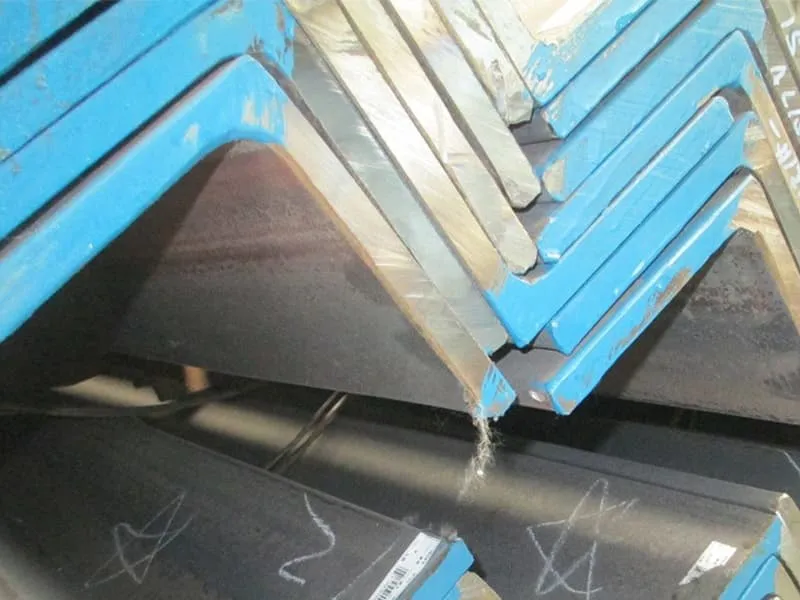
What hides under a coat of black paint?
I had a client from Vietnam. He received angle steel that looked fine on top. But when his workers cut a piece, they saw layers of scale and pitting inside. The supplier had painted over bad steel. The client lost two weeks of work.
So do not trust a pretty surface. Dig deeper.
First, know the common surface defects3. Here is a table of what to look for.
| Defect | How It Looks | Why It Is Bad |
|---|---|---|
| Red rust | Bright orange or red color | Active corrosion, will get worse |
| Deep pitting | Small holes deeper than 0.5mm | Stress points, coating failure |
| Lamination | Thin layers peeling off | Weak structure, hidden cracks |
| Rolled-in scale | Dark, flaky patches | Poor surface for welding |
| Cracks | Thin lines along or across the steel | Structural failure risk |
| Overlap | Folded metal on the surface | Hidden void underneath |
Second, ask about storage and handling. Steel that sits on wet ground will rust from the bottom. Steel that stays outside for months will get pitting. I store all my marine angle steel on wooden racks under a roof. I also keep a dehumidifier in the warehouse. That is not common for Chinese suppliers. But I do it because my clients need clean steel.
Third, do a simple field test. Take a sample piece. Scratch the surface with a knife or screwdriver. If the coating comes off easily or if the metal underneath is flaky, reject it. You can also use a magnet test. But that is more for stainless steel. For carbon steel, a visual check with good light is enough.
I once had a buyer from Qatar. He sent me a video of his previous steel. He scratched the surface with his fingernail. The rust powder fell off like dust. That steel was already failing. He switched to my supply after that.
Your surface inspection checklist
- No red rust on more than 5% of the surface
- No pits deeper than 0.3mm
- No visible cracks or laminations
- No heavy mill scale that flakes off
- Steel stored on dry, raised surface
- Steel covered or indoors
Ask your supplier for photos of their storage yard. If you see steel on dirt or gravel, be careful.
Why Is Proper Packaging and Loading Supervision Critical for Sea Freight?
Bad packaging destroys good steel. The steel leaves the factory clean. It arrives at your port rusty and bent.
Proper packaging means waterproof wrapping, edge protectors, and strong steel straps. Loading supervision means someone checks how the steel goes into the container or onto the flat rack.
[^1]](https://cnmarinesteel.com/wp-content/uploads/2025/10/Marine-angle-steel-7.jpg)
How steel gets ruined on a ship
I remember a client from Malaysia. He ordered 300 tons of angle steel. The supplier put it on a flat rack with just two straps. During the voyage, the ship hit rough seas. The steel shifted. It rubbed against itself for 20 days. When it arrived, every piece had deep scratches and bent ends. He could not use 40% of the steel.
So packaging is not extra. It is essential.
First, know the three layers of good packaging.
| Layer | Material | Purpose |
|---|---|---|
| Inner wrap | VCI paper or plastic film | Prevents moisture contact |
| Middle wrap | Waterproof tarpaulin or PE sheet | Blocks rain and sea spray |
| Outer binding | Steel straps + edge protectors | Keeps bundle tight, prevents cutting |
I use all three layers for every sea shipment. It costs a little more. But my clients get clean steel even after 30 days on the water.
Second, check how the steel is loaded. For containers, the steel should not touch the container walls directly. Use dunnage (wood or rubber) as spacers. For flat racks, the steel must be secured with multiple straps and blocked with wood. Each layer should have separators.
I always supervise the loading personally or send a staff member. I also take photos of every stage. Then I share those photos with my clients. That gives them peace of mind.
Third, ask for loading supervision4 by a third party. If you do not trust the supplier, hire an inspector at the loading port. They will check the packaging material2 and the loading method. They will also witness the steel going into the container. Then they seal the container and give you a report.
One of my clients from Saudi Arabia uses a local inspection company in Qingdao port. That inspector sends him real-time photos during loading. He told me that this system stopped two suppliers from shipping poorly packaged steel.
Your packaging and loading checklist3
- Waterproof wrapping on every bundle
- Edge protectors under all steel straps
- At least four straps per bundle
- Wood or rubber dunnage between steel and container floor
- No overloading (check weight limit of container)
- Photos taken during loading and after sealing
Ask your supplier: “Can you send me loading photos within 24 hours of shipment?” If they say no, find another supplier.
Conclusion
Check the certificates, measure the steel, inspect the surface, and watch the packaging. These four checks save your money and time.
-
Explore this link to learn essential techniques for protecting marine angle steel during shipping, ensuring it arrives in perfect condition. ↩ ↩ ↩
-
Discover the most effective packaging materials for sea freight to protect your goods from moisture and damage during transit. ↩ ↩ ↩ ↩
-
A comprehensive loading checklist is crucial for ensuring all safety measures are followed, preventing costly shipping errors. ↩ ↩ ↩ ↩
-
Understanding the significance of loading supervision can help you prevent damage to your cargo and ensure safe transport. ↩ ↩ ↩