Other countries make marine steel plates. But China delivers more tons, faster, and at lower cost.
China’s competitiveness comes from large‑scale modern mills, vertical integration of raw materials, global certifications, and a mature port‑to‑port logistics network that cuts delivery time and cost.
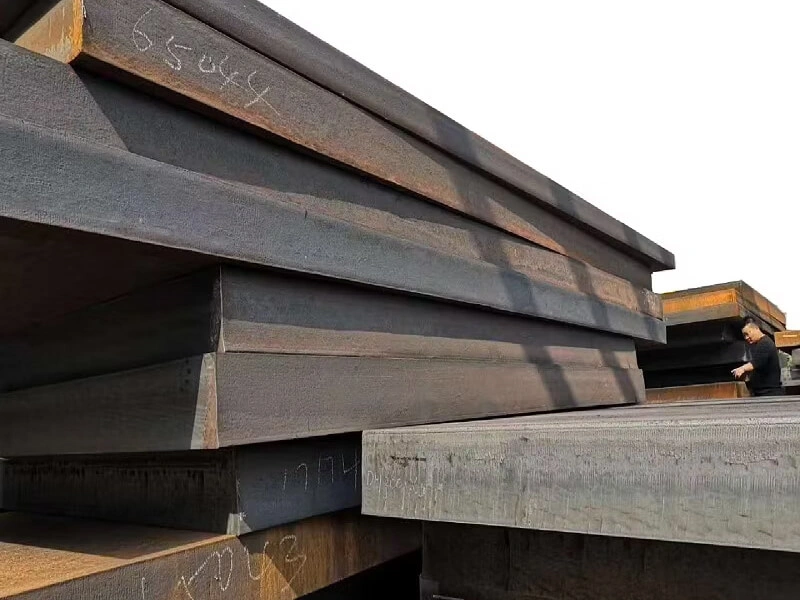
I have visited mills in many countries. I have seen how they roll steel. China is different. It is not one thing. It is a system. The scale, the supply chain, the quality standards, and the logistics all work together. Let me walk you through the four pillars that make Chinese marine steel plates competitive on the global market.
How Do Large‑Scale Production Capacity and Modern Mills Drive Down Costs?
A small mill produces 500,000 tons per year. A large Chinese mill produces 10 million tons. The large mill spreads fixed costs over more steel.
Large‑scale production allows Chinese mills to achieve lower cost per ton through economies of scale. Modern equipment – continuous casting, automated rolling lines – reduces labor and energy costs per ton. This cost advantage passes to buyers.
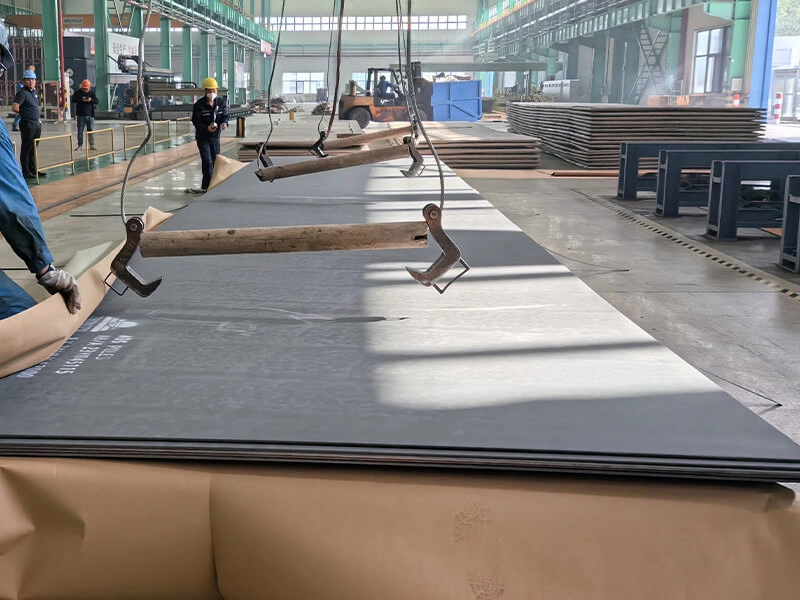
Why bigger is cheaper in steel
I remember a buyer from Mexico. He asked me: "Why are Chinese prices lower than European prices for the same grade?" I explained scale. A European mill might produce 2 million tons per year. A Chinese mill like Baowu produces over 100 million tons. That is 50 times bigger. Fixed costs like R&D, equipment depreciation, and management are spread over 50 times more steel.
So let me break down the cost advantages of scale.
First, the numbers behind scale. Here is a comparison of production costs per ton across different mill sizes.
| Mill Size (million tons/year) | Fixed Cost per Ton | Variable Cost per Ton | Total Cost per Ton | Typical Market |
|---|---|---|---|---|
| 0.5 | $120 | $550 | $670 | Specialty, local |
| 2 | $80 | $530 | $610 | Regional |
| 5 | $60 | $520 | $580 | Large regional |
| 10 | $45 | $510 | $555 | Global |
| 20+ | $35 | $500 | $535 | Global leader |
Chinese mills in the 10‑20+ million ton category have a $75‑135 per ton cost advantage over small mills.
Second, modern equipment reduces labor and energy. Chinese mills have invested heavily in new technology.
| Process | Old Equipment | Modern Chinese Equipment | Saving |
|---|---|---|---|
| Steelmaking | Open hearth (obsolete) | Basic oxygen furnace (BOF) or electric arc | 20‑30% energy saving |
| Casting | Ingot casting | Continuous casting | 15‑20% yield improvement |
| Rolling | Manual control | Automated computer control | Lower labor cost, consistent quality |
| Cooling | Natural cooling | Accelerated cooling system | Faster production, better properties |
I have walked through mills in Shandong and Hebei. The automation is impressive. One operator controls a whole rolling line from a glass room.
Third, how scale translates to lower buyer prices. The cost saving flows through the supply chain.
| Cost Component | Small Mill | Large Chinese Mill | Difference |
|---|---|---|---|
| Raw material purchase | Market price | Volume discount (3‑5%) | Lower |
| Labor per ton | Higher | Lower (automated) | Lower |
| Energy per ton | Higher | Lower (efficiency) | Lower |
| Financing cost | Higher interest | Lower (state‑backed) | Lower |
| Final plate price to buyer | $750‑850/ton | $600‑700/ton | $100‑150 saving |
What this means for you
As a buyer, you get the cost benefit. But you also need to choose the right mill. Very large mills have high MOQ (500‑1000 tons). For smaller projects, medium mills (5‑10 million tons) offer a good balance of cost and flexibility.
I work with both. My clients get the scale advantage without the MOQ problem.
What Role Does Vertical Integration of Raw Materials and Energy Play in Price Stability?
Steel prices jump when iron ore or coal prices spike. Mills that buy raw materials on the open market feel the full shock.
Chinese mills are often vertically integrated – they own iron ore mines or have long‑term contracts. Some also own power plants or have state‑backed energy pricing. This reduces exposure to spot market volatility and keeps prices more stable for buyers.
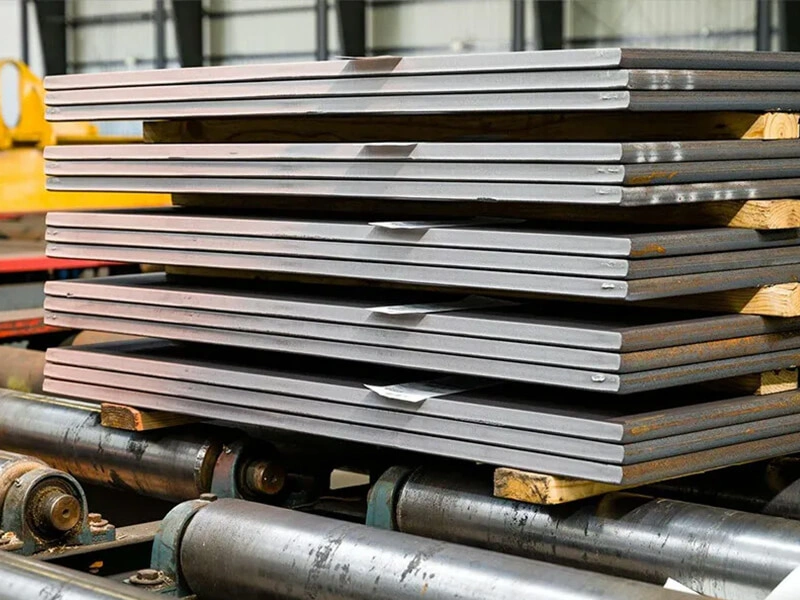
How owning the mine protects your price
I remember 2021. Iron ore prices doubled in six months. Many non‑integrated mills raised prices by 40‑50%. But some large Chinese mills with captive mines or long‑term contracts raised prices by only 15‑20%. My clients who bought from those mills saved thousands of dollars.
So let me explain vertical integration.
First, what vertical integration means in steel. The steel production chain has several steps:
| Step | Material/Service | Integrated Mill | Non‑Integrated Mill |
|---|---|---|---|
| Mining | Iron ore | Owns mines or has joint venture | Buys on spot market |
| Processing | Coke from coal | Owns coking plants | Buys coke |
| Energy | Electricity, gas | Owns power plant or state‑rate | Buys at market rate |
| Shipping | Logistics | Owns port facilities or fleet | Hires third party |
An integrated mill controls more of these steps. A non‑integrated mill buys everything at market prices.
Second, how integration stabilizes prices. When iron ore prices spike, an integrated mill’s cost increases only slightly (their own mine still produces at a fixed cost). They can keep prices stable. A non‑integrated mill’s cost jumps immediately.
| Market Event | Integrated Mill Price Change | Non‑Integrated Mill Price Change |
|---|---|---|
| Iron ore up 50% | +10‑15% | +30‑40% |
| Coal price up 30% | +5‑10% | +20‑25% |
| Energy price up 20% | +0‑5% (state power) | +15‑20% |
Third, examples of Chinese vertical integration.
-
Baowu Group – owns iron ore assets in Australia and Africa. Also has joint ventures with major miners for long‑term supply at fixed pricing.
-
HBIS Group – owns coking coal assets and has its own power generation.
-
Shagang Group – private mill but has long‑term contracts with ore suppliers and owns shipping logistics.
Even smaller Chinese mills benefit from state‑backed energy pricing. Industrial electricity in China is often lower than in Europe or the US.
Fourth, the buyer benefit: less price surprise.
| Buying from | Price Volatility (Year‑to‑Year) | Typical Lead Time for Price Change |
|---|---|---|
| Non‑integrated mill | ±30‑50% | Immediate (days) |
| Integrated Chinese mill | ±15‑25% | 30‑60 days notice |
As a buyer, you can plan better when prices move predictably.
What to ask your supplier about vertical integration
- Does your mill own or have long‑term contracts for iron ore?
- How much of your coking coal is secured by contract (vs spot)?
- What is your typical price adjustment notice period?
I ask my mill partners these questions. Then I pass the stability to my clients.
How Have Chinese Mills Achieved Global Certifications (ABS, DNV, LR) and Consistent Quality?
Twenty years ago, Chinese marine steel was seen as lower quality. Today, it holds the same certifications as European, Japanese, and Korean steel.
Chinese mills have invested heavily in quality control systems, third‑party audits, and continuous training. Today, over 30 Chinese mills hold ABS, DNV, LR, BV, CCS, and other classification society approvals. Quality consistency is maintained through ISO 9001, six sigma, and automated inspection.
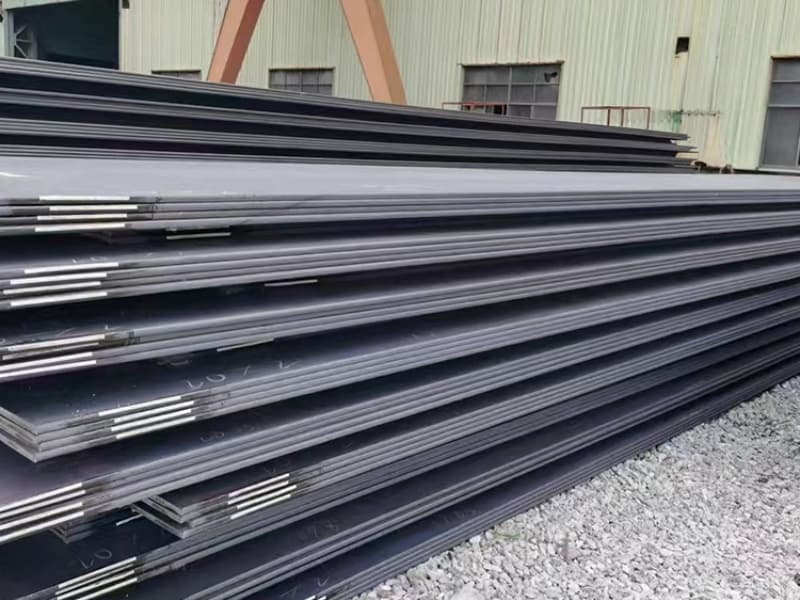
From "cheap" to "certified" – the quality journey
I had a client from Saudi Arabia. He hesitated to buy Chinese marine steel. He remembered stories from 15 years ago about bad quality. I showed him the ABS and DNV certificates from my mill. I offered SGS inspection. He took a trial order. The steel passed every test. He is now a regular buyer.
So let me show you how Chinese mills gained global trust.
First, the certification timeline.
| Decade | Status | Key Development |
|---|---|---|
| 1990s | Limited certifications | Mostly CCS (China) only |
| 2000s | Early international approvals | First mills get ABS, DNV |
| 2010s | Mass certification | Most large mills have multiple approvals |
| 2020s | Full global standards | Chinese mills compete with Japan, Korea on quality |
Now, 30+ Chinese mills have at least two major international approvals. Many have all six (ABS, DNV, LR, BV, NK, RINA).
Second, the cost of certification – and why mills invest. Getting a classification society approval is expensive and time‑consuming.
| Step | Time | Cost (USD) |
|---|---|---|
| Mill self‑assessment | 1‑2 months | Internal |
| Classification society audit | 1‑2 months | $50,000‑100,000 |
| Trial production and testing | 2‑4 months | $100,000‑200,000 |
| Ongoing annual audit | Every year | $20,000‑40,000 |
Mills invest because certified steel sells at a premium and opens global markets.
Third, quality control systems that ensure consistency.
| System | What It Does | Adoption in Top Chinese Mills |
|---|---|---|
| ISO 9001 | Basic quality management | Nearly 100% |
| Six Sigma | Reduces variation | Large mills |
| Statistical process control (SPC) | Real‑time monitoring | Modern mills |
| Third‑party audits (SGS, BV) | Independent verification | Common for export |
I visit my mill partners regularly. I see their labs, their testing equipment, their records. The best mills have better quality control than many European mills I have seen.
Fourth, real quality metrics from Chinese mills.
| Metric | Typical Value | Comparison |
|---|---|---|
| MTC accuracy (heat number match) | 99.7% | Same as Japan, Korea |
| Dimensional tolerance within spec | 98‑99% | Slightly below Japan (99.5%) but above many others |
| Surface defect rate | <2% | Comparable to global standard |
| Third‑party inspection pass rate | 95‑98% | Very good |
Chinese steel is not “premium” like some Japanese brands. But for the price, the quality‑to‑cost ratio is exceptional.
What this means for you
You can buy Chinese marine steel plate with confidence – as long as you buy from a certified mill and a reputable supplier. I always provide the mills current approval list. I also offer SGS inspection for buyers who want extra verification.
Why Is Proximity to Major Ports and a Mature Export Logistics Network a Strategic Advantage?
Steel is made inland. It must reach a port. Then a ship. Then your country. Every delay costs money.
China has built massive port infrastructure near steel‑producing regions. Qingdao, Tianjin, Shanghai, and Ningbo are world‑class ports with high efficiency and low handling costs. A mature logistics network – trucking, rail, warehousing, freight forwarding – moves steel from mill to vessel quickly and cheaply.
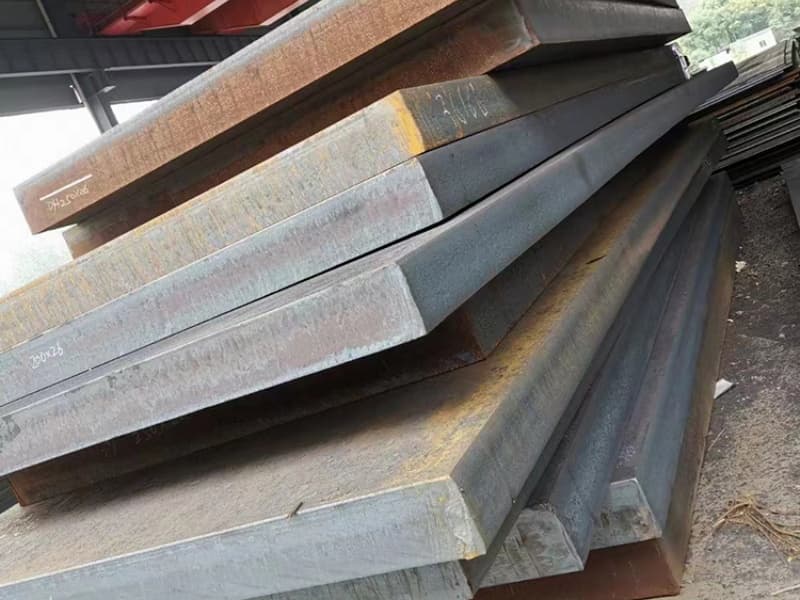
How logistics cuts days and dollars from your delivery
I remember a client from Romania. He compared buying from China versus a closer European mill. The European mill had lower freight cost but much higher steel price. The total cost was similar. But the logistics from China were faster and more predictable because of the port infrastructure. He chose China.
So let me explain the logistics advantage.
First, major ports near steel mills.
| Port | Nearby Steel Cities | Distance (km) | Annual Container Volume (million TEU) |
|---|---|---|---|
| Qingdao | Liaocheng, Jinan, Zibo | 400‑500 | 25+ |
| Tianjin | Tangshan, Beijing region | 150‑200 | 20+ |
| Shanghai | Baoshan, Jiangsu mills | 0‑100 | 47+ |
| Ningbo | Hangzhou Bay mills | 0‑50 | 35+ |
Steel can be trucked from mill to port in one day. That is fast.
Second, port efficiency and cost. Chinese ports rank among the most efficient in the world.
| Metric | Chinese Major Port | US Port | European Port |
|---|---|---|---|
| Container crane productivity (moves/hour) | 30‑40 | 20‑25 | 25‑30 |
| Truck turnaround time | 30‑45 min | 60‑90 min | 45‑75 min |
| Port handling cost per ton (steel) | $10‑15 | $25‑35 | $20‑30 |
Lower port costs mean lower CIF prices for you.
Third, the logistics ecosystem. It is not just ports. It is everything around them.
- Freight forwarders – hundreds of experienced forwarders specializing in steel exports
- Container availability – high volume means empty containers are plentiful
- Shipping line competition – multiple lines (Maersk, MSC, COSCO, ONE, etc.) compete for your cargo
- Rail connections – direct rail from some mills to ports reduces trucking cost
I work with forwarders who handle all steel export documentation. They know which shipping line has space, which port is least congested, and how to consolidate LCL shipments.
Fourth, how logistics speed translates to lead time.
| Origin | Port | Sea Freight Time to (e.g., Jebel Ali, UAE) | Total Lead Time (port to port) |
|---|---|---|---|
| Liaocheng (via Qingdao) | Qingdao | 18‑22 days | 25‑30 days |
| Tangshan (via Tianjin) | Tianjin | 18‑22 days | 25‑30 days |
| Any inland Chinese location | Any major port | 20‑25 days | 30‑35 days (inland trucking adds days) |
Compare to other origins:
| Origin | Lead Time to Jebel Ali |
|---|---|
| China (major port) | 25‑30 days |
| Japan / Korea | 20‑25 days (slightly faster) |
| Europe (via Suez, but longer land transport) | 35‑50 days |
| Brazil | 35‑45 days |
China is competitive on speed, especially for Asia and Middle East destinations.
What this means for you
The port and logistics network means you get steel faster and with lower freight cost than from many other sources. I handle all logistics for my clients – from mill to port to vessel. You get one tracking number and one delivery date.
Conclusion
Scale drives cost down. Integration stabilizes price. Certifications prove quality. Ports deliver fast. That is China’s competitive edge in marine steel plate manufacturing.