
Are you tired of suppliers who only focus on price and ignore quality and service? Modern shipyards face immense pressure to deliver projects on time and on budget. Their expectations from steel suppliers have fundamentally shifted beyond simple transactions.
Shipyards today expect marine angle steel suppliers to be reliable partners. They demand consistent, certified quality, fast and clear communication, flexible logistics support, and proactive problem-solving. The focus is on total value, which includes technical support, reliable delivery, and the ability to adapt to changing project needs.
These high expectations are driven by the high stakes of shipbuilding. But to fully understand them, we need to look at the technical foundation. A supplier can only meet these expectations if they truly understand the material they are selling. Let’s explore the core knowledge that separates a true partner from a simple vendor. We will look at the best steel for the sea, the basic types of steel, the specific types of angle steel, and where production is heading.
What is the best steel for marine use?
Are you using general structural steel in your marine projects to save cost? This short-term saving can lead to long-term disasters like corrosion, cracking, and failed inspections. The marine environment is one of the most corrosive on Earth, and the steel must be engineered for it.
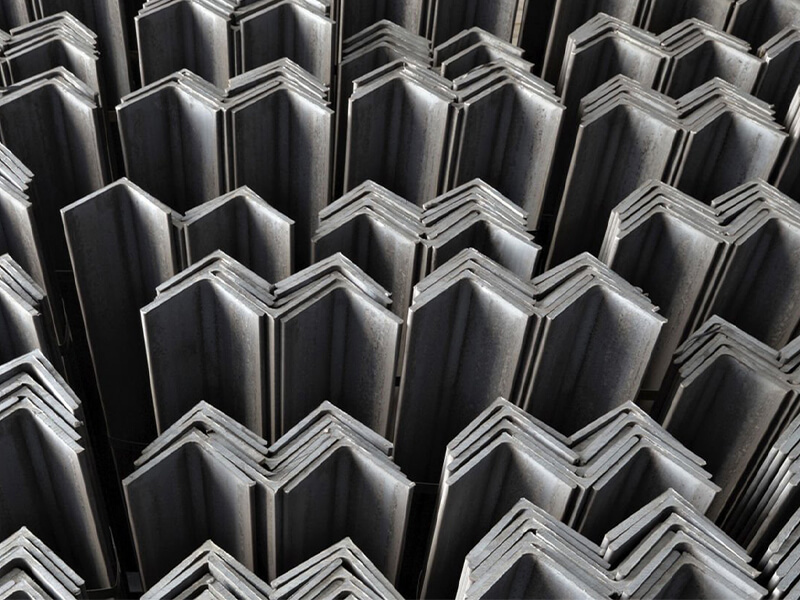
The best steel for marine use is high-strength, low-alloy (HSLA) carbon steel1 with specific grades certified by marine classification societies2. Grades like AH36, DH36, EH36, or S355 grades with specified toughness (J2, K2) are common. These steels offer an optimal balance of strength, weldability, toughness (especially at low temperatures), and enhanced corrosion resistance3.
Beyond "Strong Steel": The Specifics of Marine-Grade Performance
Saying "marine-grade steel" is not enough. We need to define what makes it special. It is a combination of mechanical properties, chemical composition, and production controls designed for a harsh, wet, and salty life.
First, let’s talk about strength and toughness. Marine steels have high yield strength (the 36 in AH36 means 355 MPa yield strength). This allows for thinner, lighter structures. But strength alone is dangerous in cold water. The steel must also be tough. Toughness is the ability to absorb energy and deform without shattering. The prefix letter (A, D, E) indicates the test temperature for toughness. ‘A’ is for ambient temperatures, ‘D’ is for -20°C, and ‘E’ is for -40°C. For ships operating in Arctic routes or deep, cold waters, ‘E’ grade steel is mandatory. Using an ‘A’ grade in such conditions could lead to catastrophic brittle fracture.
Second, we must consider corrosion resistance3. While no carbon steel is fully rust-proof, marine grades are better. They achieve this through a carefully controlled chemical composition. Lower levels of impurities like sulfur and phosphorus improve resistance. Sometimes, small additions of elements like copper, chromium, or nickel are made to enhance atmospheric corrosion resistance3. The steel’s surface condition also matters. Proper removal of mill scale via shot blasting and the application of a good primer are part of the "best" solution.
Third, and critically important, is weldability4. A ship is a giant welded structure. The steel must be easy to weld without forming brittle zones in the heat-affected area. This is controlled by the Carbon Equivalent Value (CEV)5. A lower CEV means better weldability4. Reputable mills control the CEV tightly. A supplier must be able to provide the CEV on the Mill Test Certificate (MTC)6. I have seen projects delayed because the delivered steel had a CEV higher than allowed, requiring special, slow welding procedures.
Finally, certification and traceability7 are part of the "best" definition. The steel must be produced to a recognized standard (like ABS, LR, DNV-GL, or EN 10225) and come with full, heat-number traceable MTCs. This is not optional. It is the shipyard’s proof of compliance to the ship owner and the classification society.
Here is a comparison of key properties:
| Property | General Structural Steel | Marine-Grade Steel (e.g., AH36/DH36) |
|---|---|---|
| Primary Purpose | Buildings, bridges, general construction. | Ships, offshore platforms, coastal structures. |
| Corrosion Focus | Basic atmospheric resistance. | Enhanced resistance to saltwater spray and immersion. |
| Toughness Requirement | Often specified for ambient temperature only. | Mandatory impact testing at low temperatures (0°C, -20°C, -40°C). |
| Certification | Mill certificate may be generic. | Must be produced under survey of a classification society with full traceability. |
| Weldability Control | CEV may not be tightly controlled. | CEV is strictly limited and reported. |
A shipyard’s expectation is that their supplier understands all this. They don’t want to educate their vendor. They expect the vendor to already know that an order for "ship angle steel" means certified, low-CEV, toughness-graded material. Our client feedback highlights this: "The product quality is stable." This stability comes from our deep understanding of these marine-grade specifics and our partnerships with mills that specialize in them.
What are the 4 types of steel?
Do you classify steel only as "mild" or "stainless"? This oversimplification can cause major specification errors. Understanding the four basic types is essential for selecting the right material for each part of a ship.
The four main types of steel are: Carbon Steel1, Alloy Steel2, Stainless Steel3, and Tool Steel4. Each type is defined by its chemical composition and resulting properties. In shipbuilding, Carbon Steel1 and Alloy Steel2 (specifically High-Strength Low-Alloy or HSLA steel) are used for the vast majority of structural components.
Navigating the Steel Family: Composition, Use, and Cost in Shipbuilding
Knowing the names is just the start. A shipyard procurement manager needs to know why these types exist and where they are used. Let’s break them down in the context of marine construction.
1. Carbon Steel1
This is the most common type. Its properties are primarily determined by the carbon content.
- Low Carbon (Mild Steel): Carbon content <0.25%. It is ductile, tough, and easy to weld and form. It is used for non-critical secondary structures, handrails, and some brackets. It is not typically used for primary hull structures in modern ships because its strength is too low.
- Medium & High Carbon Steel1: These are stronger but harder to weld and less tough. They are rarely used in shipbuilding due to poor weldability and risk of brittle fracture.
2. Alloy Steel2
This is where most marine structural steel lies. Alloy steel adds other elements (like manganese, silicon, nickel, chromium, molybdenum) in larger amounts than carbon steel to achieve specific properties.
- High-Strength Low-Alloy (HSLA) Steel5: This is the workhorse of shipbuilding (e.g., AH/DH/EH grades). It uses small additions of alloys (like niobium, vanadium) to achieve much higher strength and better toughness than mild steel, while maintaining good weldability. This is the "best steel for marine use" we discussed earlier.
3. Stainless Steel3
Stainless steel contains a minimum of 10.5% chromium, which forms a passive, self-healing oxide layer that provides excellent corrosion resistance.
- Use in Ships: It is not used for hull structures due to its high cost and different thermal expansion properties. It is used selectively for specific components: piping systems for ballast or fuel, kitchen galley equipment, decorative fittings, and sometimes for tanks carrying corrosive chemicals. It is a specialty material.
4. Tool Steel4
This steel is alloyed and heat-treated to be very hard and wear-resistant. It is used for cutting, drilling, and forming tools—like the drills, punches, and shear blades in the shipyard's workshop. It is not a construction material for the ship itself.
The key insight for shipyards is this: Most of the ship is HSLA Alloy Steel2. When you partner with a supplier, you need them to be experts in this category. They should understand the nuances between S355J2 and S355K2, or between AH36 and DH36. A supplier who mainly deals in general low-carbon steel will not have the mill connections or technical depth for marine HSLA steel6. This mismatch leads to the "quality inconsistency" our clients often complain about before they work with us.
What are the different types of angle steel?
Are you ordering just "angle iron"? The specific type you choose affects the ship's weight, strength, and fabrication cost1. Knowing the variations helps you optimize designs and communicate clearly with fabricators and suppliers.
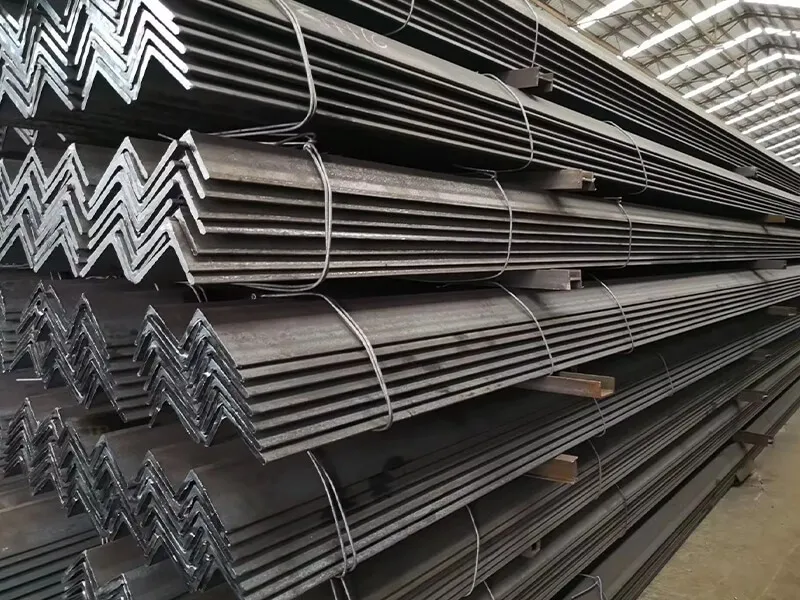
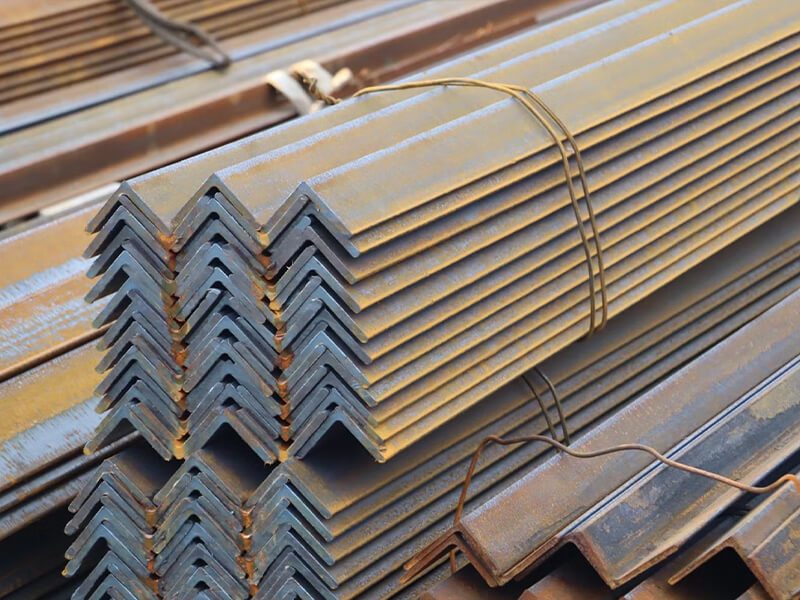
The main types of angle steel are defined by leg dimensions: Equal Angles2 (both legs the same length) and Unequal Angles3 (legs of different lengths). They are further categorized by material grade4 (like S235, S355) and production standard. Special types include bulb angles (with a thickened edge) and angles with rounded toes for safety.
%[visual comparison of equal angle unequal angle and bulb angle](https://cnmarinesteel.com/wp-content/uploads/2026/01/Marine-angle-steel-49.webp "Types of Angle Steel")
Choosing the Right Angle: How Geometry and Grade Dictate Function
The L-shape is deceptively simple. The variations exist to solve different engineering problems efficiently. Let's explore them from a ship designer's and builder's perspective.
1. Equal Angles2 (L a x a x t)
This is the most common and versatile type. Because it is symmetrical, it has similar strength properties in both directions. This makes it ideal for applications where load direction might vary or is unknown.
- Typical Shipyard Uses: General stiffeners on bulkheads and decks, frames for lightweight partitions, ladder stringers, handrail posts, and a multitude of small brackets and supports. Its symmetry simplifies stock management and fabrication.
2. Unequal Angles3 (L a x b x t)
This type has one leg longer than the other (e.g., L 100 x 75 x 10). It is used when you need more strength or connection space in one direction.
- Typical Shipyard Uses: Edge stiffeners for plates where one side needs more engagement (like the connection of a deck to a side shell), specific bracket designs where one leg bolts to a beam and the other to a column, and in built-up sections to create non-symmetrical beams. It allows for more material-efficient design but requires more careful specification.
3. Bulb Angles5
This is a specialized type where one leg ends in a thickened, rounded bulb (like a small bulb flat attached to an angle). The bulb adds significant extra strength and stiffness to that leg.
- Typical Shipyard Uses: Heavy-duty stiffeners, especially as longitudinal stiffeners on ship sides and bottoms where maximum bending resistance is needed. They are more efficient than standard angles but are more expensive and have limited size ranges.
4. Rounded Toe Angles6
Some angles have the sharp interior corner slightly rounded for safety (to reduce stress concentration and injury risk) or the exterior tip rounded. This is often a detail specified in certain standards.
The choice between these types is an engineering decision7. However, a good supplier can offer valuable input. For example, if a shipyard is designing a new standard bracket, a supplier might point out that an unequal angle from their standard stock list could be more cost-effective than fabricating it from a cut-down equal angle. This kind of collaboration saves money and time.
The table below summarizes the decision factors:
| Angle Type | Key Characteristic | Best For | Procurement Note |
|---|---|---|---|
| Equal Angle | Symmetrical, versatile. | General-purpose stiffening, frames, supports, standard brackets. | Most readily available; largest size range. |
| Unequal Angle | Asymmetrical strength. | Applications requiring different strength/connection in each direction. | May have longer lead times for less common sizes. |
| Bulb Angle | Extra stiffness on one leg. | Primary longitudinal and transverse stiffeners in hull. | Premium product; ensure supply from mill capable of rolling this profile. |
A shipyard expects its supplier to stock or reliably source the types it uses most. They also expect accurate labeling and documentation. A bundle marked "L 100x100x10 S355" should contain exactly that, not a mix of S275 or a size variation. This precision is non-negotiable for automated cutting and assembly processes.
What is the future of steel production?
Are you concerned that future environmental regulations will make steel too expensive or scarce? The industry is undergoing a revolution, and understanding its direction is key to securing a sustainable, long-term supply chain.
The future of steel production is centered on decarbonization through green steelmaking1. This involves shifting from coal-based blast furnaces to hydrogen-based direct reduction (DRI) and electric arc furnaces (EAFs) powered by renewable energy. Digitalization, smart manufacturing2, and increased recycling will also define the next era of steel production.
%[modern green steel plant with hydrogen production and renewable energy](https://cnmarinesteel.com/wp-content/uploads/2026/01/Marine-angle-steel-47.jpg "Future Green Steel Production")
The Green and Digital Transformation: What It Means for Shipyards and Suppliers
The change is not just about being "green." It is a complete overhaul of how steel is made, tracked, and even sold. This future will impact shipyards in several concrete ways.
The Green Steel Pathway:
The traditional blast furnace uses coke (made from coal) to reduce iron ore. This process releases a large amount of CO2. The future lies in two main alternative routes:
- Hydrogen-Based Direct Reduced Iron (DRI)3: Hydrogen gas, produced using green electricity, is used to strip oxygen from iron ore. The output is direct reduced iron, which is then melted in an EAF. This process can cut CO2 emissions by over 95% if the hydrogen is green.
- Electric Arc Furnace (EAF)4 with Scrap: An EAF melts recycled scrap steel using an electric arc. If the electricity comes from renewables, this is also a very low-carbon route.
Implications for Shipyards:
This shift will create two steel markets. One will be for conventional, higher-carbon steel. The other will be for certified low-carbon "green steel." Major ship owners, especially in Europe, will start demanding green steel for their newbuilds to meet their own environmental targets. This means shipyards will need to source it. Green steel will initially carry a price premium. A shipyard's supplier must have access to mills that are investing in these new technologies. Our long-term cooperation with forward-thinking mills positions us to navigate this transition with our clients.
The Digital and Smart Factory Revolution:
Future mills will be highly automated and data-rich. Sensors will monitor every stage. This enables:
- Ultra-Consistent Quality: Real-time adjustments ensure every batch meets exact specs.
- Full Digital Traceability: Each piece of steel could have a digital twin with its complete production history, accessible via a QR code. This simplifies classification society approvals and lifetime maintenance records for the ship.
- Predictive Supply Chains: Data from the mill can feed into the supplier's and shipyard's ERP systems, allowing for better demand forecasting and inventory management.
For a shipyard, this means expectations will rise further. They will expect not just a Mill Test Certificate, but a full digital data package. They will expect their supplier's systems to integrate with their own for seamless ordering and tracking. The partnership will become more digital and transparent.
Shipyards today are already laying the groundwork for this future. They are asking about the carbon footprint of materials. They value suppliers who are prepared for this change. When we discuss future orders with clients, we talk about the availability of different grades and the environmental profile of our source mills. This forward-looking dialogue is what builds a partnership that lasts for the next decade, not just the next order.
Conclusion
Modern shipyards need suppliers who are technical experts, reliable partners, and forward-thinkers. The right partnership ensures quality, stability, and readiness for the industry's sustainable future.
-
Explore how green steelmaking is revolutionizing the industry and its environmental benefits. ↩ ↩ ↩ ↩ ↩ ↩ ↩
-
Explore the advancements in smart manufacturing and its implications for the future of production. ↩ ↩ ↩ ↩ ↩ ↩ ↩ ↩
-
Learn about DRI's role in reducing carbon emissions and its significance in sustainable steel production. ↩ ↩ ↩ ↩ ↩ ↩ ↩ ↩
-
Discover the efficiency of EAFs in recycling steel and their impact on carbon footprint. ↩ ↩ ↩ ↩ ↩ ↩
-
Discover the benefits of Bulb Angles, especially in heavy-duty applications, and their role in shipbuilding. ↩ ↩ ↩
-
Find out how Rounded Toe Angles enhance safety and reduce stress concentration in structural designs. ↩ ↩ ↩
-
Learn about the factors influencing engineering decisions in selecting angle steel types for optimal performance. ↩ ↩