
Your steel plate shipment is late. Your production line is waiting. You call the supplier. No answer.
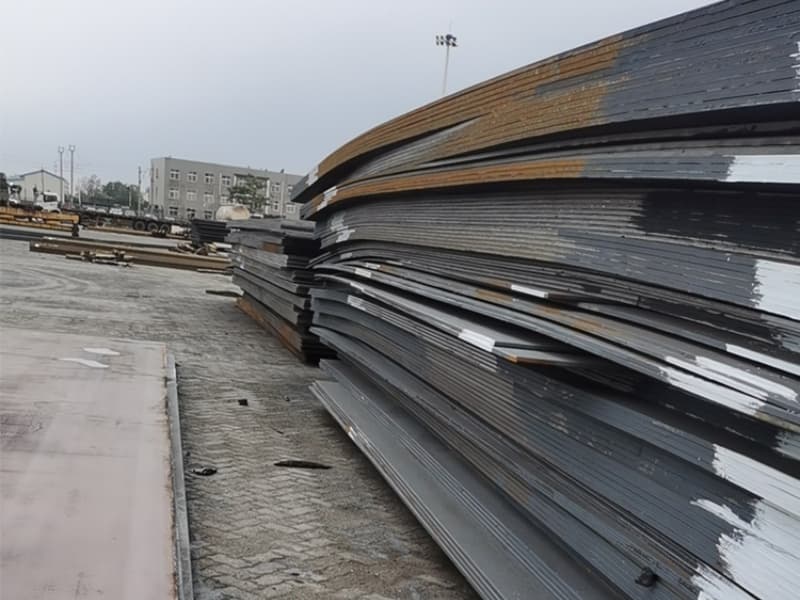
Shipyards today expect marine steel plate suppliers to deliver consistent quality with full class approvals (ABS, DNV, LR), reliable lead times with phased deliveries and buffer stock, complete documentation with third‑party inspection support, and responsive communication with dedicated account management for urgent issues.
I am Zora Guo from cnmarinesteel.com. I talk to shipyard buyers every day. Their expectations have changed. Five years ago, price was the main factor. Today, reliability, quality, and communication matter just as much. Let me share what shipyards are telling me they need from steel plate suppliers in 2025.
Consistent Quality, Class Approvals (ABS, DNV, LR), and Full Heat Number Traceability for Every Batch
You buy steel from a new supplier. The price is low. But the class certificate is missing. The surveyor rejects your shipment. You lose weeks.
Shipyards require that every steel plate shipment carries approvals from recognized classification societies – ABS, DNV, or LR. These approvals are not optional. Beyond the certificate, shipyards demand full heat number traceability. The heat number stamped on each plate must match the mill certificate. The chemical composition and mechanical properties must fall within class rules. Rejection rates above 1‑2% are unacceptable. The best suppliers maintain rejection rates below 0.5%.

Let me explain what quality really means to a shipyard.
Class Approvals – The Non‑Negotiable Foundation
Every ship built for international trade must be certified by a classification society. The most common societies are ABS, DNV, LR, BV, and CCS. Each has its own rules for steel plates. Most shipbuilding projects require certification from at least one major society. For vessels trading in multiple jurisdictions, dual or triple approvals may be needed.
The testing requirements vary by society. One society may require Charpy impact tests at -20°C, another at 0°C. A good supplier knows these differences and can source from mills that hold multiple approvals.
Full documentation is critical. Each shipment must include original mill test certificates with the surveyor’s stamp. Scanned copies can be sent for pre‑approval, but the originals must travel with the cargo. All data must be traceable to the stamp on the steel plate.
Heat Number Traceability – The Chain of Evidence
A shipyard once told me: “If I cannot trace a plate from the mill to the final weld, I cannot use it.” Traceability is not a nice‑to‑have. It is a legal requirement.
Each steel plate must be stamped or painted with its heat number. That heat number must appear on the mill certificate. The certificate must show the chemical composition and mechanical test results for that specific heat.
Why does this matter? If a weld cracks, the shipyard can go back to the heat number and determine if the problem was the steel or the welding process. Without traceability, everyone blames everyone else. With traceability, the root cause is found and fixed.
This is why full material certification with test results traceable to the heat is the industry standard. It protects the shipyard from both physical failure and legal liability.
Acceptable Rejection Rates
What is an acceptable rejection rate? The industry benchmark varies by grade and application. For standard grades like AH36, a rejection rate below 1% is expected. For higher grades like DH36 and EH36, the target is even lower – under 0.5%.
Top‑tier suppliers maintain on‑time delivery records and consistent quality across every batch. They do this through rigorous in‑process testing and third-party inspection and verification.
A Real Example
A shipyard in Vietnam received 500 tons of AH36 plates from a new supplier. The price was attractive. But when the class surveyor arrived, he noticed that the heat numbers on the plates did not match the mill certificates. The supplier had mixed plates from two different heats into one certificate. The entire shipment was rejected. The shipyard lost six weeks and $40,000 in reordering costs. Now they only work with suppliers who provide heat‑by‑heat traceability.
Reliable Lead Times, Phased Deliveries, and Buffer Stock to Match Just‑In‑Time Production Schedules
Your yard has limited space. Steel arrives three months early. It sits outside, rusting. Or steel arrives three weeks late. Your production line stops.
Shipyards expect suppliers to offer flexible delivery models that match their production pace. Just-in-time (JIT) delivery minimizes inventory holding costs by receiving steel only when needed. Phased deliveries allow shipyards to order a large quantity once but receive it in monthly batches. Buffer stock – held by the supplier at a nearby warehouse – provides a safety cushion for unexpected demand. Together, these practices reduce on-site inventory by 50-70% and eliminate most delays.

Let me explain what shipyards actually need.
Just‑In‑Time Delivery – The Ideal
JIT means steel arrives exactly when the production line is ready for it. Not a day earlier. Not a day later.
The supplier must have accurate visibility into the shipyard‘s production schedule. The shipyard shares a rolling forecast. The supplier plans mill production and shipping accordingly.
JIT is not easy. It requires trust and precise coordination. But when it works, the benefits are huge. Steel companies can enhance efficiency and reduce inventory holding time.
Phased Deliveries – The Practical Alternative
Many shipyards use phased deliveries. They place one master order for a large quantity – say 6,000 tons for the whole project. But they ask the supplier to deliver in monthly batches of 1,000 tons.
Why does this work? The shipyard gets volume pricing. But they do not have to store all 6,000 tons at once. The supplier holds the steel at their warehouse and ships each batch on schedule.
Phased deliveries also reduce working capital. The shipyard pays for each batch as it is delivered, not for the entire order upfront.
Vendor Managed Inventory – The Trust‑Based Model
Vendor Managed Inventory (VMI) takes delivery coordination further. The supplier manages inventory levels directly for the shipyard. They own the steel until it is used. The shipyard pays for steel only after it is consumed.
VMI programs foster collaboration between suppliers and shipyards. They provide a more accurate picture of inventory needs, reducing the risk of both stockouts and overstocking.
A Real Example
A large shipyard in South Korea switched from bulk ordering to a VMI arrangement with their primary plate supplier. The supplier keeps 2,000 tons of common plates at a warehouse 15 km from the yard. The shipyard draws from this stock daily. The supplier replenishes weekly. On‑site inventory dropped from 5,000 tons to 800 tons. The shipyard saved over $2 million in holding costs per year.
Complete Documentation (Mill Certificates, Packing Lists, Certificates of Origin) and Third‑Party Inspection Support
Your steel arrives at the port. Customs stops it. The packing list is missing. The mill certificate is incomplete. Your steel sits on the dock for two weeks.
Shipyards require complete documentation for every shipment: mill test certificates with class society stamps, detailed packing lists linking heat numbers to bundle numbers, commercial invoices, bills of lading, and certificates of origin. Missing or incorrect documents cause customs holds, demurrage charges, and production delays. Shipyards also expect suppliers to support third-party inspections by SGS, Bureau Veritas, or class surveyors. The supplier should provide access to the mill, samples for testing, and all necessary paperwork. Suppliers who resist third-party inspection are often hiding quality problems.

Let me go through each document shipyards expect.
Mill Test Certificates (MTC)
The MTC is the most important document. It proves that the steel meets the required grade and properties.
Every MTC must show:
- Steel grade (e.g., AH36, DH36)
- Heat number
- Chemical composition (carbon, manganese, sulfur, phosphorus)
- Mechanical properties (yield strength, tensile strength, elongation)
- Charpy impact test results (energy absorbed at specified temperature)
- Stamp of the classification society
The stamp is crucial. Steel plates that do not bear a valid class certificate can be rejected by authorities, triggering off‑hire penalties and massive operational downtime.
Packing List – The Map
The packing list tells the shipyard exactly what is in each bundle. It must include:
- Bundle number
- Heat number range
- Steel grade
- Dimensions (thickness x width x length)
- Quantity of plates
- Gross weight
The packing list must match the bundle tags. Any discrepancy triggers a customs hold.
Certificate of Origin
Many countries offer tariff preferences for steel from certain origins. For example, steel from China to Saudi Arabia under the GCC agreement may have reduced duties. The certificate of origin proves the country of production.
Third‑Party Inspection Support
Shipyards increasingly require third‑party inspection as a standard condition of supply. The inspector visits the mill or supplier‘s warehouse. They select random samples. They measure thickness and flatness. They witness tensile and Charpy tests. They issue an independent report.
Third‑party inspection costs 0.2‑0.5% of order value. It saves far more by catching defects before shipment.
A Real Example
A buyer in Saudi Arabia received a shipment of plates with no packing list. The bundles had no tags. Customs held the cargo for 10 days while the buyer requested documents from the supplier. The demurrage charge was $8,000. The buyer now requires that digital copies of all documents be sent before the vessel arrives.
Responsive Communication, Dedicated Account Management, and Joint Problem‑Solving for Urgent or Non‑Conforming Orders
A problem occurs. The wrong plates are shipped. A certificate is missing. You call the supplier. You get a voicemail. You email. No reply.
Shipyards expect suppliers to respond within hours, not days. A dedicated account manager who knows the shipyard‘s project history is essential. When a problem arises – non‑conforming plates, missing documents, urgent changes – the supplier must engage in joint problem‑solving. They should not say “that is the mill‘s fault.” They should say “we will fix it.” The best suppliers assign a dedicated export sales representative fluent in the buyer‘s language, maintain rapid response speed throughout the delivery process, and offer third‑party inspection support. That is what builds long‑term partnerships.

Let me explain what responsive communication really means.
Response Time – The First Test
When a shipyard sends an inquiry or reports a problem, the clock starts. A response within 2‑4 hours is excellent. Within 24 hours is acceptable. More than 48 hours is a failure.
One of our customers, Gulf Metal Solutions, told us: “The steel company was the first supplier to respond within two hours, and maintained this rapid response speed throughout the entire delivery process.” That response speed was a key reason they chose us.
Dedicated Account Management
A dedicated account manager knows the shipyard‘s project, their quality requirements, and their contact people. They do not ask “what is your heat number again?” every time.
The account manager should be fluent in the shipyard‘s language. For international buyers, English fluency is critical. Many shipyards have complained about Chinese suppliers with poor English support. That is why we assigned a dedicated export sales rep fluent in English.
Joint Problem‑Solving – No Blame Game
When a problem occurs, the supplier should not point fingers. They should not say “the mill made a mistake” or “the freight forwarder lost the documents.” The shipyard does not care whose fault it is. They care about a solution.
A good supplier will:
- Acknowledge the problem immediately.
- Propose a solution (replacement, credit, expedited shipping).
- Implement the solution without waiting for approval from the mill.
- Follow up until the shipyard confirms the issue is resolved.
A Real Example
A shipyard in Qatar received a shipment where 10 plates had edge cracks. They called their supplier. The supplier said: “We are sorry. We will ship replacement plates by air freight within 5 days. Please send photos of the damaged plates for our claim with the mill.” The replacements arrived in 4 days. The shipyard did not lose a single day of production. That supplier kept the customer for life.
Conclusion
Shipyards today need consistent quality with class approvals, reliable lead times with phased deliveries, complete documentation with third‑party inspection, and responsive communication with dedicated account management. Meet these expectations, and you earn a long‑term partner.