
Is your shipyard struggling with stiffeners that add too much weight or are hard to install? Modern ship designs are pushing materials to their limits, and standard sections often fall short. This shift is driving a quiet but significant change in steel procurement.
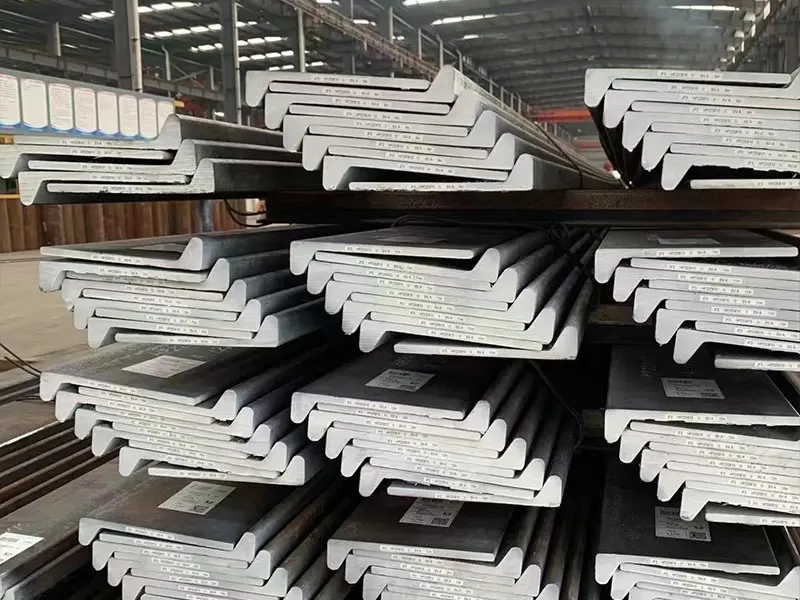
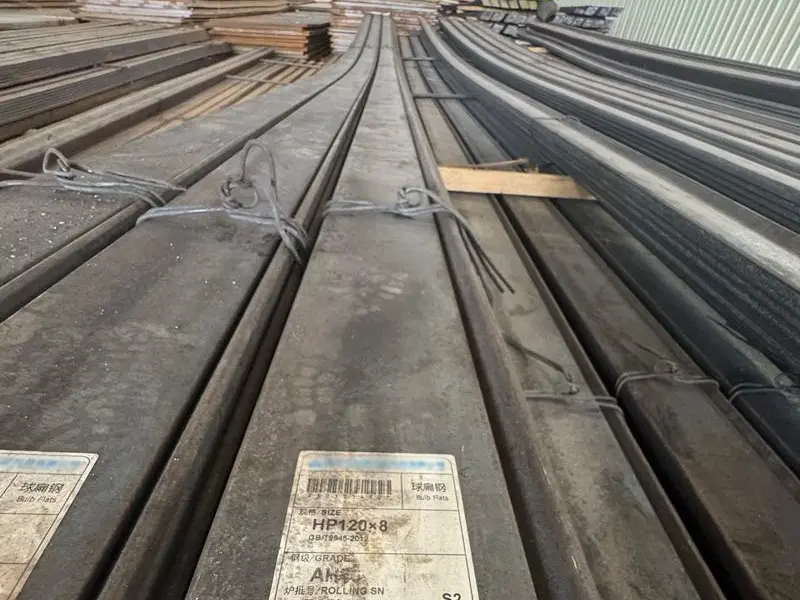
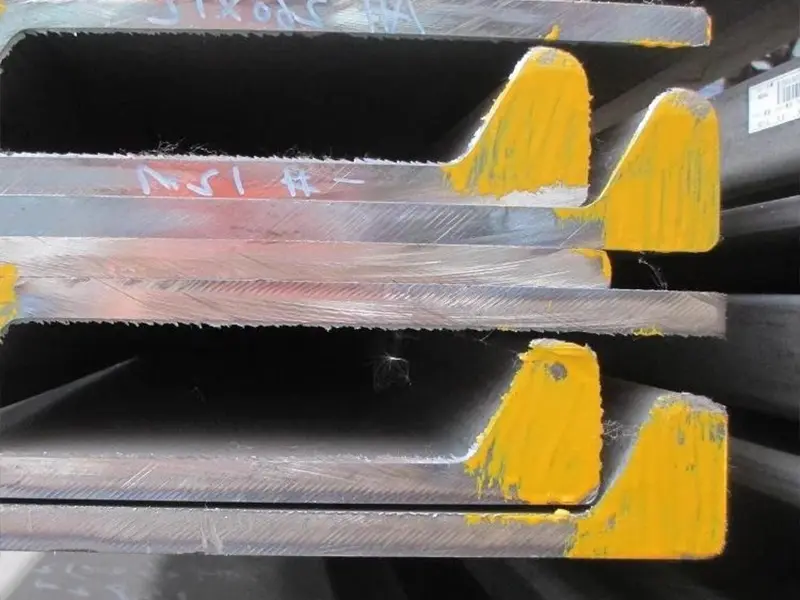
Bulb flat steel demand is rising because it provides superior strength-to-weight ratio for ship hulls and decks. Its unique bulb shape adds stiffness without needing a separate flange, saving weight and simplifying construction. This makes modern ships more fuel-efficient and cost-effective to build, aligning with global efficiency trends.
The answer above explains the ‘why,’ but the story is bigger. This trend connects to the entire future of steel in marine construction. To truly understand its impact on your business, we need to look at the fundamentals. Let’s explore the basic uses of steel, the short and long-term demand, and what "flat steel" really means in today’s market.
What is the use of flat steel1?
Do you think of flat steel1 as just simple plates? Its uses are far more varied and critical. If you only stock standard plates, you might be missing key project opportunities and cost savings for your clients.
Flat steel, primarily in the form of plates, is used to create the main hull, decks, and bulkheads of ships. It forms the primary watertight shell and provides the foundational strength for the entire vessel’s structure. It is also used in offshore platforms and port infrastructure.
Beyond the Hull: The Diverse Roles of Flat Steel in Marine Engineering
When we say "flat steel1," most people picture a simple, thick plate. In marine engineering2, this view is too limited. Flat steel is the canvas of shipbuilding. Its use is layered and specialized.
First, let’s talk about the hull. The hull plates3 are the ship’s skin. They must resist constant pressure from water, impact from waves, and corrosion from seawater. Not all plates are the same. For example, plates used at the bow, which faces the most impact, often have higher toughness grades. Plates used for the bottom might have special treatments for better corrosion resistance. As a supplier, we don’t just sell "ship plate." We discuss the specific part of the ship it’s for. This ensures the mill produces the right grade with the correct chemical properties.
Second, flat steel1 is used for internal structures4. Decks, bulkheads (walls inside the ship), and double bottoms are all made from plates. These parts are not just flat surfaces. They are often cut, bent, and welded into complex shapes. The steel must have good formability. It must bend without cracking. This is a key quality point. I remember a client in the Philippines had issues with plates cracking during the bending process for a bulkhead. The problem was not the welding; it was the steel’s internal composition. After they switched to our source, which guarantees controlled chemical levels for better formability, the problem stopped.
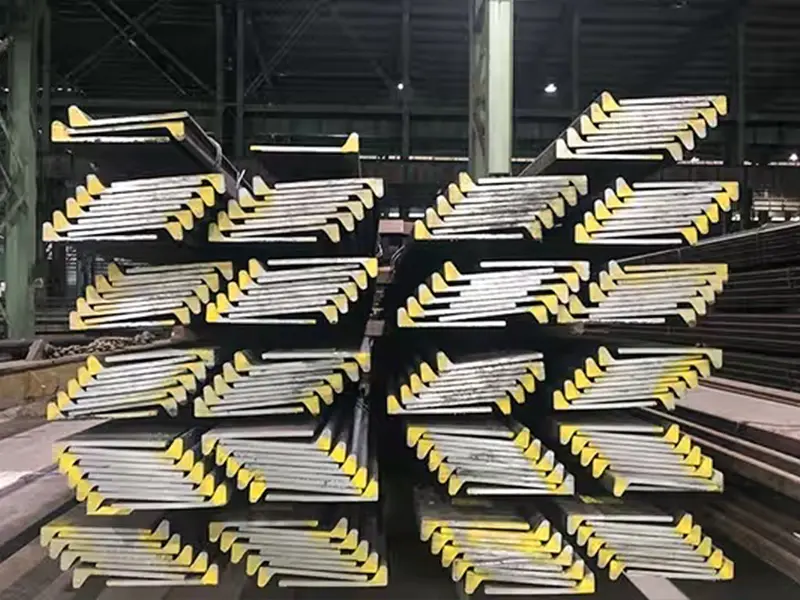
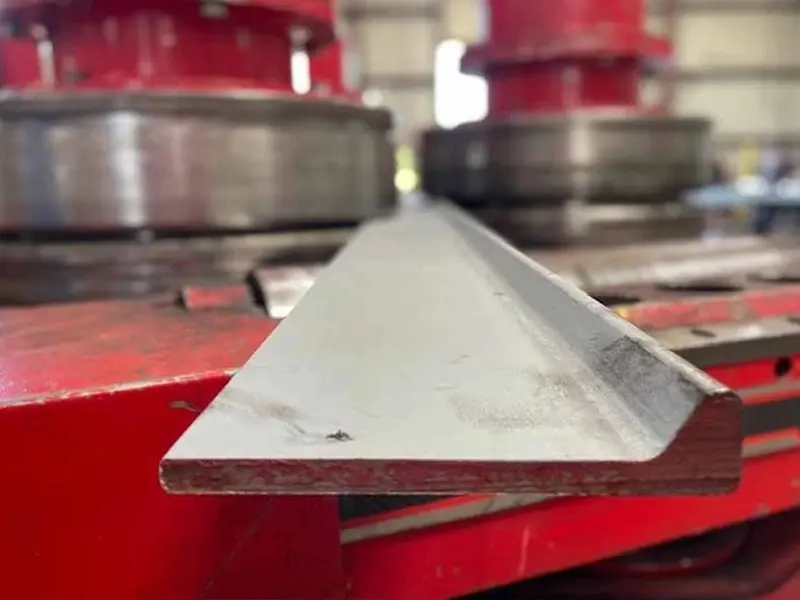
Third, and this is crucial, flat steel1 is the starting material for other sections. Bulb flat steel1 itself is made by rolling and forming a flat steel1 strip. Marine angle steel and L-shaped steel are also created from flat stock. So, the quality of the base flat steel1 determines the quality of all derived sections. If the base plate has internal flaws or inconsistent thickness, the bulb flat rolled from it will be weak.
Here is a breakdown of common flat steel1 applications in a vessel:
| Ship Section | Primary Flat Steel Use | Key Steel Property Required |
|---|---|---|
| Outer Hull Shell | Main hull plates3, from keel to deck. | High tensile strength, impact toughness, corrosion resistance. |
| Main Deck | Weather deck plating. | High strength, good fatigue resistance, often with anti-skid surface. |
| Internal Bulkheads | Walls dividing cargo holds or creating watertight compartments. | Good formability for bending, moderate strength. |
| Double Bottom | Inner and outer plating forming a protective space at the ship’s bottom. | Excellent corrosion resistance, weldability for complex seams. |
| Superstructure | Living quarters and bridge on the deck. | Lighter gauge plates, good weldability and paint adhesion. |
Understanding these uses helps you see why quality is non-negotiable. A failure in a bulkhead plate is a serious safety risk. This is why buyers like Gulf Metal Solutions insist on SGS inspection5. They need proof that the steel’s properties match the specification sheet, not just a visual check.
Will steel demand1 increase in 2025?
Are you worried about locking in prices for next year’s projects? Confusion about demand leads to bad inventory decisions. Getting the 2025 forecast right is essential for your purchasing budget and project bids.
Yes, overall steel demand1, especially for marine grades, is expected to increase in 2025. This growth is driven by active new shipbuilding orders, particularly for container ships and LNG carriers, and ongoing major port and offshore energy projects in the Middle East and Southeast Asia.
Analyzing the 2025 Demand Drivers: A Closer Look at the Numbers
Saying "demand will increase" is easy. Understanding why and where it will increase helps you make better decisions. Let’s break down the main drivers.
The biggest driver is the shipbuilding order backlog2. Shipyards in China, South Korea, and increasingly in Vietnam are full. They are building container ships, LNG carriers, and bulk carriers. Each of these ships consumes thousands of tons of steel. For example, a large container ship can use over 50,000 tons of steel. This order book stretches into 2025 and even 2026. This means yards are already securing their steel supply now. They are signing long-term contracts3 with mills and large distributors. If you are a smaller buyer or a project contractor needing steel next year, you are competing with these large, committed orders. This competition will keep prices firm and availability tight for certain grades.
The second driver is infrastructure. Look at Saudi Arabia’s Vision 2030 projects and Qatar’s continued infrastructure development4. These countries are building new ports, expanding existing ones, and constructing offshore oil and gas platforms. All these structures require massive amounts of marine-grade plate5, pilings, and sections. This demand is more project-based than shipbuilding. It comes in large, sudden batches. A project might need 10,000 tons of plate in a three-month window. This creates spikes in demand. Suppliers who can respond quickly and deliver large volumes reliably will win this business.
However, there is a counter-force. Global economic uncertainty could slow down some investment. Some shipowners might delay placing new orders. Some construction projects could be postponed. This means the demand increase might not be a straight line upward. It could be bumpy.
So, what does this mean for you? In my opinion, 2025 is not a year to take chances with your supply chain. Relying on spot market purchases could be expensive and risky. The smart strategy is to build a relationship with a supplier who has direct access to mill production. You need someone who can give you a realistic lead time and a stable price for your planned needs. When our client in Saudi Arabia planned their 2024 projects, we worked with them in late 2023 to forecast their needs. This allowed us to reserve mill capacity for them. They avoided the price hikes in Q2 2024. The same approach will be even more valuable for 2025.
What does flat steel1 mean?
When a shipyard asks for "flat steel1," do you assume they just want plate? This common misunderstanding can cause costly errors in quoting and ordering. The term has a specific technical meaning that every professional should know.
In technical terms, "flat steel1" refers to steel products that have a rectangular cross-section with a width much greater than its thickness. The main categories are plates (thick) and sheets (thin), which are produced by hot or cold rolling. In shipbuilding, we almost always refer to thick steel plates.
Flat Steel Demystified: From Slab to Specification
The dictionary definition is simple, but in practice, "flat steel1" is a starting point, not a final product. Its meaning changes depending on who is asking and for what purpose.
Let’s start with production. Flat steel begins as a steel slab—a big, solid block. This slab is heated and passed through a series of rollers. The rollers squeeze the slab thinner and longer. This is hot rolling. For very thin, smooth sheets, the steel might go through another cold rolling process. For shipbuilding, we use hot-rolled plates. The thickness can range from about 6mm all the way to over 100mm for some special parts. The width can be several meters. This is why shipping these plates requires careful planning for container or bulk vessel space.
Now, the critical part: the specification. When I receive an inquiry for "marine flat steel2l](https://cnmarinesteel.com/what-is-bulb-flat-steel-and-why-its-used-in-shipbuilding/)[^1]," my first questions are never about price. They are about the grade, standard, dimensions, and delivery condition3. These four elements define what the "flat steel1" really is.
- Grade: This is like the steel’s recipe. Grades like AH36, DH36, EH36 are common for ship plates. The letter (A, D, E) indicates the toughness level at low temperatures. ‘H’ means high strength, and ’36’ means the yield strength is 355 MPa (36 kgf/mm²). An E-grade plate is for the coldest operating environments. Supplying an A-grade when an E-grade is specified is a major failure.
- Standard: This is the rulebook. The most common standards are from classification societies4 like Lloyd’s Register (LR), Det Norske Veritas (DNV), American Bureau of Shipping (ABS), or national standards like GB (China) or JIS (Japan). The plate must be produced and tested to meet this specific standard’s requirements.
- Dimensions: Thickness, width, and length. Tolerances matter. A plate that is 0.5mm thinner than specified can be rejected because it affects the structural calculation.
- Delivery Condition: Often, plates are delivered as "AR" (As-Rolled) or "N" (Normalized). Normalized means the steel was heated and cooled in a controlled way after rolling. This process improves its internal structure and toughness. It is often required for higher grades or thicker plates.
Here is a comparison of two common "flat steel1" requests and their real meanings:
| Inquiry Phrase | What It Usually Means | Key Details to Confirm |
|---|---|---|
| "We need shipbuilding plate." | Hot-rolled steel plate for hull construction. | Grade (e.g., AH36), Standard (e.g., ABS), Thickness/Width, Condition (AR or N). |
| "We need flat steel1 for fabrication." | Could be plate or sheet for manufacturing parts. | Final use (bending, cutting?), Surface finish, Tolerance, Possible need for pre-treatment (like blasted). |
A client once told me, "Our previous supplier sent us flat steel1, but it was not the right flat steel1." The plates were the right size but were a commercial grade, not a marine grade. They failed the ultrasonic test for internal defects5. This cost them time and money. So, "flat steel1" is not a commodity. It is a precise engineering material. Your supplier must understand these details deeply.
What is the steel demand in 2030?
Are you making long-term business plans based on today’s market? The world is changing fast. The steel landscape in 2030 will be shaped by forces that are already visible today, and ignoring them is a strategic risk.
Steel demand in 2030 is projected to remain strong but will be fundamentally reshaped by the green transition. Demand for traditional marine steel will be sustained by fleet renewal, but there will be massive growth in demand for advanced, high-strength, and "green" steel grades needed for next-generation, fuel-efficient ships and offshore renewable energy projects.
2030: The Green Imperative and Its Impact on Steel Demand
Looking to 2030 requires us to think beyond simple volume. The question shifts from "how much steel?" to "what kind of steel?" The dominant theme will be environmental regulation1 and efficiency.
The International Maritime Organization (IMO) has set ambitious targets to reduce the carbon intensity of international shipping. By 2030, new ships will need to be significantly more efficient than today. How do you build a more efficient ship? You make it lighter. This directly drives demand for advanced high-strength steel (AHSS)2. AHSS allows designers to use thinner plates while maintaining strength. This reduces the ship’s weight, which reduces fuel consumption. The demand for bulb flat steel3, which is part of this lightweighting trend, is a precursor to this wider shift. By 2030, the use of AHSS in shipbuilding will be standard, not exceptional.
The second major factor is the offshore wind energy boom4. Countries around the world are committing to huge offshore wind farms. These farms need massive steel foundations: monopiles, jackets, and floating platforms. This is a completely new, large-scale market for marine-grade steel. The steel for these structures must withstand harsh seawater conditions for 25-30 years. It needs exceptional corrosion resistance and fatigue strength. The volume of steel required for a single large wind farm can rival that of building several large ships.
Third, the production of steel itself will change. "Green steel" made using hydrogen or electric arc furnacles will become more common. Buyers, especially in Europe, may pay a premium for steel with a certified lower carbon footprint. This will create a two-tier market. Projects funded by environmentally focused entities may mandate green steel5.
For businesses like ours and for buyers, this means we must start adapting now. Our partnerships with mills are crucial. We need to know which mills are investing in AHSS production lines and green technology. We need to understand the new specifications and testing required for offshore wind steel. The buyer from Gulf Metal Solutions is already asking about steel for port infrastructure supporting renewable energy. This is not a 2030 question; it’s a question for today.
The table below contrasts the demand drivers of today with those of 2030:
| Aspect | Current Demand Driver (2024) | 2030 Demand Driver |
|---|---|---|
| Primary Market | Traditional shipbuilding (containers, bulk) & oil/gas platforms. | Shipbuilding + Offshore Wind & Renewable Energy infrastructure. |
| Key Steel Property | Strength, toughness, corrosion resistance. | Ultra-high strength-to-weight ratio, extreme fatigue life, certified low-carbon footprint. |
| Purchase Criteria | Price, quality, delivery time. | Price, green certification, technical partnership for new designs6. |
| Supply Chain Focus | Reliability and cost-efficiency. | Transparency, sustainability data, and innovation partnership. |
Conclusion
Bulb flat steel’s rise is just the beginning. The future belongs to smarter, stronger, and greener steel. Building a supply chain that understands this evolution is your key to staying competitive.
-
Find out how regulations are driving changes in steel production and demand for greener materials. ↩ ↩ ↩ ↩ ↩ ↩ ↩ ↩ ↩ ↩ ↩ ↩ ↩ ↩ ↩ ↩ ↩ ↩ ↩ ↩ ↩ ↩
-
Explore how AHSS is revolutionizing ship design by enabling lighter, more fuel-efficient vessels. ↩ ↩ ↩ ↩
-
Understand the role of bulb flat steel in lightweighting ships and enhancing fuel efficiency. ↩ ↩ ↩ ↩ ↩
-
Learn about the massive steel requirements for offshore wind farms and their role in sustainable energy. ↩ ↩ ↩ ↩
-
Discover the innovative production methods of green steel and its significance in reducing carbon footprints. ↩ ↩ ↩ ↩
-
Explore how collaborations are essential for innovation in steel specifications and designs. ↩