
Your new ship design is ready. The shipyard asks for "BV certified steel" for the angle brackets. You know BV is a classification society, but why is their specific certification so important for a global industry?
BV (Bureau Veritas) certified angle steel is popular because it provides a globally recognized guarantee of quality, material properties, and traceability. Shipyards and owners trust BV certification to ensure the steel meets strict international rules for strength, toughness, weldability, and chemical composition, which is non-negotiable for safety and insurance in shipbuilding.

A certificate is not just a piece of paper. In shipbuilding, it is the legal and technical passport for every piece of steel. BV is one of the most respected names issuing these passports. To understand its popularity, we need to look at the bigger picture of marine steel selection. Let’s explore what makes steel suitable for ships and where BV certification fits in.
What is the best steel for ship building?
You want the "best" steel for your ship. But the best steel is not one single type. It is the right steel, chosen for the right part of the ship, backed by the right certification.
There is no single ‘best’ steel for all shipbuilding. The optimal choice depends on the ship’s location and function. For general hull areas, normal strength Grade A-D steel offers good balance. For critical areas like the keel or ice-class vessels, high-strength grades like AH/DH/EH with guaranteed low-temperature toughness are best. The steel must also have the correct certification from a class society like BV, ABS, or LR.
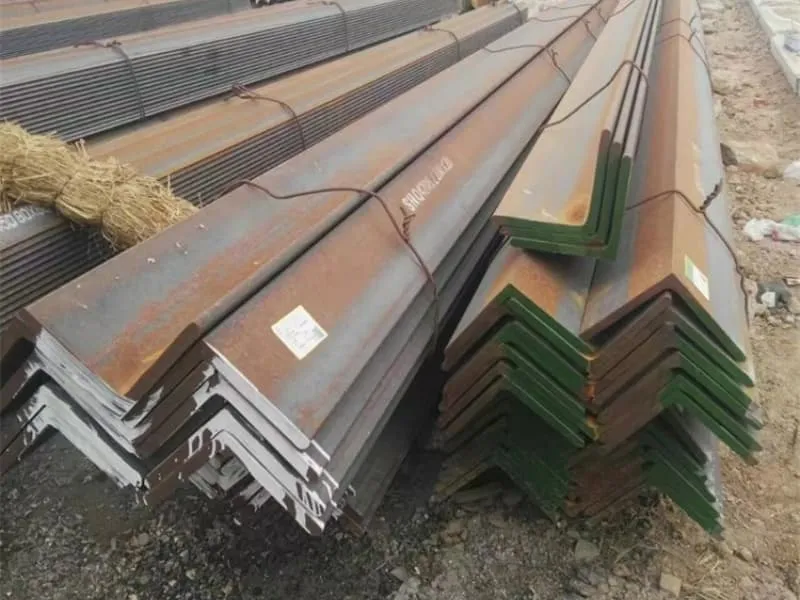
The word "best" is misleading. A better question is: "What is the most suitable and approved steel for this specific application?" The answer is a combination of material grade and quality assurance.
The Two Pillars of "Best" Marine Steel
Selecting marine steel involves two equally important decisions:
- Choosing the Correct Grade: This is about the steel’s inherent properties—its strength, toughness, and weldability. We match the grade to the stress and environment.
- Choosing the Correct Certification: This is about trust and verification. It proves the steel actually has those properties. A mill can produce AH36 steel, but only steel produced under a classification society’s survey and testing rules gets the "AH36" stamp of approval from that society (like BV).
A Practical Guide to Steel Selection by Zone
Here is how a naval architect thinks about material selection for different parts of a ship:
| Ship Area / Function | Typical ‘Best’ Steel Grade | Primary Reason for Choice |
|---|---|---|
| Inner Bottom, Non-critical Decks | Normal Strength Grade A or B | Cost-effective for areas with lower stress. Good weldability for fast construction. |
| Midship Hull, Main Deck | Normal Strength Grade D or High Strength AH32/DH36 | These zones face high bending loads. Grade D offers good toughness; AH/DH offers high strength for weight saving. |
| Keel, Sheer Strake, Ice Belt | High Strength Grade DH36, EH36, FH | These are the most critical, high-stress areas. They require the highest toughness (Grade E/H/F) to resist impact and brittle fracture in cold water. |
| Ballast Tanks | Grade D or DH with enhanced corrosion protection | These areas suffer from constant wet/dry cycles. The grade needs good toughness, and is always paired with high-performance coatings. |
| Superstructure | Higher Grade Steels (e.g., DH36) | Minimizing weight high up on the ship is crucial for stability. High-strength steel allows for lighter construction. |
The "best" steel for a bracket made from angle steel, for example, depends on where it is used. A bracket in a ballast tank might be DH36 grade with BV certification. A bracket for an interior ladder might be Grade A. The BV certification is what makes a Grade DH36 steel reliable. It verifies the chemistry, the mechanical tests, and the production process. For a project contractor in Romania building a cargo ship, specifying "BV certified DH36 angles" is precise. It tells the supplier exactly what is needed. This clarity prevents mistakes and ensures the material will be accepted by the ship’s surveyor.
Which type of steel is most commonly used in shipbuilding due to its strength and durability?
Walk through any major shipyard. The majority of steel you see, in plates and profiles, belongs to a specific family. It is popular because it provides the perfect balance for most of the ship’s structure.
Normal strength hull structural steel (Grades A, B, D, E) is the most commonly used type in shipbuilding. It offers an excellent balance of strength (yield strength ~235 MPa), good toughness, ease of welding, and cost-effectiveness. Grade A and B are ubiquitous for general hull plating and internal structures where the highest toughness is not required.
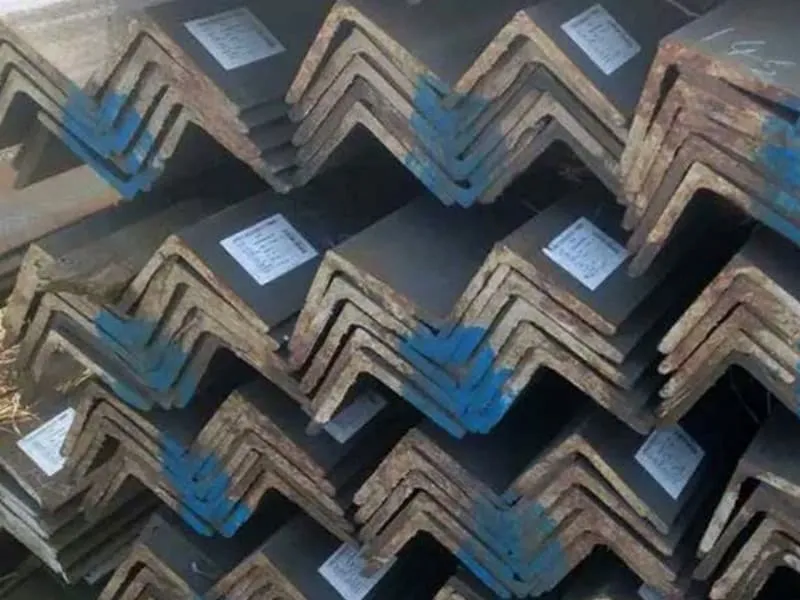
"Common" does not mean "ordinary." It means "optimized and proven." This category of steel forms the backbone of the global merchant fleet because it is reliable and economical.
Why Normal Strength Steel Dominates
Several factors explain the widespread use of Grades A through E:
- Proven Track Record: This steel has been used for over a century. Its performance in every aspect—fabrication, welding, and decades at sea—is completely understood by builders, class societies, and owners.
- Excellent Weldability: It has a relatively low Carbon Equivalent (CEV). Shipyards can weld it quickly using standard procedures without complex pre-heating. This keeps construction time and labor costs low.
- Cost-Effectiveness: It is produced in massive volumes worldwide. The mature manufacturing process and scale make it the most affordable marine-grade steel option.
- Adequate Properties for Most Areas: For ships trading in temperate and tropical waters, the toughness of Grade B (tested at 0°C) or Grade D (tested at -20°C) is perfectly sufficient to prevent brittle fracture.
The Role of High-Strength Steel
High-strength steel (AH, DH, EH with yield strengths of 315, 355, 390 MPa+) is also very common, but its use is more strategic. It is not used for the entire hull.
- Strategic Use: High-strength steel is used where its benefits are most valuable. You use it in the sheer strake or keel for higher strength. You use it in decks and upper hull to reduce weight. Reducing topside weight is critical for ship stability.
- The Material Mix: A typical ship might use 60-70% normal strength steel and 30-40% high-strength steel. The normal strength steel forms the bulk of the structure.
When we talk about angle steel, the same logic applies. A huge volume of angle steel used for internal framing, bulkhead stiffeners, and non-critical brackets is normal strength Grade A or B. However, this steel must still be certified. A BV-certified Grade B angle steel is extremely common. It gives the shipyard the confidence of proven material at a good price. For a distributor like Gulf Metal Solutions, stocking BV-certified normal strength angles is essential. Their shipyard clients use it daily for a wide range of applications. The certification from BV means they can sell it with complete confidence, knowing it will pass any audit or survey.
What grade of steel is used in ships?
The word "grade" in shipbuilding is a precise term. It defines a set of mechanical and chemical properties. Ships use a range of grades, each designated by a letter and number code defined in international standards.
Ships primarily use two families of steel grades: Normal Strength (Grades A, B, D, E) and High Strength (Grades AH, DH, EH, FH). The letter indicates toughness level (E is tougher than A), and ‘H’ denotes higher yield strength. The number (32, 36, 40) indicates the minimum yield strength in ksi (e.g., 36 for 355 MPa). The specific grade is chosen based on the structural location and operating environment.
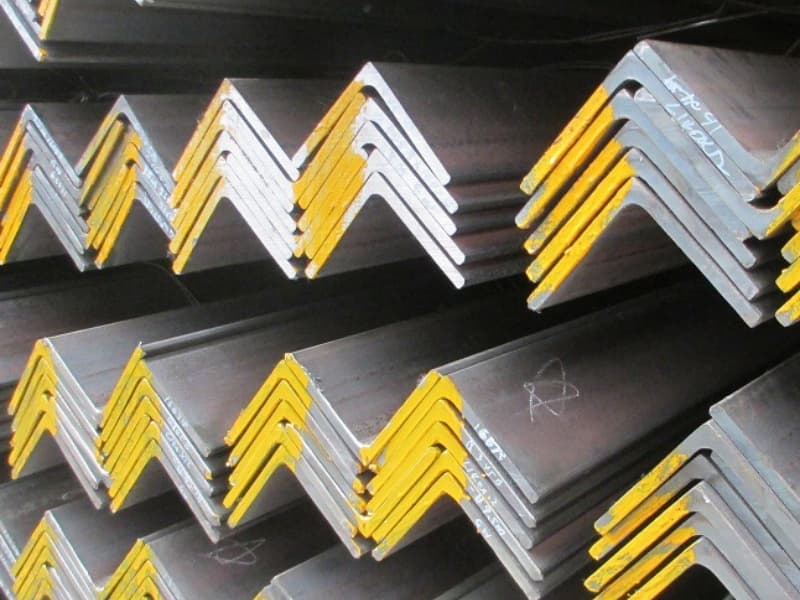
The grading system is a global language. It allows a shipyard in the Philippines, a steel mill in China, and a classification society in France (BV) to all refer to the same material expectations.
Understanding the Grade Code System
The system, standardized by the International Association of Classification Societies (IACS), is logical.
-
Normal Strength Steel (Yield Strength ~235 MPa):
- Grade A: Basic grade, no impact test required for thicknesses up to 50mm in some rules.
- Grade B: Impact tested at 0°C. The most common general-purpose grade.
- Grade D: Impact tested at -20°C. Used for more critical parts.
- Grade E: Impact tested at -40°C. Used for the most critical areas in large vessels.
-
High Strength Steel (Yield Strength 315-460 MPa+):
- Grades AH, DH, EH, FH: The letter before ‘H’ has the same meaning (A, D, E, F for toughness). The ‘H’ means High tensile strength.
- The Number: AH32 (315 MPa), AH/DH/EH36 (355 MPa), DH/EH/FH40 (390 MPa). Higher numbers mean higher strength.
How Grades are Applied in a Real Ship
Let’s look at a Capesize bulk carrier as an example:
- Bottom Shell (Center): Grade B or D plates.
- Bottom Shell (Bilge Area): Grade D or DH32 plates and stiffeners.
- Side Shell: Grade B plates with Grade B or D stiffeners.
- Deck (Center, for hatch openings): AH32 or DH36 plates and angles (for strength and weight saving).
- Sheer Strake (Top of side shell): Grade D, DH36, or EH36 plates and angles (high toughness required).
- Internal Bulkheads: Grade A or B plates and angles.
For angle steel specifically, it is typically ordered to match the grade of the plate it will be welded to. If a bulkhead is Grade A, the angle stiffeners will be Grade A. If the deck is DH36, the supporting angle brackets will be DH36. This ensures uniform strength and weldability. The popularity of BV certification comes in here. BV maintains a list of approved mills. When a mill produces a batch of DH36 angle steel under BV survey, they test it. BV reviews the test results. Then BV issues a certificate that states: "This product conforms to Grade DH36 per BV Rules." This grade, confirmed by certification, is what shipbuilders buy. They are not buying just steel; they are buying a BV-certified Grade DH36 angle steel. This full description is what appears on the material purchase order.
What is the main advantage of using high tensile steel1 for ship building?
High tensile steel costs more than normal strength steel. Yet, its use is increasing in modern ship designs. The reason is a powerful economic and technical advantage that outweighs the higher material cost.
The main advantage of using high tensile steel1 (like AH/DH/EH grades) in shipbuilding is weight reduction2. Higher strength allows for the use of thinner plates and smaller sections to achieve the same structural strength. This reduces the ship’s lightweight, enabling more cargo capacity3, better fuel efficiency4, and improved stability5.
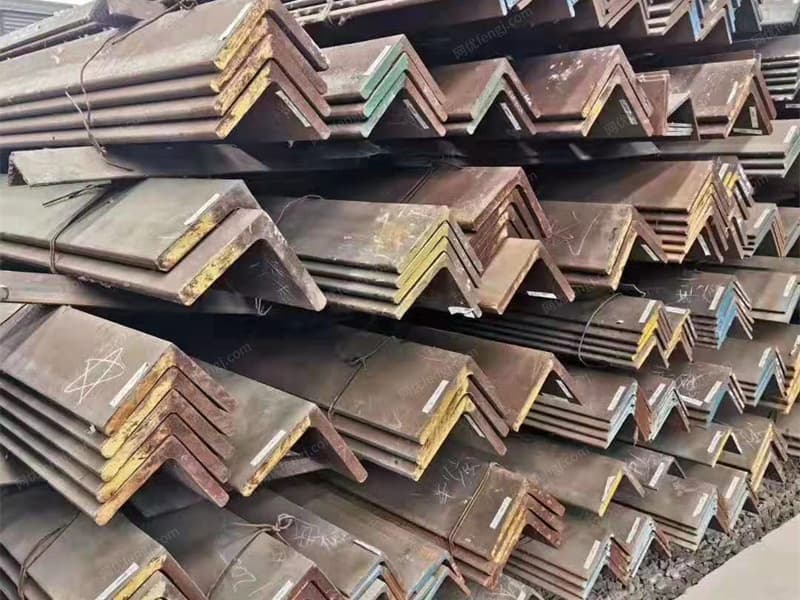
The benefit is not just about making the ship lighter. It is about making the ship more profitable and competitive over its entire lifetime. Let’s break down how this single advantage creates multiple wins.
The Direct Impact of Weight Saving
A ship’s earning capacity is directly linked to its deadweight tonnage (DWT), which is the total weight it can carry (cargo, fuel, supplies). The ship itself has a weight, called the lightweight. The formula is simple: DWT = Full Load Displacement – Lightweight.
If you reduce the lightweight by 1000 tons, you can increase the cargo capacity3 by 1000 tons. For a bulk carrier, that is 1000 more tons of iron ore or grain to sell on every voyage. This is a huge financial incentive.
Advantages Beyond Cargo Capacity
The benefits of weight reduction2 ripple through the ship’s design and operation:
- Increased Cargo Payload: As explained above, this is the primary driver for cargo ships.
- Improved Fuel Efficiency: A lighter ship requires less engine power to move at the same speed. This reduces fuel consumption, which is one of the largest operational costs for a ship owner. Over a 25-year lifespan, the fuel savings can be massive.
- Enhanced Stability: Reducing weight high up in the ship (like in the superstructure and decks) lowers the vessel’s center of gravity. This makes the ship more stable and safer in rough seas. It can also allow for a more efficient hull form.
- Extended Range: With the same fuel tanks, lower fuel consumption means the ship can travel farther between bunkering ports.
The Trade-Offs and Smart Application
There are reasons not to use high tensile steel1 everywhere:
- Higher Cost: The material itself is more expensive.
- Welding Considerations: It can be slightly more sensitive to welding, sometimes requiring stricter procedures. However, modern TMCP-produced high tensile steels6](https://cnmarinesteel.com/what-is-bulb-flat-steel-and-why-its-used-in-shipbuilding/)[^1]s have excellent weldability.
- Fatigue and Buckling: Thinner plates may be more susceptible to certain types of fatigue damage or buckling, which designers must account for.
Therefore, high tensile steel1 is used strategically. It is applied in areas where its strength can most effectively reduce weight:
- Decks and Upper Hull: To lower the center of gravity.
- Longitudinal Stiffeners (like bulb flats and angles): Using a higher strength grade allows for smaller, lighter profiles that do the same job.
- Sheer Strake and Keel: Here, the benefit is increased strength and toughness for critical areas, not just weight saving.
For angle steel, using AH36 instead of Grade A for a deck bracket means a smaller angle leg can be used. This saves a few kilograms per bracket. Multiply that by thousands of brackets on a ship, and the total weight saving becomes significant. When a shipowner chooses a BV-certified high tensile angle steel, they are investing in this long-term efficiency. The BV certification7 guarantees they get the high strength they paid for. Without that certification, the promised weight savings might not materialize if the steel’s actual strength is lower. In essence, the main advantage—weight saving—is only realized with guaranteed material quality, which is exactly what BV certification7 provides.
Conclusion
BV certified angle steel is popular because it combines the right material grade with guaranteed quality. This certification ensures the steel meets strict international standards for strength, toughness, and traceability, which is essential for safe, efficient, and class-approved ship construction.
-
Explore the advantages of high tensile steel, including weight reduction and improved efficiency in ship design. ↩ ↩ ↩ ↩
-
Learn how weight reduction enhances cargo capacity and fuel efficiency, making ships more profitable. ↩ ↩
-
Understanding cargo capacity is crucial for maximizing a ship’s earning potential and operational efficiency. ↩ ↩
-
Discover how better fuel efficiency can significantly lower operational costs for ship owners. ↩
-
Explore the relationship between weight distribution and stability, crucial for safe maritime operations. ↩
-
Explore the benefits of TMCP-produced steels, including excellent weldability and strength for shipbuilding. ↩
-
Learn about BV certification and its importance in ensuring the quality and strength of shipbuilding materials. ↩ ↩