
You run a shipyard. You need L‑sections in different sizes and grades. You buy from four different suppliers. You chase invoices, track separate deliveries, and fix quality issues from each one.
Integrated supply means one single supplier handles all your marine L‑shaped steel needs – from sourcing and quality control to documentation and delivery. This reduces your administrative work, ensures consistent quality, lowers freight costs, and allows you to respond faster to urgent changes.
I am Zora Guo from cnmarinesteel.com. I have seen many shipyards and marine contractors struggle with multiple suppliers. The paperwork piles up. The phone calls never stop. And when something goes wrong, they do not know who to blame. Let me explain why integrated supply is the smarter way.
How Does Integrated Supply Reduce Administrative Overhead and Communication Delays Across Multiple Orders?
You work with several suppliers. Each one has its own ordering system, its own invoicing process, and its own sales contact. You spend hours every week just managing vendors. That is time you could spend on your project.
Integrated supply reduces administrative overhead by giving you a single point of contact for all your L‑section orders. Instead of creating multiple purchase orders, chasing separate invoices, and coordinating with different account managers, you issue one order to one supplier. Your contact person knows your project history, your quality requirements, and your delivery needs. This cuts invoice processing time, simplifies order tracking, and frees your team to focus on real problems instead of paperwork.
Let me break down the hidden costs of managing multiple suppliers.
Hard Costs – The Money You Actually See
Every supplier you add increases your transaction costs. You pay for more purchase orders, more invoice processing, more payment runs.
Example for a shipyard ordering L sections from four suppliers:
| Cost item | Four suppliers | One integrated supplier |
|---|---|---|
| Purchase orders per month | 8 | 2 |
| Invoice processing hours per month | 16 | 4 |
| Bank transfers/fees | 8 | 2 |
| Supplier qualification audits (annual) | 4 | 1 |
At an hourly rate of $50 for procurement staff, you save $600 per month just in processing time.
Soft Costs – The Hidden Drain
The real cost is not in dollars – it is in your team’s attention. Every time a supplier calls, every time you chase a missing certificate, every time you have to explain your project needs to a new salesperson – that is productivity lost.
A MD at AJ Products UK explains: “Juggling a lot of different vendors is time‑consing and leads to increased costs and reduced efficiency. Vendor consolidation can make a big difference to the way your business operates, providing both hard and soft cost savings.”[reference:0]
Single Point of Accountability
When something goes wrong with multiple suppliers, each one blames the other. The steel is late. The certificates do not match. The wrong grade arrived. Who is responsible?
With one integrated supplier, you have one throat to choke. The supplier owns the entire order – from the mill to your yard. If a problem occurs, you call one person. That person fixes it.
A Real Example
A shipyard in Vietnam bought L sections from three different Chinese suppliers. Each had its own sales rep, its own payment terms, and its own quality level. The procurement manager spent 10 hours per week just on emails and calls. After switching to a single integrated supplier, that time dropped to 2 hours per week. He said: “I used to feel like a traffic controller. Now I feel like a project manager.”
Why Can a Single Supplier Deliver Better Mill Certificate Traceability and Consistent Quality Across All L‑Sections?
You buy from different suppliers. One sends certificates that are clear and complete. Another sends handwritten notes. You waste time checking and comparing.
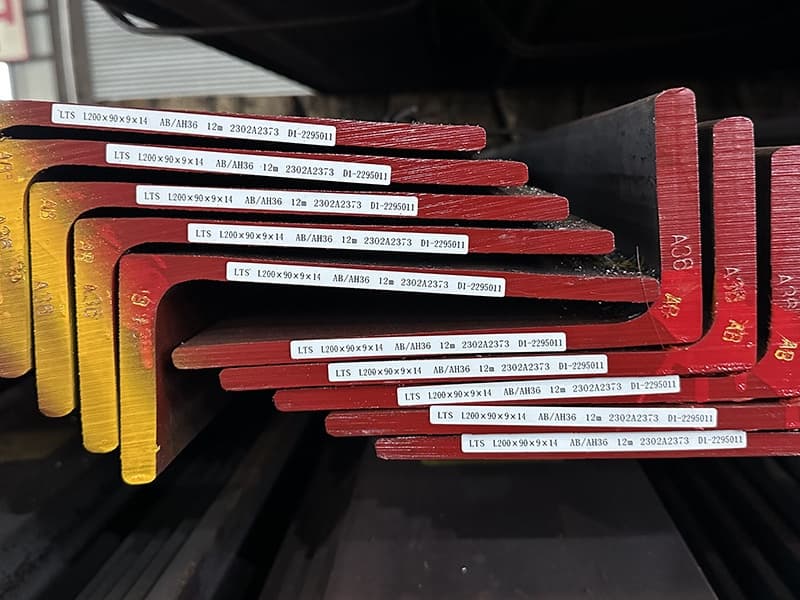
A single integrated supplier works with a consistent set of approved mills. They maintain a uniform documentation system for all orders. Every mill certificate follows the same format. Every heat number is traceable. Every batch meets the same quality standards because the same quality control process applies to all your orders. This consistency is impossible when you juggle multiple suppliers with different quality cultures.
Below is my article in Markdown format, please help me fill in the missing links in it (if necessary, please search Google for the most appropriate linking resources).
Let me explain why consistency matters.
Uniform Mill Certificate Format
When you buy from multiple suppliers, you get different certificate formats. One supplier sends PDFs with heat numbers clearly marked. Another sends scanned handwritten logs. A third uses a different naming convention for each shipment.
Your receiving team spends extra time figuring out which certificate matches which bundle. Mistakes happen. Plates get misplaced.
With an integrated supplier, you get one format, every time. Your receiving team knows exactly where to look for the grade, the heat number, and the test results.
Traceability Across Orders
Imagine you find a welding crack on a part made from L section heat #12345. You need to know: what other parts used steel from that same heat? With multiple suppliers, you cannot easily answer that question. Each supplier keeps separate records.
With an integrated supplier, one database holds all your orders. A single query tells you exactly where that heat number was used.
Consistent Quality Control
A supplier that works with multiple mills must enforce quality standards across all of them. That takes time and investment. Many small suppliers simply pass along whatever the mill gives them.
An integrated supplier with a strong quality system – ISO 9001 certification , third-party inspection support, dedicated quality staff – ensures that every batch meets the same standards, regardless of which mill produced it.
Manufacturers that partner with an integrated metal supplier and fabricator benefit from a streamlined, cost-effective, and quality-assured production process. The ability to source, process, and deliver metal from a single, trusted partner translates into fewer rejected parts and higher quality assurance.[reference:1]
A Real Example
A contractor in Saudi Arabia used three different L‑section suppliers. One consistently sent mill certificates with missing heat numbers. The contractor’s quality team had to call the supplier every time to get corrections. After switching to a single integrated supplier, the contractor received complete, correct certificates with every shipment. The quality manager told me: “I used to spend half my week chasing documents. Now I just file them.”
How Do Combined Shipping and Phased Deliveries from One Source Lower Freight Costs and Inventory Holding?
You order from multiple suppliers. Each one ships separately. You pay full freight for each shipment. And you end up with a yard full of steel that arrived too early.
With an integrated supplier, you can combine L sections of different sizes and grades into a single shipment. One container, one freight bill, one customs clearance. You can also arrange phased deliveries – the supplier holds the steel and ships it to you in batches that match your construction schedule. This reduces your freight costs by 30‑50% and cuts your inventory holding costs by sending steel only when you need it.
Let me show you the math.
Freight Savings from Consolidation
When you order from multiple suppliers, each order ships in its own container or LCL (less than container load). LCL freight is expensive – you pay a premium for shared space.
Example for 60 tons of L sections:
| Scenario | Shipment method | Freight cost |
|---|---|---|
| Four suppliers, 15 tons each | 4 × LCL | $2,000 × 4 = $8,000 |
| One supplier, 60 tons | 1 × 40ft container | $3,800 |
Integrated supply saves you $4,200 in freight on this single order.
Phased Delivery – Steel When You Need It
Your projects have phases. The bottom block needs steel first. The deck block needs steel later. With multiple suppliers, you cannot easily coordinate – you either order all at once (and hold inventory) or place separate orders (and pay more freight).
An integrated supplier can hold your steel in their warehouse and ship it in phases. You pay for steel as it is delivered. Your working capital stays free.
Manufacturers using VMI programs can reduce costs associated with warehousing, labor, and carrying excess inventory, while ensuring a consistent and reliable supply and reducing the risk of production delays.[reference:2]
A Real Example
A shipyard in Malaysia built three tankers over 12 months. They used an integrated supplier for all their L sections. The supplier held 400 tons of steel in their warehouse and shipped 100 tons every 3 months. The shipyard paid for each shipment on delivery. They saved $15,000 in freight (consolidated shipping) and avoided holding $320,000 of inventory. The procurement manager said: “We used to keep six months of steel on our yard. Now we keep two months. That is real money.”
What Role Does Integrated Supply Play in Managing Urgent Changes and Avoiding Production Stoppages?
Your client changes the design. You need a different L section size. Or your steel order is late. With multiple suppliers, you panic. With one supplier, you have a partner who can help.
An integrated supplier acts as your partner, not just a vendor. When you need an urgent change, you call one person who knows your project. They check their stock, their mill schedules, and their logistics options – all within their own system. They can reroute a shipment, switch to a different size, or expedite a replacement because they are not waiting for answers from a separate mill or freight forwarder. This agility prevents production stoppages that cost thousands per hour.
Let me explain how this works in practice.
Single Point of Contact for Changes
When you work with multiple suppliers, an urgent change means calling several people. Each one checks with their own mill, their own logistics provider. By the time you get answers, your production line has already stopped.
With an integrated supplier, you call one person. They have real‑time visibility into their stock, their mill relationships, and their shipping schedules. They can give you an answer in hours, not days.
Faster Problem Resolution
Problems happen. A shipment is delayed. A batch fails quality. A certificate is missing. With an integrated supplier, you have one partner who takes responsibility. They solve the problem – at their cost, using their resources.
Juggling numerous suppliers can bleed margins and slow down operations. Strategic single‑source procurement consistently outperforms multi‑sourcing on total cost and efficiencies.[reference:3]
Building a Partnership
When you consolidate your orders with one supplier, you become a valuable customer. Your supplier invests in your success. They prioritize your orders. They keep buffer stock for your projects. They assign their best people to your account.
A supplier that can be relied upon for after‑sales support and product guarantees will provide long‑term savings.[reference:4]
A Real Example
A shipyard in Indonesia was building a bulk carrier. The client changed the design three weeks before the bottom block was scheduled for fabrication. The yard needed 30 tons of a different L section size – immediately.
They called their integrated supplier. The supplier had the exact size in stock at their warehouse. They shipped it by express truck. The steel arrived in 4 days. The yard met their deadline. The procurement manager said: “If we had used our old multiple‑supplier model, we would have been waiting 8 weeks.”
Conclusion
Integrated supply gives you one point of contact, consistent quality, lower freight costs, and faster response to urgent changes. It turns your steel supplier into a partner who helps you succeed.