
Do you treat each steel order as a separate, stressful negotiation? This reactive approach exposes your project to price spikes, quality roulette, and last-minute delays. Your project’s stability should not be left to chance.
Long-term supply agreements for marine angle steel lock in predictable pricing, guarantee consistent quality from reserved mill capacity, and ensure reliable delivery schedules. This transforms your material supply from a volatile cost center into a stable, strategic pillar for project planning and financial forecasting.
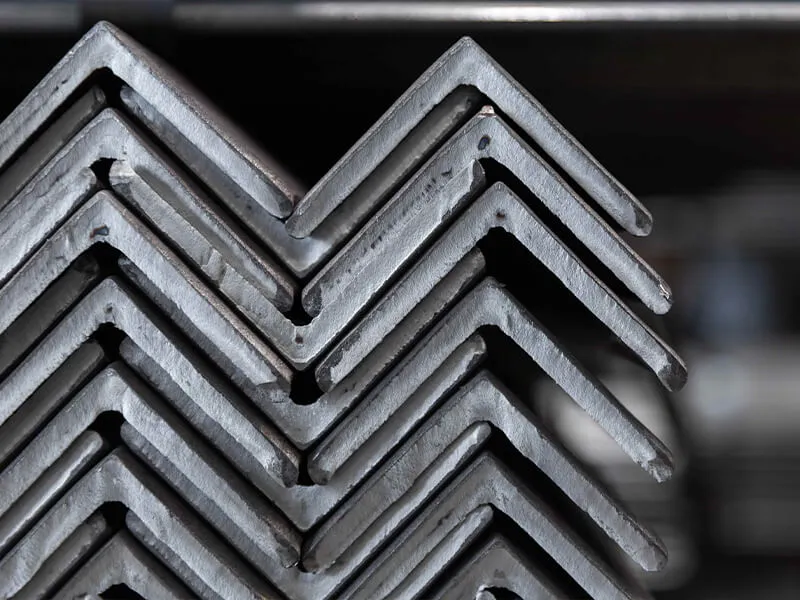
Clients often ask me for spot prices for specific sizes, like a 40x40x5 angle. I provide them, but I also explain the hidden cost of buying this way. The questions that follow reveal the core knowledge gaps that long-term agreements fill. Let’s start with the basic questions, and I’ll show you how a contract moves you from reactive buying to proactive partnership.
What is the price of 40x40x5 angle per kg?
You need a quick quote for a small repair job. The price per kg seems straightforward, but this single number is a snapshot that can change tomorrow. Relying on it for project budgeting is like building on sand.
The price of a 40x40x5 mild steel angle1 per kg is volatile and varies daily based on global raw material costs2, currency exchange rates, and mill allocation. As of [Current Date], a typical FOB China price might range between $0.70 to $0.90 USD per kg, but this is only a reference point for spot purchases, not a stable project cost.

Beyond the Spot Quote: The True Cost of Price Volatility
When you ask for a per-kg price, you are entering the spot market. This market reacts instantly to news, speculation, and commodity trades. For a long-term project, this creates immense financial risk. Let’s break down why the spot price is an unreliable foundation and how a long-term agreement fixes this.
First, understand what drives the spot price:
- Raw Material Costs: Iron ore and scrap steel prices change daily on exchanges like the Dalian Commodity Exchange. A $10/ton move in iron ore translates to a change in finished steel cost.
- Energy Costs: Steel production is energy-intensive. Fluctuations in coal and electricity prices directly impact mill operating costs.
- Supply and Demand: If many large infrastructure projects kick off simultaneously in Asia, mill capacity tightens, and spot prices rise. If a major mill undergoes maintenance, supply shrinks, and prices jump.
- Currency Exchange Rates: You pay in USD. The mill’s costs are in Chinese Yuan (RMB). If the RMB strengthens against the USD, the USD price must rise to maintain the mill’s margin.
Now, imagine you are building a ship with 500 tons of angle steel. You budget based on a spot quote of $0.80/kg. Three months later, when you need to order the next 100-ton batch, the spot price has surged to $0.95/kg due to a supply crunch. Your project budget is now overrun by $15,000 on that batch alone. This is not a hypothetical scenario; it happens regularly.
A Long-Term Supply Agreement (LTSA)3 addresses this directly. It typically uses one of these pricing mechanisms:
- Fixed Price4: The price per ton is locked for the contract duration (e.g., 12 months). This gives you absolute budget certainty. The supplier bears the risk of raw material increases, so this price will be at a premium to the current spot market5.
- Formula-Based Price6: The price is tied to a published index (e.g., "CRU Southeast Asia Steel Section Index") plus a fixed processing margin. It moves with the market but removes the supplier’s arbitrary pricing power. You share the risk but have transparency.
- Price Cap/Collar7: A maximum price is set. If the market goes above it, you pay the cap. If it goes below, you pay the lower market price. This protects you from spikes while allowing you to benefit from drops.
Here is a comparison of buying strategies:
| Purchasing Strategy | How Price is Determined | Budget Certainty | Risk Profile | Best For |
|---|---|---|---|---|
| Spot Market Purchase | Daily quotation based on current raw material costs2 + mill profit. | Very Low. Unknown future costs. | High. Buyer bears all market volatility risk. | One-off, small, urgent repairs with no advanced planning. |
| Annual Contract (Fixed Price4) | Agreed fixed rate for the contract period. | Very High. Complete certainty. | Low for buyer. Supplier bears market risk. | Long-term shipbuilding projects, multi-vessel series, stable consumption. |
| Framework Agreement (Formula Price) | Published industry index + pre-agreed margin. | Moderate. Follows market trends but known margin. | Shared. Buyer bears commodity risk; supplier bears processing cost risk. | Distributors, fabricators with continuous but fluctuating demand. |
My insight comes from a client in the Philippines. They were building coastal barges. They bought steel spot for the first two hulls. When prices spiked midway, their profit on the third hull vanished. We proposed a 12-month fixed-price contract for their estimated annual volume. The initial rate was 8% above the spot price at signing. They were hesitant. Six months later, when spot prices had risen 20%, they were saving significantly. More importantly, they could accurately bid on new projects knowing their major material cost was locked. The "price per kg" question became irrelevant. They had moved from being price-takers to having cost control.
What is ASTM A 36 steel angle?
You see ASTM A361 specified on drawings. It’s a common structural steel. But is it the right choice for your marine application? Understanding this standard is the first step in knowing what you are not buying when you choose true marine grade steel2.
ASTM A361 is a standard specification for carbon structural steel shapes, plates, and bars. It is a general-purpose, mild steel with a minimum yield strength3 of 36 ksi (250 MPa) and good weldability. It is commonly used in building construction and bridges but is generally not recommended for primary marine hull structures due to its lack of guaranteed notch toughness at low temperatures.
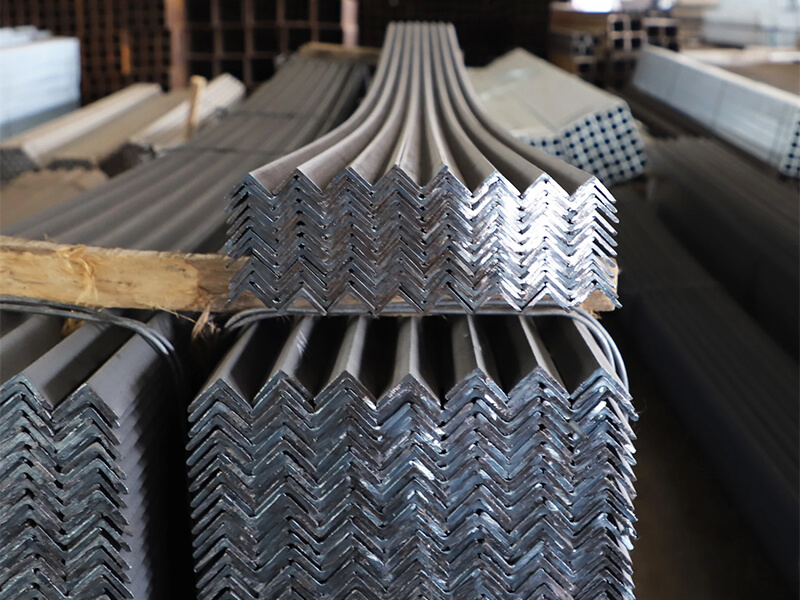
ASTM A36 vs. Marine Grades: The Critical Divergence
ASTM A36 is a good, reliable steel for many applications. However, in the marine world, "good" is not enough. The marine environment demands specific, guaranteed properties that A36 does not require. A long-term supplier must understand this distinction intimately to protect you from using the wrong material.
The key difference lies in the required testing and guaranteed properties.
ASTM A361 focuses on strength and chemistry. The standard ensures the steel meets minimum tensile and yield strength. It places limits on chemical composition (Carbon, Manganese, Phosphorus, Sulfur) to ensure weldability. However, it does not mandate Charpy V-Notch (CVN) impact testing. This test for notch toughness is optional unless specified by the purchaser.
Marine grades (like AH36, DH36 per ABS or EN 10025-4) mandate toughness. These standards have the same minimum yield strength3 (36 ksi / 250 MPa for Grade A, 355 MPa for Grade 36) but add a critical layer:
- They require CVN impact testing at specified low temperatures.
- The steel is graded based on this test temperature: A (0°C), D (-20°C), E (-40°C), F (-60°C).
- This guarantees the steel will not behave in a brittle manner in cold seawater.
Using A36 in a marine hull is a risk. It might pass a tensile test, but if the ship operates in cold waters, a wave impact or grounding could cause a brittle crack to propagate rapidly. Classification societies like Lloyd’s Register, DNV, or ABS will typically not approve A36 for primary hull members for this reason.
A long-term agreement with a marine steel specialist4 ensures you get the right grade every time. The agreement will specify the exact marine standard (e.g., "ABS Grade AH365/DH36" or "EN 10025-4 S355J2+N"). It legally binds the supplier to deliver material with the correct, full certification.
Let’s compare the specifications side-by-side:
| Property | ASTM A361 (Structural) | ABS Grade AH365 (Marine) | Why the Difference Matters for Supply |
|---|---|---|---|
| Minimum Yield Strength | 250 MPa (36 ksi) | 355 MPa (51 ksi) | Marine grade is stronger, allowing weight savings. |
| Tensile Strength | 400-550 MPa | 490-620 MPa | Similar range, but marine grade has tighter control. |
| Charpy V-Notch Test | Not required by standard. (Can be supplementary.) | Mandatory. Minimum energy values specified. | This is the core safety requirement. A supplier must provide this test report. |
| Test Temperature | Not applicable (if tested, often at room temp). | AH36: 0°C, DH36: -20°C, EH36: -40°C. | Defines the operating environment. A long-term supplier must reliably source these specific grades. |
| Primary Use | Buildings, bridges, general fabrication. | Ship hulls, offshore structures, areas subject to dynamic loading6. | Using the wrong grade is a compliance and safety failure. |
My experience involves preventing a costly mistake. A new client in Mexico sent us an inquiry for "A36 angles for marine fabrication." We immediately called to clarify the application. They were building modules for an offshore platform. We explained that while the modules might not be the hull, they would be subject to North Sea conditions and would require class certification. The client’s engineering team then revised the spec to ABS DH36. If we had simply shipped A36, the entire shipment would have been rejected at the project site, causing months of delay. A spot supplier might have shipped the A36 to make the sale. A long-term partner’s goal is to ensure your project’s success, which starts with asking the right technical questions before the first ton is produced.
What is marine grade steel1 material?
You know you need "marine grade" steel, but what does that actually mean on a molecular level and in the mill? It’s not a single material; it’s a family of engineered alloys designed to fight a relentless enemy: the ocean.
Marine grade steel is a category of low-alloy, high-strength steel specifically designed for shipbuilding and offshore structures. Its defining characteristics are enhanced corrosion resistance2, guaranteed notch toughness at low temperatures, and high strength-to-weight ratio, achieved through precise chemical composition3 and controlled rolling processes like Thermo-Mechanical Control Process (TMCP)4.
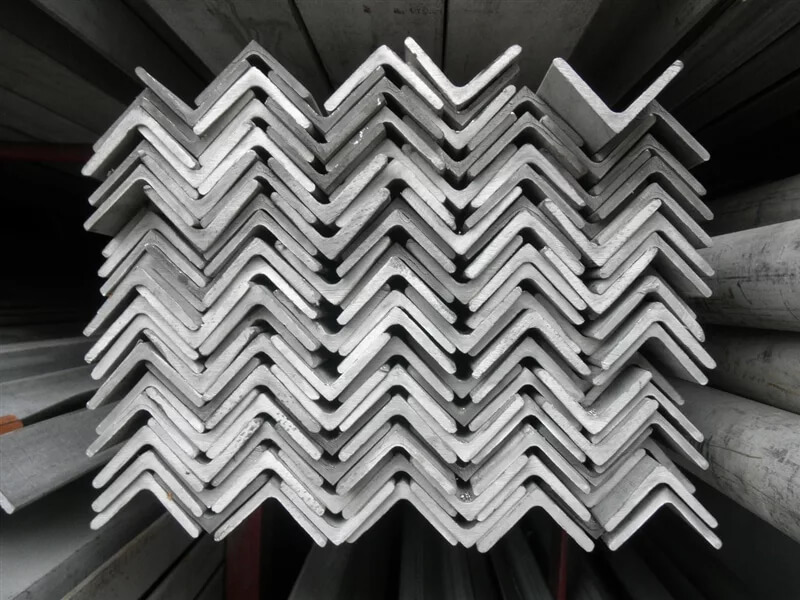
The Engineering Behind "Marine Grade": More Than Just a Coating
Many people think "marine grade" just means the steel is galvanized or painted. This is wrong. The marine grade properties are inherent to the steel itself. The coating is an additional, secondary protection. A long-term supplier’s value is in guaranteeing these inherent properties batch after batch.
The "marine grade" quality is built in three key areas:
1. Chemical Composition for Weldability and Toughness:
Marine steels have carefully balanced chemistry. Carbon content is kept relatively low (typically below 0.18% for good grades) to ensure excellent weldability5 without pre-heat in most thicknesses. Manganese is used to increase strength and toughness. Harmful elements like Phosphorus and Sulfur are controlled to very low levels to improve ductility and through-thickness properties. Micro-alloying elements like Niobium (Nb) and Vanadium (V) are often added in TMCP steels to refine the grain structure for exceptional toughness.
2. The Thermo-Mechanical Control Process (TMCP)4:
This is the modern magic behind marine steel. Instead of just heating and rolling, TMCP involves precise control of the rolling temperature and the cooling rate after rolling.
- It produces a very fine grain structure. A finer grain means more grain boundaries, which act as barriers to crack propagation, directly increasing toughness.
- It allows mills to achieve higher strength (like AH36, AH40) without adding expensive alloying elements that hurt weldability5.
A long-term supplier works with mills that have TMCP lines to consistently produce this superior product.
3. Mandatory Testing and Certification:
Every single plate or section must be tested and certified. The Mill Test Certificate (MTC)6 is its passport. It must show:
- Chemical analysis for the melt.
- Mechanical properties (Yield, Tensile, Elongation) for the plate/section.
- Charpy Impact Test7 results at the specified temperature for a set number of samples.
This traceability is non-negotiable. A spot supplier might provide a generic certificate. A contracted partner provides the authentic, heat-specific MTC for every delivery.
Here is how marine grade steel1 differs from standard structural steel in application:
| Aspect | Standard Structural Steel (e.g., S355JR) | Marine Grade Steel (e.g., AH36/DH36) | The Long-Term Agreement Safeguard |
|---|---|---|---|
| Core Purpose | Resist static loads (building weight). | Resist dynamic loads8 (waves, impact) and corrosive environment. | Contract specifies the dynamic load and environmental requirements. |
| Toughness Guarantee | May be adequate, but not guaranteed for low temperatures. | Guaranteed by mandatory testing at low temperatures (0°C, -20°C, etc.). | Agreement specifies the exact test temperature and minimum energy values. |
| Corrosion Resistance | Relies entirely on external coating systems. | Enhanced inherent resistance due to cleaner chemistry and finer microstructure9; still requires coating. | Supplier ensures chemistry controls are met, providing a better substrate for coatings. |
| Production Consistency | Can vary between heats and mills. | Requires extremely tight process control (TMCP). | The agreement ties you to a supplier with fixed, certified mill sources that master this process. |
| Certification | General MTC, may lack impact tests. | Full MTC with mandatory impact tests, traceable to heat number. | Contract mandates submission of full, original MTCs before payment. |
My direct insight is about the cost of inconsistency. A fabricator in Thailand received marine grade plate from a spot supplier. The first batch welded perfectly. The second batch, for the same project, had a slightly different chemistry from a different mill. It led to weld cracks, requiring expensive repairs and re-testing. Under a long-term agreement, the supplier is contractually obligated to source from pre-approved mills with consistent TMCP processes. This eliminates the "quality roulette" that plagues spot buying. The material itself becomes a predictable component, allowing your engineers and welders to work with confidence.
What is the weight of 75x75x6mm MS angle1?
You are preparing a lifting plan or calculating freight costs. You need the weight of a 75x75x6 MS angle. The theoretical weight2 is simple, but the actual weight3 can vary, and these variations have cost implications that a long-term partner can help manage.
The theoretical weight2 of a 75x75x6mm mild steel (MS) equal angle is approximately 6.8 kg per meter. This is calculated using the cross-sectional area and the density of steel (7850 kg/m³). However, actual weight can vary by +/- 5% due to rolling tolerances, affecting total invoice weight and logistical planning.
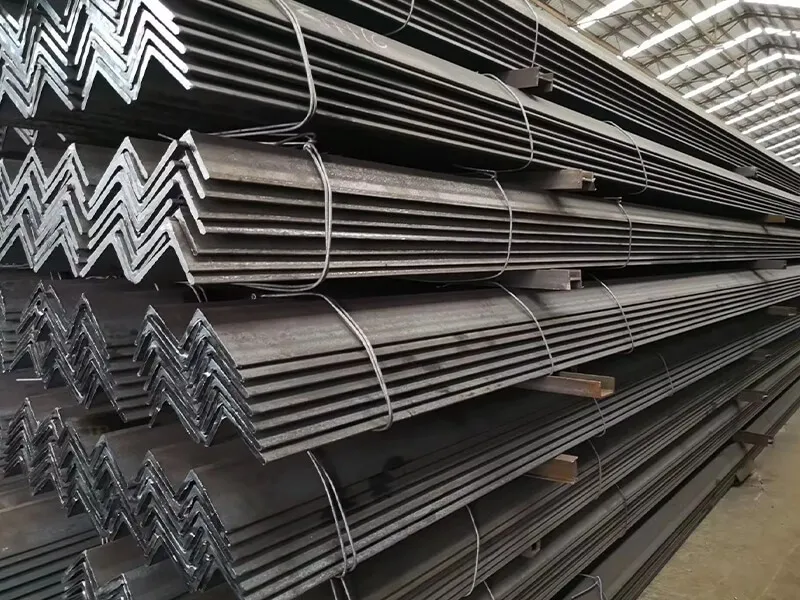
From Theoretical Weight to Total Landed Cost: The Importance of Predictability
The question about weight seems basic, but it touches on several aspects of procurement where long-term agreements add precision and fairness. Let’s explore why the "simple" weight matters and how a good partnership handles it.
First, the calculation. For an equal leg angle, the approximate weight per meter (W) is:
W (kg/m) = (Leg Width1 + Leg Width2 – Thickness) Thickness Density.
For 75x75x6: W ≈ (0.075 + 0.075 – 0.006) 0.006 7850 = 6.8 kg/m.
A 12-meter length would weigh about 81.6 kg.
Now, here is the critical part: tolerances4. Manufacturing standards allow for dimensional tolerances4:
- Leg width tolerance: Typically ±2mm or ±3mm.
- Thickness tolerance: Typically ±0.5mm or a percentage.
These small changes affect the cross-sectional area and thus the actual weight3. A mill might roll the angle at 74x76x6.5mm. It still functions perfectly but will have a different actual weight3.
This leads to two procurement practices:
- Theoretical Weight Billing: You pay for the calculated weight based on standard dimensions, regardless of actual weight3. This is common but can be unfair if the mill consistently rolls under-tolerance.
- Actual Weight Billing: The steel is weighed before shipment, and you pay for the actual weight3. This is fairer but requires trust in the weighing process.
In a spot purchase, a supplier might use theoretical weight2 and hide behind tolerances4. In a long-term agreement5, these terms are clarified upfront. A good agreement will specify:
- The weighing method6 (mill certificate weight vs. third-party verified weight).
- The accepted tolerance standards (e.g., per EN 10056-1).
- How weight disputes7 are resolved (e.g., via joint agreed surveyor).
Furthermore, accurate weight is crucial for logistics8. Overestimating weight wastes freight budget. Underestimating can lead to last-minute container overload issues or incorrect lifting equipment on site, causing safety risks and delays.
Consider the impact across the supply chain:
| Weight Factor | Impact with Inconsistent Spot Buying | How a Long-Term Agreement Standardizes It |
|---|---|---|
| Billing Accuracy | Supplier may use advantageous theoretical weight2 calculations. | Method is contractually defined (e.g., actual weighed weight per batch), ensuring fairness. |
| Freight Costs | Incorrect weight estimates lead to last-minute premium freight charges or wasted space. | Predictable, verified weights allow for accurate container and vessel booking, optimizing logistics8 costs. |
| Project Planning | Workshop lifting plans based on incorrect weights pose safety risks. | Consistent dimensional and weight tolerances4 from a known mill allow for precise engineering and planning. |
| Inventory Management | Receiving less actual tonnage than paid for disrupts production schedules. | Agreement includes clauses for weight reconciliation, protecting your project’s material flow. |
My practical example involves a client in Saudi Arabia. They were being billed on theoretical weight2 for plates. They started physically weighing received material and found a consistent 2-3% shortfall over a year, representing tens of thousands of dollars. When they entered a framework agreement with us, one of their key terms was "payment based on actual weighed weight certified by SGS at the loading port." This eliminated the ambiguity. The upfront price per ton was clear, and the final invoice matched the physical goods exactly. This level of transparency and fairness is only possible when both parties invest in a long-term relationship built on defined processes, not one-off transactions. The question of "weight" transforms from a potential conflict into a routine, agreed-upon data point.
Conclusion
Long-term supply agreements transform marine steel procurement from a series of risky transactions into a strategic advantage. They provide cost certainty, guarantee specification compliance, and build a partnership that actively contributes to your project’s stability and success.
-
Understanding the weight of this angle is crucial for accurate logistics and cost management. ↩ ↩ ↩ ↩ ↩ ↩ ↩ ↩
-
Learn how theoretical weight impacts pricing and procurement strategies in steel purchasing. ↩ ↩ ↩ ↩ ↩ ↩ ↩ ↩ ↩
-
Discover why knowing the actual weight can save costs and improve procurement accuracy. ↩ ↩ ↩ ↩ ↩ ↩ ↩ ↩ ↩
-
Understanding tolerances helps in anticipating weight variations and ensuring fair billing. ↩ ↩ ↩ ↩ ↩ ↩ ↩ ↩ ↩
-
Discover how long-term agreements can enhance transparency and fairness in pricing. ↩ ↩ ↩ ↩ ↩ ↩
-
Explore various weighing methods to ensure accurate billing and avoid disputes. ↩ ↩ ↩ ↩
-
Understanding dispute resolution can help maintain fair practices in long-term agreements. ↩ ↩ ↩
-
Learn how accurate weight calculations can optimize logistics and reduce costs. ↩ ↩ ↩
-
Understand the role of microstructure in determining the strength and toughness of marine grade steel. ↩