
You walk through a modern shipyard. Everywhere you look, you see two shapes dominating the landscape: the L-shaped angle and the bulb flat with its distinctive rounded edge. For decades, these two profiles have coexisted. Some might think bulb flats, with their superior efficiency, would replace L sections entirely. But they have not. Why?
Shipyards continue to use L sections alongside bulb flats because each has distinct advantages for different applications. Bulb flats offer superior stiffness-to-weight ratio and are ideal for long, continuous stiffeners on hulls and decks. L sections (angles) excel at connections, brackets, and locations where the open profile simplifies welding and fit-up with intersecting structures. The two profiles complement each other, and a well-designed ship uses both where each performs best.
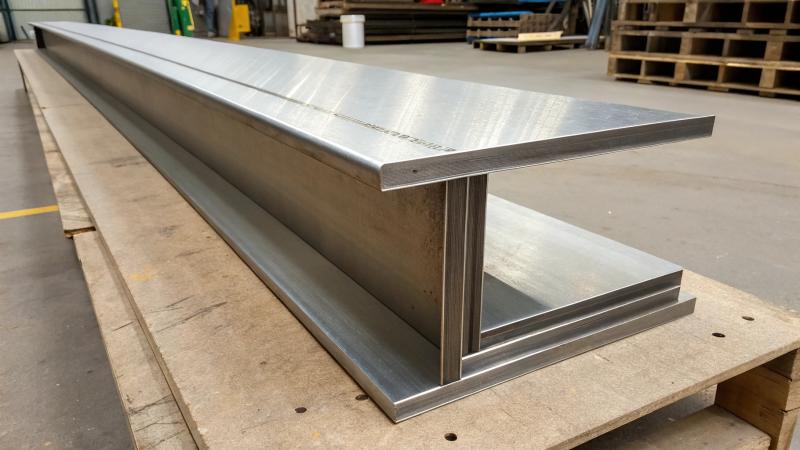
To understand why both are needed, we must understand the specific uses of each. Let’s start with the bulb flat.
What is the use of bulb flat1?
You are looking at the hull of a large vessel under construction. Long, continuous profiles are being welded to the hull plates. They have a distinctive rounded edge. These are bulb flat1s. Why are they used here instead of angles?
A bulb flat1 is used as a longitudinal or transverse stiffener2 on ship hulls, decks, and bulkheads. Its primary function is to prevent the large steel plates from buckling under compressive loads from water pressure, cargo weight, and wave action. The bulb shape concentrates material away from the neutral axis, providing maximum stiffness with minimum weight. This makes bulb flat1s the most efficient profile for long, continuous stiffening runs.
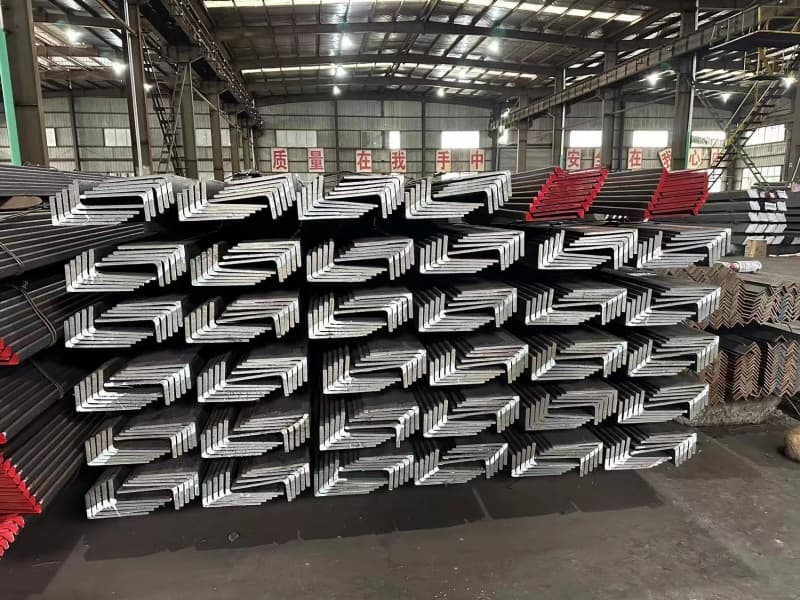
Why Bulb Flats Excel at Stiffening
The engineering logic behind the shape explains its dominance.
| 1. The Efficiency Advantage. | Profile | Stiffness-to-Weight Ratio | Best Use |
|---|---|---|---|
| Bulb Flat | Highest | Long, continuous stiffeners where weight matters. | |
| L Section (Angle) | Good | General stiffening, connections, brackets. | |
| Flat Bar | Lowest | Light, non-critical stiffening. |
2. Where Bulb Flats Are Used.
- Bottom Shell: Longitudinal stiffeners running the length of the hull, resisting water pressure.
- Side Shell: Similar longitudinal stiffeners, often smaller than bottom.
- Deck: Stiffeners under deck plates to support cargo loads.
- Bulkheads: Vertical and horizontal stiffeners on watertight bulkheads.
3. Why Shipyards Love Them.
- Weight Savings: Using bulb flat1s instead of angles can reduce hull weight by 5-10%, directly increasing cargo capacity or fuel efficiency.
- Simpler Welding: The bulb shape provides a natural run-off for welding, reducing defects.
- Cleaner Connections: The flat side of the bulb flat1 provides a clean surface for attaching other structures.
My Insight from the Field
A shipyard in Vietnam switched from using angles to bulb flat1s for all longitudinal stiffeners on a series of container ships. They reduced the hull weight by 8%, allowing the vessels to carry more containers. The shipowner was delighted with the increased revenue potential. This is why bulb flat1s are the first choice for long stiffeners.
What is the use of bulb bar?
You are at a connection point where a longitudinal stiffener meets a transverse frame. The detail is complex. Here, you see an L-shaped angle, not a bulb flat. Why the switch? This is where the bulb bar’s limitations appear.
A bulb bar (bulb flat) is used for continuous stiffening, but at intersections and connections, its closed bulb profile can make welding and fit-up difficult. At these locations, L sections (angles)1 are often preferred. The open profile of an angle allows easier access for welding, simpler coping (cutting to fit around intersecting members), and more straightforward connections to other structures. The bulb bar handles the long runs; the angle handles the complex intersections.
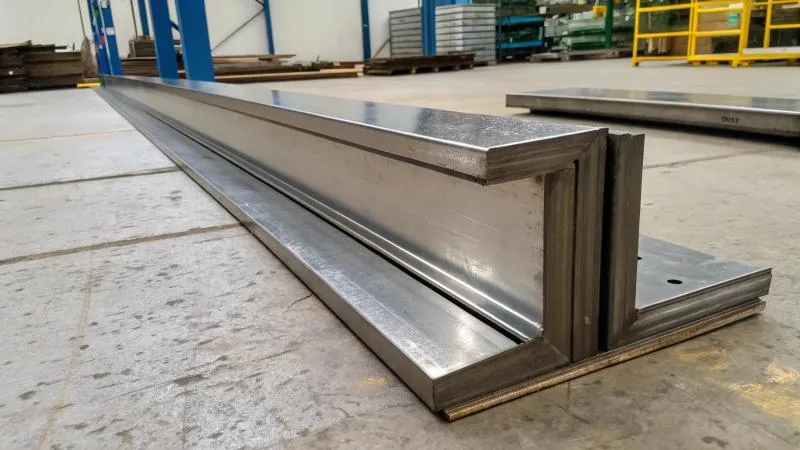
Why Angles Are Needed at Connections
The geometry of the connection dictates the profile choice.
1. The Challenge of Bulb Flats at Intersections.
- Coping: When a stiffener meets a frame, the end must be cut (coped) to fit around the intersecting member. The bulb shape makes this cut more complex than for a simple angle.
- Welding Access: The bulb can obstruct welding access2 in tight corners.
- Connection Details: Attaching brackets or other members to a bulb flat requires more complex detailing than attaching to an angle’s flat leg.
| 2. Where Angles Excel. | Location | Why Angle is Preferred |
|---|---|---|
| Stiffener End Connections | Easier to cope and weld. | |
| Brackets | The open legs provide natural attachment points. | |
| Intersections of Stiffeners | Angles can be easily connected back-to-back. | |
| Non-Standard Details | Angles are easier to modify and fit on site. |
3. The Hybrid Approach.
Modern ship design uses a hybrid approach3:
- Bulb Flats for the long, continuous stiffeners where efficiency matters most.
- L Sections (Angles) for the ends of those stiffeners, for brackets, and for locations with complex geometry.
4. Practical Example.
A longitudinal stiffener might be a bulb flat for 95% of its length. At the end, where it attaches to a bulkhead, a short length of angle might be welded on to simplify the connection. Or the bulb flat end might be specially coped, but this is more labor-intensive.
My Insight from the Field
A shipyard in the Philippines once tried to use bulb flats for everything, including connections. They found that the welding and fit-up time at intersections increased significantly. The labor cost savings from using lighter bulb flats were offset by the extra time at connections. They returned to using angles at intersections and bulb flats for the long runs. This balanced approach optimized both material and labor.
What are the 4 types of bulbs?
You are specifying bulb flats. The term "bulb" refers to the rounded edge. But are there different types of bulbs? Understanding the variations helps you select the right profile and understand why bulb flats are not a single product but a family.
In the context of bulb flats, there are not four distinct "types" of bulbs in the sense of different shapes. Rather, bulb flats are produced in a range of standard sizes, each with a specific bulb geometry defined by the standard (EN 100671, JIS G 31922, etc.). The "types" refer to the size categories: small, medium, large, and jumbo3 profiles. Each size range has different rolling requirements and applications. Additionally, there are different bulb profiles4 (like the shape of the bulb itself) specified in different standards, but these are not typically called "types."

Understanding Bulb Flat Variations
This knowledge helps you choose the right profile for your application.
| 1. Size Categories (Indicative). | Category | Web Height Range | Typical Applications | Rolling Difficulty |
|---|---|---|---|---|
| Small | 80-160 mm | Light stiffening, small vessels, superstructures. | Easier, many mills can do it. | |
| Medium | 160-240 mm | General shipbuilding, hull stiffeners on medium vessels. | Standard, most marine mills can do it. | |
| Large | 240-320 mm | Primary stiffening in large vessels, offshore platforms. | More difficult, requires larger mills. | |
| Jumbo | 320-430 mm | Very large ships (VLCCs, bulk carriers), major offshore structures. | Specialized, only a few mills worldwide. |
| 2. Different Standards, Different Bulb Shapes. | Standard | Region | Bulb Shape Characteristics |
|---|---|---|---|
| EN 100671 | Europe | Specific bulb dimensions for each size. | |
| JIS G 31922 | Japan | Slightly different bulb proportions. | |
| GB/T 9946 | China | Similar to EN but with local variations. |
3. Why This Matters.
- Interchangeability: A bulb flat from one standard may not have the exact same dimensions as another. If your design is based on EN, you need EN material.
- Availability: Not all sizes are available in all standards. A jumbo size may only be available in one standard.
- Fabrication: Welding procedures may be based on a specific standard’s dimensions.
4. The "4 Types" Misconception.
Some older references might categorize bulbs by shape (e.g., "Dutch bulb," "German bulb"), but modern production is standardized. When someone asks about "4 types," they may be referring to the size categories or to the different standards. Clarify what they mean.
My Insight from the Field
A client in Romania designed their vessel using EN standard bulb flats. A supplier offered a better price on JIS standard material, claiming it was "equivalent." It was not. The dimensions were slightly different, and the client’s cutting program was based on EN. They would have had to recut all their parts. They stayed with EN material. This is why understanding the different standards is critical.
What is 25 * 3mm MS flat?
You are looking at a material list. It includes "25 * 3mm MS flat." This is not a bulb flat or an angle. It is a simple flat bar. But it is still an important part of the ship’s structure. Understanding what it is helps you see the full picture of steel in shipbuilding.
A 25 * 3mm MS flat is a mild steel flat bar1 with a width of 25mm and a thickness of 3mm. It is a simple rectangular section, hot-rolled or sometimes cold-rolled. It is used for light brackets2, stiffeners on small structures, edge trim, and various non-critical applications. Unlike bulb flats and angles, it has no bulb or leg; it is just a flat strip. Its simplicity makes it cheap and versatile, but it is much less efficient as a stiffener than a bulb flat or angle.
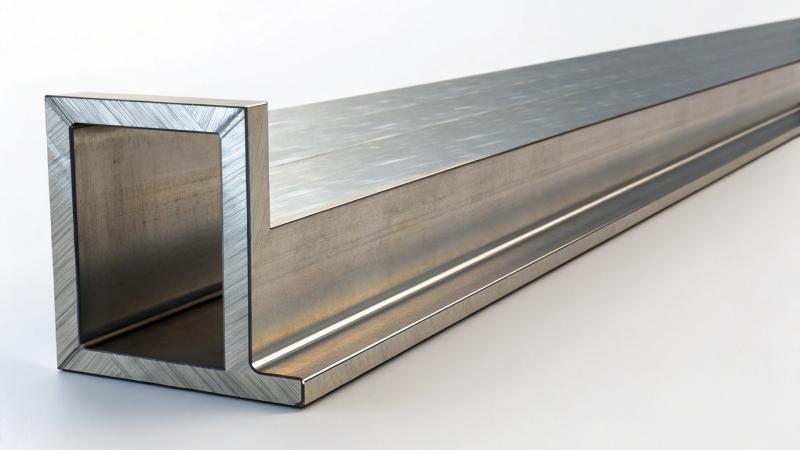
The Role of Simple Flat Bars in Shipbuilding
Even with advanced profiles, simple flat bars still have a place.
| 1. Typical Applications. | Application | Why Flat Bar is Used |
|---|---|---|
| Light Brackets | Small, non-critical brackets where strength is not the main factor. | |
| Edge Trim | Protecting and finishing edges of plates. | |
| Small Stiffeners | In superstructures or non-critical areas where loads are light. | |
| Temporary Supports | During construction, for jigs and fixtures. |
| 2. Comparison with Other Profiles. | Profile | Stiffness | Weight | Cost | Best Use |
|---|---|---|---|---|---|
| Bulb Flat | Highest | Low | Higher | Primary stiffening | |
| Angle | High | Medium | Medium | General stiffening, connections | |
| Flat Bar | Low | Medium | Low | Light, non-critical applications |
3. Why Shipyards Still Use Flat Bars.
- Cost: For light applications, flat bars are the cheapest option.
- Availability: They are widely available in many sizes.
- Simplicity: Easy to cut, weld, and modify on site.
- No Need for Efficiency: In areas with very light loads, the efficiency of a bulb flat is not needed.
*4. The 25 3mm Size.**
This is a small, light flat bar. It might be used for:
- Small brackets in accommodation areas.
- Edge protection on non-structural panels.
- Temporary bracing during construction.
My Insight from the Field
A shipyard in Malaysia once ordered a large quantity of 25*3mm MS flat for light brackets2 in the superstructure. They could have used small angles, but the flat bars were cheaper and easier to weld. The application did not require the stiffness of an angle. This is a good example of matching the material to the requirement. Not every part of a ship needs the most efficient profile. Simple flat bars have their place.
Conclusion
Shipyards continue to use both L sections and bulb flats because each serves a distinct purpose. Bulb flats excel at long, efficient stiffening. L sections handle connections and complex geometry. Simple flat bars fill the remaining needs. Together, they form a complete toolkit for modern shipbuilding.
-
Explore this link to understand the versatility and applications of mild steel flat bars in various construction projects. ↩ ↩ ↩ ↩ ↩ ↩ ↩ ↩ ↩ ↩ ↩ ↩
-
Discover the importance of light brackets in construction and how they contribute to structural integrity. ↩ ↩ ↩ ↩ ↩ ↩
-
Explore this link to understand the size categories of bulb flats and their applications in various industries. ↩ ↩
-
Learn about the various bulb profiles defined in standards to ensure you select the right one for your project. ↩