
Every ton saved in a ship’s hull is a ton of extra cargo or fuel saved. Shipyards face constant pressure to build stronger, lighter vessels faster. This is the precise problem bulb flat steel is engineered to solve.
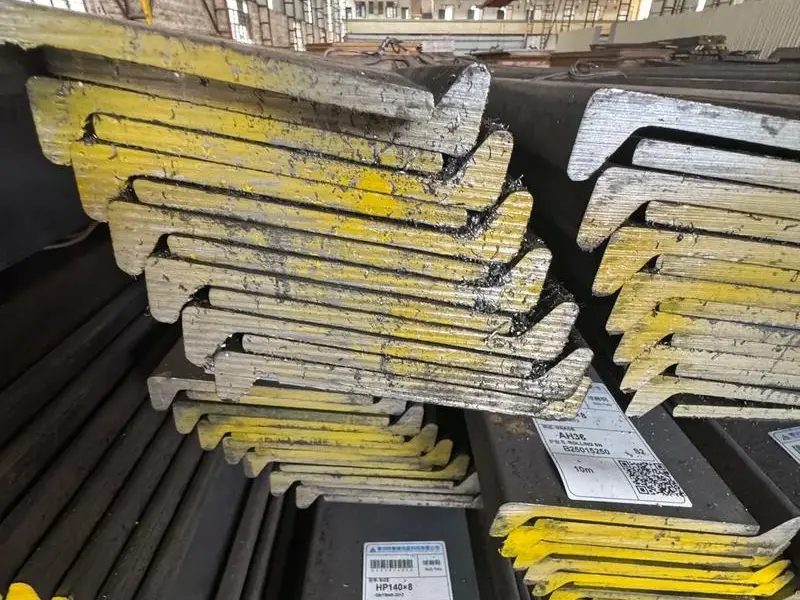
Shipyards prefer bulb flat steel for structural optimization because it delivers an unmatched combination of high strength-to-weight ratio and production efficiency. Its single-piece, rolled profile replaces heavier fabricated sections, significantly reducing hull weight and construction time while maintaining superior structural integrity.
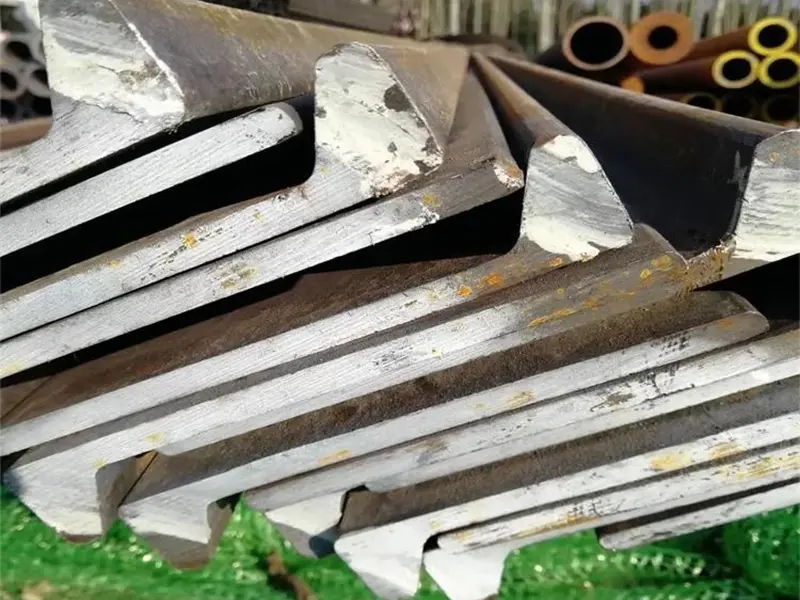
I see this preference daily. Our inquiries from Vietnam, the Philippines, and Saudi Arabia are not just for ‘steel.’ They are increasingly specific: "We need 200 tons of bulb flats, grade DH36, for transverse frames." This specificity tells a story. It shows that modern ship design has standardized on this solution. But to truly understand why, we need to look at the role it plays, the material it’s made from, and the core advantage it provides.
What are bulb flats1 used for?
Imagine the skeleton inside a ship’s hull. The vertical ribs that give the hull its shape and strength against the crushing pressure of the sea are increasingly made from one specific profile.
Bulb flats are used primarily to construct the transverse frames2 and stiffeners within a ship’s hull and decks. They act as the primary ribs of the vessel, providing critical bending resistance and structural support to the thinner steel plating, thereby defining the ship’s internal framework.
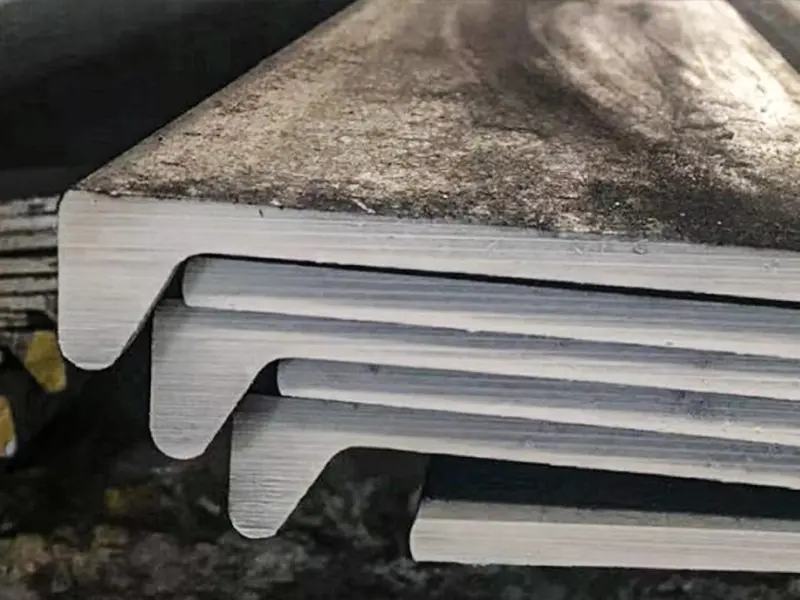
The Critical Role of Bulb Flats as the Ship’s Skeleton
The use of bulb flats1 is not accidental; it is a result of deliberate engineering optimization. Their application can be broken down into three key functional areas, each contributing to the overall goal of a lighter, stronger, and more cost-effective ship.
1. As Primary Transverse Frames:
This is the most important use. In most large vessels like container ships and bulk carriers, the hull is supported by a series of vertical frames spaced evenly from bow to stern. These frames absorb the global bending stresses of the ship moving through waves. Historically, these were built by welding a vertical plate (the web) to a horizontal flat bar (the flange). A bulb flat replaces this two-piece assembly with a single, rolled profile where the flat part is the web and the bulb is the flange. This eliminates a long, critical weld, saving labor, reducing potential distortion, and improving consistency.
2. As Longitudinal Stiffeners:
In addition to vertical frames, ships have longitudinal members running the length of the vessel. These support the plating between frames and help manage local stresses. Bulb flats are also used here, especially in areas requiring high stiffness like the bottom and deck.
3. In Specialized Structures:
You will find bulb flats1 in other critical areas:
- Bulkheads: They stiffen watertight and non-tight bulkheads3.
- Deck Girders: They provide support under heavy deck loads.
- Superstructure: They form the framing for decks and walls in the accommodation block.
The Optimization Advantage: A Direct Comparison
The preference for bulb flats1 becomes clear when we compare them to the traditional alternative.
| Feature | Traditional Built-Up Section (Web + Flange Plate) | Bulb Flat Steel Section |
|---|---|---|
| Construction Process | Requires cutting two separate pieces (web plate, flat bar) and welding them together along the entire length. | Delivered as a single, ready-to-use rolled profile. No assembly welding needed. |
| Labor Intensity | High. Involves fitting, tack-welding, and full welding. Requires more man-hours. | Low. Simply positioned and welded to the hull plate. |
| Material Weight | Heavier for the same bending strength. The design is less material-efficient. | Lighter for the same bending strength. The bulb places mass efficiently for maximum stiffness. |
| Dimensional Consistency | Can vary due to welding distortion and assembly tolerances. | Highly consistent as it is mill-rolled to precise tolerances. |
| Quality Control | Relies on weld quality inspection. A weld defect can compromise the frame. | No critical longitudinal weld to inspect. Quality is assured at the mill. |
From a Supplier’s Perspective:
This shift changes what shipyards need from us. They don’t just want steel; they want a precision component. The dimensional accuracy4 of our bulb flats1 is paramount. A bulb flat that is out of tolerance can’t be easily forced into place; it delays the entire production line. This is why we insist on SGS or third-party inspection support before shipment. It gives our clients, like the fabricator in Saudi Arabia, the confidence that the product will fit perfectly, enabling their own optimization in the yard. The use of bulb flats1 is the first and most visible step in a shipyard’s structural optimization strategy.
What kind of steel is used in shipbuilding?
Building a ship is an exercise in managing extremes. The steel used must withstand saltwater corrosion, immense physical forces, and impact loads. This demands a specialized family of steel, not a single type.
Shipbuilding primarily uses marine-grade steel plates1 and profiles, categorized into two main groups: Ordinary Strength (Grades A, B, D, E)2 and Higher Strength (Grades AH32/36/40, DH32/36/40, EH32/36/40). These steels are formulated for excellent strength, toughness, and weldability, with specific grades chosen for different parts of the vessel based on stress and temperature requirements.
The Marine Steel Ecosystem: More Than Just "Strong Steel"
The term "shipbuilding steel" encompasses a precise system defined by international classification societies (ABS, LR, DNV, etc.). This system ensures that every piece of steel in a ship is fit for its specific purpose. It’s a language of letters and numbers that dictates safety and performance.
1. The "Grade" System: A Code for Toughness and Strength.
The grade is the most important identifier. It tells you two things:
- The Letter (A, B, D, E, AH, DH, EH, FH): This indicates the toughness grade, or the steel’s ability to resist brittle fracture at low temperatures.
- A, B: For use in ambient temperatures.
- D: For service in low-temperature zones.
- E, EH: For very low-temperature service (e.g., Arctic routes, certain areas of large ships).
- The H in AH/DH/EH simply means "High tensile."
- The Number (32, 36, 40, 47…): This indicates the minimum yield strength3 in kilograms-force per square millimeter (kgf/mm²). For example, 36 means a minimum yield strength3 of 36 kgf/mm², which is approximately 355 Megapascals (MPa). A higher number means a stronger steel.
2. Application by Ship Zone:
Not all steel on a ship is the same grade. The classification rules specify different grades for different areas based on stress levels.
- Keel and Bottom Shell: Subject to high bending stress and impact. Typically uses higher-strength grades like AH36/DH36.
- Side Shell: Uses a mix of ordinary and higher strength depending on location.
- Deck (especially midship): Under high tensile stress, so higher-strength grades are common.
- Superstructure: Typically uses ordinary strength grades to save cost and weight high up on the ship.
- Internal Bulkheads: Often use ordinary strength grades unless they are load-bearing.
3. Beyond Plates: Profiles and Their Steel.
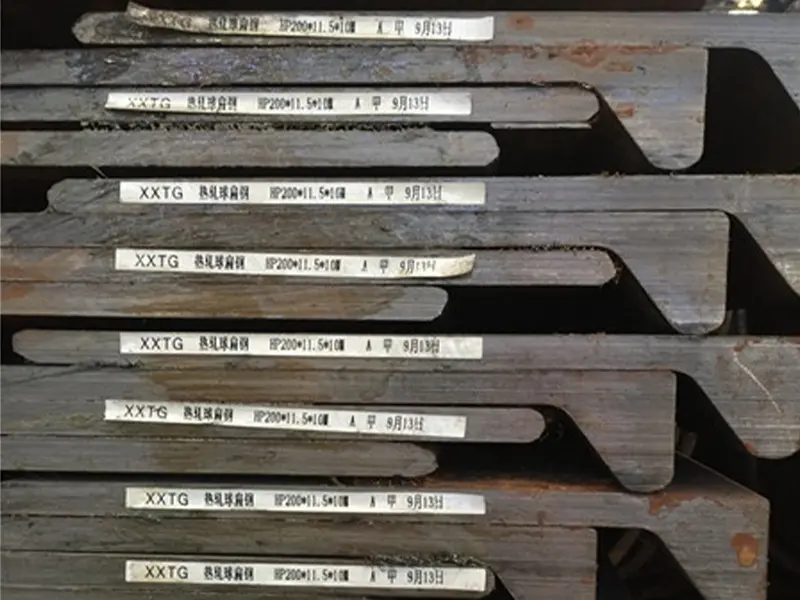
Bulb flats, angles, and L-sections are made from the same family of marine steels. A bulb flat will be ordered as "Bulb Flat, Grade DH36, 300mm x 11mm." This means it is made from steel with the properties of DH36 plate. The steel’s chemistry and mechanical properties are verified at the mill before it is rolled into the bulb flat profile.
The Shipyard’s Selection Logic:
A shipyard doesn’t choose "shipbuilding steel." It chooses a specific grade for a specific part. The selection is a balance of:
- Rules: The classification society’s minimum requirements.
- Design Optimization: Using higher strength where it saves the most weight.
- Cost: Higher-strength steel is more expensive per ton, but using less of it can lower total cost.
- Fabricability: The steel must be easy to cut, bend, and weld.
This complex ecosystem is why we maintain long-term cooperation with certified mills. We need to source not just steel, but the right grade of steel for bulb flats, plates, and angles, and ensure it arrives with the full suite of mill certificates that prove it meets the exacting class rules. This reliability is what allows shipyards to optimize their structures with confidence.
Which type of steel is most commonly used in shipbuilding due to its strength and durability?
Walk through any major shipyard building commercial vessels. The majority of the steel you see, especially in the hull, will belong to one reliable and proven category.
High-Strength Low-Alloy (HSLA) steel1, particularly grades AH36 and DH362, is the most commonly used steel in modern shipbuilding due to its optimal balance. It provides significantly higher strength than ordinary steel with good toughness3 and weldability4, allowing for lighter, stronger hulls without compromising durability or safety.
The Reign of AH36/DH36: Why It Became the Industry Workhorse
The dominance of AH36/DH36 is a textbook case of a material solution perfectly matching industry needs. Its common use is the result of converging factors: regulatory evolution, economic pressure, and manufacturing practicality.
The Strength-Weight Breakthrough.
Before the widespread adoption of HSLA steels, ships were built with milder steels. To achieve the required strength, plates had to be thicker. This made ships heavier. Heavier ships need more power and fuel to move. The development of HSLA steels like AH36 (with a yield strength of 355 MPa5) allowed naval architects to use thinner plates for the same structural performance. This directly led to the design of larger, more efficient vessels. The "A" and "D" grades cover the vast majority of global trading routes (ambient and low-temperature), making AH36/DH36 the default choice.
The Durability and Safety Factor.
Strength alone is not enough. Ship steel must be tough. Toughness is the ability to absorb energy and deform without cracking, especially in cold water. The chemistry and rolling process of AH36/DH36 steel are controlled to ensure excellent notch toughness3. This is verified by Charpy V-notch impact tests6 at specified temperatures. This durability is non-negotiable for class approval. A ship built with this steel has a proven record of surviving decades of harsh ocean service, which gives owners, insurers, and regulators confidence.
The Fabrication Advantage: Weldability.
Ships are welded structures. A steel that is strong and tough but difficult to weld would be useless. AH36/DH36 steels are designed with a controlled carbon equivalent (CE) value. This ensures they can be welded using common shipyard processes (like submerged arc welding) without excessive pre-heating or risk of cold cracking. This weldability4 is crucial for maintaining construction speed and quality.
Why Not Always a Higher Grade?
You might ask, if AH36 is good, is AH40 or FH40 better? They are stronger, but they come with trade-offs:
- Higher Cost: Increased alloy content and more controlled processing raise the price.
- Fabrication Challenges: Higher strength can sometimes mean slightly lower weldability4 or more stringent welding procedures.
- Diminishing Returns: The weight savings from moving from AH36 to AH40 in a given design may not justify the extra cost for all parts of the ship.
Therefore, AH36/DH36 sits at the "sweet spot." It offers a major improvement over ordinary strength steel without the cost and complexity penalties of the very highest grades. It is the pragmatic, optimized choice for the majority of a ship’s structure.
Implication for Bulb Flats:
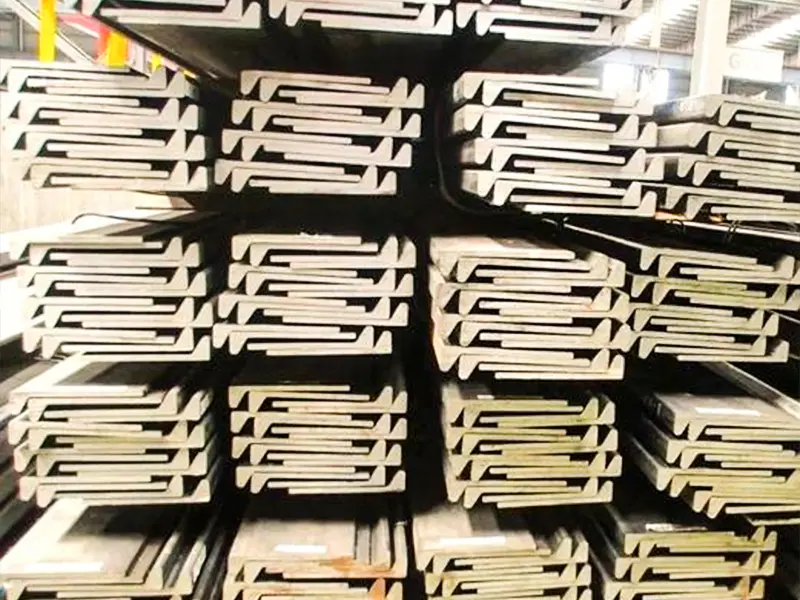
This is exactly why bulb flats7 are most commonly rolled from AH36 and DH362 grade steel. The bulb flat is an optimized shape, and AH36/DH36 is the optimized material. Together, they form the standard building block for modern ship framing. When a shipyard orders bulb flats7, they are, in most cases, ordering the physical form of the industry’s most trusted steel. Our job is to ensure that the bulb flats7 we supply are not just the right shape, but are genuinely made from top-quality, certified AH36/DH36 steel that will perform as expected for the life of the vessel.
What is the main advantage of using high tensile steel1 for ship building?
The ocean is a relentless force. Building a ship that is both strong and efficient is the core challenge. High tensile steel provides the fundamental answer by allowing you to use less material to achieve the same, or greater, strength.
The main advantage of using high tensile steel1 (like AH36, DH40) in shipbuilding is weight reduction2. By providing higher yield strength, it allows for thinner plates and lighter structural sections, which directly leads to increased cargo capacity, improved fuel efficiency3, and enhanced stability for the vessel.
Deconstructing the Weight Advantage: A Multiplier Effect on Performance and Profit
The benefit of "weight reduction2" is often stated but rarely fully unpacked. It is not a single advantage; it is a cascade of interconnected benefits that touch every aspect of a ship’s economics and operational profile.
1. The Direct Impact: Increased Deadweight Tonnage (DWT).
A ship’s earning capacity is largely measured by how much cargo it can carry (its deadweight). The ship itself has a weight (lightship weight). The difference between the ship’s displacement when fully loaded and its lightship weight is the DWT. If you reduce the lightship weight by using lighter, high-tensile steel, you automatically increase the DWT. This means more containers, more ore, or more oil per voyage. This translates directly to higher revenue.
2. The Operational Impact: Fuel Efficiency and Range.
A lighter ship requires less power to move at the same speed. This reduces fuel consumption, which is the single largest operating cost for a shipowner. In today’s era of high fuel prices and strict Carbon Intensity Indicator (CII) regulations, this is a critical advantage. Better fuel efficiency3 also means the ship can travel further on the same amount of bunker fuel, adding operational flexibility.
3. The Design and Stability Impact.
Weight saved in the hull structure can be strategically used elsewhere.
- Enhanced Stability: Weight saved low in the hull (e.g., in the bottom frames and plates) lowers the ship’s center of gravity. This makes it more stable, which can allow for changes in design or improved safety margins.
- Room for Innovation: The saved weight budget can be allocated to new equipment, such as larger cranes, more powerful engines, or emission-reduction technology like scrubbers or ballast water treatment systems, without compromising cargo capacity.
The Critical Role of Bulb Flat Steel in Realizing This Advantage:
High-tensile steel plates are one part of the equation. Bulb flat steel made from high-tensile grades (like AH36) is the other. The hull’s framing contributes a massive portion of the structural weight. Optimizing here has an outsized impact.
Consider a traditional built-up frame versus a bulb flat frame made of the same AH36 steel. The bulb flat frame will be lighter for the same strength. Now, multiply that weight saving by the hundreds of frames in a large container ship. The total saving can be substantial—easily hundreds of tons. This is weight reduction2 achieved not just by the material’s property, but by the synergy of material property and geometric design.
A Comparative View of the Advantages:
| Aspect | Ship Built with Ordinary Strength Steel | Ship Built with High-Tensile Steel (and Optimized Profiles) |
|---|---|---|
| Hull Weight | Heavier for the required strength. | Lighter for the same strength, or stronger for the same weight. |
| Cargo Capacity (DWT) | Lower. More weight is the ship itself. | Higher. The primary commercial advantage. |
| Fuel Consumption | Higher due to greater displacement. | Lower. A direct and continuous cost saving. |
| Construction Material Cost | Lower cost per ton of steel, but more tons required. | Higher cost per ton, but fewer tons required. Total cost may be comparable or better. |
| Environmental Compliance | Harder to meet EEDI/EEXI/CII targets due to higher fuel use. | Easier to meet targets due to inherent efficiency from weight savings. |
Therefore, the main advantage is foundational. It unlocks a chain of secondary benefits that define a modern ship’s competitiveness. For a shipyard, specifying high-tensile steel and bulb flats is not an extra expense; it is an investment in the vessel’s long-term commercial success and regulatory compliance. This is why these materials are not just preferred; they are now standard in optimized ship design.
Conclusion
Shipyards prefer bulb flat steel because it is the practical embodiment of structural optimization, combining the proven strength of common HSLA steel with a shape that maximizes efficiency, reduces build time, and directly contributes to a vessel’s profitability and environmental performance.
-
Explore the advantages of high tensile steel, including weight reduction and improved strength, crucial for modern shipbuilding. ↩ ↩ ↩ ↩ ↩ ↩ ↩ ↩ ↩ ↩
-
Understanding weight reduction can reveal how it enhances cargo capacity and fuel efficiency in ships. ↩ ↩ ↩ ↩ ↩ ↩ ↩
-
Discover how fuel efficiency affects operational costs and environmental compliance in the shipping industry. ↩ ↩ ↩ ↩ ↩ ↩ ↩
-
Discover how weldability influences the choice of steel in shipbuilding, impacting construction speed and quality. ↩ ↩ ↩ ↩
-
Understand the implications of a yield strength of 355 MPa in shipbuilding materials for structural integrity. ↩
-
Explore the importance of Charpy V-notch impact tests in assessing the toughness of shipbuilding steels. ↩
-
Learn about bulb flats and their significance in modern ship framing, made from trusted AH36/DH36 steel. ↩ ↩ ↩