
Your project needs angle steel. The supplier says "two weeks." Four weeks later, nothing arrives.
Secure stable supply by qualifying suppliers with mill direct access, signing volume commitments for priority treatment, keeping safety stock and rolling forecasts, and diversifying sources so one failure doesn’t stop your project.
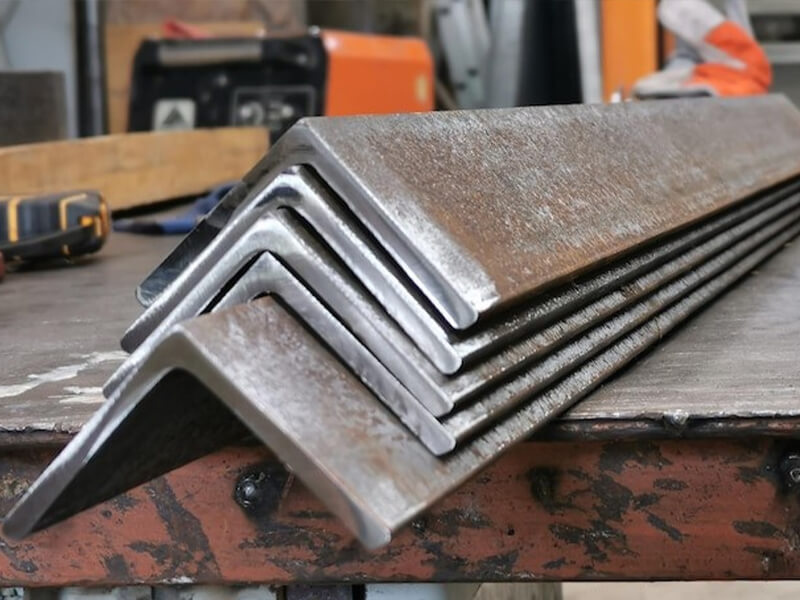
I have helped shipyards avoid supply disruptions for years. The ones who plan ahead never stop production. The ones who don’t panic. Let me share the exact steps you can take to keep steel flowing, even when the market gets tight.
How Do You Identify and Qualify Reliable Angle Steel Suppliers with Mill Direct Access?
A trader calls himself a "supplier." But when you need steel, he goes to the spot market. Prices change. Availability disappears.
A reliable supplier has direct contracts with certified mills, not just spot buying. They can show you mill cooperation agreements, provide consistent MTCs from the same mill, and offer stable pricing over time.

The difference between a real supplier and a middleman
I remember a buyer from Malaysia. He bought from a "supplier" for two years. Then the market got tight. The supplier suddenly could not deliver. Why? Because he was just a trader. He had no mill contract. He bought spot from whoever had stock. When demand went up, he had no priority. The buyer lost four weeks. After that, he switched to a supplier with direct mill access – me.
So let me show you how to check if a supplier is real.
First, ask for proof of mill direct access. Do not take their word. Ask for:
- A copy of their mill cooperation agreement or annual contract
- Mill’s name and location – you can verify with a quick call
- Photos of their team at the mill (not stock photos)
- The mill’s certificate of approval for marine grades (ABS, DNV, etc.)
I share these documents with any serious buyer. A transparent supplier has nothing to hide. For reference on mill test certificates and what they should show, see Mill Test Certificates: How to Read an MTC and steel mill test certificates explained.
Second, check the MTC consistency. A trader buys from different mills. The MTCs will show different mill names, different formats, different heat number patterns. A direct mill supplier will give you MTCs from the same mill, with the same format, every time.
| Sign of Direct Mill Access | Sign of Trader / Spot Buyer |
|---|---|
| Same mill name on every MTC | Different mill names on different orders |
| Consistent MTC format | MTC formats vary widely |
| Heat numbers follow a logical sequence | Random heat numbers from different sources |
| Mill contact person known | Supplier cannot provide mill contact |
Third, test their response to a non‑standard request. Ask for a size or grade that is not common. A direct mill supplier will say: "Let me check with my mill contact. I will have an answer in 24 hours." A spot buyer will say: "I need to search the market. Maybe 3‑5 days."
I have a direct line to my mill’s production manager. I get answers fast. For marine-grade approval context, see ABS, LR, DNV, and BV certification requirements and What Is ABS and DNV Certification in Marine?.
Fourth, evaluate their financial stability and track record. A reliable supplier has:
| Indicator | What to Look For |
|---|---|
| Years in business | 5+ years minimum |
| Export volume | At least 5,000 tons per year for marine steel |
| Client references | At least 3 long‑term shipyard or contractor clients |
| Payment terms offered | Standard 30% deposit, not demanding 100% upfront |
I have been exporting marine steel for years. I am happy to provide references. For supplier audit and traceability practices, see Steel Mill Audits – a Metallurgy Approach and MTC needed to prove iron and steel origin and quality.
A quick qualification checklist
- Supplier has a direct, written contract with a certified mill
- Mill has active classification society approvals (ABS, DNV, LR, etc.)
- MTCs consistently show the same mill and format
- Supplier can provide mill production photos and contact info
- Supplier has been in business for 5+ years with verifiable references
Take two hours to check these. It will save you months of headache.
What Contract Terms and Volume Commitments Ensure Priority Treatment During Peak Demand?
You are a small buyer. The mill is busy. They fill large orders first. Yours waits.
Volume commitments and long‑term contracts give you priority. Sign a 12‑month agreement with minimum monthly tonnage. The supplier reserves production slots for you. When demand peaks, you are already in the queue.
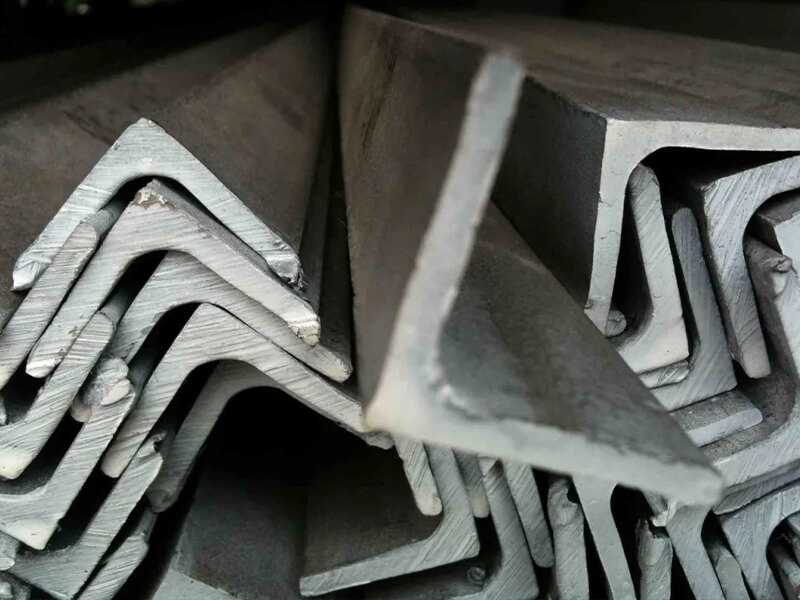
Why small buyers get pushed back – and how to change that
I had a client from Vietnam. He bought 50 tons here, 30 tons there. No commitment. One quarter, the market went crazy. Mills were fully booked. His orders kept getting pushed. He waited 60 days for 50 tons. Then he signed a 12‑month contract with me for 100 tons per month. Suddenly, his orders were always on time. Why? Because I reserved mill capacity for him. For broader background on volume commitments in contracts, see volume commitments as part of contract negotiations and long-term contracts in steel procurement.
So let me explain the contract terms that work.
First, volume commitment – the foundation of priority. Mills and suppliers prioritize buyers who give them predictable volume. Lead time is also closely tied to supplier capacity and existing commitments, as discussed in processing lead time in steel orders.
| Commitment Level | Priority | Typical Lead Time During Peak |
|---|---|---|
| Spot orders, no commitment | Low – last in line | 45‑90 days |
| 6‑month forecast, no guarantee | Medium | 30‑60 days |
| 12‑month contract with minimum monthly volume | High – reserved slots | 20‑30 days |
| 24‑month contract with guaranteed volume | Highest – first priority | 15‑25 days |
Even a modest guarantee of 500 tons per year moves you from "spot buyer" to "regular client."
Second, what to put in the contract. A good long‑term contract includes:
| Clause | Why It Matters |
|---|---|
| Minimum monthly volume (your commitment) | Supplier can plan capacity |
| Price adjustment formula (e.g., quarterly based on raw materials) | Protects both sides from market spikes |
| Delivery schedule with agreed lead time | Supplier reserves production and shipping |
| Priority clause – stating your orders go to the front of the queue | Legal protection during peak demand |
| Liquidated damages for late delivery | Supplier has incentive to deliver on time |
I use these clauses in my contracts. My clients know exactly what they are getting. For general guidance on manufacturing contract clauses and escalation provisions, see some key clauses in manufacturing contracts and price escalation clauses in construction contracts.
Third, how to negotiate priority without buying huge volumes. You do not need to be the biggest buyer. You need to be a predictable buyer.
| Your Strength | How to Use It |
|---|---|
| Consistent order pattern | "I order the same 3 sizes every month. You can stock them for me." |
| Willingness to prepay or provide larger deposit | "I will pay 40% deposit if you guarantee priority." |
| Long contract term (2‑3 years) | "I will sign a 2‑year contract. Give me priority over 1‑year buyers." |
| Referrals to other buyers | "I will introduce you to two other shipyards." |
I give priority to clients who are easy to work with and predictable. Price is not the only factor.
Fourth, a real example of volume commitment working.
| Before Contract | After 12‑Month Contract |
|---|---|
| Monthly volume: 30‑80 tons (sporadic) | Monthly volume: 60 tons guaranteed |
| Lead time: 35‑55 days | Lead time: 20‑25 days |
| Price: Market + 5% to 10% | Price: Market flat |
| On‑time delivery: 82% | On‑time delivery: 96% |
The client increased his guaranteed volume from zero to 60 tons per month. His stability improved dramatically.
Your contract negotiation checklist
- Can you commit to a minimum monthly or quarterly volume?
- Are you willing to sign a 12‑month contract?
- Have you discussed a price adjustment formula?
- Is there a priority clause in the contract?
- Are late delivery penalties included?
I offer all of these to my long‑term clients. It is a fair exchange.
How Can Safety Stock and Rolling Forecasts Protect Against Supply Chain Disruptions?
A port closes. A mill has an accident. Your supplier cannot deliver. You have no backup.
Safety stock – steel you keep in your own yard – covers short disruptions. Rolling forecasts – sharing your future needs with your supplier – allow them to build stock on your behalf. Together, they create a buffer against uncertainty. For a practical overview of safety stock formulas, see What Is Safety Stock? Formula & How to Calculate and Safety Stock Formula & Calculation.

The two buffers that saved projects during COVID
I remember 2021. Ports were backed up. Mills were shut down. My clients with safety stock kept working. My clients without safety stock stopped. One client in Thailand had only two weeks of steel when the disruption hit. He ran out. He paid triple for air freight. He swore he would never run low again.
So let me show you how to set up your own protection.
First, calculate your safety stock level. Use this formula:
Safety stock (tons) = (Average daily usage × Lead time in days) × 1.5
Example: You use 5 tons per day. Your supplier’s lead time is 40 days.
Safety stock = 5 × 40 × 1.5 = 300 tons.
That 300 tons sits in your yard. It covers you if a shipment is late by up to 20 days (the 0.5 factor is a 50% buffer).
Second, adjust safety stock based on risk.
| Risk Level | Multiplier | When to Use |
|---|---|---|
| Low (reliable supplier, stable market) | 1.2 to 1.3 | Normal times |
| Medium (some delays, seasonal demand) | 1.4 to 1.6 | Typical |
| High (port congestion, mill shutdowns) | 1.7 to 2.0 | Disruption periods |
During the COVID port crisis, I advised clients to use 2.0. Many did. They never stopped production.
Third, rolling forecasts – your early warning system. Share your planned steel needs for the next 3‑6 months with your supplier. Update it every month. Rolling forecast processes are widely used in supply chain planning; see Rolling forecasts – Supply Chain Management and Rolling Forecast Best Practices.
| Forecast Horizon | Precision Required | Supplier Action |
|---|---|---|
| 0‑4 weeks | Firm orders | Reserve production slots |
| 4‑8 weeks | Estimated ( ± 20%) | Purchase raw materials |
| 8‑12 weeks | Indicative ( ± 30%) | Plan capacity and stock |
I have a client in Saudi Arabia who shares a 6‑month forecast every quarter. I keep his most common sizes in my own stock. When he places a firm order, I ship within days.
Fourth, the cost of safety stock vs the cost of a disruption.
| Scenario | Cost |
|---|---|
| Holding 300 tons of safety stock for one year (at $700/ton, 15% holding cost) | 300 × 700 × 0.15 = $31,500 |
| One week of production stoppage due to steel shortage (100 tons/day × 5 days lost profit) | $50,000 to $200,000 |
The safety stock costs $31,500 per year. One stoppage costs more. The math is clear.
Your safety stock and forecasting checklist
- You have calculated safety stock based on your daily usage and lead time
- You have dedicated storage space for that safety stock
- You rotate safety stock (FIFO) so it does not age
- You share a 3‑6 month rolling forecast with your supplier
- Your supplier acknowledges the forecast and confirms capacity
I work with my clients to set up this system. It takes one hour. It saves months of pain.
Why Is Supplier Diversification and Backup Sourcing Critical for Project Continuity?
Your only supplier fails. You have no alternative. Your project stops.
Diversification means having at least two approved suppliers who can provide the same steel. Backup sourcing means having a pre‑qualified secondary source you can activate within days, not weeks. For background on supplier diversification and backup sourcing in steel supply chains, see Unlocking the Benefits of Supplier Diversification in Steel Sourcing and Strategies for Supply Chain Resilience: Backup Sourcing and Dual Sourcing.
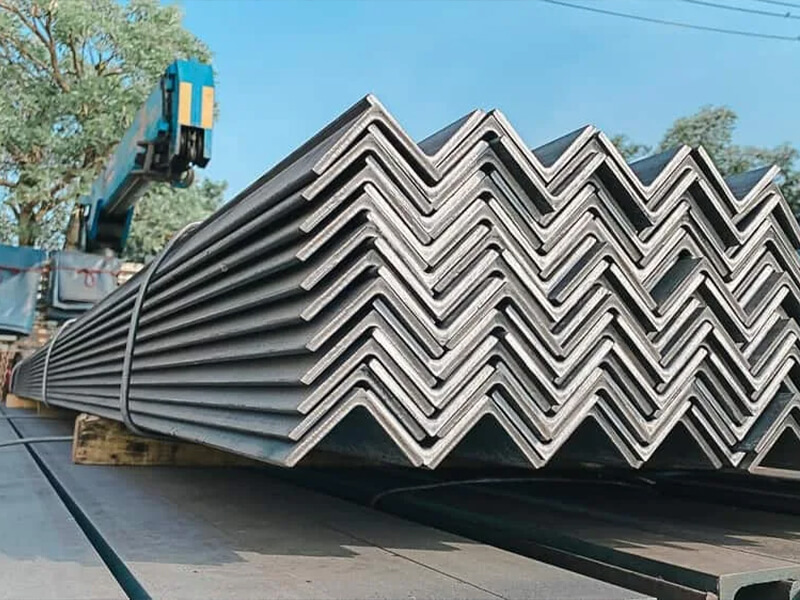
Never put all your steel in one basket
I had a client in the Philippines. He used one supplier for three years. The supplier was good. Then the supplier’s mill had a major breakdown. The supplier could not deliver for two months. The client had no backup. He scrambled to find new suppliers. He paid 20% more and waited 45 days. After that, he asked me to help him build a backup plan. Now he has two suppliers. If one has a problem, the other can cover.
So let me explain how to diversify without doubling your workload.
First, the right number of suppliers. For most shipyards, 2 to 3 approved suppliers is enough.
| Number of Suppliers | Pros | Cons |
|---|---|---|
| 1 | Simple, easy to manage | Single point of failure |
| 2 | Redundancy, competitive pressure | More vendor management |
| 3 | Strong backup, price competition | More complex coordination |
| 4+ | Too many – inefficient | Overkill for most |
I recommend two main suppliers and one backup that you qualify but do not actively use. For more on the business continuity side of this, see The Ultimate Guide To Business Continuity In Steel Manufacturing and How Single-Source Supply Deals Destroy Business Continuity.
Second, how to qualify a backup supplier without buying from them often.
| Step | Action | Frequency |
|---|---|---|
| 1 | Request their mill certificates and approvals | Once at qualification |
| 2 | Ask for a sample of their MTC and quality records | Once |
| 3 | Visit (or video tour) their facility | Once per year |
| 4 | Place a small trial order (10‑20 tons) | Once every 1‑2 years |
| 5 | Keep their contact and price list updated | Quarterly |
This keeps the relationship warm. When you need them, you can call and say "remember our trial order?"
Third, decide how to split volume between suppliers. Different strategies:
| Strategy | Primary Supplier | Secondary Supplier | Best For |
|---|---|---|---|
| 100/0 | 100% volume | Qualified but inactive | Stable markets |
| 80/20 | 80% volume | 20% volume (keeps them active) | Most projects |
| 60/40 | 60% volume | 40% volume | High‑risk markets |
| 50/50 | 50% each | Equal split | Maximum redundancy |
I see most shipyards use 80/20. The secondary supplier gets small regular orders. They stay ready.
Fourth, the backup activation plan. Write a simple one‑page plan:
- Trigger – When primary supplier’s lead time exceeds X days, or quality fails Y times.
- Contact – Call backup supplier’s sales manager (have their number ready).
- Order – Send PO for up to 100% of your needs.
- Price – Pre‑negotiated pricing (within 5‑10% of primary).
- Lead time – Confirmed within 24 hours, delivery within agreed days.
I have been a backup supplier for several shipyards. I appreciate the relationship. When they call, I prioritize them because they are already qualified.
A real example of diversification saving a project
| Scenario | Without Diversification | With Diversification |
|---|---|---|
| Primary supplier’s mill down for 6 weeks | Production stops for 6 weeks | Secondary supplier covers 60% of volume. Production slows but does not stop. |
| Cost of disruption | Lost profit: $120,000 | Extra freight: $8,000. No lost profit. |
The diversification cost almost nothing. The saving was huge.
Your diversification checklist
- You have at least 2 qualified marine angle steel suppliers
- You have placed a trial order with your secondary supplier in the last 24 months
- You have their current price list and contact details on file
- You have a written backup activation plan
- You review your supplier list every 6 months
I am happy to be a primary or backup supplier. My clients know I deliver.
Conclusion
Qualify direct‑mill suppliers, sign volume commitments, keep safety stock with rolling forecasts, and diversify sources. That is how you secure stable steel supply.