
Your steel is ready. But it sits at the port for weeks. Customs rejects your documents. The buyer is angry.
Marine steel plate exports face four main challenges: document errors, shipping disruptions, quality inconsistency, and payment risks. You solve them with pre‑shipment checks, logistics buffers, third‑party inspections, and secure payment terms.
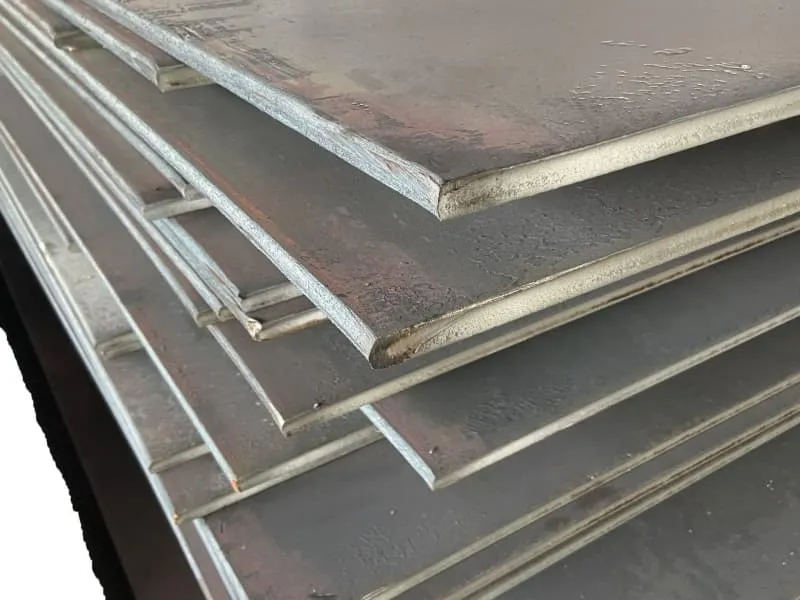
I have exported marine steel plates to over a dozen countries. Every problem I have faced, I have seen before. The good news is that most challenges have simple solutions. Let me walk you through the most common export problems and exactly how to fix them.
What Documentation and Certification Errors Lead to Customs Delays and How Can You Avoid Them?
One wrong HS code. One mismatched weight. One missing heat number. Your container sits in a customs warehouse for 10 days.
The most common document errors are mismatched weights between invoice and packing list, incorrect HS codes, missing Mill Test Certificates (MTCs), and heat numbers that do not match the steel. Avoid them with a pre‑shipment document checklist and a second person who verifies every number.
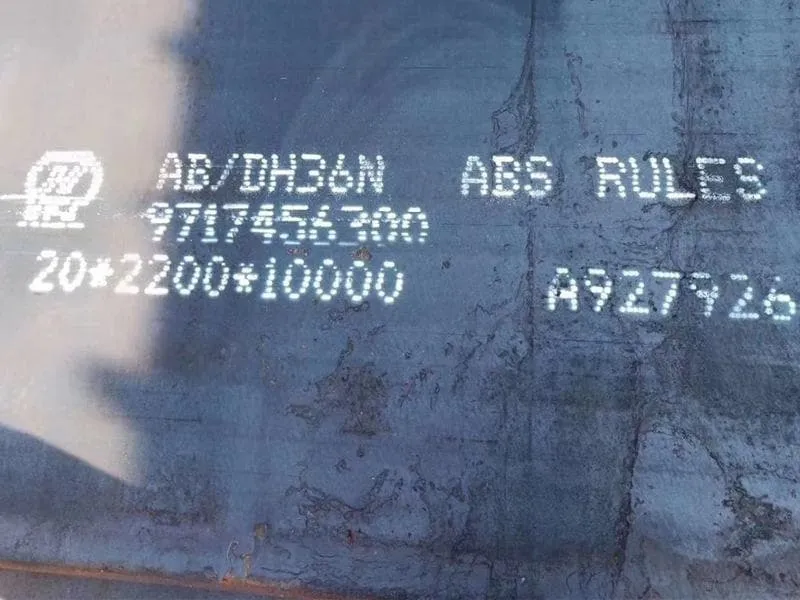
The missing comma that cost $2,000
I remember a shipment to Mexico. The packing list said 48.5 tons. The commercial invoice said 48.5 tons. The bill of lading said 48.5 tons. All good. But the customs system read the BL as 48.5 tons and the invoice as 48.5 tons? No – one document had a space after the number. The system flagged a mismatch. The container was held for 7 days. My client paid $1,500 in demurrage.
Below is my article in Markdown format, please help me fill in the missing links in it (if necessary, please search Google for the most appropriate linking resources).
So let me show you the exact errors and how to prevent them.
First, the most common document errors in steel export.
| Error Category | Specific Error | Consequence |
|---|---|---|
| Weight mismatch | Invoice weight vs packing list vs BL differ by even 0.1 ton | Customs hold, possible fine |
| HS code error | Wrong code for marine plate (e.g., 7208–7219) | Wrong duty rate, rejection |
| Heat number mismatch | MTC heat number not found on steel | Lab testing, 7‑14 day delay |
| Missing documents | No MTC, no origin certificate, no packing list | Full inspection, heavy delay |
| Consignee name error | Name on BL does not match import license | Can’t take possession of steel |
Second, the pre‑shipment document checklist I use for every order.
I print this list and check each item before the container is sealed.
- Commercial invoice weight matches packing list weight (to the nearest 0.01 ton)
- Packing list bundle weights add up to total weight
- HS code is verified with buyer’s customs broker (different countries use different codes)
- MTC includes all heat numbers and matches the steel photos
- Bill of lading consignee name matches the buyer’s import license exactly
- Certificate of origin (if required by buyer’s country) is prepared
- All documents use the same spelling of port names, company names, and product descriptions
Third, the two‑person verification rule. One person prepares the documents. A second person checks them. I have a junior staff member prepare the docs. Then I check every number myself. That second pair of eyes catches 90% of errors.
Fourth, send documents to the buyer before the vessel sails. I email the full document package to my client 2‑3 days before the ship leaves. The client can check everything. If there is an error, I fix it before the steel arrives. That saves days of delay at the destination.
| Action | Timing | Benefit |
|---|---|---|
| Document preparation | 5 days before loading | Time to correct errors |
| Buyer review | 3 days before sailing | Catch mismatches early |
| Final corrections | Before vessel departs | Clean documents for customs |
Your document‑error prevention checklist
- Have a written document checklist
- Use two people to verify every document
- Send documents to buyer before vessel sails
- Keep digital and paper copies for at least 1 year
I have used this system for years. Document‑related delays are now very rare for my shipments.
How Do Shipping Volatility and Port Congestion Disrupt Delivery Schedules and What Are the Solutions?
You promise the steel in 35 days. The shipping line changes the vessel schedule. The port is backed up. Now it takes 50 days.
Shipping disruptions come from vessel schedule changes, port congestion, container shortages, and route changes (e.g., Red Sea diversions). Solutions include building buffer time into your schedule, using multiple ports, booking with reliable shipping lines, and keeping emergency stock at destination.

How I saved a client’s project during the Red Sea crisis
I had a client in Saudi Arabia. His steel was scheduled to go through the Red Sea. Then the attacks started. All vessels rerouted around the Cape of Good Hope. The sailing time went from 18 days to 32 days. I called my client immediately. We moved to a different port. I booked space on a vessel that still used the Red Sea with armed guards. The steel arrived only 5 days late instead of 14. That call saved his schedule.
So let me share what you can do.
First, build realistic buffer time into your schedule. Do not assume the best case. Advice to build schedule buffers and prepare for disruption is consistent with customs-delay and shipping-risk guidance.
| Leg | Best Case | Typical | With Buffer (Recommended) |
|---|---|---|---|
| Mill production | 10 days | 15 days | 20 days |
| Packaging & QC | 3 days | 5 days | 7 days |
| Inland trucking | 2 days | 3 days | 5 days |
| Port waiting | 3 days | 7 days | 10 days |
| Sea freight | 15 days | 22 days | 30 days |
| Customs & final delivery | 5 days | 7 days | 10 days |
| Total | 38 days | 59 days | 82 days |
Plan for 60‑90 days. If it comes earlier, you are happy. If it is late, you are not surprised.
Second, use multiple ports. Do not rely on one port. In China, I can ship from Qingdao, Tianjin, Shanghai, or Ningbo. If one port is congested, I switch to another.
| Port | Typical Congestion | Alternative Ports |
|---|---|---|
| Qingdao | Medium | Tianjin (2 days trucking) |
| Shanghai | High (more congestion) | Ningbo (close, less congested) |
| Tianjin | Medium | Qingdao |
Third, choose shipping lines with better on‑time performance. Not all lines are equal. Carrier selection and reliability are commonly recommended in shipping-delay prevention guidance.
| Shipping Line | On‑Time Performance (Typical) | Cost Level |
|---|---|---|
| Maersk | 70‑80% | High |
| MSC | 65‑75% | Medium‑High |
| COSCO | 60‑70% | Medium |
| Regional lines | 50‑65% | Low |
For critical orders, I pay a premium for Maersk or MSC. For standard orders, COSCO is fine.
Fourth, keep contingency stock at or near your site. The best way to beat shipping delays is to not need the steel immediately. Keep 2‑4 weeks of safety stock. That buffer covers most delays. Maintaining buffer inventory and organizing shipment records are consistent with broader delay-prevention advice.
Your shipping disruption checklist
- Your project schedule has a 20‑30% buffer in lead time
- You have identified alternative ports on both ends
- You know which shipping lines are most reliable for your route
- You keep safety stock of common sizes at your yard
I help my clients with all of these. We plan together. When disruptions happen, we are ready.
What Quality Inconsistency and Surface Defect Issues Occur in Marine Plate Exports and How to Prevent Them?
The first batch is perfect. The second batch has rust and pitting. The mill changed its process.
Quality issues include dimensional variations (thickness out of tolerance), surface defects (rust, pitting, laminations), chemical composition shifts between batches, and poor edge preparation. Prevent them with mill audits, batch‑specific MTCs, pre‑shipment inspection, and clear acceptance criteria in your contract.
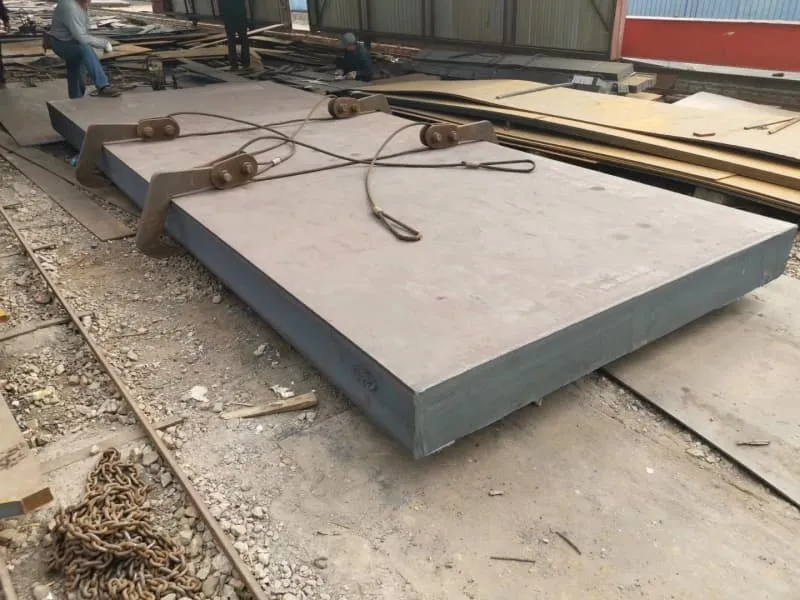
The shipment that taught me to inspect every batch
Years ago, I shipped 200 tons of AH36 plates to a client in Vietnam. The first 100 tons were fine. The second 100 tons came from a different mill run – same mill, different week. The thickness was 0.6mm thinner on average. The client rejected 40 tons. I had to replace it at my cost. Now I inspect every batch separately, even if it comes from the same mill.
So let me share what I learned.
First, the most common quality issues in marine plate exports.
| Issue | How It Happens | How To Detect |
|---|---|---|
| Thickness variation | Worn mill rollers, different cooling rates | Ultrasonic measurement at 5+ points per plate |
| Surface pitting | Rust during storage, poor descaling | Visual inspection under good light |
| Lamination | Trapped gas during casting | Ultrasonic scanning |
| Chemistry shift | Different scrap mix in furnace | Compare MTCs from each heat number |
| Edge cracks | Poor rolling practice | Visual check of both edges |
Second, the pre‑shipment inspection plan that catches problems.
| Stage | Action | Responsibility |
|---|---|---|
| 1. Mill production | Mill performs internal QC and issues MTC | Mill |
| 2. Before packaging | I take random samples from each bundle, measure thickness and check surface | Me (supplier) |
| 3. At loading port | Third‑party inspector (SGS, BV, TÜV) takes samples and issues report | Inspector |
| 4. After arrival | Buyer performs incoming inspection | Buyer |
I use step 2 and step 3 for every export order. Step 3 costs $300‑800 but saves thousands in rejects. Third‑party inspection and pre-shipment checks are widely used to verify dimensions, surface quality, marking, and documents before shipment.
Third, how to write quality requirements into your contract to avoid disputes.
Do not just say "to ASTM A6". Write:
"Thickness tolerance: ±0.3mm for plates under 20mm, ±0.4mm for plates over 20mm. Surface: no red rust covering more than 5% of area. No pitting deeper than 0.3mm. No laminations visible on edges. Rejected plates to be replaced at seller’s cost within 30 days."
I accept these terms. Bad suppliers will hesitate.
Fourth, how to prevent quality inconsistency across multiple orders.
| Practice | Effect |
|---|---|
| Use the same mill for all orders of the same grade | Eliminates mill‑to‑mill variation |
| Require batch‑specific MTCs | You can compare each batch |
| Keep a sample from each order | Reference for future orders |
| Build a supplier scorecard | Track quality trends over time |
Your quality prevention checklist
- You have a written quality specification with tight tolerances
- You require batch‑specific MTCs
- You use pre‑shipment third‑party inspection for every export order
- Your contract includes clear rejection and replacement terms
I provide all of these to my clients. My quality rejection rate is under 1%.
How Can Exporters Overcome Payment Risks and Currency Fluctuations When Trading Globally?
You ship the steel. The buyer delays payment. Or the currency moves against you. You lose money.
Payment risks include buyer default, delayed payment, and political risks. Currency fluctuations affect the real value of your sale. Solutions include secure payment terms (LC, DP, CAD), currency hedging, advance deposits, and export credit insurance.
The payment structure that protects both sides
I had a buyer in Pakistan. A good client for years. Then a political crisis hit. The government restricted foreign currency transfers. He could not pay me for three months. My cash flow was hurt. After that, I changed my payment terms. I now ask for a deposit that covers my material cost. The balance is due against documents, not after delivery.
First, standard payment methods for steel exports – and their risk levels.
| Method | Risk to Exporter | Risk to Buyer | Best For |
|---|---|---|---|
| 100% wire transfer before shipment | Low (exporter safe) | High (buyer takes all risk) | Small orders, trusted buyers |
| 30‑50% deposit, balance before shipment | Low | Medium | Most transactions |
| 30‑50% deposit, balance against BL copy | Medium | Low | Standard for marine steel |
| Letter of Credit (LC) at sight | Medium (document risk) | Low | Large orders, new buyers |
| Documents against Payment (DP) | Medium‑High | Low | Some markets |
| Open account (pay after delivery) | High | Very low | Long‑term trusted partners |
I use 30% deposit, 70% against BL copy for most clients. For new clients or larger orders, I use LC.
Second, how to handle currency fluctuations. Steel is often priced in USD. Your buyer may want to pay in local currency. If the local currency drops, you lose.
| Strategy | How It Works | Best For |
|---|---|---|
| Price in USD only | Buyer converts local to USD at their bank | Most exports |
| Hedging with forward contract | Lock in exchange rate with your bank | Large, regular shipments |
| Shorten payment terms | Get paid faster, less exchange risk | When currency is volatile |
| Add currency adjustment clause | Price adjusts if exchange rate moves more than X% | Long‑term contracts |
I price all my exports in USD. The buyer pays in USD. No currency risk for me.
Third, export credit insurance. This protects you if the buyer does not pay for political or commercial reasons.
| Provider | Coverage | Cost (approx) |
|---|---|---|
| Sinosure (China) | Up to 90% of invoice value | 0.5‑1.5% of invoice |
| Private insurers | 70‑90% | 0.5‑2% |
I use Sinosure for large orders or buyers in higher-risk countries. Sinosure is China’s export credit insurance provider.
Fourth, a real example of payment risk mitigation.
| Order value | $100,000 |
|---|---|
| Deposit (30%) | $30,000 – covers my material cost |
| LC for balance (70%) | $70,000 – confirmed, irrevocable |
| Sinosure insurance | $1,000 – covers 90% of $100,000 |
| Total risk to me | Near zero |
A confirmed irrevocable letter of credit adds the bank’s payment commitment, which is why it is commonly used for higher-risk international deals.
Second, how to handle currency fluctuations. Steel is often priced in USD. Your buyer may want to pay in local currency. If the local currency drops, you lose.
| Strategy | How It Works | Best For |
|---|---|---|
| Price in USD only | Buyer converts local currency to USD at their bank | Most exports |
| Hedging with forward contract | Lock in the exchange rate with your bank | Large, regular shipments |
| Shorten payment terms | Get paid faster, reduce exchange-rate exposure | When currency is volatile |
| Add a currency adjustment clause | Price changes if the exchange rate moves more than X% | Long-term contracts |
I price all my exports in USD. The buyer pays in USD. No currency risk for me.
Third, export credit insurance. This protects you if the buyer does not pay for political or commercial reasons.
| Provider | Coverage | Cost (approx) |
|---|---|---|
| Sinosure (China) | Up to 90% of invoice value | 0.5–1.5% of invoice |
| Private insurers | 70–90% | 0.5–2% |
I use Sinosure for large orders or buyers in higher-risk countries. Sinosure is China’s export credit insurance provider, and its SME cover can insure up to 90% under qualifying policies.
Fourth, a real example of payment risk mitigation.
| Order value | $100,000 |
|---|---|
| Deposit (30%) | $30,000 – covers my material cost |
| LC for balance (70%) | $70,000 – confirmed, irrevocable |
| Sinosure insurance | $1,000 – covers 90% of $100,000 |
| Total risk to me | Near zero |
Your payment risk checklist
- You have a clear payment policy written into every contract
- You collect a deposit that covers your material and production cost
- You price in a stable currency (USD)
- You consider export credit insurance for larger orders or higher‑risk buyers
I follow these rules. My clients know my payment terms upfront. There are no surprises.
Conclusion
Fix document errors before sailing. Plan for shipping delays. Inspect quality before loading. Secure payment with deposits and LCs. That is how you solve marine plate export challenges.