
You compare prices from three suppliers. The lowest price wins. Then the steel fails inspection.
The key factors are quality certifications with full traceability, real cost versus cheap price, delivery reliability that protects your schedule, and supplier communication with flexible third‑party inspection support.
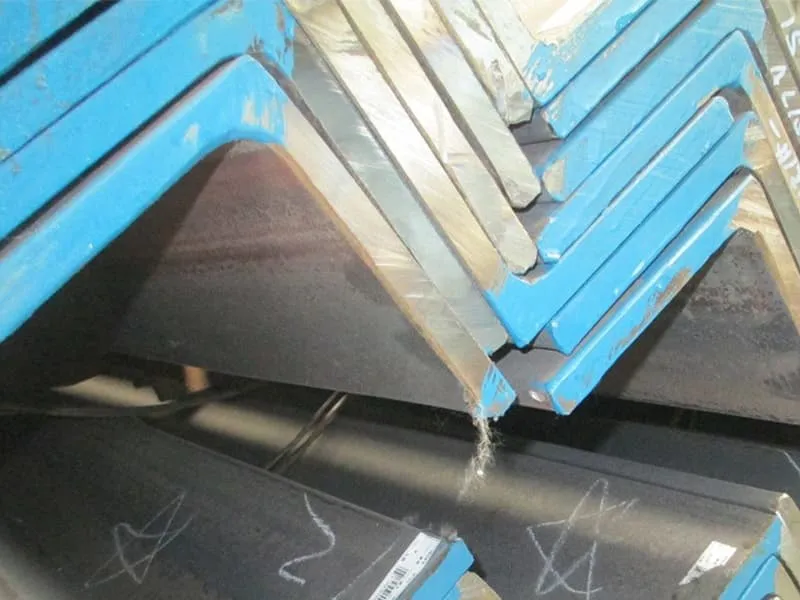
I talk to buyers every week. They all want the same thing: steel that arrives on time, meets specifications, and does not cause problems. But what actually drives their final decision? Not just price. Let me walk you through the real factors that smart buyers weigh before placing an order.
Why Are Quality Certifications and Material Traceability Non‑Negotiable Buying Criteria?
A cheap price with fake MTC costs you more than a fair price with real documents.
Quality certifications – classification society approval (ABS, DNV, LR, etc.) – prove the steel meets marine standards. Material traceability – heat number stamped on each piece matching the MTC – allows you to recall or claim if something fails. Buyers will not compromise on these.
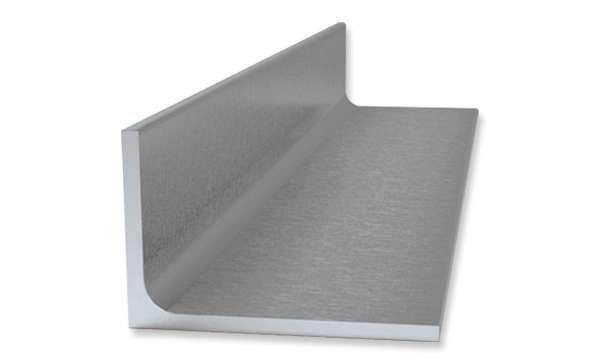
The two documents that decide your order
I had a buyer from Qatar. He received a quote that was 15% below market. The certificate looked real. But the heat number was missing from the MTC. He called me. I checked with the classification society. The certificate was fake. He avoided a $50,000 loss.
So let me explain why certifications and traceability are the first filter.
First, classification society approval – the entry ticket. No approved mill certificate, no sale. Shipyards and project contractors will reject steel without a valid ABS, DNV, LR, BV, or CCS stamp. Some buyers accept only two or three of these.
| Buyer Location | Typical Required Approval | Consequence of Missing Approval |
|---|---|---|
| Saudi Arabia (oil tankers) | DNV, ABS, BV | Rejection at port |
| Vietnam (bulk carriers) | LR, NK, CCS | Cannot install on vessel |
| Philippines (patrol boats) | ABS, DNV | Fails coast guard inspection |
| Mexico (port structures) | CCS, ABS | Insurance will not cover |
Second, material traceability – your liability shield. Every piece of angle steel must have a heat number stamped or painted on it. That heat number must appear on the MTC. Without that, you cannot prove where the steel came from.
| Traceability Element | Why It Matters |
|---|---|
| Heat number on steel | Identifies the exact batch |
| Heat number on MTC | Provides chemistry and mechanical properties |
| Matching records | Allows recall of defective material |
Third, what buyers check before ordering.
- Is the mill listed on the classification society’s approved list? (You can verify online)
- Does the MTC include all required tests (chemistry, tensile, yield, elongation, impact)?
- Is the heat number clearly stamped? (Ask for photos)
Fourth, the cost of skipping these checks.
| Problem | Typical Cost |
|---|---|
| Fake certificate discovered at port | Steel rejected, pay return freight: $5,000‑$10,000 |
| No traceability when weld fails | Cannot claim from mill, pay repair: $20,000‑$100,000 |
| No classification approval | Replace steel urgently at premium: 30‑50% higher cost |
Your certification and traceability checklist
- Supplier provides classification society approval from a recognized society
- MTC includes heat number and full test results
- Heat number is physically stamped on the steel (ask for photos)
- You can verify the certificate with the classification society online
I provide all of these before payment. A good supplier will too.
How Do You Balance Price Competitiveness Against the Hidden Cost of Inconsistent Quality?
The cheapest quote saves you $5,000 on paper. Then you pay $15,000 in rework, delays, and lost labor.
Price competitiveness matters, but the hidden cost of inconsistent quality – dimensional variations, surface defects, chemistry shifts – often exceeds the upfront saving. Smart buyers calculate total cost of ownership, not just price per ton.
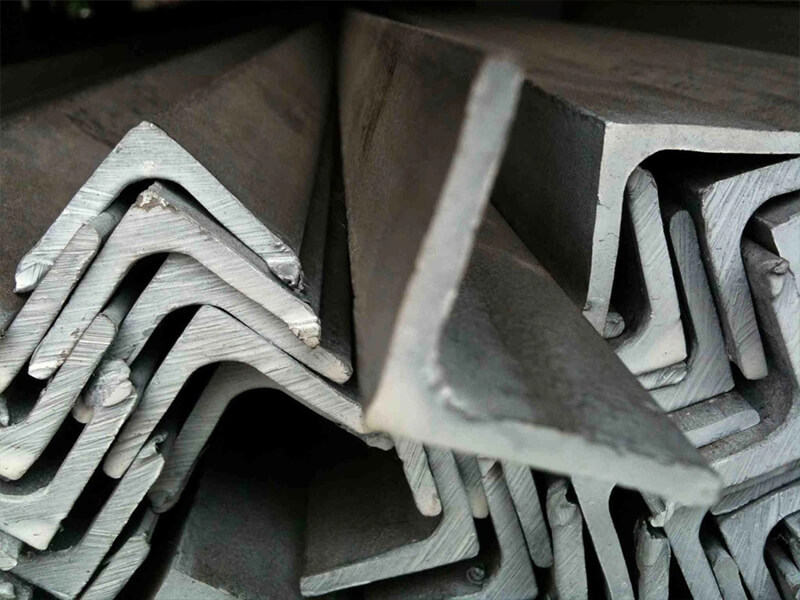
The $8,000 saving that cost $25,000
I remember a contractor in Thailand. He chose a supplier quoting $650/ton instead of $680/ton. On 200 tons, that saved $6,000. But the cheaper steel had inconsistent leg length. His welders spent 40 extra hours grinding and shimming. At $50/hour, that is $2,000. He also had to re‑weld 15% of the joints – another $3,000. And the project was delayed 5 days – cost unknown but significant. The $6,000 "saving" cost him over $10,000 in rework.
So let me break down the real cost of cheap steel.
First, the direct costs of inconsistent quality.
| Quality Problem | Extra Work | Typical Cost per 100 tons |
|---|---|---|
| Leg length variation ±2mm | Grind high spots, add shims | $800‑1,500 |
| Thickness variation ±0.5mm | Change welding parameters constantly | $1,000‑2,000 |
| Surface rust (heavy) | Sandblasting or grinding | $500‑1,200 |
| Poor straightness | Hydraulic straightening | $1,000‑2,500 |
| Chemistry off (weld cracking) | Re‑weld failed joints | $2,000‑5,000 |
Second, the hidden costs that are harder to measure.
| Cost Type | How It Shows Up |
|---|---|
| Production slowdown | Workers wait for rework or for material to be fixed |
| Quality inspection time | More samples, more testing |
| Schedule delay penalty | Contract penalties for late delivery |
| Reputation risk | Client loses confidence in your work |
Third, how to compare price fairly. Calculate total cost of ownership per usable ton.
Total cost = (Price per ton × tons ordered) + (Rework labor) + (Delay cost) + (Scrap of rejected steel)
Example:
| Supplier | Price/ton | Rework Cost/ton | Scrap Loss | Total Cost/ton |
|---|---|---|---|---|
| Low‑price Supplier | $650 | $80 | 5% ($32.5) | $762.50 |
| Medium‑price Supplier | $670 | $20 | 1% ($6.7) | $696.70 |
| Premium Supplier | $700 | $5 | 0.5% ($3.5) | $708.50 |
The medium‑price supplier has the lowest total cost.
Fourth, questions to ask a supplier about quality cost.
- What is your typical rejection rate for dimensional tolerance?
- Do you have photos of surface condition from recent shipments?
- Can you provide a reference from a shipyard that can speak to rework costs?
I share my quality data openly. My clients know what to expect.
Your price‑vs‑quality checklist
- You have calculated the total cost of ownership, not just price per ton
- You have asked the supplier about their rejection rate and rework history
- You have factored in your own labor and delay costs
Why Does Delivery Reliability and Lead Time Impact Project Scheduling So Heavily?
The steel arrives three weeks late. Your fabrication line sits idle. You pay workers to do nothing.
Delivery reliability – the supplier’s track record of shipping on the promised date – directly affects your project schedule. Lead time – the days from order to arrival – determines when you must place orders. Unreliable delivery forces you to keep more safety stock or risk stoppages.
Delivery reliability matters because on-time material arrival keeps work moving and prevents schedule disruption, while lead time determines how far ahead you must commit to avoid delays. Projects often need buffer time and tighter coordination when delivery performance is inconsistent, because late materials can trigger idle labor, missed deadlines, and higher inventory costs.

The cost of one week of delay
I had a shipyard client in Vietnam. His supplier promised 35 days. The steel arrived in 55 days. The shipyard had to move 20 workers to other tasks, then bring them back. The delay cost $30,000 in labor reallocation and lost productivity. He now asks every supplier for their on‑time delivery percentage before signing a contract.
So let me explain the numbers.
First, how delivery delay impacts your schedule.
| Delay Length | Typical Consequence |
|---|---|
| 1‑3 days | Minor – can adjust with overtime |
| 4‑7 days | Moderate – shift workers, some idle time |
| 8‑14 days | Significant – production stoppage likely |
| 15+ days | Severe – contract penalties, lost client confidence |
Second, what to look for in a supplier’s delivery reliability.
| Metric | What to Ask | Good Target |
|---|---|---|
| On‑time delivery rate | "What percentage of orders shipped by the promised date?" | ≥95% |
| Lead time accuracy | "How often does actual lead time exceed quoted lead time by >10%?" | <20% of orders |
| Delay notification | "How many days before the delay do you inform the buyer?" | ≥7 days |
Third, how to protect your schedule.
| Tactic | How It Helps |
|---|---|
| Add buffer to quoted lead time | If supplier says 30 days, plan for 40 |
| Keep safety stock of common sizes | Covers short delays |
| Use multiple suppliers for critical sizes | If one is late, the other may be on time |
| Include late delivery penalties in contract | Supplier has incentive to be on time |
I provide a delivery guarantee in my contracts. If I am late, I offer a discount. That keeps me focused.
Fourth, a real example of lead time impact.
| Vessel Type | Steel Order Lead Time | Construction Phase | Consequence of 2‑Week Delay |
|---|---|---|---|
| Small tugboat | 30 days | Hull assembly | $10,000 idle labor |
| Bulk carrier | 60 days | Block fabrication | $50,000 schedule slip |
| Offshore platform | 90 days | Deck installation | $200,000 penalty risk |
Your delivery reliability checklist
- Supplier provides their on‑time delivery rate for the last 12 months
- You have agreed on a clear delivery date with penalty clauses
- You have built a buffer into your project schedule
- You have a backup plan (safety stock or secondary supplier)
I share my delivery performance with clients. They trust me because I am transparent.
How Does Supplier Communication, After‑Sales Support, and Third‑Party Inspection Flexibility Influence Decisions?
The steel arrives with a problem. You email the supplier. No reply for three days. You feel abandoned.
Buyers choose suppliers who respond quickly, offer a dedicated contact person, handle quality claims professionally, and accept third‑party inspection (SGS, BV, TÜV) without resistance. These factors build trust and reduce risk.
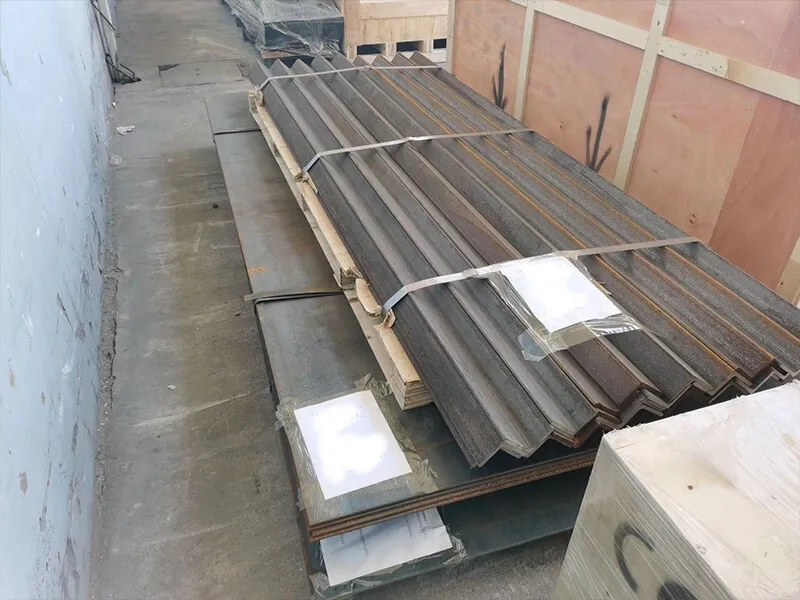
The supplier who answered at 9 PM
I had a client in Mexico. His container was held at customs because of a missing document. It was 9 PM my time. He sent me a WhatsApp message. I replied in 5 minutes. I sent the corrected document within an hour. Customs cleared the next morning. That client has ordered from me five more times. He told me: "You answered when others were sleeping."
So let me show you what buyers look for.
First, communication responsiveness.
| Response Time | Buyer Perception |
|---|---|
| Within 1 hour | Excellent – highly valued |
| Within 4 hours | Good – acceptable |
| Within 24 hours | Average – may look elsewhere |
| Over 24 hours | Poor – will not buy again |
Buyers also want a dedicated account manager – one person who knows their order history.
Second, after‑sales support expectations.
| Issue | Buyer Expects Supplier To |
|---|---|
| Quality claim | Respond within 24 hours, offer replacement or discount |
| Document correction | Send corrected documents within 1 business day |
| Customs inquiry | Help coordinate with forwarder, provide supporting letters |
| Technical question | Answer about welding, storage, or fabrication |
Third, third‑party inspection flexibility. Buyers want the option to hire SGS, BV, or TÜV to inspect the steel at the loading port. A supplier who resists or charges excessive fees is a red flag.
| Supplier Attitude | Buyer Confidence |
|---|---|
| "Yes, we welcome SGS inspection. We will cover local costs." | High |
| "Yes, but buyer bears all costs." | Medium – acceptable |
| "We prefer not to. It delays loading." | Low – suspicious |
| "No, we do not accept third‑party inspection." | Very low – do not buy |
I offer third‑party inspection at the buyer's cost (typical $300‑800). I provide samples and access. No excuses.
Fourth, how buyers evaluate these soft factors before ordering.
| Check | What to Do |
|---|---|
| Test response time | Send an inquiry and see how fast they reply |
| Ask for a dedicated contact | Request a named person for your account |
| Request sample documents | See how they handle a mock claim or document change |
| Ask about inspection | "Do you accept SGS inspection at loading port?" |
Your communication and support checklist
- Supplier has a dedicated account manager for your account
- Supplier responds to emails within 24 hours (test it)
- Supplier has a clear quality claim process
- Supplier accepts third‑party inspection without resistance
I built my business on these factors. My clients stay because they know I will be there when they need me.
Conclusion
Quality certifications, true cost of quality, delivery reliability, and responsive support – these four factors drive purchasing decisions more than price alone.