
You order marine steel plates for a new ship. The truck arrives. But then the inspector finds problems. Your project stops.
The most common acceptance issues are wrong thickness or dimensions, surface defects like pitting or laminations, missing or mismatched mill certificates, and failed mechanical tests for yield, tensile, or impact strength. These problems cause delays and extra costs.
At CN Marine Steel, I handle shipments to shipyards all over the world. Our client Gulf Metal Solutions in Saudi Arabia once told me how they struggled with bad steel from other suppliers. They had plates that were too thin, certificates that did not match, and surface rust that went too deep. Now they work with us because we avoid these problems. But if you are a buyer, you need to know what to watch for. In this post, I will walk you through the most common acceptance issues I have seen. I will also explain how to avoid them or fix them fast.
Why Do Thickness and Dimensional Tolerances Often Fall Outside Class Rules?
You expect a 20 mm plate to be 20 mm. But sometimes it comes at 19.2 mm. That is a big problem for a ship’s strength.
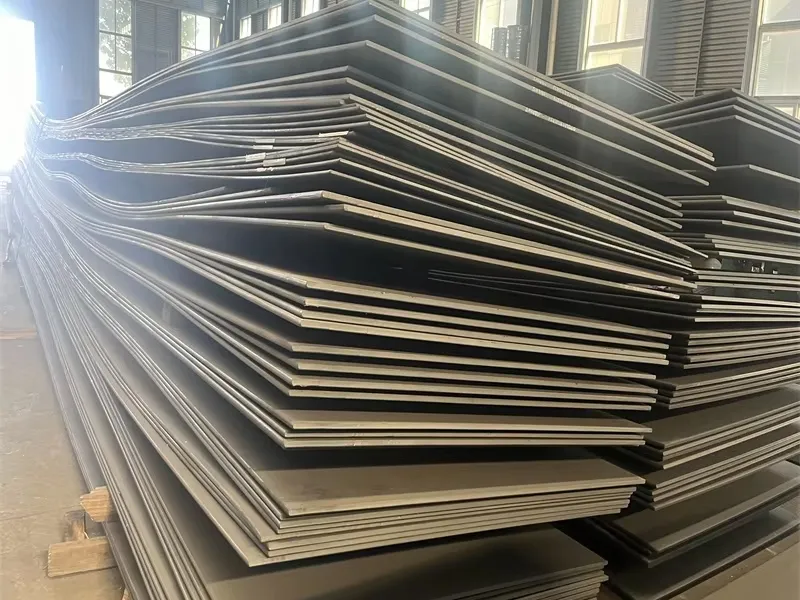
Thickness and dimensional tolerances fall outside class rules because steel mills rush production, use worn rollers, or fail to control cooling. Also, some suppliers ship "seconds" or off-size plates to save money. Class rules require strict ranges, often +0.5 / -0.2 mm for thickness.
Where do these errors come from?
Let me break down the main causes. I have seen them many times.
Roller wear – Steel plates are made by passing hot steel between heavy rollers. As the rollers get used, they wear down. The gap between them becomes uneven. This creates plates that are thinner on one side or thinner overall. A good mill replaces rollers on a schedule. A bad mill keeps using worn rollers to save money. The result is plates that measure below the lower tolerance.
Uneven cooling – After rolling, a plate cools down. If it cools too fast on one side, it can warp or bow. Warped plates are not flat. A plate with a 15 mm bow over 3 meters will fail the flatness test. Class rules usually allow only 5 mm per meter. Cooling beds that are not level cause this problem.
Poor shearing or cutting – When plates are cut to length, the blade must be square. A dull blade makes a rough edge. It can also make the plate slightly shorter on one corner. I have seen plates that were 10 mm shorter than ordered. That is outside the typical +3 / -0 mm tolerance. The shipyard cannot use a short plate because it will not fit the designed gap.
Deliberate under‑spec – This is the worst case. Some cheap suppliers buy "mill rejects" or "secondary" plates. These plates failed the original inspection for a reason. They are sold at a discount. Then the supplier resells them as prime material. The buyer saves money but gets a plate that is too thin or too short. When the shipyard measures, the plates fail.
How class rules define acceptable tolerances
Different classification societies have slightly different rules. But they are very close. Here is a typical table for marine steel plates:
| Dimension | Nominal size | Allowed tolerance (class rule) | Common failure |
|---|---|---|---|
| Thickness | 10 mm to 15 mm | +0.5 / -0.3 mm | -0.4 mm or worse |
| Thickness | 16 mm to 25 mm | +0.6 / -0.3 mm | -0.5 mm |
| Thickness | 26 mm to 40 mm | +0.7 / -0.4 mm | -0.6 mm |
| Length | Any | +3 / -0 mm | -5 mm or more |
| Width | Any | +3 / -0 mm | -4 mm |
| Flatness | Any | ≤5 mm per meter | 8 mm per meter or more |
A plate that falls outside these numbers is rejected. The shipyard will not take it. The supplier must replace it.
A real story from my work
A buyer from the Philippines once ordered 50 plates of AH36, 18 mm thick. The plates arrived with a certificate that said 18 mm. But the shipyard measured them. The average thickness was 17.4 mm. Some spots were 17.2 mm. That is 0.8 mm below the -0.3 mm tolerance. The buyer sent me photos and the NCR. The supplier had used old rollers. We did not make that plate. But I know how frustrating it is. The buyer had to wait two weeks for a replacement. That is why I always tell my clients to ask for a thickness guarantee and a third party inspection before shipment.
What Surface Defects (Pitting, Laminations, Rolling Scale) Lead to Plate Rejection?
A plate can have the right thickness and still be useless. The surface tells a lot about the steel’s health.
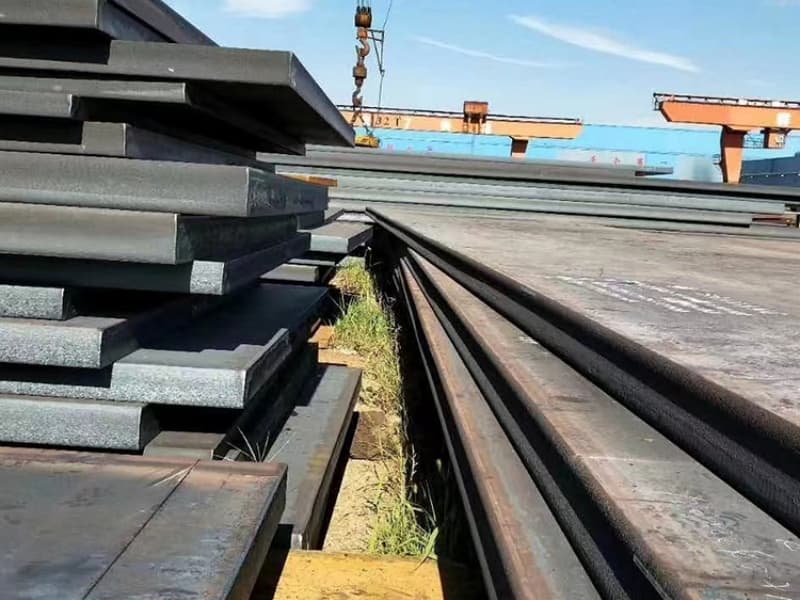
Pitting, laminations, and heavy rolling scale cause plate rejection because they create weak spots, trap moisture, or hide cracks. Pits deeper than 0.5 mm are not allowed. Laminations of any size are rejected. Rolling scale is okay if it can be blasted off, but thick scale that leaves marks below is a defect.
Let me explain each defect and why it is bad
Pitting – These are small holes or craters on the plate surface. They look like rust spots but deeper. Pitting happens when the steel has inclusions or when surface rust is left too long. A single pit might seem small. But a pit is a stress concentrator. When the ship flexes, cracks can start from the pit. Class rules usually say pits deeper than 0.5 mm are not allowed. For high‑stress areas like the deck or bottom shell, any pit is a problem. Shipyards will reject a plate with many pits, even if they are shallow.
Laminations – This is a serious defect. A lamination is a split inside the steel, parallel to the surface. It looks like a blister or a long line. Laminations happen when gas bubbles or dirt get trapped during casting. The steel does not weld together properly. A laminated plate can separate into two thin layers under stress. That is very dangerous. Any lamination, no matter how small, leads to rejection. Inspectors find laminations with ultrasonic testing or sometimes with a visual check if the lamination reaches the edge.
Rolling scale – Also called mill scale. This is the dark grey oxide layer that forms on hot steel. A thin layer is normal. It is removed by shot blasting before painting or welding. But heavy scale is a problem. Heavy scale can be thick and flaky. Underneath it, the steel might have pits or cracks. Also, thick scale can hide laminations. An inspector will scrape the scale off in several spots. If the steel under the scale is pitted or cracked, the plate is rejected. If the scale is just heavy but the steel is clean underneath, the plate is okay but needs extra blasting.
Here is a quick reference for surface defects:
| Defect | How it looks | Rejection condition |
|---|---|---|
| Pitting | Small holes, often rusted | Depth >0.5 mm or many pits |
| Lamination | Blister, line, or edge split | Any size |
| Heavy rolling scale | Thick, flaky black layer | Hides defects or leaves marks |
| Edge cracks | Splits on cut edge | Any crack deeper than 2 mm |
| Scabs | Raised patches | Any loose or deep scab |
How to tell if a defect is serious
I have seen buyers panic over light surface rust. That is not a defect. Light rust can be cleaned. But I have also seen suppliers argue that deep pitting is "cosmetic." That is false. Deep pitting weakens the plate.
From my experience with clients in Vietnam and Mexico, the safest rule is this: If you can feel a pit with your fingernail, measure it. If it is more than half a millimeter, reject the plate. For laminations, do not argue. Just reject. And always take photos before moving the plates. Once you move them, the supplier might say the damage happened in your yard.
At CN Marine Steel, we inspect every plate before shipment. We use a checklist. We also send photos to the buyer. That way, there are no surprises. Our client from Qatar told us that our plates always arrive with clean surfaces. That is because we work with good mills and we do not buy secondary material.
How Do Missing or Mismatched Mill Certificates and Heat Numbers Cause Acceptance Delays?
You have the plates on your dock. But you cannot use them. Why? Because a piece of paper is missing or wrong.
Missing or mismatched mill certificates and heat numbers cause delays because classification societies require full traceability. Without a matching certificate, the steel is considered unproven. The shipyard cannot release the plates for fabrication. The supplier must provide correct documents or replace the plates.
Why traceability is so strict
Every marine steel plate must be traceable back to the exact heat (batch) of steel it came from. The heat number is stamped or painted on each plate. The mill test certificate (MTC) lists that heat number along with chemical and mechanical test results. If the heat number on the plate does not match the MTC, no one knows what that plate is made of. Maybe it is the wrong grade. Maybe it failed a test at the mill. Maybe it came from a different supplier entirely.
Class societies like ABS, DNV, and Lloyd’s require traceability for every structural plate. Without it, the surveyor will not approve the ship. The yard cannot proceed.
The most common document problems
Mismatched heat numbers – This happens when the supplier mixes plates from different heats. For example, an order of 100 plates might come from two heats: 50 plates with heat A and 50 with heat B. The supplier sends only one MTC for heat A. The other 50 plates have no matching paper. Or worse, the supplier sends an MTC for heat A, but the plates have heat C stamped on them. That is a complete mismatch. The inspector will reject all plates until the correct MTC arrives.
Missing certificates – Sometimes the truck arrives but the papers are still at the supplier’s office. Or the supplier forgot to include them. The shipyard will not unload without the MTC. The truck sits there. Demurrage charges add up. The buyer gets angry.
Wrong grade on certificate – The MTC says "AH36", but the plate stamp says "DH36". That is a mismatch. Even if both are high‑strength steels, the impact test requirements are different. DH36 is for colder temperatures. Using a DH36 plate where AH36 is specified might be okay from a strength view. But the class plan calls for AH36. The surveyor will not accept a substitution without approval. So the plate is rejected.
Expired or missing class stamp – Many buyers require plates approved by a specific class society. The MTC must have a stamp from ABS, DNV, or another society. If the stamp is missing or the approval has expired, the certificate is invalid.
How this plays out in a real yard
Let me give you an example. A buyer in Malaysia ordered 200 plates of grade A mild steel. The shipment arrived with MTCs for 180 plates. The other 20 plates had no papers. The supplier said "we will email the missing certificates tomorrow." But tomorrow came and the email never arrived. The buyer’s yard put the 20 plates in a quarantine area. They waited two weeks. Finally, the supplier sent scanned copies. But the heat numbers did not match the plates. The supplier had sent the wrong batch.
The buyer had to return those 20 plates. The supplier sent replacements after one month. The project was delayed by three weeks. That is why I always tell my clients: before you pay for a shipment, ask for a PDF of the MTC with heat numbers. Then ask for photos of the plate stamps. Match them yourself. At CN Marine Steel, we send this information automatically. We know that good documentation is as important as good steel.
What Mechanical Property Failures (Yield, Tensile, Impact) Are Most Common During Incoming Testing?
Even with the right dimensions and good surface, the steel might be weak inside. Testing finds that out.
The most common mechanical property failures are low yield strength (below the required 235 MPa for mild steel or 355 MPa for AH36), low tensile strength, and low impact energy (below 27 Joules at the specified temperature). These failures mean the steel is too soft or too brittle for shipbuilding.
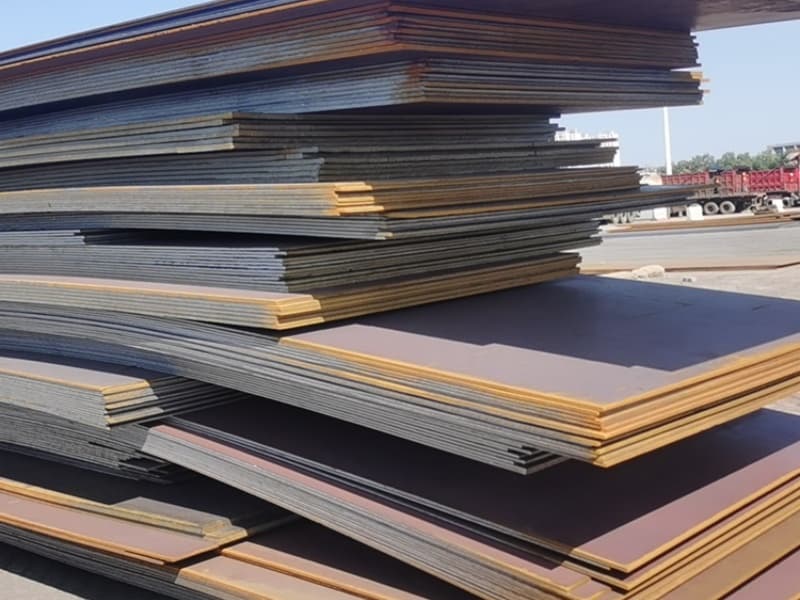
Breaking down each property
Yield strength – This is the stress at which steel starts to deform permanently. For mild steel grade A, the required yield is 235 MPa minimum. For higher strength like AH36, it is 355 MPa. A low yield strength means the steel will bend too easily under load. In a ship, that can cause the hull to sag or hog more than designed. Low yield usually comes from wrong chemistry (too little carbon or manganese) or poor heat treatment.
I once saw a test report where the yield was 210 MPa for grade A steel. That is 25 MPa too low. The plate was rejected. The supplier had to replace 30 plates. The buyer sent us the failed coupon as proof.
Tensile strength – This is the maximum stress the steel can take before breaking. For mild steel, tensile is usually 400 to 520 MPa. For AH36, it is 490 to 620 MPa. Low tensile strength means the steel is weak overall. It might tear instead of stretching. Tensile failure is less common than yield failure. But when it happens, it is serious. It often means the steel has too many inclusions or was rolled at the wrong temperature.
Impact strength – This is the most common failure I see. Ships operate in cold or cold‑moderate conditions. The steel must absorb energy without breaking. The test uses a notched sample that is struck by a pendulum. The result is in Joules. For grade A, the requirement is 27 Joules at 20°C. For DH36, it is 27 J at -20°C. For EH36, it is 27 J at -40°C.
Low impact values mean the steel is brittle. It can crack like glass in cold weather or under sudden loads. Impact failures happen when the steel has too much sulfur, too much phosphorus, or the wrong grain size.
What the test numbers look like
Here is a table of typical requirements and failure examples:
| Steel grade | Yield (MPa) | Tensile (MPa) | Impact (J / temp) |
|---|---|---|---|
| Grade A | 235 min | 400-520 | 27J @ 20°C |
| Grade B | 235 min | 400-520 | 27J @ 0°C |
| AH36 | 355 min | 490-620 | 27J @ 0°C |
| DH36 | 355 min | 490-620 | 27J @ -20°C |
| EH36 | 355 min | 490-620 | 27J @ -40°C |
Common failure examples – I have seen an AH36 plate give yield of 340 MPa (fail). I have seen a Grade A plate give impact of 18 J at 20°C (fail). I have seen a DH36 plate that broke at 480 MPa tensile (fail, because it was below 490). Each failure leads to rejection of the entire heat number. That can be dozens of plates.
How testing is done
The shipyard or an independent lab takes a sample from each plate heat. They cut small coupons and machine them into test pieces. The test is done on a calibrated machine. For impact, three samples are tested and the average must be 27 J or more, with no single value below 20 J.
If the test fails, the supplier has two options. One, accept rejection and replace the plates. Two, ask for a retest on two more samples. If those also fail, the whole heat is rejected. No second chance.
At CN Marine Steel, we only buy from mills that do their own testing and share the results. We also offer SGS inspection before shipment. The SGS team can take samples and test them in an independent lab. This gives our buyers confidence. For example, our client in Romania ordered DH36 plates for a tugboat working in the Black Sea. We arranged SGS testing for impact at -20°C. All samples passed. The buyer accepted the shipment with no delays.
Conclusion
Thickness errors, surface defects, missing certificates, and weak mechanical properties are the top acceptance issues. Know them, avoid them, or fix them fast.