
You see bulb flat steel in modern ship designs. It is strong and light. But you still see angle bars everywhere. Why?
Shipyards continue to use angle bars because they offer better weldability, simpler connections, and faster availability than bulb flats. For secondary framing, light stiffeners, and non‑critical zones, angle bars are easier to install and repair. Most shipyards use both profiles – bulb flats for primary longitudinals, angle bars for everything else.
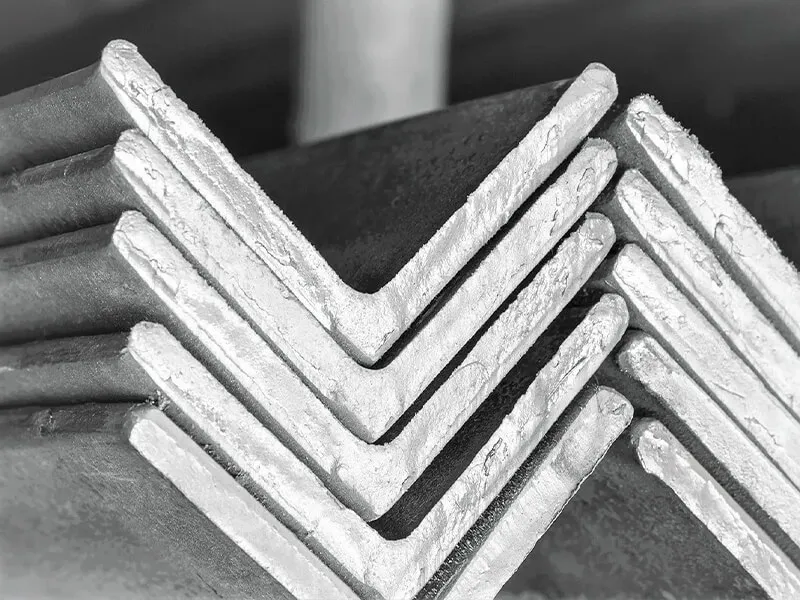
I am Zora Guo from cnmarinesteel.com. I supply both angle bars and bulb flats to shipyards around the world. Many buyers ask me: “Is bulb flat replacing angle steel completely?” The answer is no. Let me explain why angle bars remain a workhorse in shipbuilding.
What Unique Structural Advantages Do Angle Bars Offer That Bulb Flats Cannot Match?
Bulb flat is great for one direction of bending. But ships have forces from many directions. Angle bars have a unique advantage: they resist bending in two directions.
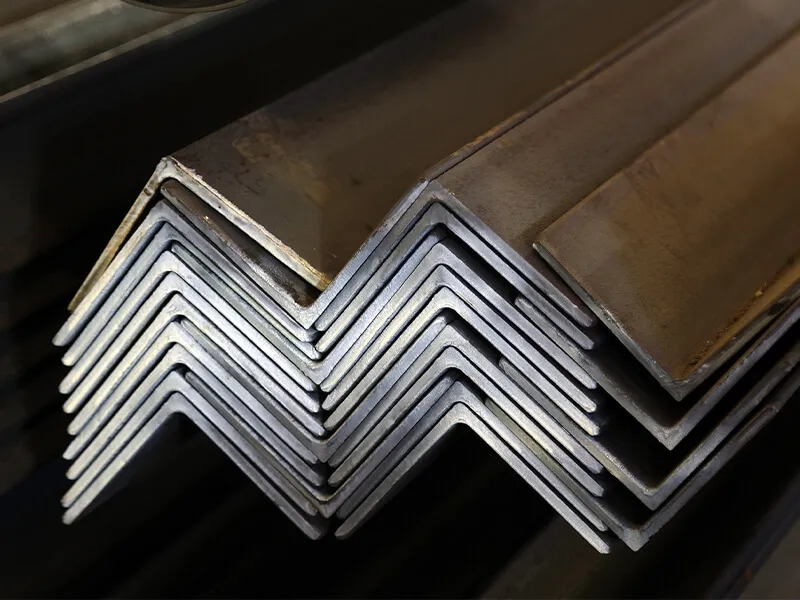
Angle bars offer two-way bending strength. The two legs work together to resist loads from any angle. Bulb flats are optimized for bending in one plane (the web direction). In corners, brackets, and connections where loads come from multiple directions, angle bars are much stronger. Also, the 90-degree corner of an angle bar acts as a natural fillet that distributes stress better than the sharp transition on a bulb flat.
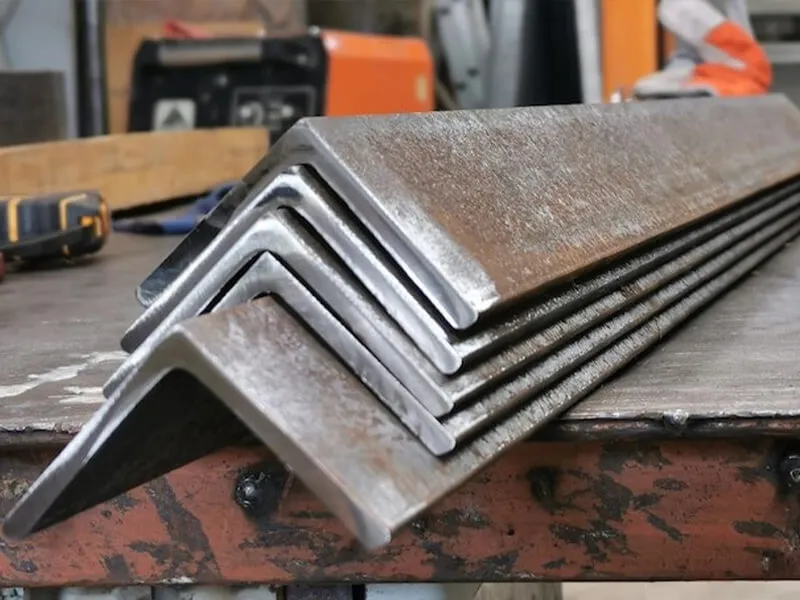
Let me explain the structural differences.
Bi‑axial Bending Strength
A bulb flat has a bulbous head on one side. Its section modulus is high in the vertical direction (web bending). But in the horizontal direction (lateral bending), it is very weak. The bulb offers almost no help.
An angle bar has two legs at 90 degrees. It has good section modulus in both the X and Y directions. This matters at connections where the stiffener is attached to a bracket or another frame. The load does not come straight down the web. It comes at an angle.
Example: A deck beam connected to a side frame. The deck beam is loaded vertically by cargo. But the connection also sees horizontal forces from the side frame. An angle bar deck beam handles both. A bulb flat would twist.
Natural Fillet Radius
The inside corner of an angle bar is rolled with a small radius (r = 2‑5mm, depending on size). This radius reduces stress concentration. On a bulb flat, the transition from the web to the bulb is a curved shape, but the opposite side (the flat flange) has a sharp corner. That sharp corner is a stress raiser.
In fatigue‑prone areas like hatch corners or crane foundations, angle bars often outperform bulb flats because of this.
Built‑Up Assemblies
When you need a very strong beam, you can weld two angle bars back‑to‑back. This creates a symmetric beam with two outstanding flanges. It is very strong in all directions. You cannot do the same with two bulb flats – they do not fit together neatly.
What a Naval Architect Told Me
A designer in Vietnam said: “For the main longitudinal stiffeners on a tanker, I use bulb flat. It saves weight. But for the deck beams in the superstructure, for the brackets, and for any place where the load changes direction, I use angle bars. Bulb flat would twist. Angle bar works every time.”
How Do Simpler Connection Details and Weldability Make Angle Bars More Practical for Secondary Framing?
You have to weld every frame. Some profiles are easy. Some are hard. Bulb flats are harder to weld than angle bars.
Angle bars have a simpler shape – two flat legs meeting at 90 degrees. Welders can easily access both sides of the joint. You can weld the inside corner (fillet weld) from one side and the outside corner from the other. With bulb flats, the bulbous head blocks access to the back side of the web. This makes welding slower and requires more skilled welders. For secondary framing where speed matters, angle bars are simply more practical.
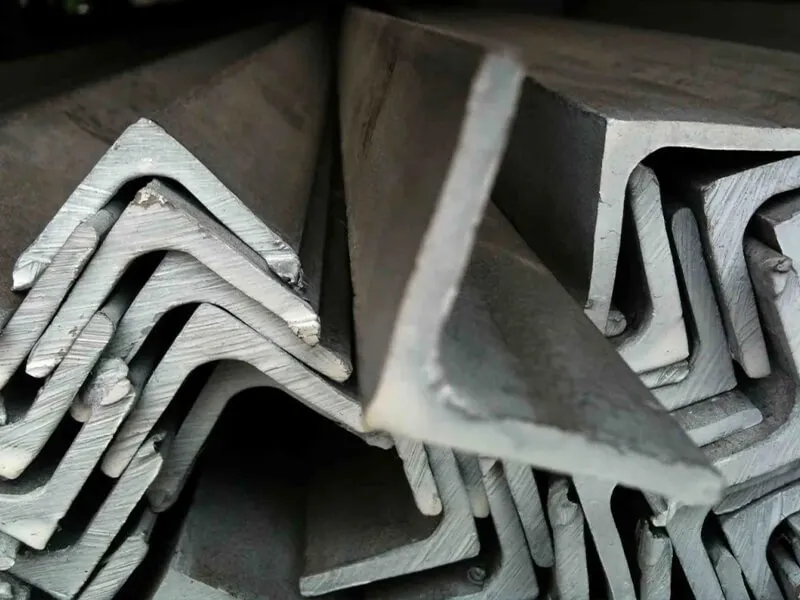
Let me break down the weldability differences.
Weld Access
| Profile | Access to back of web | Difficulty |
|---|---|---|
| Angle bar | Both legs are flat. You can weld from either side. | Easy |
| Bulb flat | The bulb blocks access to the back side of the web. You cannot weld there easily. | Harder. Requires special torch angle or pre‑welded backing. |
Real impact: A shipyard in Malaysia told me that welding a bulb flat frame takes 40% longer than welding an angle bar of the same size. That is because the welder has to lean around the bulb or use a mirror. With angle bars, they just run the torch straight in.
Connection Details
End connections are simpler with angle bars. You can weld a snipe (notch) into the free leg easily. You can weld a triangular bracket to both legs. With bulb flats, the bulb gets in the way. You often need a special forged end connection or a cutout that weakens the section.
Common connection for angle bar: Sniped end – cut away part of the free leg, weld the other leg continuously. Simple, fast, and strong.
Common connection for bulb flat: You need to weld a flat bar extension or use a complex cut. More time, more chance of error.
Repair and Modification
Ships need repairs. Old frames get cut out and replaced. Angle bars are easy to find, cut, and weld into place. Bulb flats of the same size may not be in stock. The repair yard may have to use a flat bar or angle bar as a substitute.
I have a customer in the Philippines who repairs cargo ships. He said: “When we get a ship with bulb flat damage, we often replace the damaged section with an angle bar. It is faster and we know it will fit. The class surveyor allows it if we do a proper design check.”
Why Is Availability and Lead Time for Angle Bars Often Better Than for Bulb Flats in Many Regions?
You need steel fast. Your production line is waiting. Which profile can you get in 2‑3 weeks? Usually angle bars.
Angle bars are produced by many more mills than bulb flats. Over 100 mills worldwide can roll class‑approved angle bars. Only about 30 mills produce bulb flats. As a result, angle bars are almost always in stock at distributors. Lead time for common angle bar sizes is 2‑4 weeks. For bulb flats, you often wait 8‑12 weeks. In many regions, you cannot get bulb flats at all – you have to import them. This makes angle bars the default choice for shipyards that cannot wait.
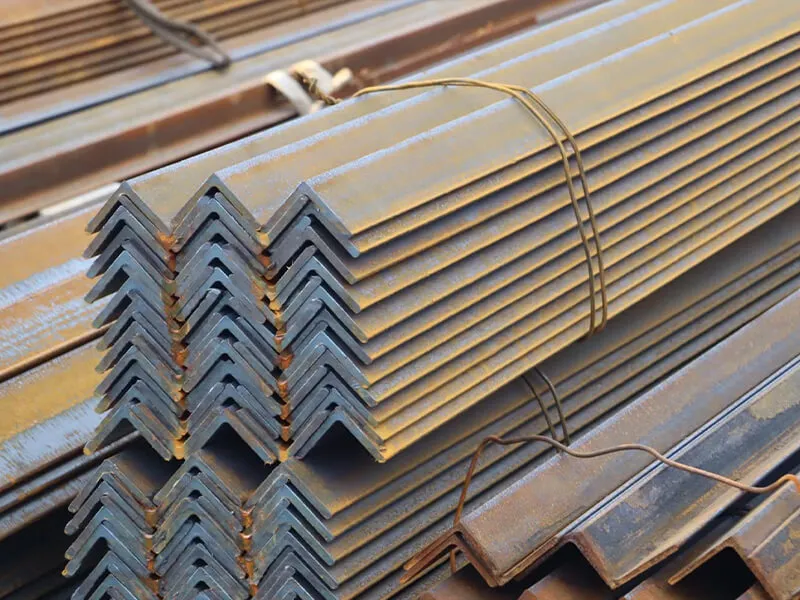
Let me show you the supply chain reality.
Production Capacity
| Profile | Number of mills (worldwide) | Typical minimum order quantity | Lead time |
|---|---|---|---|
| Angle bar (common sizes) | 100+ | 20‑50 tons | 2‑4 weeks |
| Angle bar (special sizes) | 50+ | 50‑100 tons | 4‑6 weeks |
| Bulb flat (common sizes) | 30 | 100‑200 tons | 6‑10 weeks |
| Bulb flat (special sizes) | 10‑15 | 200‑500 tons | 12‑16 weeks |
Regional Availability
In Southeast Asia (Vietnam, Philippines, Indonesia):
- Angle bars: Stocked by many local suppliers. You can buy 5 tons tomorrow.
- Bulb flats: Few local stocks. Most shipyards import from China, Korea, or Japan. Lead time 8‑12 weeks.
In the Middle East (Saudi Arabia, UAE, Qatar):
- Angle bars: Available from multiple suppliers in Dubai and Dammam.
- Bulb flats: Often special order from Europe or Asia. Lead time 10‑14 weeks.
In South America (Brazil, Argentina):
- Angle bars: Produced locally by several mills.
- Bulb flats: Almost all imported. Long lead times and high shipping costs.
What a Shipyard Buyer in Saudi Arabia Told Me
Gulf Metal Solutions (our case study customer) buys both profiles. They told me: “For urgent orders, we always buy angle bars. We can get L125x80x12 delivered in 3 weeks. For bulb flat, we plan 3‑4 months ahead. We keep a stock of common bulb flat sizes, but for anything else, we use angle bars as a substitute.”
Impact on Project Scheduling
If a shipyard runs out of a certain size, production stops. With angle bars, the yard can often find a substitute size or buy from a different local supplier. With bulb flats, the yard may have to wait for a mill to roll a new batch. That can delay the project by months.
How Do Shipyards Balance Cost, Strength, and Fabrication Speed by Using Both Profiles in Different Hull Zones?
You do not have to choose one profile for the whole ship. Smart shipyards use bulb flats where weight matters most. They use angle bars everywhere else.
Shipyards balance cost, strength, and speed by assigning profiles based on hull zone. For primary longitudinal stiffeners in the bottom and deck of large ships, they use bulb flats to save weight. For side frames, deck beams in smaller vessels, superstructures, and all secondary stiffeners, they use angle bars. This hybrid approach reduces total steel weight by 5‑10% compared to using only angle bars, while keeping fabrication time 20‑30% lower than using only bulb flats.
Let me show you a typical assignment.
Zone‑Based Profile Selection
| Hull zone | Typical profile | Why |
|---|---|---|
| Bottom longitudinal stiffeners (large ships) | Bulb flat | Weight saving is critical. |
| Deck longitudinal stiffeners (large ships) | Bulb flat or angle bar | Bulb flat for weight, angle bar for simplicity. |
| Side shell transverse frames (all ships) | Angle bar | Easier to connect to decks and bottoms. |
| Deck beams (small to medium ships) | Angle bar | Simple, cheap, fast. |
| Bulkhead stiffeners | Angle bar | Easy to weld both sides. |
| Superstructure stiffeners | Angle bar | Light loads, angle bar is enough. |
| Bracket connections | Angle bar (or cut from plate) | Two‑way bending strength. |
| Non‑critical stiffeners (e.g., under floors) | Angle bar (small) | Cheap and available. |
Cost Comparison per Ton
| Profile | Material cost per ton | Fabrication cost per ton | Total cost per ton |
|---|---|---|---|
| Angle bar | Base (1.0x) | 1.0x (fast welding) | 1.0x |
| Bulb flat | 1.15‑1.25x | 1.3‑1.5x (slower welding, more complex connections) | 1.2‑1.4x |
So bulb flats are more expensive per ton. But because they are lighter for the same strength, the total project cost may be lower if weight saving reduces fuel consumption over the ship’s life. For a large tanker, the extra upfront cost of bulb flats pays back in fuel savings. For a small fishing boat, it does not.
A Real Example from a Bulk Carrier
A shipyard in China built two identical 80,000 DWT bulk carriers. One used bulb flats for all longitudinal stiffeners. The other used angle bars. Results:
- Bulb flat ship: 5% lighter steel weight. Saved $200,000 in steel cost per ship.
- Angle bar ship: 15% faster fabrication. Saved $150,000 in labor cost per ship.
- Net difference: Bulb flat ship saved $50,000 total, but required longer lead time for steel.
The shipyard decided to use bulb flats for the bottom and deck longitudinals, and angle bars for everything else. That gave them most of the weight saving with most of the fabrication speed. That is the smart way.
What a Production Manager Told Me
“I have two work crews. One is very experienced and can weld bulb flats fast. The other is newer. I assign the experienced crew to bulb flat zones. The newer crew works on angle bar zones. This way, we keep quality high and schedule on track.”
Conclusion
Angle bars are not going away. They offer better weldability, simpler connections, and faster availability than bulb flats. Smart shipyards use both – bulb flats for primary weight‑sensitive zones, angle bars for everything else.