
You order marine steel plates for your project. They arrive. Then you find hidden defects. Your schedule stops. You lose money.
Third-party inspection catches defects, verifies mill certificates, and confirms mechanical properties before shipment. It costs under 1% of order value but prevents costly delays, rework, and class rejections — making it a high-ROI investment for any marine steel buyer.
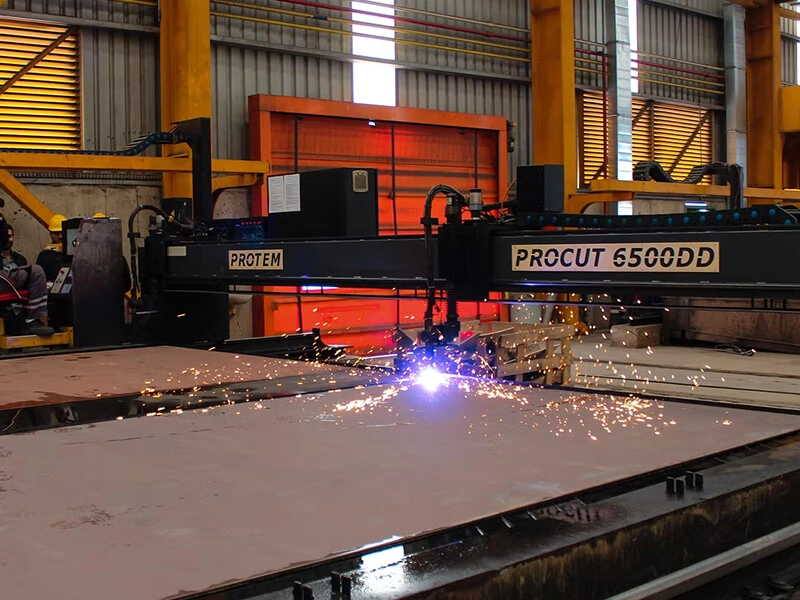
I am Zora Guo from cnmarinesteel.com. I have helped many international buyers arrange pre-shipment inspections through SGS, ABS, DNV, and other agencies. The buyers who skip inspection sometimes get bad steel. Those who invest in third-party checks sleep better. Let me explain what inspection catches and why it protects your project.
What Common Plate Defects Does Third-Party Inspection Catch Before Shipment?
A plate can look fine on the outside. But hidden defects can ruin your welding and weaken your structure. Third-party inspection finds these before the steel leaves the mill.
Third-party inspection catches laminations (internal layers that do not bond), surface cracks, deep pits, rolled-in scale, and thickness that falls below class tolerance. For high-risk thicknesses (25‑50mm), UT scans the full plate surface. Under LR rules, laminations longer than 50mm or clustered defects require immediate rejection — a threshold that third-party inspectors are trained to detect.
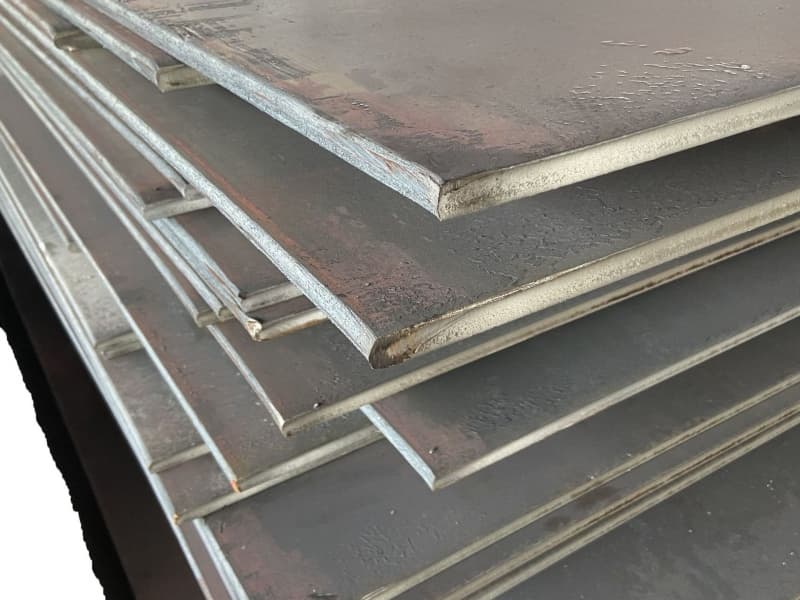
Let me walk you through the most common defects and how inspection catches them.
Laminations – The Hidden Danger
Laminations are internal separations within the steel plate. They happen during rolling when layers do not bond properly. You cannot see them with your eyes. But when you cut or weld that plate, the layers separate. The weld fails.
How UT finds them: An ultrasonic probe sends sound waves through the plate. If a lamination exists, the wave reflects back early. The operator sees a spike on the screen. Automatic UT scanning (AUT) uses phased-array probes to cover the entire plate surface[reference:0].
Acceptance criteria per LR rules: Any lamination longer than 50mm is rejected. Clustered defects (multiple small laminations close together) are also rejected. For critical structures like bottom shell plates or deck openings, even smaller laminations may require cropping[reference:1].
Surface Defects – Visible but Missed
Surface defects include:
- Scabs – Loose metal patches on the surface that can fall off, leaving pits.
- Rolled-in scale – Hard oxide that sticks to the plate and prevents proper coating.
- Edge cracks – Cracks at the plate edge from shearing or rolling.
- Deep pits – Cavities deeper than 0.5mm that reduce thickness.
Class society rules allow some surface defects if they are shallow. For a 12‑25mm plate, defects up to 0.3mm deep are acceptable if they cover less than 5% of the area. But deeper defects require grinding or rejection[reference:2].
Dimensional Non-Conformities
Thickness is the most common rejection reason. Many mills push the lower tolerance limit to save material. But class rules set strict limits. For a 12mm plate, under‑tolerance is typically -0.3mm. If the plate measures 11.6mm, it is rejected.
How inspectors check: They use an ultrasonic thickness gauge at four corners and the center. They also check flatness (wavy edges or bowing) and edge squareness.
What a Third-Party Inspector Does on Site
A typical pre-shipment inspection includes:
- Visual check for surface defects (scabs, pits, rolled-in scale).
- Dimensional check (thickness, length, width, flatness).
- Ultrasonic testing for internal laminations (full plate scan for critical grades).
- Witnessing of mechanical tests (tensile and Charpy) if required.
- Verification of heat numbers against mill certificates.
- Packing and marking check.
This happens before you pay the final balance. You get a report. Then you decide: accept, reject, or ask for a price reduction.
How Does Independent Testing Verify Mill Certificates and Mechanical Properties?
A mill certificate is a piece of paper. It can be faked or mistaken. Independent testing confirms that the steel in your shipment actually meets the numbers on that paper.
Independent testing verifies mill certificates by taking random samples from your shipment and sending them to an accredited lab. The lab tests chemical composition (using spectrometry) and mechanical properties (tensile and Charpy V-notch tests) per ASTM A131 standards. If the results match the MTC within allowable variation, the steel is approved. If not, the shipment is rejected or downgraded. This stops false certificates from reaching your yard.
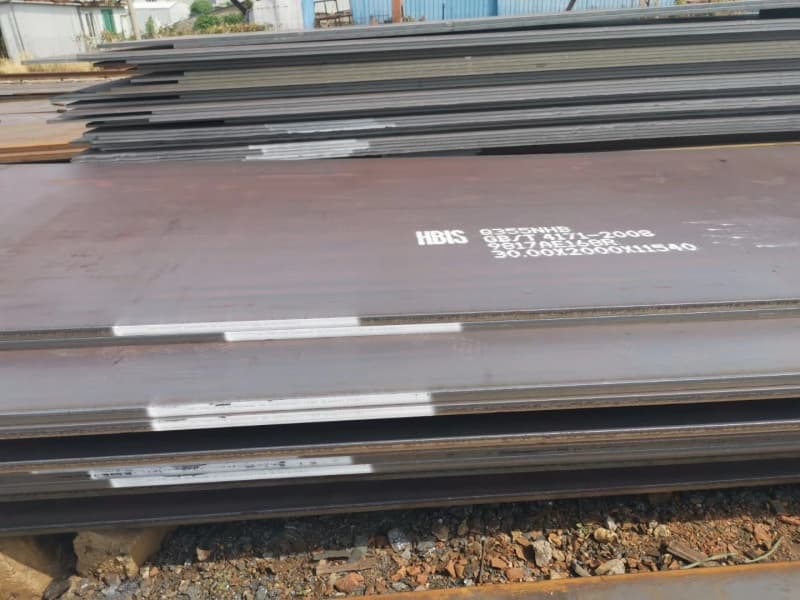
Let me explain what the tests actually measure.
Chemical Composition – The Recipe That Makes Steel Strong
A spectrometer analyzes a small sample of the steel. It measures the percentage of each element.
| Key elements and why they matter: | Element | Target (AH36) | What happens if off-spec |
|---|---|---|---|
| Carbon (C) | 0.16‑0.18% | Too high → poor weldability, cracking | |
| Manganese (Mn) | 1.0‑1.3% | Too low → low strength | |
| Sulfur (S) | Below 0.025% | Too high → hot cracking during welding | |
| Phosphorus (P) | Below 0.025% | Too high → brittle steel, low impact toughness |
ASTM A131 requires full heat analysis for all ordinary and higher strength structural steels, covering carbon, manganese, phosphorus, sulfur, and micro‑alloying elements like niobium, vanadium, and titanium[reference:3].
Tensile Test – How Strong Is the Steel?
A sample is pulled until it breaks. The machine records three numbers:
- Yield strength – The stress at which the steel starts to bend permanently. For AH36, minimum 355 MPa.
- Tensile strength – The maximum stress before breaking. For AH36, 490‑620 MPa.
- Elongation – How much the sample stretches before breaking. For AH36, minimum 21%.
Per ASTM A131, these mechanical properties are evaluated using standardized tension tests performed in the transverse direction[reference:4].
Charpy Impact Test – Toughness at Cold Temperatures
This test measures how much energy the steel can absorb when hit at a low temperature. A notched sample is struck by a swinging pendulum. The energy absorbed (in Joules) tells you if the steel is brittle or tough.
Test temperatures by grade:
- Grade A / AH32 / AH36: 0°C
- Grade D / DH32 / DH36: -20°C
- Grade E / EH36: -40°C[reference:5]
For AH36 at 0°C, the minimum absorbed energy is typically 34 Joules average, with no single value below 24J.
What If Test Results Do Not Match the MTC?
If independent tests show lower values than the MTC:
- Minor deviation (5‑10% below) – Negotiate a price reduction or ask for replacement of those plates.
- Major deviation (more than 10% below) – Reject the shipment. The mill may have sent a different grade than ordered.
- Certificate is clearly fake – Stop payment immediately. Report the supplier to the platform (Alibaba, etc.).
I have had one case where a mill sent AH36 plates that tested as A grade (235 MPa yield instead of 355 MPa). The buyer had ordered for a high‑stress zone. The whole shipment was rejected. The supplier replaced it at their cost. The buyer lost time but not money because they had independent testing before payment.
How Can a Pre‑Shipment Inspection Protect Your Project from Costly Delays and Rejections?
Steel arrives at your yard. It fails inspection. Now you wait for replacement. Your production line stops. The cost is huge.
A pre‑shipment inspection (PSI) catches defects before the steel leaves the mill. If the inspector finds a problem, you can reject the shipment immediately. You do not pay the final balance. You do not pay freight for bad steel. The supplier must replace the plates or refund you. This shifts the risk of non‑conforming steel from you to the supplier. PSI costs under 1% of order value — often $200‑400 per man‑day — but prevents delays that cost thousands per day[reference:6][reference:7].
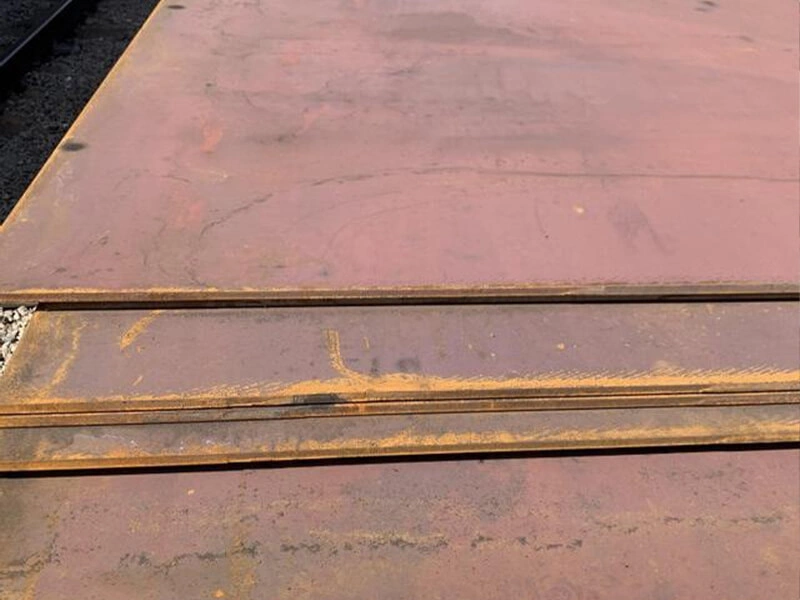
Let me break down the cost logic.
The Cost Equation
| Scenario | Cost to you |
|---|---|
| No inspection, steel arrives bad | Freight ($5,000‑15,000) + storage ($500‑2,000) + production delay ($10,000‑50,000 per week) |
| PSI done, steel is good | Inspection fee ($1,000‑2,000) + peace of mind |
| PSI done, steel is bad | Inspection fee + supplier replaces at their cost. You avoid all other costs. |
A study of quality management found that the total cost of poor quality can reach 15‑20% of sales revenue in some industries. For a $500,000 steel order, that is $75,000‑100,000 of risk. A $2,000 inspection is a very small price[reference:8].
How Pre‑Shipment Inspection Works
A third‑party inspector (SGS, BV, or class surveyor) goes to the mill or your supplier’s warehouse. They follow an Inspection and Test Plan (ITP) agreed before the order.
Typical PSI scope for marine plates:
- Verify heat numbers match the MTC.
- Measure thickness at 5‑10 points per plate.
- Visually inspect surface for defects.
- Perform UT on a random sample (or full scan for critical orders).
- Witness tensile and Charpy tests from random samples (if required).
- Check packing (wooden dunnage between plates, steel strapping).
- Supervise loading into the container or truck.
- Issue a final report with pass/fail status.
Timeline: The inspection can be scheduled in 2‑3 working days. The report is issued within 24‑48 hours after the inspection[reference:9].
What Happens If the Steel Fails PSI?
The inspector issues a non-conformance report. You send it to the supplier. Then you have options:
- Full rejection – Supplier sends replacement plates at their cost, including expedited shipping.
- Partial rejection – Supplier replaces only the bad plates. Good plates are shipped.
- Price reduction – If defects are minor (e.g., shallow pits that can be ground), you accept the steel but pay less.
- Repair at supplier’s cost – For surface defects that can be ground and welded, the supplier pays for repair.
Important: You must specify these remedies in your purchase contract before the order. Do not assume the supplier will be fair after the fact.
A Real Example from a Bulk Carrier Project
A buyer in Vietnam ordered 800 tons of DH36 plates for a bulk carrier. They paid for SGS pre-shipment inspection. The inspector found that 12 plates (about 15 tons) had laminations longer than 60mm — above the LR acceptance limit. The buyer rejected those 12 plates. The supplier shipped the good plates first and air-freighted replacements for the rejected plates. The buyer’s production schedule lost only 5 days. The total cost to the buyer was the inspection fee ($1,800). Without inspection, they would have received all plates, discovered the laminations at their yard, and faced 8‑10 weeks of delay waiting for replacements.
What Specific Checks (Ultrasonic, Dimensional, Visual) Give Buyers Confidence in Imported Marine Steel?
You get an inspection report. It says “passed.” But what does that actually mean? You need to know which checks were done so you can trust the result.
The specific checks that give buyers confidence are ultrasonic testing (UT) for internal laminations (per ASTM A578), dimensional checks (thickness tolerance per class rules), visual inspection for surface defects (per IMO rules), and verification of markings (heat number and grade stamp). For critical orders, add witness testing of tensile and Charpy samples. These checks are the industry standard and are accepted by all classification societies.
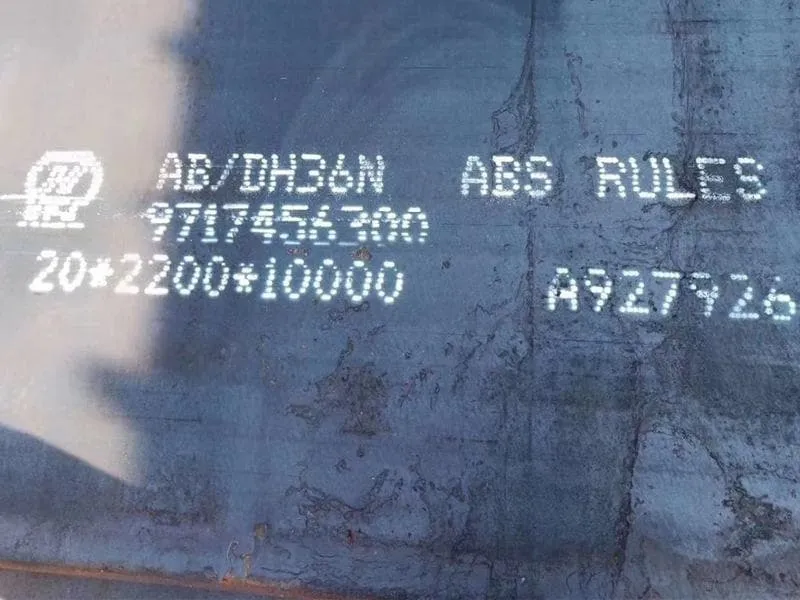
Let me list what each check actually finds.
Ultrasonic Testing (UT) – The Internal Health Check
UT is the only way to find laminations, voids, and inclusions inside the plate.
What the inspector does:
- Uses a probe that sends sound waves into the plate.
- Scans the entire plate surface (or a grid pattern for less critical orders).
- Records any reflections that indicate a lamination.
- Measures the size and depth of each lamination.
Acceptance standard: Per ASTM A578, Level A, B, or C depending on the application. For ship hull plates, Level B is common. Any lamination longer than 50mm is rejected. Clustered defects smaller than 50mm but closely spaced are also rejected[reference:10].
What gives you confidence: The UT report includes a map of the plate showing each lamination’s location and size. You see exactly where the problem is — or that there is no problem.
Dimensional Checks – Getting What You Paid For
Steel is sold by weight. Thinner plates weigh less. If the plate is too thin, you are overpaying.
What the inspector checks:
- Thickness – Measured with an ultrasonic gauge at multiple points. Must stay within class tolerance (e.g., -0.3mm for 12mm plate).
- Flatness – The plate should not be wavy (excessive wavy edge) or bowed. Class rules limit bow to 5mm per meter of length.
- Edge squareness – The cut edges should be 90 degrees to the surface. Out‑of‑square plates are hard to weld.
What gives you confidence: The report shows the exact measurements at each point. You can compare them to your purchase order.
Visual Inspection – Spotting Surface Defects
Some defects are easy to see — if you look carefully. A third-party inspector looks for:
- Laminations exposed at the edge – Visible as thin lines or separation between layers.
- Scabs and blisters – Raised or loose metal patches. If they fall off, they leave pits.
- Deep scratches or gouges – More than 0.5mm deep reduces local thickness.
- Rolled‑in scale – Hard, dark patches that prevent coating adhesion.
- Edge cracks – From shearing or rolling. Any crack longer than 10mm is usually rejected.
Class rules set clear limits. For a 12‑25mm plate, rounded surface defects up to 0.3mm deep are acceptable if they cover less than 5% of the surface area. Deeper defects must be ground or the plate rejected[reference:11].
Marking and Traceability – Connecting the Plate to the Paper
Each plate must be marked with:
- Heat number (a unique code from the steel batch).
- Steel grade (AH36, DH36, etc.).
- Class society stamp (ABS, DNV, LR, etc.).
- Mill name.
- Dimensions (thickness x width x length).
What the inspector does: Reads the marking on each plate (or a random sample for large shipments) and matches it to the MTC. If the marking is missing or illegible, the plate is rejected because you cannot trace it.
Witness Testing – The Ultimate Check
For critical orders (e.g., class-approved plates for a tanker or offshore platform), buyers ask for witness testing. The third-party inspector watches the mill’s lab perform tensile and Charpy tests on samples from the actual shipment.
What gives you confidence: The inspector sees the test happen. They confirm the sample was taken correctly. They record the results. There is no chance of the mill swapping a good certificate for a bad batch.
How We Use These Checks at cnmarinesteel.com
For every export order, we offer SGS, ABS, DNV, or LR inspection as an option[reference:12]. About 60% of our buyers choose it. We:
- Send the inspector the purchase order and required standards.
- Provide mill access and samples.
- Receive the report and share it with the buyer before final payment.
- Only ship plates that have passed.
One buyer in Saudi Arabia told us: “Your third‑party reports let us skip incoming inspection at our yard. We trust the report. That saves us time and labor.”
Conclusion
Third-party inspection catches hidden defects, verifies mill certificates, and protects your project from delays. It costs under 1% of order value — a small price for peace of mind.