
You need marine L sections for a newbuild. You send the order. The steel arrives. The class stamp is missing. The leg is too short.
A marine L‑shaped steel purchasing checklist has four parts: verify mill approvals and class certificates, confirm dimensions and grade, review mechanical properties and heat number traceability, and check documentation, inspection, and packing. Follow this checklist to avoid bad steel and project delays.
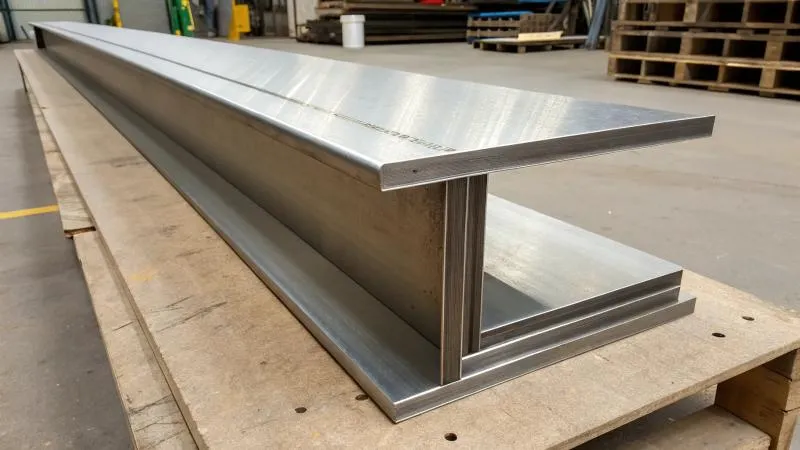
I am Zora Guo from cnmarinesteel.com. I have helped hundreds of buyers order L sections. Many made mistakes because they did not have a systematic checklist. Let me give you one that covers everything.
How to Verify Supplier Mill Approvals and Class Society Certificates (ABS, DNV, LR) Before Purchase?
You buy from a supplier. They say the steel is ABS approved. You trust them. Then your class surveyor rejects the steel. The mill was not approved.
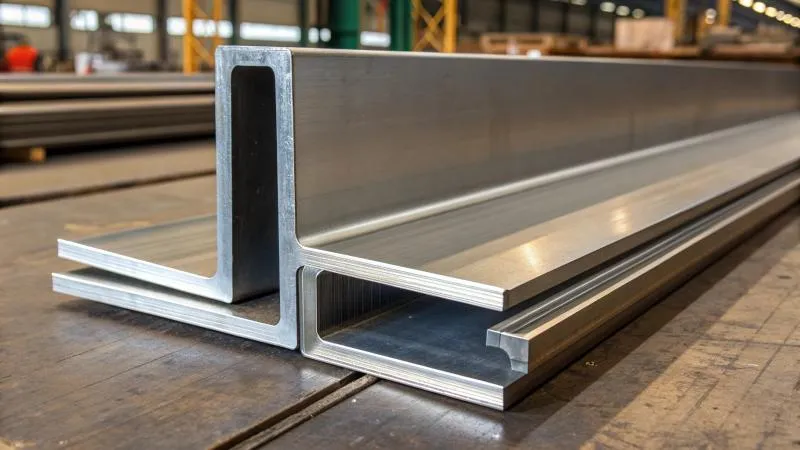
Before placing an order, verify that the mill (not just the supplier) holds current approvals from ABS, DNV, LR, or the society your project requires. Ask for the mill’s certificate. Then check the society’s online approved mills list. Confirm that the approval covers L sections (not just plates) and the grades you need. Also check the supplier’s ISO 9001 certification. This verification takes 30 minutes but saves months of problems.
Let me walk you through the steps.
Step 1: Get the Mill Name and Certificate
Ask your supplier: “Which mill produces the L sections? Please provide the mill’s current approval certificate from ABS, DNV, or LR.”
A legitimate supplier will answer within 24 hours. A red flag is “we don’t share mill names” or “our certificate is internal only.”
Step 2: Check the Online Class Society List
Each society publishes an approved manufacturers list on its website.
- ABS: Search “ABS Approved Mills List”
- DNV: Search “DNV Approved Manufacturers”
- LR: Search “LR Approved Mills”
What to verify:
- Is the mill name on the list?
- Is the product type “structural sections” or “L sections” (not just plates)?
- What grades are approved (A, AH32, AH36, DH36)?
- Is the approval current (not expired)?
Step 3: Check the Supplier’s Quality System
The supplier (trading company) should have ISO 9001 certification. Ask for a copy. Check that the scope includes “trading of steel products.”
Common Mistakes to Avoid
- Trusting a photocopy without online verification. Forged certificates exist.
- Assuming plate approval includes L sections. It does not.
- Ignoring expiration dates. An approval may have expired last month.
A Real Example
A buyer in Vietnam received a quote for L150x90x12 AH36. The supplier sent a mill certificate that looked real. The buyer checked the ABS list. The mill was not there. He called ABS. They confirmed the mill had no approval for L sections. The buyer walked away. Three months later, he heard that another buyer had used that mill and their steel was rejected by class.
What Dimensional Checks (Leg Length, Thickness, Straightness) and Grade Confirmations Are Essential?
You order L150x90x12. The mill sends L148x88x11.5. Without agreed tolerances, you cannot reject it.
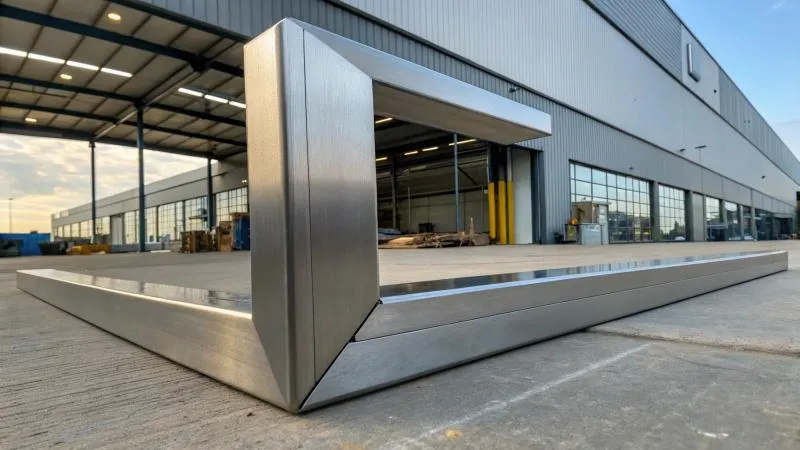
Essential dimensional checks: leg length tolerance (±2mm for legs up to 150mm, ±3mm for larger), leg thickness tolerance (‑0.3mm for thickness up to 15mm, ‑0.4mm for 15‑25mm), straightness (3mm per meter max bow, 2mm per meter max twist), and surface condition (no laminations, deep pits, or edge cracks). Also confirm the grade stamp (e.g., AH36) is legible on every piece. Write these tolerances into your purchase order. Do not assume “standard” means the same to the mill.
Let me give you exact numbers to specify.
Leg Length Tolerance
L sections come in equal leg (L100x100) and unequal leg (L150x90). Leg lengths can vary.
Specify: “Leg length tolerance: ±2mm for legs up to 150mm. ±3mm for legs over 150mm.”
Why it matters: If the longer leg is 2mm short, the weld area is smaller. If the shorter leg is 2mm long, it may interfere with other structures.
Leg Thickness Tolerance
The thickness of the leg (e.g., 12mm in L150x90x12) is critical for strength.
Specify: “For leg thickness up to 15mm, under‑tolerance not to exceed 0.3mm. For thickness 15‑25mm, under‑tolerance not to exceed 0.4mm. No leg shall measure more than 0.3mm below nominal at any point.”
Straightness (Bow and Twist)
L sections can bow along their length or twist.
Specify: “Maximum bow: 3mm per meter of length, total not to exceed 0.15% of full length. Maximum twist: 2mm per meter.”
How to check: Lay a straightedge along the length. Measure the gap. For twist, place the L section on a flat surface and measure the height difference at the ends.
Surface Condition
Specify: “No laminations visible on edges. No deep pits deeper than 0.5mm. No edge cracks longer than 10mm. Surface shall be free of rolled‑in scale that cannot be removed by light grinding.”
Grade Confirmation
Each L section must be stamped or painted with the grade (e.g., AH36, DH36). Check that the stamp matches your PO. If the stamp is missing or illegible, the piece is not traceable and may be rejected by class.
A Real Example
A buyer in Saudi Arabia ordered L200x100x14 AH36. He did not specify leg length tolerance. The mill sent L197x98x14. The buyer’s welding jig was designed for 200mm legs. The shorter legs did not fit. The supplier said “±3mm is normal.” The buyer had to modify the jig. After that, he added leg length tolerances to every PO.
How to Review Mechanical Properties (Yield, Tensile, Charpy) and Heat Number Traceability on Mill Certificates?
You have a mill certificate (MTC). It says AH36. But does the steel really have 355 MPa yield? Without checking the numbers, you do not know.
On every mill certificate, check: yield strength (min 355 MPa for AH36), tensile strength (490‑620 MPa), elongation (min 21%), and Charpy impact (min 34 J at 0°C for AH36, or at ‑20°C for DH36). Verify that the heat number on the certificate matches the stamp on the steel. Ensure the certificate has the class society stamp (ABS, DNV, LR). For critical projects, ask for independent lab tests to confirm the MTC values.
Let me explain how to read an MTC.
Key Mechanical Properties
| Grade | Yield (MPa) | Tensile (MPa) | Elongation (%) | Charpy (J) at temp |
|---|---|---|---|---|
| A | 235 | 400‑490 | 22 | 27 at +20°C |
| AH32 | 315 | 440‑590 | 22 | 28 at 0°C |
| AH36 | 355 | 490‑620 | 21 | 34 at 0°C |
| DH36 | 355 | 490‑620 | 21 | 34 at -20°C |
| EH36 | 355 | 490‑620 | 21 | 34 at -40°C |
What to check:
- Yield strength must be at least the minimum. If it is very close (e.g., 356 MPa), that batch has little margin. Ask for extra testing.
- Tensile strength must be within the range. If it is above the maximum, the steel may be too hard and brittle.
- Elongation below the minimum means the steel will crack when bent.
Charpy Impact – The Critical Test for Cold Weather
Charpy values are the most common failure point. For AH36 at 0°C, the average of three samples must be at least 34 J, with no single sample below 24 J.
What to watch: If the MTC shows 35 J, 36 J, 34 J – that is fine. If it shows 38 J, 22 J, 40 J – one sample failed. That heat should be rejected.
Heat Number Traceability
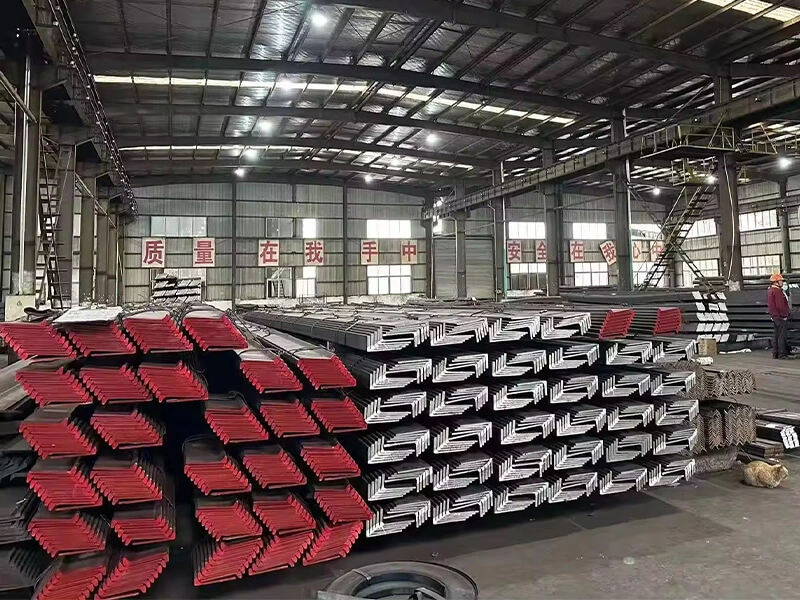
The MTC has a heat number (e.g., H12345). Each L section must be stamped with that same heat number.
Check: Pick a random piece from the shipment. Read the stamp. Does it match the MTC? If not, the steel is not traceable. Class surveyors will reject it.
Independent Verification
For large or critical orders, do not trust the MTC alone. Hire SGS or a class surveyor to take random samples and test them at an independent lab.
Cost: $500‑1,000 per test batch. Worth it for high‑value projects.
A Real Example
A buyer in Qatar received MTCs showing AH36 Charpy values of 42‑45 J. He was suspicious because that seemed too high for that mill. He paid for independent testing. The results showed 28‑30 J – failing the 34 J minimum. The MTCs were fake. The buyer rejected the whole shipment. He later learned the mill had sent Grade A steel labeled as AH36.
What Documentation, Third‑Party Inspection, and Packing Requirements Should Be on Your Final Checklist?
The steel is ready. You pay. Then you realize the packing list is missing. Customs holds your shipment.
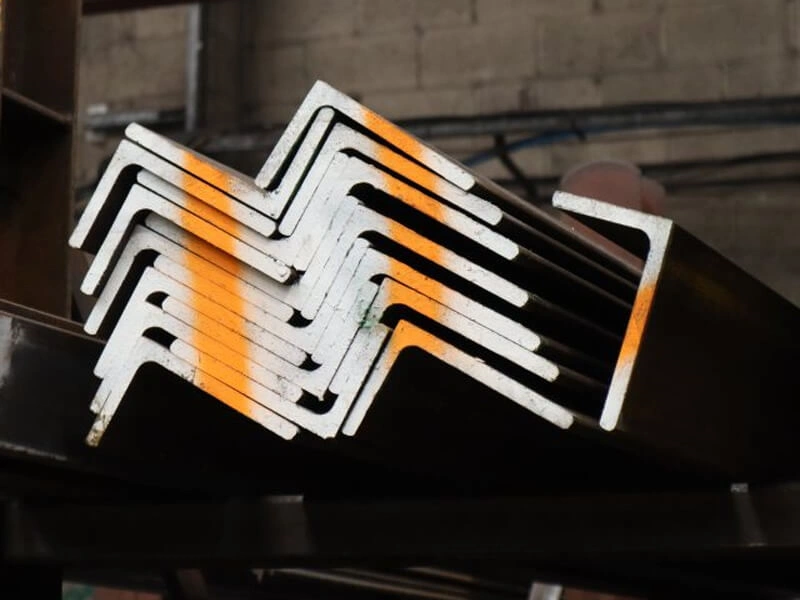
Your final checklist must include: original mill test certificates (stamped by class society) with heat numbers matching the steel, a detailed packing list showing bundle numbers, grades, and quantities, a commercial invoice with full description, a certificate of origin, and a third‑party inspection report (SGS or class surveyor) if required. Also check packing: each bundle must have a weather‑resistant tag, steel straps, and wooden dunnage between layers. Missing documents or poor packing can delay your project by weeks.
Let me list every item.
Documentation Requirements
| Document | What to check |
|---|---|
| Mill test certificate (MTC) | Heat numbers match stamp, class society stamp, mechanical values meet grade |
| Packing list | Bundle numbers, thickness, grade, quantity (pieces and tons), heat number range per bundle |
| Commercial invoice | Full description, HS code, weight, value, terms |
| Certificate of origin | Issued by chamber of commerce, shows country of origin (China) |
| Bill of lading | Clean (no remarks), matches packing list weight |
| Third‑party inspection report (if ordered) | Pass/fail, list of tested plates, measurement results |
Packing Requirements
Specify in your PO:
- Each bundle shall contain only one thickness and one grade.
- Each bundle shall be strapped with steel bands (minimum 2 bands per bundle, more for long bundles).
- Wooden dunnage (50x50mm) shall be placed between layers to allow air circulation and prevent scratching.
- Each bundle shall have a weather‑resistant tag showing: bundle number, thickness, grade, heat number range, quantity, and weight.
- L sections shall be stacked with the long leg facing down to prevent bending.
Third‑Party Inspection
For critical projects, add: “All plates and L sections shall be subject to pre-shipment inspection by SGS, Bureau Veritas, or a class surveyor. The inspector shall verify dimensions, surface, ultrasonic testing (for plates over 20mm), and witness mechanical tests. The shipment shall not leave the mill without a passing inspection report.”
A Real Example
A buyer in the Philippines received a shipment of L sections. The packing list was handwritten and illegible. The bundle tags were missing. The yard could not identify which bundle was which. They had to measure every piece to sort by thickness. That took 2 days. The buyer now requires printed packing lists and tag photos before shipment.
Conclusion
Verify mill approvals, confirm dimensions and grade, review MTC mechanical properties, and check documentation and packing. This six‑step checklist protects your shipbuilding project from bad steel and delays.