
You finally get your steel plates after weeks of waiting. Then you open the container. Rust, bent edges, and mixed grades create a costly mess.
Good packaging prevents rust, edge damage, and bent plates. It also uses clear markings and smart stacking. This means faster unloading, less rework, and a smoother start for your project.
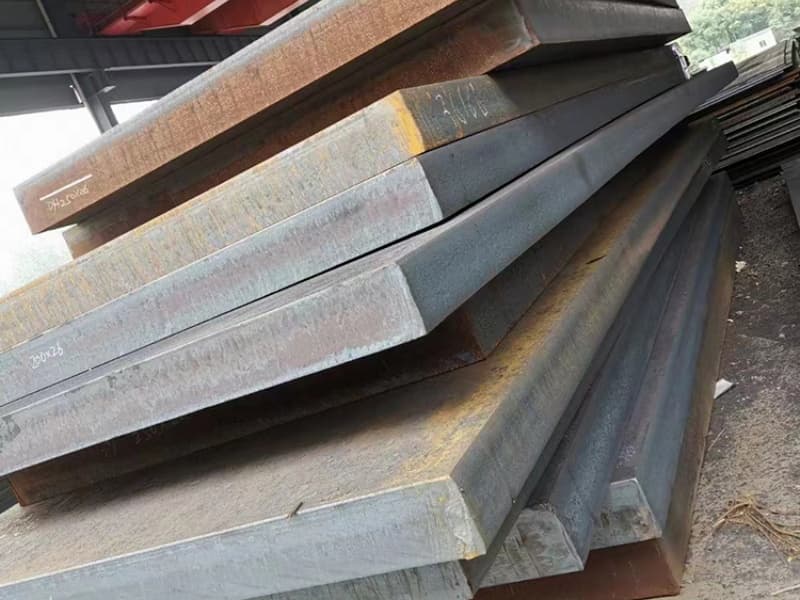
I have seen projects lose weeks just because of bad packaging. You might think steel is tough. But during a long sea journey, it can get damaged easily. Let me show you how the right packaging keeps your timeline on track.
How Does Poor Packaging (Rust, Edge Damage, Bent Plates) Delay Project Start and Increase Rework Costs?
Rust on a new plate is a bad surprise. You cannot use it until you clean or cut off the damaged part.
Poor packaging causes rust, bent corners, and scratched surfaces. These defects force you to grind, cut, or reject plates. This adds days or weeks of rework and pushes your whole project schedule back.
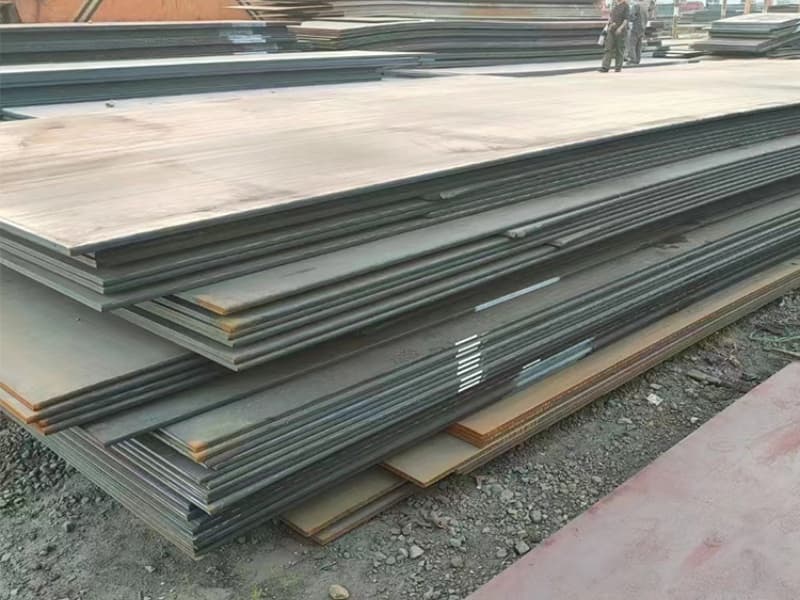
Let me break down the real cost of bad packaging. Many buyers only look at the price per ton. But the hidden cost of rework is often higher than the money you saved by choosing a cheap packaging method.
Three Main Types of Damage from Poor Packaging
1. Rust (Corrosion)
Moisture gets inside the package during shipping. Sea air is salty, so rust starts fast. Without proper anti‑rust coating and sealed wrapping, your plates can arrive with orange stains. Even light rust needs grinding. Heavy rust makes the plate thinner than the required thickness, so you cannot use it at all. One of my clients in Malaysia had to scrap 8% of a shipment because of deep rust. That was a $12,000 loss.
2. Edge Damage
When plates are not strapped tightly or when dunnage (wood or rubber spacers) is missing, the edges knock against each other. Forklifts also hit exposed edges during unloading. A bent or cracked edge means you lose the full width of the plate. You might need to cut a new edge, which creates waste and extra labor. For a ship hull, a damaged edge can fail a weld inspection.
3. Bent Plates (Deformation)
Stacking plates without proper support in the middle causes them to sag. If a plate is bent, you cannot lay it flat for cutting or welding. Straightening a bent plate is hard and rarely perfect. Most of the time, you have to cut it into smaller pieces or reject it. This is a big problem for deck plates that need to be flat.
How Each Type of Damage Delays Your Project
Here is a simple table that shows the time loss for a typical 500‑ton steel order:
| Damage Type | Time to Inspect & Sort | Rework Hours per 20 Plates | Total Delay (Days) |
|---|---|---|---|
| Light rust (surface) | 2 days | 1 hour each (grinding) | 3-4 days |
| Heavy rust | 3 days | 2 hours each (cutting + re‑edging) | 5-7 days |
| Edge damage | 1 day | 1.5 hours each (trimming) | 2-3 days |
| Bent plates | 1 day | 3 hours each (straightening or scrapping) | 3-5 days |
These delays add up quickly. If you have mixed damage, your team might spend a full week just fixing plates before real work starts. And that does not include the time you lose waiting for replacement plates.
A Real Example from a Client in Qatar
A contractor ordered marine steel plates for offshore modules. The supplier used thin plastic wrap and weak straps. When the container arrived in Dammam, more than 30% of the plates had edge rust and bent corners. The contractor’s team spent four days sorting and grinding. They also had to order 40 new plates. The replacement took another three weeks by sea. The total delay was six weeks. They lost their weather window and paid extra for rushed work later. All because of poor packaging.
What You Can Do
Ask your supplier to show photos of their packaging process before shipment. Check if they use VCI (vapor corrosion inhibitor) paper, thick plastic, and strong steel straps. Also ask for a packaging video. At CN Marine Steel, we send every client photos of each bundle. We also support third‑party inspection at the loading port. This way, you see the condition before the ship sails.
Why Do Proper Dunnage, Strapping, and Stacking Order Prevent Transport Damage and Preserve Plate Flatness?
You cannot stop the ship from rolling. But you can stop the plates from hitting each other.
Dunnage (wood or rubber spacers) keeps plates apart. Steel straps hold them tight. A smart stacking order puts heavy plates at the bottom and lighter ones on top. This stops bending and rubbing during transport.
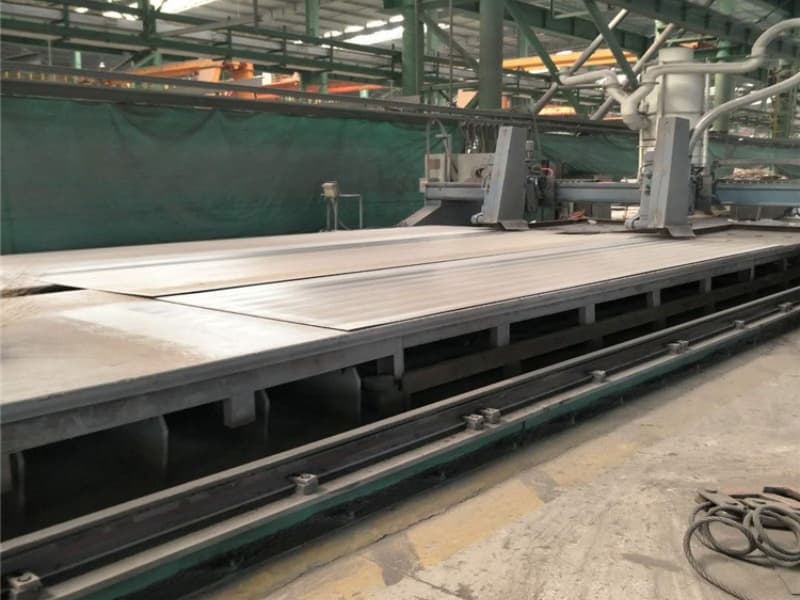
Let me explain each part in simple terms. You will see why these small details make a big difference.
What Is Dunnage and Why Does It Matter?
Dunnage is any material placed between steel plates or between plates and the container wall. The best dunnage is dry hardwood or rubber strips. It creates a gap. That gap stops two plates from rubbing together. It also allows air to flow, which reduces moisture buildup. Without dunnage, vibration during the voyage makes plates slide and scratch each other. The protective oil layer gets wiped off, and rust starts.
At our warehouse in Liaocheng, we place hardwood strips every 1.5 meters along the length of the plate. We also put rubber pads at the corners. This costs very little, but it cuts edge damage by more than 80%.
Strapping: The Right Tension and Material
Strapping holds the whole bundle together. We use galvanized steel straps, not plastic. Plastic stretches when the ship moves. Steel straps stay tight. Each bundle gets at least four straps: two lengthwise and two crosswise. The tension must be high enough to stop movement but not so high that it bends the top plate. Our workers use a tension meter to get it right. I have seen other suppliers use loose plastic straps. The results are always bad.
Stacking Order: Heavy at the Bottom, Light on Top
This sounds obvious, but many suppliers ignore it. They stack plates of different thicknesses randomly. The heavy plates press down on the thin ones, causing bending. Always put the thickest and heaviest plates at the bottom of the stack. Then put medium plates in the middle. The thinnest and lightest plates go on top. Also, never stack plates of very different widths together. A wide plate on top of a narrow plate will bend over the empty space.
Here is a quick guide for a typical bundle of marine steel plates:
| Layer | Plate Thickness | Max Width | Stacking Notes |
|---|---|---|---|
| Bottom (layer 1) | 20mm – 30mm | Full container width | No overhang |
| Middle (layer 2) | 10mm – 18mm | Slightly less than bottom | Use dunnage between layers |
| Top (layer 3) | 6mm – 8mm | Narrowest | Extra straps to prevent shifting |
How We Do It at CN Marine Steel
We follow a written packaging standard for every export order. First, we clean and oil each plate. Second, we place dunnage strips. Third, we stack according to thickness. Fourth, we apply two layers of plastic wrap with VCI paper inside. Fifth, we tighten four to six steel straps. Finally, we add edge protectors – plastic or steel corners – on all four corners of the bundle. This method has kept our damage rate below 1% over the last three years. Our client Gulf Metal Solutions told us that our packaging was the best they had ever seen. That is not luck. It is a system.
What You Can Ask Your Supplier
Before you place a big order, ask these questions:
- Do you use hardwood or rubber dunnage between every layer?
- What type of straps do you use? Steel or plastic?
- Can you show me a stacking diagram for my plate sizes?
- Do you put edge protectors on all corners?
If the supplier hesitates on any of these, be careful.
How Do Clear Markings (Heat Numbers, Grades, Dimensions) on Bundles Speed Up Receiving, Sorting, and Cutting?
Your crew unloads a bundle. They see a handwritten label that has faded during the voyage. Nobody knows the grade or thickness. Work stops.
Clear markings on each bundle show the steel grade, heat number, dimensions, and project name. This lets your team sort materials in minutes instead of hours. It also prevents wrong plates from going into the wrong sub‑project.
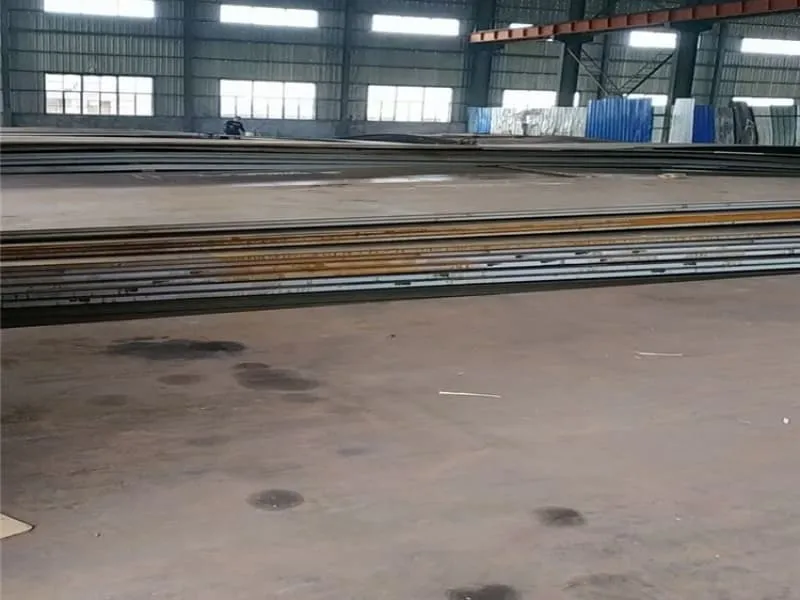
I have walked into shipyards where workers spent half a day just identifying plates. That is lost money. Let me show you how to fix it.
What Markings Must Be on Every Bundle?
At a minimum, each bundle needs a weather‑resistant tag or direct stencil with:
- Steel grade (for example, AH36, DH36, or marine angle steel grade)
- Heat number (for traceability)
- Dimensions (thickness x width x length)
- Quantity of plates in the bundle
- Project name or code
- Purchase order number
The markings must be in English. They must be placed on at least two sides of the bundle. The best method is to use a stencil and spray paint on the top plate and on the side of the bundle. Then attach a laminated plastic tag with a zip tie. This tag survives rain and salt spray.
How Good Markings Speed Up Each Step
Receiving: When the truck arrives, your receiver looks at the tag. He checks the project name and PO number. He then directs the bundle to the correct storage area. No searching, no guesswork. This takes 30 seconds per bundle instead of 10 minutes.
Sorting: You might have plates for three different ships in one container. With clear markings, your team can pull out the bundles for Ship A first, then Ship B. Without markings, they have to measure each plate’s thickness and guess the grade from the mill color code. That is slow and error‑prone.
Cutting: The cutting operator needs the heat number and grade to set the right cutting speed and welding parameters. If those numbers are not on the bundle, he has to go back to the office and check the paper certificate. That breaks his workflow. With clear markings, he just reads the tag and starts cutting.
A Real Story from a Shipyard in Vietnam
A customer ordered marine steel plate and marine angle steel for three bulk carriers. They asked us to mark each bundle with the ship name (Hull 101, Hull 102, Hull 103). We printed large color labels: red for Hull 101, blue for Hull 102, green for Hull 103. The receiving team sorted 40 bundles in two hours. The previous supplier had no color coding, and sorting took two full days. The customer saved 14 labor hours on that one delivery. Over a full project, that adds up to weeks of saved time.
The Connection to Digital Tracking
Clear markings are the physical version of digital tracking. When your supplier puts a barcode on the bundle, you can scan it with a phone. That barcode can link to a digital record showing the mill certificate, inspection photos, and delivery date. We offer this as an option. It is cheap and easy. One scan gives you the whole history of that plate. No more lost paperwork.
What to Avoid
Avoid handwritten labels that can smudge. Avoid putting the tag only on the inside of the bundle where you cannot see it without unpacking. And never rely only on the mill’s original paint marks. Those are often small and hard to read after a long voyage. Always ask for an extra laminated tag.
What Packaging Strategies (Grouping by Module, Anti‑Rust Coating, Edge Protection) Improve Yard Efficiency and Reduce Handling Time?
Your yard is busy. You do not have time to move plates from one pile to another. Smart packaging groups plates the same way you will use them.
Group plates by the module or sub‑project before packing. Apply a heavy‑duty anti‑rust coating on all surfaces. Add plastic or steel edge protectors. This cuts handling time by half and keeps plates clean until the moment you cut them.
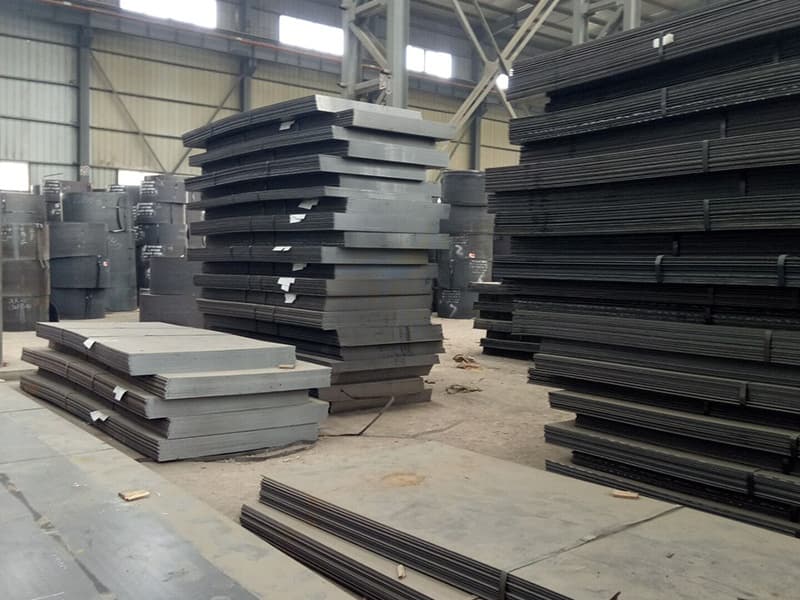
Let me explain how you can work with your supplier to make this happen.
Grouping by Module or Sub‑Project
Most suppliers pack plates by size or grade. That is logical for them, but not for you. You want plates for the same module or the same part of the ship to arrive together. For example, the bottom shell module needs plates of different grades and thicknesses. Ask your supplier to collect all those plates into one bundle or a set of bundles. Then put a big label saying "Bottom Shell Module – Unload First."
At CN Marine Steel, we let you send us a packing list that matches your construction sequence. We then pack in that order. When the container opens, your team unloads Module 1 bundles first and takes them straight to the cutting area. No extra sorting or moving. This is called "sequence packing." It is common in automotive, but very rare in steel. We do it because it saves you time.
Anti‑Rust Coating That Actually Works
Standard mill oil is not enough for a two‑month sea journey to Saudi Arabia or Vietnam. We use a heavy‑duty, solvent‑based anti‑rust coating. It stays on for up to six months indoors and three months outdoors. The coating is clear, so you can still see the surface. When you are ready to weld, you remove it with a cheap degreaser. Some clients ask for a weldable primer instead. We can do that too.
The important thing is to apply the coating after cutting and before packing. Many suppliers coat the plates at the mill, then cut them to size later. The cut edges have no protection. We cut first, then coat all edges. That stops rust from starting at the cut lines.
Edge Protectors: Small Cost, Big Benefit
Edge protectors are plastic or steel corners that slide onto the edges of the bundle. They stop steel straps from cutting into the plates. They also stop the plates from digging into each other when the ship rolls. Plastic protectors cost about $0.50 each. Steel ones cost $2.00. For a 20‑bundle order, that is $10 to $40. But they can prevent $1,000 of edge damage. It is an easy choice.
Putting It All Together: A Table of Packaging Strategies
| Strategy | What It Does | Typical Cost | Time Saved Per Bundle |
|---|---|---|---|
| Group by module | Reduces sorting and moving | $0 (planning only) | 15 minutes |
| Heavy anti‑rust coating | Prevents rust for 3‑6 months | $15 per ton | 5 minutes (no grinding) |
| Edge protectors | Stops corner damage | $0.50‑$2.00 each | 10 minutes (no trimming) |
| Sequence packing | Matches delivery to construction order | $0 (planning only) | 20 minutes |
How This Helped a Client in Malaysia
A fabricator was building modular units for an oil platform. They asked us to pack each module’s plates together and apply extra edge protection. We also printed a simple drawing on each bundle showing where the plates went in the module. When the steel arrived, their team unloaded bundle by bundle and placed each one next to the assembly jig. They did not need a separate storage area. They did not move plates twice. They started cutting within two hours of delivery. The project manager told me that the packing strategy saved them at least four days of handling time.
What You Should Ask Your Supplier
Call your supplier and ask:
- Can you pack plates by my module list instead of by size?
- Do you use heavy‑duty anti‑rust coating on cut edges?
- Do you offer edge protectors as a standard?
- Can you send me a photo of the packed bundles before shipping?
If they say yes to all, you have found a good partner. If they say no or seem confused, keep looking.
Conclusion
Good packaging prevents rust, damage, and sorting delays. It keeps your project on schedule and within budget.