
You need a reliable steel supplier. You find one that delivers on time and gives good quality. But next year, prices go up and lead times stretch. Your project suffers.
Shipyards build long‑term partnerships with steel plate suppliers by using frame agreements with volume commitments, aligning quality standards, sharing forecasts and inventory, and conducting regular performance reviews. These steps create stability, trust, and mutual benefit over years of cooperation.
I am Zora Guo from cnmarinesteel.com. I have worked with shipyards that treat suppliers as interchangeable vendors – and I have seen real partnerships where both sides grow together. The difference is not luck. It is a deliberate process. Let me walk you through how successful shipyards do it.
Why Do Frame Agreements and Volume Commitments Secure Supplier Capacity and Price Stability?
You order steel for one vessel. Then you order for the next. Each time you negotiate price and delivery. This takes time and leaves you open to market spikes.
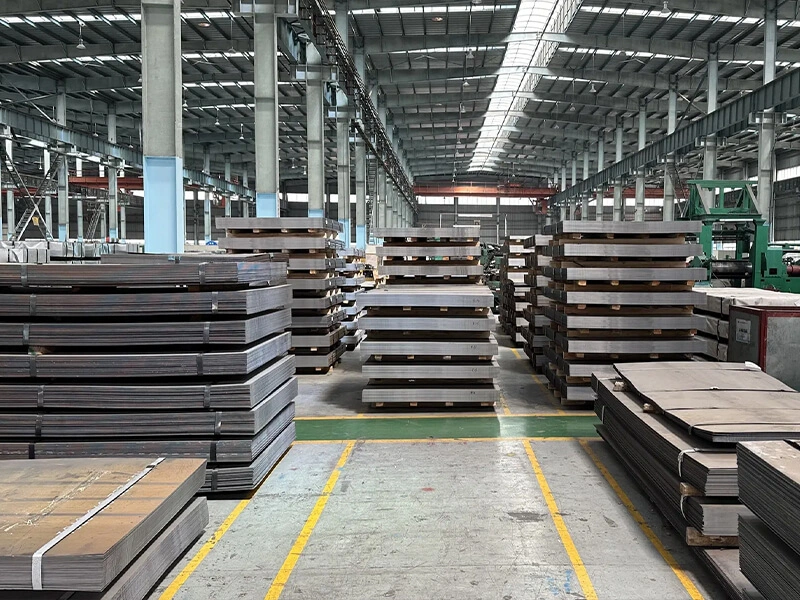
Frame agreements lock in supplier capacity because the mill knows exactly how much you will buy over a fixed period. They reserve production slots for you. Price stability comes from fixing the price per ton or tying it to an index (like billet price plus a rolling fee). For example, a 12‑month frame agreement for 10,000 tons of AH36 plates at $800/ton protects you when spot prices jump to $950/ton. The mill benefits from predictable revenue. You benefit from lower costs and priority allocation. Frame agreements cut procurement costs by 5‑15% and shorten lead times by 20‑30%.
Let me explain how these agreements work in real life.
What a Good Frame Agreement Contains
A frame agreement (also called a long‑term agreement or LTA) is not just a handshake. It is a detailed contract that covers:
- Volume commitment – A minimum number of tons per month or quarter. For example, 500 tons per month of plates in specified sizes and grades.
- Price mechanism – Either a fixed price for the whole term or a formula like “billet price + $200 rolling fee.” The formula protects both sides from extreme moves.
- Delivery schedule – Rolling releases. You give the supplier a forecast for the next 3‑6 months and firm orders for the next 30‑60 days.
- Quality standards – Class society approvals, tolerances, testing requirements – all clearly written.
- Lead time – The maximum weeks from firm order to delivery (e.g., 6 weeks).
- Penalties – A discount for late delivery, like 1% per week. This gives the supplier a strong incentive to perform.
How It Secures Capacity
Mills have limited production capacity. When demand is high, they must decide who gets steel first. They prioritize LTA customers because those customers provide steady, predictable volume. Spot buyers are last in line.
In a tight market, a mill might have 10,000 tons of monthly capacity. LTA customers take 7,000 tons. Spot buyers fight over the remaining 3,000 tons. Your LTA means you get your steel when spot buyers are turned away.
How It Stabilizes Prices
Steel prices can swing 30‑50% in a single year. A fixed‑price LTA protects your project budget. If the market drops, the mill benefits – but your cost stays predictable.
For example, a shipyard in Vietnam signed a 12‑month LTA for 8,000 tons of AH36 plates at $780/ton. Six months later, spot prices hit $920/ton due to a raw material shortage. The shipyard saved $140/ton on the 4,000 tons shipped in those six months – a total saving of $560,000. The supplier honored the contract because the volume commitment was valuable to them. They had a guaranteed customer.
A Real Example
A large shipyard in South Korea had a frame agreement with a Chinese mill for 20,000 tons per year. When COVID‑19 disrupted supply chains worldwide, the mill diverted steel from spot buyers to their LTA customers. The shipyard received 100% of their contracted volume. Their competitor, who bought only on the spot market, got nothing for three months. The partnership paid off many times over.
What Quality Alignment (Shared Inspection Standards, Class Approvals) Prevents Recurring Disputes?
You reject a shipment for surface rust. The supplier says it is normal mill scale. You argue for weeks. Production stops.
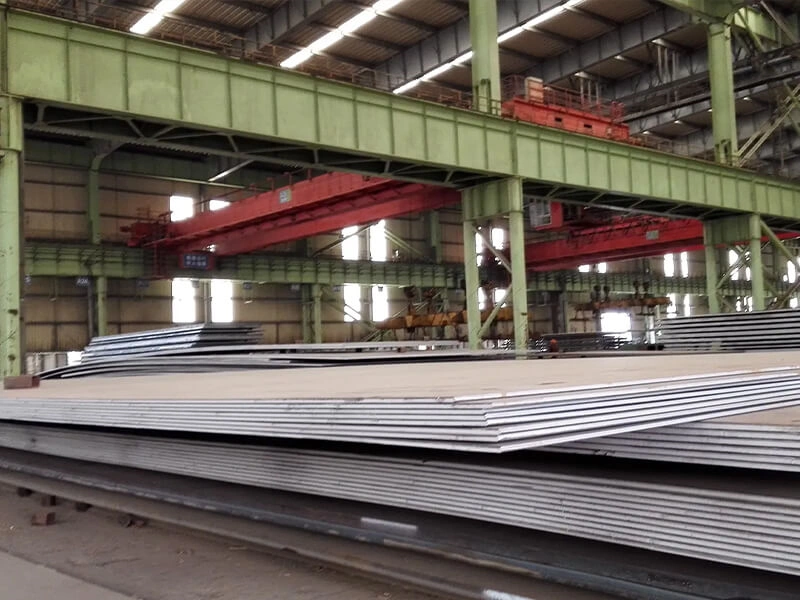
Quality alignment means both sides agree on inspection standards before the first shipment. Put the class society rules (ABS, DNV, LR) into your contract. Specify exactly how to measure thickness (ultrasonic gauge at five points per plate), how to check flatness (straightedge, 5mm per meter max), and what surface defects are rejectable (pits deeper than 0.5mm, edge cracks longer than 10mm). Use third‑party inspection (SGS, class surveyor) for independent verification. When both sides use the same standards and the same inspectors, disputes drop by 80‑90%.
Let me break down the elements of quality alignment.
Written Quality Standards – No Room for Interpretation
Do not rely on vague phrases like “industry standard” or “mill standard.” Write the exact tolerances into your contract. Here is a simple table you can use:
| Parameter | Specification to include |
|---|---|
| Thickness tolerance (plates up to 15mm) | Under‑tolerance max 0.3mm at any point. Average of five points within 0.2mm of nominal. |
| Thickness tolerance (plates 15‑25mm) | Under‑tolerance max 0.4mm at any point. |
| Flatness – bow | Max 5mm per meter of length, total bow ≤0.15% of length. |
| Flatness – wavy edge | Max 3mm over 300mm width. |
| Surface defects | No pits deeper than 0.5mm. No edge cracks longer than 10mm. No laminations visible at edges. |
| Mechanical properties | As per class rules for the grade (e.g., AH36 yield ≥355 MPa, Charpy ≥34J at 0°C). |
Third‑Party Inspection Agreement
Agree on who pays for third‑party inspection. Typically the buyer pays, but for high‑volume LTAs the supplier may share the cost.
Inspection protocol to include in your contract:
- Sampling rate: 10% of plates per shipment (or 100% for critical grades like bottom shell).
- Ultrasonic testing for laminations: required for plates over 20mm in high‑stress areas.
- Witness of mechanical tests: required for each heat number.
- The inspector must be from an accredited agency (SGS, BV, or class surveyor).
Dispute Resolution Process
Even with aligned standards, disagreements can happen. Agree on a process ahead of time:
- First level: Supplier and buyer quality managers review the evidence together.
- Second level: If they cannot agree, a third‑party retest at an agreed lab (e.g., SGS). The cost is borne by the party whose measurement is proven wrong.
- Third level: Arbitration if needed – but with clear standards and a retest process, this is very rare.
A Real Example
A shipyard in Malaysia had recurring disputes with a supplier over thickness. The supplier measured at the edge of the plate; the yard measured at the center. The yard added a clause: “Thickness shall be measured at five points – 50mm from each corner and the center – using a calibrated ultrasonic gauge. Average thickness shall not be more than 0.3mm under nominal. Minimum single reading not more than 0.4mm under.” The disputes stopped immediately. Both sides now use the same method.
How Do Transparent Forecasting, Phased Deliveries, and Inventory Sharing Build Trust?
You know your production schedule for the next six months. You keep it secret. The supplier makes guesses. They order raw materials too late. Your steel is late.
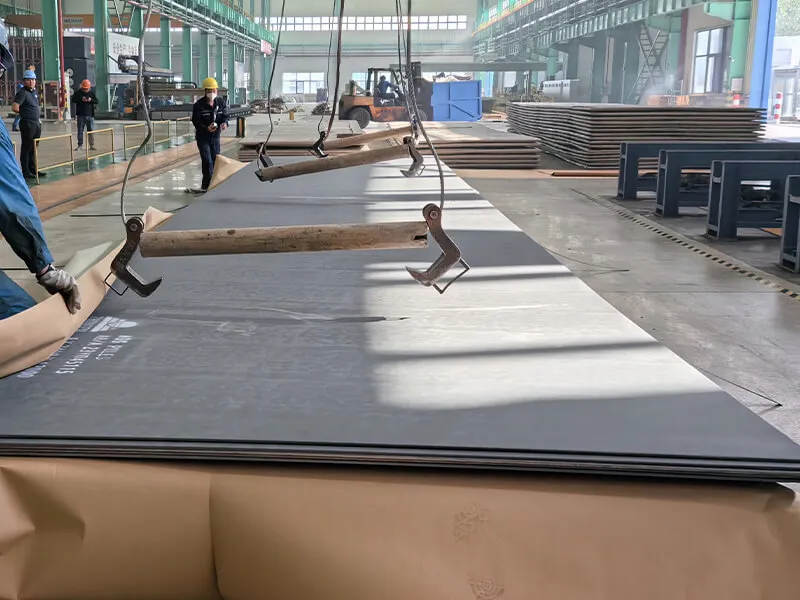
Transparent forecasting means sharing your rolling production plan with your supplier. Give them a 6‑month forecast, updated monthly. This allows the mill to order billets and reserve rolling slots well ahead of time. Phased deliveries (for example, 500 tons per month) let the supplier plan transport efficiently. Inventory sharing – also called vendor managed inventory (VMI) – takes trust further. The supplier holds steel at your yard or at a nearby warehouse, and you pay only when you use it. These practices reduce lead times by 30‑50% and cut inventory holding costs by 40‑60%. Trust is built on shared data, not on promises.
Let me explain each practice in more detail.
Transparent Forecasting – The Foundation of Trust
Share a rolling forecast with your supplier. Update it every month. Include:
- Expected monthly consumption by grade and thickness for the next 6 months.
- Projected peak periods (e.g., “month 3 will need 50% more steel than average”).
- Any design changes that could affect steel requirements.
The supplier uses your forecast to:
- Order raw billets from their upstream supplier (which has a lead time of 4‑8 weeks).
- Reserve rolling mill capacity for your orders.
- Plan their own inventory levels.
What about confidentiality? Sign a non‑disclosure agreement. Your forecast is valuable business information. A good supplier will protect it.
Phased Deliveries – The Middle Ground
Instead of ordering 6,000 tons all at once, place one order for 6,000 tons but ask for 1,000 tons per month for 6 months. The supplier holds the steel at their warehouse or at the mill until each delivery date.
Benefits of phased deliveries:
- You pay for steel as you receive it, not months ahead.
- You do not need to store 6,000 tons at your already crowded yard.
- The supplier can consolidate your steel with other orders to reduce freight costs.
Inventory Sharing (VMI) – The Ultimate Trust
Vendor Managed Inventory (VMI) takes trust to the highest level. The supplier owns the steel until you use it. The supplier keeps a buffer stock at your yard or at a nearby warehouse.
How VMI works:
- You and the supplier agree on minimum and maximum stock levels (e.g., min 200 tons, max 500 tons).
- You take steel from the buffer as you need it – no purchase order required for each withdrawal.
- The supplier monitors the stock level and replenishes automatically, usually weekly.
- You pay for the steel 30‑60 days after you use it (or at the end of each month).
VMI requires trust on both sides. The supplier trusts that you will not over‑use or damage the steel. You trust that the supplier will keep enough stock to meet your needs.
A Real Example
A large shipyard in Japan shared their 12‑month rolling forecast with their plate supplier. The supplier used the forecast to reserve billet production months ahead. Lead time dropped from 8 weeks to 4 weeks. Encouraged by this success, the shipyard then implemented VMI for their most common plate sizes. The supplier kept 1,000 tons at a warehouse just 20 km from the yard. The shipyard’s on‑hand inventory dropped from 3,000 tons to 800 tons. The holding cost saving was over $1.7 million per year. The supplier also saved money because they could plan their mill runs more efficiently. Everyone won.
How Can Joint Problem‑Solving and Performance Reviews Turn Suppliers into Strategic Partners?
Problems happen. A shipment is late. A batch fails quality tests. In a transactional relationship, you blame the supplier. In a partnership, you solve the problem together.
Joint problem‑solving means that when an issue arises, both sides send teams to find the root cause. The goal is not to assign blame but to fix the process so it never happens again. Regular performance reviews – quarterly or even monthly – track key metrics: on‑time delivery, rejection rate, lead time, responsiveness. Use scorecards. Share the results openly. Set improvement targets together. When a supplier feels that you are invested in their success – and they in yours – they will go beyond the contract. They will expedite your urgent orders, hold extra buffer stock for you, and warn you early about market risks. That is a strategic partner.
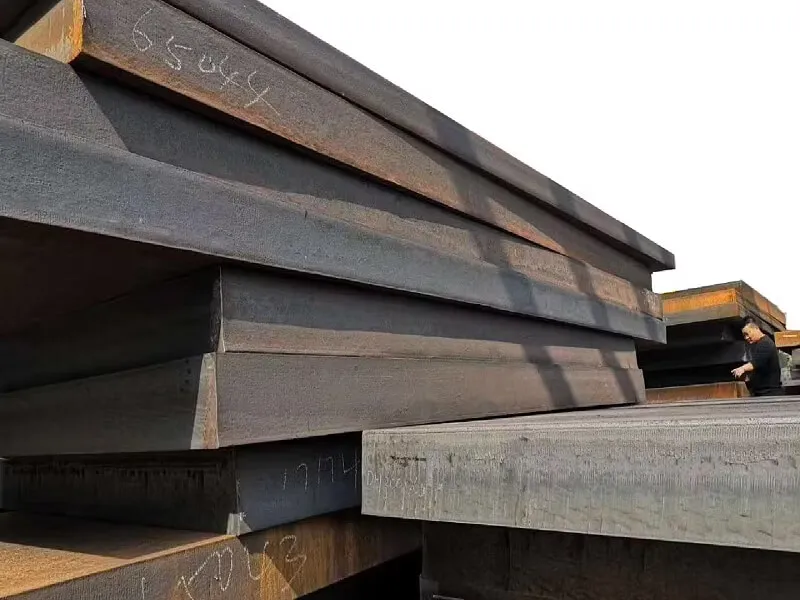
Let me give you a practical framework for turning a vendor into a partner.
The Performance Scorecard
Measure your supplier on 4‑5 key metrics. Share the scorecard every quarter. Do not use it as a weapon – use it as a tool for improvement.
| Metric | Target | Weight | How to measure |
|---|---|---|---|
| On‑time delivery | 98% (within agreed window) | 30% | (Deliveries on time / total deliveries) × 100 |
| Quality rejection rate | <1% of tons rejected | 30% | (Rejected tons / total tons) × 100 |
| Lead time (order to delivery) | <6 weeks for standard sizes | 20% | Average days from firm order to arrival |
| Responsiveness (urgent issues) | <4 hours to reply | 10% | Time to acknowledge urgent email or call |
| Documentation accuracy | 99% error‑free MTCs, packing lists | 10% | (Correct documents / total documents) × 100 |
How to use the scorecard: Review the scorecard together in a quarterly meeting. Celebrate good scores. For low scores, ask: “What can we do to help you improve?” The tone should be “we are in this together,” not “you failed.”
Joint Improvement Projects
Identify the top one or two pain points for both sides. Form a joint team with people from the shipyard and from the supplier. Give them a clear goal and a deadline.
Example: A shipyard had frequent disputes with a supplier over edge cracks on plates. The supplier blamed the mill. The mill blamed the shipyard for poor handling during unloading. The joint team visited both the mill and the shipyard. They discovered that the cracks originated during shearing at the mill – the shear blade clearance was too large. The mill changed the blade clearance. Edge cracks dropped by 90%. The dispute was resolved because people worked together instead of pointing fingers.
Two‑Way Transparency – Sharing Bad News Early
Strategic partners share both good and bad news early. If a mill will have a maintenance shutdown in three months, the supplier should tell the shipyard now – not two weeks before. If the shipyard knows that a design change will increase steel demand by 30% next quarter, they should tell the supplier now – not when the order is placed.
Sharing bad news early allows both sides to adjust plans. The shipyard can build a buffer. The supplier can order extra billets. Everyone avoids a crisis.
A Real Example
A shipyard in the United States had a 10‑year partnership with a domestic steel mill. When a hurricane hit the Gulf Coast and shut down rail transport, the mill called the shipyard on the same day. They said: “We have 2,000 tons of your plates ready but we cannot ship by rail. We can ship by truck at extra cost. We will split the extra cost with you.” The shipyard agreed. The plates arrived only three days late – much better than the three‑week delay that other mills had. The partnership saved the project from a major disruption.
Conclusion
Frame agreements secure capacity and price. Aligned quality standards prevent disputes. Transparent forecasting, phased deliveries, and VMI build trust. Joint problem‑solving and performance reviews turn suppliers into strategic partners. That is how shipyards build long‑term success.