
You are building a ship. Steel prices jump 30% in one month. Your fixed‑price contract is now underwater. Your profit disappears.
Long‑term supply agreements (LTAs) lock in steel prices, guarantee mill capacity, maintain consistent quality across multiple vessels, and enable phased deliveries with inventory buffers. For shipyards, they turn unpredictable steel procurement into a stable, manageable process.
I am Zora Guo from cnmarinesteel.com. I have seen shipyards thrive with LTAs and struggle without them. The difference is not subtle. Let me explain why long‑term agreements are not just a procurement tool but a strategic necessity.
How Do Long-Term Supply Agreements Lock in Pricing and Protect Shipyards from Steel Price Volatility?
Steel prices can swing wildly. A trade war, a raw material shortage, or a sudden demand surge can add hundreds of dollars per ton. Without a price lock, your project budget is at risk.
Long‑term supply agreements protect shipyards from price volatility by fixing the price per ton for the duration of the contract — typically 12 to 24 months. Some agreements use a formula based on raw material indices (e.g., billet price plus a fixed rolling fee), which still provides predictability. When spot prices spike, LTA customers pay the agreed rate. When spot prices drop, they may pay a slight premium, but the stability over the full project cycle saves far more than occasional overpayment. For a 10,000‑ton project, a $100/ton price spike protection saves $1 million. LTAs transfer price risk from the shipyard to the supplier.
Let me break down the numbers.
The Cost of Price Volatility
Steel plate prices are negotiated twice a year between steel mills and shipbuilding associations. For the first half of 2026, Korean steel and shipbuilding industries settled on a supply price of thick plates in the mid‑800,000 won per ton range — a slight increase from the low 800,000s recorded in the previous quarter. This modest increase was achieved despite rising raw material costs, because of the LTA structure.
If you buy spot, you pay whatever the market demands. In a volatile market, that can be disastrous. For a 500‑ton order, a $50/ton increase adds $25,000. A $200/ton increase adds $100,000. Over multiple vessels, these costs compound.
How Price Locks Work
An LTA can fix the price in two ways:
- Absolute fixed price: $800/ton for AH36 plates for 12 months. Simple and predictable.
- Formula‑based price: Billet price (index) + $200 rolling fee. This protects both sides. If billet prices rise, the mill does not lose money. If they fall, you benefit. But the variation is much smaller than spot market swings.
For example, if the billet index moves from $500 to $600 per ton, your plate price moves from $700 to $800. That is a 14% increase. Meanwhile, spot plate prices might jump 30‑40% because of panic buying and speculation.
Real Example from 2024‑2025
During the post‑COVID supply chain disruption, steel plate prices in some markets spiked by over 60% in 18 months. Shipyards with spot exposure saw their material costs explode. Those with LTAs paid the contract price, often 30‑40% below spot. The savings were enough to keep some yards profitable while competitors lost money.
A shipyard in Vietnam told me: "In 2024, our LTA saved us $800,000 on a 5,000‑ton order. That was the difference between a bonus and a loss."
Why Do Frame Agreements Ensure Priority Mill Capacity and Shorter Lead Times During Market Shortages?
When demand exceeds supply, mills must choose who gets steel. LTA customers go to the front of the line.
During market shortages, mills prioritize customers with long‑term volume commitments. A frame agreement guarantees you a reserved production slot. Without an LTA, you are a spot buyer — the last to be served when mills are busy. Lead times for spot buyers can stretch from 4‑6 weeks to 12‑16 weeks. LTA customers often keep their 4‑6 week lead times even in tight markets. This priority access prevents production stoppages when steel is scarce. For shipyards with fixed delivery dates, this is essential.
Let me explain how capacity allocation works.
The Reality of Mill Production
A steel mill has a fixed monthly production capacity. For high‑grade marine plates, capacity is even more limited because not every mill holds class approvals. When demand surges, mills allocate capacity first to LTA customers. These customers have committed to buying a minimum volume every month. The mill values that predictable revenue.
Spot buyers fill the remaining capacity. When there is no remaining capacity, spot buyers are told"sorry, we are fully booked."They must find another mill, pay higher prices, or wait weeks for the next production window.
Lead Time Comparison
In a normal market:
- LTA lead time: 4‑6 weeks
- Spot lead time: 4‑8 weeks (similar)
In a tight market:
- LTA lead time: 6‑8 weeks (slightly extended, but predictable)
- Spot lead time: 12‑20 weeks (or no availability at all)
The Cost of Waiting
A 4‑week delay in steel delivery can idle a shipyard’s fabrication line. Idle labor costs $50,000‑100,000 per week for a medium yard. A 12‑week delay is catastrophic.
LTA customers rarely experience such delays. They get priority.
A Real Example
A shipyard in South Korea had a 3‑year LTA with a domestic mill. When global steel demand surged in 2025, the mill informed spot buyers that lead times would be 16 weeks. LTA customers were told 8 weeks — still longer than normal, but manageable. The shipyard adjusted its production schedule and did not lose a single day.
What Role Do Long-Term Agreements Play in Maintaining Consistent Quality, Class Approvals, and Traceability Across Multiple Vessels?
Every vessel in a series should be built with the same steel properties. Without consistency, welding behavior changes and class approvals become complex.
Long‑term agreements maintain quality consistency because the same mill, same grade, and same production process are used across multiple vessels. The mill certificate format is identical. The heat number traceability system is uniform. The class approvals are pre‑verified. This consistency reduces the need for repeated qualification tests. For multi‑vessel projects — such as a series of tankers or bulk carriers — the steel for vessel 5 will match vessel 1. Shipyards can train welders on one batch and trust the next. Class surveyors see the same documentation and approve faster.
Let me explain the benefits.
Repeatability Reduces Risk
When a shipyard uses the same supplier for multiple vessels, they build a data history. They know the typical yield strength range, the Charpy impact values, and the thickness tolerance. They can set welding parameters once and use them for all vessels.
If they switch suppliers for each vessel, they must re‑qualify every time. That takes weeks and adds cost.
Class Approval Efficiency
Classification societies approve mills, not individual shipments. Once a mill is approved for a grade and product type, every shipment from that mill carries the approval. If you change mills, the new mill may need to be approved — a process that can take months.
With an LTA, the mill remains the same. No re‑approval needed.
Traceability Across Vessels
If a problem is found on vessel 3, you need to know if the same steel was used on vessels 1, 2, and 4. With a single supplier and consistent heat number records, you can trace easily. With multiple suppliers, each with different record‑keeping systems, tracing becomes a nightmare.
A Real Example
BAE Systems Australia signed a Framework Agreement with BlueScope Distribution for the Hunter Class Frigate Program. The agreement locks in local steel supply over five years. More than 5,000 tonnes of specialised, high‑strength steel will be delivered for each ship. By using the same supplier for every frigate, BAE ensures consistent quality, traceability, and class approval across the entire fleet.
How Do Strategic Supplier Partnerships Foster Phased Deliveries, Inventory Buffers, and Joint Forecasting for Efficient Production?
An LTA is not just a contract. It is the foundation of a strategic partnership. With that foundation, suppliers will do more than just deliver steel.
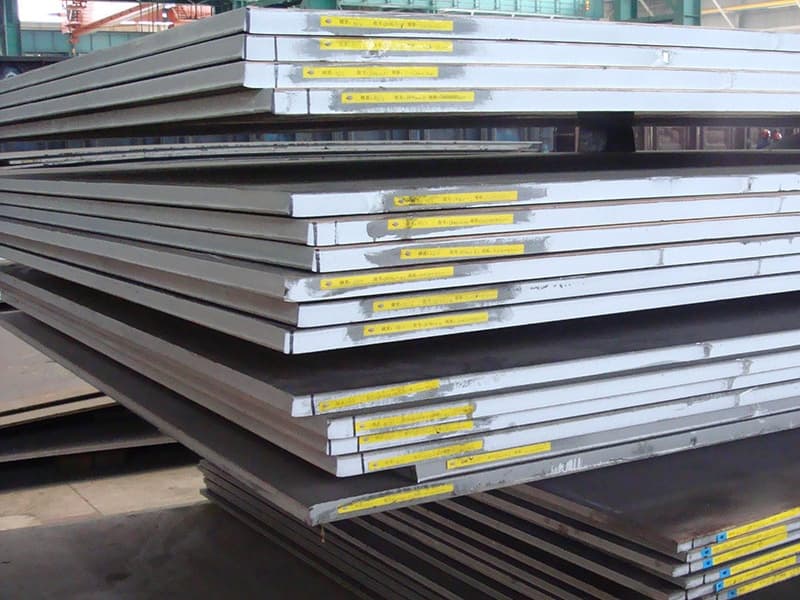
Strategic supplier partnerships built on LTAs enable phased deliveries — you order 10,000 tons once but receive 1,000 tons per month. The supplier holds the steel in their warehouse, reducing your [inventory holding costs](https://www(shipbob.com/blog/buffer-inventory/). They also keep inventory buffers — safety stock of common sizes that you can draw from when urgent needs arise. Joint forecasting — sharing your 6‑month production plan with the supplier — allows them to reserve mill capacity and order raw materials ahead of time. These practices cut lead times, lower costs, and reduce the risk of stockouts. They turn a vendor into a partner who shares your goals.
Let me detail each element.
Phased Deliveries — Pay as You Use
With a spot purchase, you pay for 10,000 tons when you order. With a phased delivery LTA, you pay for each monthly batch as it is delivered. This improves your cash flow and reduces working capital.
The supplier benefits too because they have a guaranteed buyer for the entire volume. They can plan production efficiently.
Inventory Buffers — The Safety Net
A committed partner will hold safety stock for you. For example, they might keep 500 tons of your most common plate sizes at their warehouse. If your project needs extra steel unexpectedly, you call them and they ship within days.
Without a partnership, you would have to place a new order and wait weeks.
Joint Forecasting — Aligning Supply with Demand
Share your rolling 6‑month forecast with your supplier. Include expected monthly tonnage, peak periods, and any known design changes.
The supplier uses your forecast to:
- Order billets from their upstream suppliers (which have their own lead times)
- Reserve mill rolling slots
- Plan logistics and shipping
The result: your steel arrives when you need it, not when the mill happens to have capacity.
A Real Example
Our customer Gulf Metal Solutions signed a 12‑month LTA with us. We hold quarterly reviews and share forecasts monthly. We keep a buffer stock of their common sizes at our warehouse. Their production schedule has been uninterrupted for 18 months. Their on‑time delivery rate is 100%. They told us: "The steel company was the first supplier to respond within two hours, and maintained this rapid response speed throughout the entire delivery process. The product quality is stable. We plan to place an order for ship L‑shaped steel and spherical flat steel from them in the next quarter."That is the power of an LTA‑driven partnership.
Conclusion
Long‑term supply agreements lock in prices, guarantee mill capacity, ensure consistent quality, and enable phased deliveries, inventory buffers, and joint forecasting. For shipyards, they are not optional — they are essential for predictable, profitable shipbuilding.