
You run a strategic shipyard. Your steel supply must be reliable. But holding too much inventory ties up cash. Ordering too late stops production.
Strategic shipyards balance availability and cost by using a mix of supply models: stock‑based for common sizes, Just‑in‑Time (JIT) for phased projects, long‑term frame agreements for price stability, Vendor Managed Inventory (VMI) to transfer storage risk, and multi‑mill sourcing for resilience. The right mix keeps steel flowing without waste.
I am Zora Guo from cnmarinesteel.com. I have worked with shipyards that used only one supply model. They always had problems – too much rust, too many delays, too much capital tied up. The best shipyards use a combination. Let me walk you through the five models and how to mix them.
Stock‑Based vs. Just‑in‑Time (JIT) Supply: Balancing Availability and Inventory Holding Costs
You keep a large stock of steel plates. You are ready for anything. But your money is sitting on steel. Insurance costs add up. Rust forms.
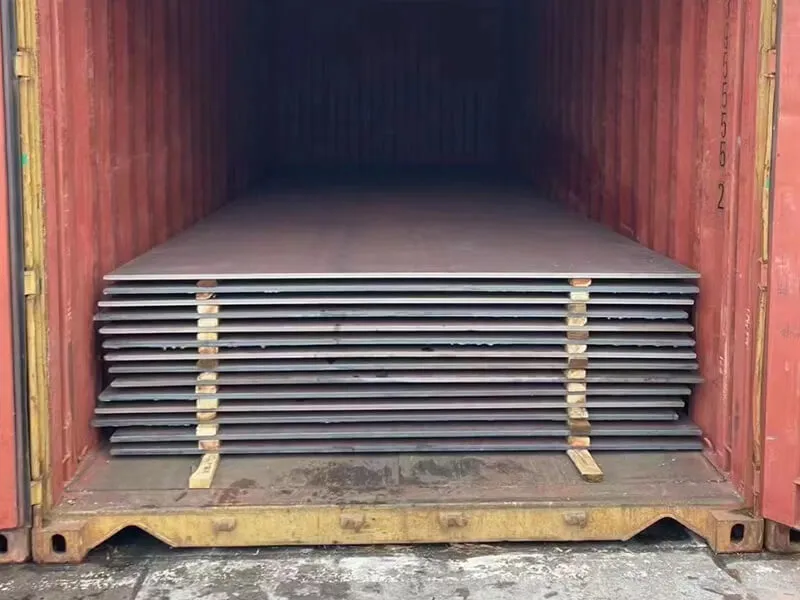
Stock‑based supply keeps steel on your yard, ready for immediate use. This gives you flexibility but costs 15‑25% of the steel value per year in holding costs (storage, insurance, capital, rust). Just‑in‑Time (JIT) supply delivers steel exactly when you need it, reducing inventory by 50‑70% and eliminating holding costs. But JIT requires a reliable supplier and accurate forecasting. Strategic shipyards use stock‑based for critical, high‑turnover sizes and JIT for everything else. A 20‑day stock of common sizes covers most emergencies. The rest arrives just in time.
Let me explain how to balance these two models.
The Cost of Holding Steel
Many shipyards overestimate the cost of a stockout and underestimate the cost of holding inventory. If you hold 2,000 tons of steel at an average value of $800/ton, that is $1.6 million in capital. At 8‑10% interest, that is $128,000‑160,000 per year. Add warehousing, insurance, and rust prevention – another 5‑10%. Total holding cost can exceed $250,000 per year.
Stock‑based supply is only efficient for steel that you use every week. For everything else, it is expensive.
When to Use Stock‑Based Supply
Keep a stock buffer of sizes and grades that you use daily. For a typical shipyard, this might be:
- AH36 plates in thicknesses 10mm, 12mm, 15mm
- Grade A plates for non‑critical structures
- Common L section sizes
Target stock level: 20‑30 days of consumption. For a size you use 100 tons per month, keep 70‑100 tons on hand.
When to Use JIT Supply
Use JIT for:
- Thicknesses or grades you use less than once per week
- Special sizes ordered for specific projects
- Very thick plates (over 30mm) that are expensive to hold
JIT requires a supplier with reliable lead times and a transparent forecasting system. You must share your production schedule at least 4‑6 weeks ahead.
A Real Example
A shipyard in Vietnam switched from 100% stock‑based to a hybrid model. They kept 30 days of stock for their 5 most common sizes and used JIT for the other 15 sizes. On‑site inventory dropped from 3,500 tons to 1,200 tons. Holding cost saving: over $300,000 per year.
Long‑Term Frame Agreements vs. Spot Buying: Locking in Price and Capacity Against Market Volatility
Steel prices are unpredictable. You can buy spot – pay the market price today – or sign a long‑term frame agreement (LTA) that locks in price and guarantees delivery.
Long‑term frame agreements (LTAs) fix the price per ton for 12‑24 months and reserve mill capacity for your shipyard. When market prices spike, you are protected. When mills are overloaded, you still get steel. Spot buying gives you flexibility to take advantage of price drops, but exposes you to sudden increases and supply shortages. Strategic shipyards use LTAs for 70‑80% of their volume (the predictable base) and spot buying for 20‑30% (opportunistic or extra orders). The LTA provides stability; spot buying adds flexibility.
Let me compare the two approaches.
How LTAs Work
An LTA is a contract between your shipyard and a steel mill (or your supplier). It includes:
- Volume commitment (e.g., 500 tons per month of AH36 plates)
- Fixed price or price formula (e.g., $800/ton or billet price + $200)
- Delivery schedule (monthly releases)
- Quality standards and class approvals
- Penalties for late delivery
For a large shipyard, an LTA might cover 10,000‑50,000 tons over 12 months.
When to Use Spot Buying
Spot buying makes sense when:
- Market prices are below your LTA price (buy extra and store it)
- You need a small quantity of a non‑standard size not in your LTA
- Your LTA supplier is at capacity and you need a backup
Never rely entirely on spot buying for critical materials. One market spike can destroy your project budget.
Real Example from 2024‑2025
A shipyard in South Korea had an LTA covering 80% of its steel needs at $780/ton. When steel prices jumped to $950/ton due to a raw material shortage, the LTA saved them $170/ton on 8,000 tons – $1.36 million. They used spot buying for the remaining 20% and paid the higher price, but the LTA protected most of their volume.
Vendor Managed Inventory (VMI) and Consignment Stock: Transferring Storage Risk While Ensuring On‑Site Availability
You want steel available at your yard. But you do not want to own it until you use it. That is where VMI and consignment stock come in.
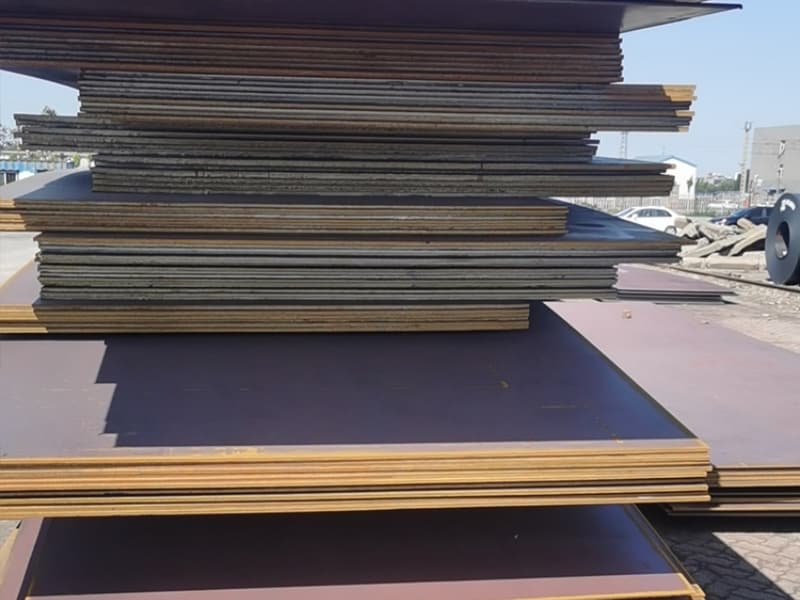
Vendor Managed Inventory (VMI) means your supplier keeps a buffer stock at your yard or at a nearby warehouse. You take steel as you need it. The supplier replenishes automatically. Consignment stock is similar: the supplier owns the steel until you pull it from the rack. You pay only for what you use. Both models transfer storage risk and capital cost from you to the supplier. VMI can reduce your on‑site inventory by 50‑70% and cut holding costs by 40‑60%. The supplier benefits from predictable demand. Strategic shipyards use VMI for their highest‑volume, repeat sizes.
Let me explain how VMI works in practice.
How VMI Works
- You and your supplier agree on minimum and maximum stock levels for specific sizes (e.g., min 200 tons, max 500 tons of 12mm AH36.
- The supplier places that stock at your yard or at a nearby warehouse.
- The supplier owns the steel. You pay nothing upfront.
- You take steel as needed for production.
- The supplier monitors stock levels (daily or weekly).
- When stock hits the minimum, the supplier ships a replenishment batch.
- You pay for the steel you used, typically monthly or quarterly.
Benefits for the Shipyard
- Zero capital tied up in that steel until you use it.
- No storage cost – the steel sits in your yard, but you do not own it.
- Always available – the supplier ensures stock never hits zero.
- Reduced administrative work – no purchase orders for every withdrawal.
Benefits for the Supplier
- Predictable demand – they know exactly how much you will use.
- Long‑term relationship – you are less likely to switch suppliers.
- Better planning – they can consolidate shipments to reduce freight costs.
A Real Example
A large shipyard in Japan used VMI for their five most common plate sizes. The supplier kept 800 tons at a warehouse 10 km from the yard. The shipyard‘s on‑site inventory dropped from 2,500 tons to 600 tons. Holding cost saving: $1.2 million per year. The supplier also saved money because they could plan mill runs more efficiently.
Multi‑Mill Sourcing vs. Single‑Supplier Integration: Building Supply Chain Resilience for Large‑Scale Production
One mill supplies all your steel. That mill has a breakdown. Your production stops. You have no backup.
Multi‑mill sourcing means you qualify two or three class-approved mills for your critical grades. If one mill fails, you shift volume to another. This builds resilience. Single‑supplier integration means you work with one master supplier who sources from multiple mills on your behalf. You get the resilience of multi‑mill sourcing without the administrative headache of managing multiple contracts. Strategic shipyards use single‑supplier integration for day‑to‑day purchasing and multi‑mill qualification for backup. They qualify at least two mills for every critical grade and thickness. When one mill has issues, they switch within days.
Let me compare the two approaches.
Multi‑Mill Sourcing – Direct
Your procurement team directly qualifies three mills. You place separate orders with each. You manage three contracts, three delivery schedules, three quality standards.
Pros: You control each relationship directly. You can negotiate prices independently.
Cons: High administrative overhead. Your team must track three suppliers. Quality may vary.
Single‑Supplier Integration – Indirect
You work with one master supplier (like cnmarinesteel.com). That supplier has relationships with multiple mills. They source from the best mill for each order. You have one contract, one delivery schedule, one quality standard.
Pros: Low administrative overhead. Resilience without complexity. The supplier manages mill relationships.
Cons: You pay a small service fee (typically 3‑5% above mill prices).
Which Is Better for Large‑Scale Production?
For shipyards producing multiple vessels per year, single‑supplier integration with multi‑mill backing is the most efficient. You get the resilience of multiple mills without the headache of managing them. The integrated supplier handles mill qualification, quality control, and logistics.
A Real Example
A shipyard in Malaysia used to buy directly from three mills. Their procurement team spent 20 hours per week managing contracts, chasing certificates, and resolving quality issues. They switched to a single integrated supplier (cnmarinesteel.com). Now they spend 4 hours per week. The integrated supplier sources from the same three mills, but the shipyard sees one order, one delivery, one set of documents. When one mill had a 4‑week shutdown, the integrated supplier shifted volume to another mill without the shipyard even knowing. Production continued uninterrupted.
Conclusion
Strategic shipyards use a mix: stock‑based for critical fast‑moving sizes, JIT for the rest, LTAs for price stability, VMI to transfer storage risk, and multi‑mill sourcing (via an integrated supplier) for resilience. No single model fits all situations.