
Have you ever had a shipyard idle for weeks — just because the steel did not show up on time?
Marine angle steel lead times typically range from 2 to 5 weeks for standard grades, but can stretch to 6 weeks or more for custom sizes[reference:0][reference:1]. When steel deliveries are delayed, the entire shipbuilding schedule can slip by months, triggering cascading delays across every downstream work stage.
I have been in the marine steel business for years. I work with shipbuilders, fabricators, and project contractors across Asia, the Middle East, and beyond. And I can tell you this: lead time is not just a number on a purchase order. It is the difference between a ship that launches on time and a project that bleeds money month after month.
Let me walk you through what affects lead times, how disruptions make them worse, and what you can do to protect your schedule.
What Are the Typical Lead Times for Marine Angle Steel and What Factors Cause Delays?
Do you know exactly how long it takes to get marine angle steel from order to delivery — and what can go wrong along the way?
Typical lead times for standard-grade marine angle steel range from 2 to 5 weeks, depending on mill workload, order volume, and regional demand[reference:2]. Custom-sized orders add 2 to 4 weeks, pushing total lead time to 5 to 6 weeks or more[reference:3]. Lead time fluctuations depend on material specification, buying mechanism, and delays from shipyard, supplier, forwarder, or customs[reference:4].
What is a realistic lead time for marine angle steel?
Let me give you the straight numbers. Different suppliers quote different timelines. But here is what you can generally expect.
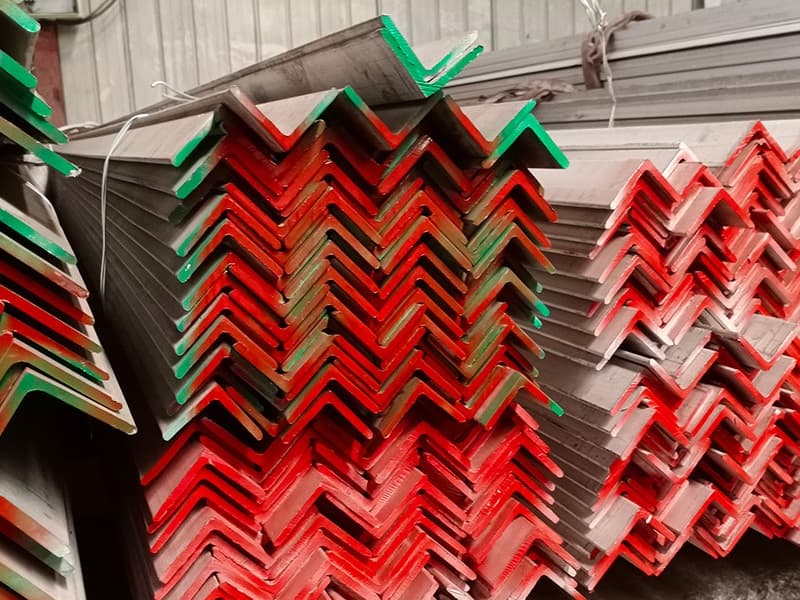
Standard-grade angle steel. For common grades like ASTM A36, EN S235JR, or JIS SS400, the typical lead time is 2 to 5 weeks[reference:5]. This assumes the mill has raw materials in stock and is running at normal capacity.
Custom-sized angle steel. If you need a non-standard size — say, a 110x110x9mm angle instead of a standard 100x100x8mm — expect an additional 2 to 4 weeks[reference:6]. A standard 100x100x8mm order might take 3 weeks. A custom 110x110x9mm order could take 5 to 6 weeks.
Stock items. If the supplier has your size in stock, delivery can be much faster. Some suppliers can ship stock items within 7 days of receiving a deposit[reference:7]. Others quote 15 to 30 days for stock sizes[reference:8].
Mill-direct orders. Orders placed directly with a mill typically involve longer lead times, ranging from 4 to 12 weeks, depending on the complexity of the order, current mill schedules, and raw material availability[reference:9].
The total timeline from purchase order to having steel in your yard can be 75 to 90 days when you include freight, customs, and handling[reference:10]. That is a long time to wait for a material that your entire project depends on.
What factors cause lead time delays?
Lead time is not a fixed number. It fluctuates. And it fluctuates for many reasons.
| Delay Factor | How It Affects Lead Time |
|---|---|
| Raw material shortages | Spikes in iron ore or scrap prices force mills to cut production or delay orders[reference:11] |
| Production bottlenecks | Mill workload, equipment issues, or labor shortages slow down rolling and processing |
| Logistical issues | Shipping delays, port congestion, or rerouted sailings add days or weeks[reference:12] |
| Custom specifications | Non-standard sizes require additional setup and processing time[reference:13] |
| Supplier financial problems | Mills unable to purchase raw materials halt production entirely[reference:14] |
| Customs clearance | Documentation errors or inspections hold shipments at port[reference:15] |
| Communication gaps | Missing material specifications are one of the leading causes of procurement delays[reference:16] |
What is the lesson?
Do not assume your steel will arrive on time just because the supplier gave you a date. Lead times are variable. They depend on factors you cannot control. The smart move is to plan for the worst-case timeline and build buffer into your schedule.
How Do Supply Chain Disruptions and Geopolitical Shocks Extend Marine Angle Steel Lead Times?
Have you ever watched a steel shipment get stuck in a port for weeks because of a conflict you did not even know was happening?
Supply chain disruptions and geopolitical shocks — from mill bankruptcies and tariff wars to regional conflicts and quota cuts — are extending marine angle steel lead times by weeks or even months. The Royal Navy’s Fleet Solid Support project faces steel supply uncertainty because Liberty Steel Dalzell ran out of funds to purchase raw materials[reference:17]. U.S. tariffs and shifting supply chains are also slowing shipbuilding schedules[reference:18].
What is happening with mill bankruptcies and production halts?
Let me start with a real example. The Royal Navy’s next-generation Fleet Solid Support project is facing serious difficulties due to steel supply disruptions[reference:19]. Liberty Steel Dalzell, which had been selected to supply marine steel plates for the project, has run out of funds for raw material procurement[reference:20]. The mill relies on purchasing steel billets from British Steel. But it cannot pay for them[reference:21]. Production has stalled[reference:22].
The plant’s small-scale trial production in November 2025 yielded only about 1,000 tons of steel plates — equivalent to "roughly three days’ output". Employees are currently receiving only 80% of their wages. The lead ship of this project was originally expected to be delivered in 2031. But if steel plate supply delays persist, the UK shipbuilding industry fears subsequent construction processes could face widespread disruption[reference:26].
This is not an isolated case. UK suppliers are unable to meet demand due to minimum batch quantities far exceeding actual needs, delivery timelines are uncertain or unavailable, and this is delaying critical projects — including those tied to government procurement such as the Royal Navy[reference:27]. In one case, a UK supplier was told it would have to take a minimum production run of 120 tonnes when they required just 30 tonnes[reference:28].
How do tariffs and trade policies affect lead times?
Tariffs are not just about price. They are about time. When tariffs change, supply chains shift. And shifting supply chains take time.
The reimposition of 25% tariffs on imported steel in early 2025 brought renewed attention to the shifting balance between enhancing domestic steel production and raising costs for shipyards. Shipbuilders may face difficulties in sourcing sufficient quantities of steel domestically[reference:31]. Shifting supply chains could potentially slow shipbuilding and maintenance schedules, which are already substantially delayed[reference:32].
The U.S. government might also prohibit the use of Chinese steel or equipment on U.S. vessels[reference:33]. This creates a dilemma for shipbuilders who rely on Chinese steel. Major South Korean shipbuilders use about 20% of Chinese thick plates, while smaller shipyards use around 50%[reference:34]. If they are forced to reduce their Chinese steel usage, they will need to find new suppliers. That takes time. And time means longer lead times.
How do regional conflicts disrupt steel supply chains?
The Gulf conflict has sent shockwaves through global supply chains. Even without a formal closure, shipping companies are rerouting or delaying sailings[reference:35]. Delays in structural steel or key components can disrupt construction sequencing[reference:36]. Project teams are building buffer time into schedules[reference:37].
Shipping rates on affected routes have risen, driven by insurance surcharges and security-related premiums[reference:38]. Industry estimates suggest shipping rates could rise further[reference:39]. Every day a ship is rerouted adds to the lead time. Every dollar of insurance premium adds to the cost.
What is the lesson?
Supply chains are fragile. A mill bankruptcy in the UK, a tariff change in the U.S., or a conflict in the Middle East can all delay your steel. You cannot predict these events. But you can prepare for them. The shipyards that build resilience into their supply chains will weather these shocks. The ones that do not will watch their schedules slip.
Why Do Extended Steel Lead Times Create Cascading Delays Across Shipyard Operations?
Have you ever seen a three-week steel delay turn into a six-month project slip — and wondered how that happened?
Extended steel lead times create cascading delays across shipyard operations because steel is the foundational material for nearly every component of a modern ship. When steel deliveries are late, subsequent construction processes face widespread disruption[reference:41]. A single key component delay can halt all downstream tasks[reference:42]. The Constellation-class frigate will be three years late[reference:43], and naval ship deliveries are approximately one to three years behind schedule[reference:44].
What is the ripple effect of a steel delay?
Let me explain how a steel delay ripples through a shipyard. Steel is the backbone of shipbuilding[reference:45]. It is used in the hull, the superstructure, and internal support systems[reference:46]. When steel does not arrive on time, nothing else can move forward.
Cutting and assembly stops. The first step in shipbuilding is cutting steel plates into the parts that will form the hull and deck sections of the ship[reference:47]. If the steel is not there, the cutting stops. The assembly stops. The workers stand idle.
Downstream tasks halt. Pipe spools are installed deep within hull blocks soon after steel erection[reference:48]. Any delay in steel procurement can halt all downstream tasks[reference:49]. Welding, outfitting, and painting all depend on steel being in place.
Schedule compression fails. When a month is removed from the start of a schedule, the time available to engineering people is drastically reduced[reference:50]. Drawings are issued late or with incomplete information. This creates more delays down the line.
The numbers tell the story. Naval ship deliveries are approximately one to three years late[reference:51]. The Constellation-class frigate will be three years late and will take nearly 10 years to deliver the lead ship[reference:52]. A steel shortage in one project slowed down all shipyards[reference:53].
What are the real-world examples?
Let me give you some concrete examples.
Royal Navy FSS project. The lead ship, RFA Resurgent, is expected to be delivered in 2031[reference:54]. But if steel plate supply delays persist, subsequent construction processes could face widespread disruption[reference:55]. And this marks the first time a British naval vessel will be built in Spain because the UK shipyard is undergoing upgrades[reference:56].
Indian shipbuilding. India is the world’s second largest producer of crude steel, but it is unable to supply shipbuilding grade steel. Local yards are forced to rely on imports. The constraints faced by local shipbuilders in sourcing steel domestically are directly impacting cost competitiveness, delivery commitments, and export performance. This will also hurt the government’s plan to build 437 vessels in India.
U.S. shipbuilding. U.S. shipyards face a well-documented shortage of skilled labor[reference:61] and a lack of a domestic supply chain[reference:62]. U.S.-built ships extensively rely on imported materials[reference:63]. With steel mills declining, suppliers remain fragile[reference:64]. Without urgent investment in domestic steel production, the U.S. will face limited options[reference:65].
How do these delays affect your bottom line?
| Impact of Steel Delay | Consequence |
|---|---|
| Idle labor | Workers paid to stand around while waiting for steel |
| Extended project timeline | Later delivery to the customer |
| Liquidated damages | Penalties for late delivery |
| Lost productivity | Rework and catch-up costs |
| Reputation damage | Future business lost |
What is the lesson?
A steel delay is not just a steel delay. It is a shipyard delay. It is a project delay. It is a customer delay. The cost of a late steel shipment is not just the cost of the steel. It is the cost of idle labor, extended schedules, and damaged relationships. The shipyards that understand this — and plan accordingly — will protect their schedules and their profits.
How Can Shipbuilders Shorten Lead Times and Protect Their Build Schedules?
Are you still ordering steel the same way you did five years ago — and wondering why your schedules keep slipping?
Shipbuilders can shorten lead times and protect their schedules by using direct buying mechanisms, ordering standard sizes instead of custom, building strategic stockpiles, segmenting suppliers strategically, and implementing lean procurement processes[reference:66][reference:67][reference:68]. Design optimization can reduce steel procurement costs by at least 5% and total fabrication costs by 12-28%[reference:69].
What procurement strategies actually work?
Let me share what I have learned from working with successful shipbuilders.
Use direct buying mechanisms. Direct buying can reduce material lead time[reference:70]. When you buy directly from the mill instead of through intermediaries, you eliminate several steps in the procurement chain. Fewer steps mean less time.
Order standard sizes. Custom-sized angle steel takes 2 to 4 weeks longer than standard-sized orders[reference:71]. If your design can accommodate standard sizes, you will get your steel faster. Work with your engineers to see where standard sizes can be used.
Build strategic stockpiles. Construction companies are pre-ordering angles and increasing stockpile levels[reference:72]. This protects them from future price increases and supply disruptions. While it ties up capital, it can save months of delay if supply chains are disrupted.
Segment your suppliers. Procurement must segment suppliers into strategic partners, capacity providers, and innovation collaborators[reference:73]. Then manage each category with distinct governance and engagement models. Strategic partners get long-term contracts. Capacity providers get volume orders. Innovation collaborators get early involvement in design.
Implement lean procurement. Lack of proper communication and visibility between processes can increase the lead time for purchase order creation[reference:74]. Lean procurement reduces the time required for building a vessel[reference:75]. Streamline your processes. Improve communication. Reduce waste.
How can design optimization help?
This is where the real savings are. Design optimization is not just about engineering. It is about schedule protection.
Reduce steel consumption. Design optimization can help lower material cost savings on steel procurement by at least 5% while also lowering construction savings in total steel fabrication and assembly costs by 12-28%. Less steel means fewer orders. Fewer orders mean less procurement time. Design optimization to minimize material usage in steel structures
Standardize designs. Standardize and buy into series production. Off-the-shelf designs reduce engineering costs and material waste. They also allow you to order standard sizes, which have shorter lead times. Engineering 101: Design Standardization
Optimize your yard layout. An optimized yard layout smooths material movements and workflows, making the most out of available space, capital, and labor. When steel arrives, you can process it faster. Hybrid Genetic Algorithm-Simulation Optimization Method for Proactively Planning Layout of Material Yard Laydown
What should you look for in a supplier?
Based on my experience, here are the qualities that matter most for lead time management.
| Supplier Quality | Why It Matters for Lead Time |
|---|---|
| Stock availability | Stock items ship within days, not weeks[reference:77] |
| Production capacity | Mills running at full capacity can meet deadlines |
| Financial stability | Mills that can pay for raw materials keep producing[reference:78] |
| Communication speed | Fast responses to spec questions prevent delays[reference:79] |
| Logistics expertise | Suppliers who understand shipping can avoid port delays |
| Certification readiness | MTCs ready at shipment avoid customs holds[reference:80] |
I learned this lesson working with Gulf Metal Solutions in Saudi Arabia. Before they found us, they dealt with delayed responses and quality inconsistency. After they switched to a supplier who offered dedicated export sales reps, third-party inspection, and flexible MOQ, their experience changed completely.
The feedback they gave us: "The steel company was the first supplier to respond within two hours, and maintained this rapid response speed throughout the entire delivery process. The product quality is stable, and the packaging is the best among all the packaging for ship plates we have received so far."
That is what a good supplier relationship looks like. It is not just about price. It is about speed, reliability, and communication.
What is the bottom line?
You cannot control global supply chains, tariffs, or conflicts. But you can control how you buy. Order standard sizes. Build stockpiles. Segment your suppliers. Streamline your procurement. And work with partners who communicate clearly and respond quickly.
The shipbuilders who take these steps will protect their schedules. The ones who do not will watch their projects slip — day by day, week by week, month by month.
Conclusion
Marine angle steel lead times of 2-6 weeks can cascade into months of shipyard delays, making strategic procurement, supplier segmentation, and design optimization essential for schedule protection.