
Your yard drawings say one thing. Your purchase order says another. If you cut or weld that marine angle steel before the conflict is resolved, you can lose weeks and fail classification.
When marine angle steel drawings conflict with purchase specifications, stop fabrication immediately, issue a written technical query to the supplier, freeze the affected batch, and get written approval from the designer and the classification society surveyor before any material is cut, welded, or installed.
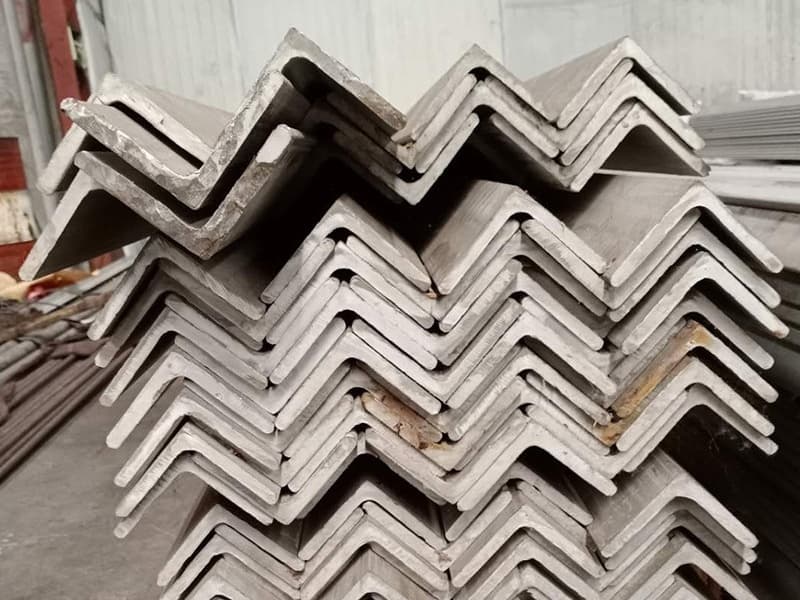
I have sold marine angle steel to yards in Vietnam, Qatar, and Saudi Arabia for years, and I can tell you that a drawing conflict found early costs a phone call. The same conflict found after fabrication costs a batch, a schedule, and sometimes a surveyor’s signature. Last quarter, a buyer in the Philippines called me about a 150x90x9 unequal angle order. His structural drawing listed the section one way and his purchase specification listed it another way. He caught it before cutting, we resolved it in two days, and he lost nothing. That is the outcome this article will help you repeat. Let me walk you through why these conflicts happen, how to resolve them before shipment, and what to do when conflicting material has already landed at your gate.
Why Do Marine Angle Steel Drawings and Purchase Specifications Conflict in the First Place?
You assumed the drawing and the purchase order matched. They did not. Now the mill has rolled 40 tonnes of angle steel against the wrong version of your requirement.
Most conflicts come from revision drift: the drawing was updated after the purchase specification was written, or the spec used a different standard (JIS G3192 vs EN 10056) than the drawing. The two documents were never cross-checked against each other at the moment of ordering.
The Revision Drift Problem
Ships are designed and revised in parallel. A hull structural drawing gets a revision triangle on frame 85. The procurement team’s material list, cut from the older revision, still calls for the original section. The purchase specification goes out, the supplier quotes against it, and the mill rolls material that no longer matches the yard’s latest drawing. I see this constantly. It is rarely anyone’s fault in a single moment. It is a process gap that accumulates over months.
The fix is unglamorous but simple: every purchase order should state the drawing revision number on its face. Not in an attachment, not in an email chain. On the PO itself. When we receive an inquiry at Yichen Steel, the first thing I ask for is the drawing revision and the standard it references. If a buyer cannot tell me the revision, I know there is conflict risk down the line, and I say so before quoting.
The Standards Mismatch Problem
The second big source is mixed standards. Your drawing might dimension an angle to EN 10056, with root radius r1 and toe radius r2 called out separately. Your purchase specification might reference JIS G3192, which tolerates leg length differently. Both describe the “same” 150x90x9 angle, but the tolerances are not identical, and a surveyor will check against the standard named on the class-approved drawing, not the one in your purchase order.
Here is a table of the conflict types I see most often, based on real inquiries that crossed my desk:
| Conflict type | Typical symptom | Who usually catches it | Severity |
|---|---|---|---|
| Drawing revision drift | PO references superseded section size | Yard QC at receiving | High |
| Standard mismatch (JIS vs EN) | Tolerance disputes on leg length or thickness | Surveyor at class inspection | Medium |
| Grade confusion (AH36 vs A) | MTC grade does not match drawing grade note | Surveyor, immediately | Very high |
| Unit error (mm vs inch) | Legs off by a factor, caught at first measurement | Anyone, at first gauge check | Low (rare) |
| Length vs piece count | PO says 40 pieces of 9 m, drawing needs 12 m lengths | Production planning | Medium |
| Missing unequal-leg orientation | Short leg and long leg swapped on fit-up | Fitter at the assembly jig | High |
Why the Mill Is the Wrong Place to Assign Blame
Buyers sometimes assume the supplier rolled the wrong thing. In my experience, the mill almost always rolled exactly what the purchase specification said. The conflict was born upstream, between the drawing and the spec. That matters because it shapes your next move: the resolution is a design-office conversation, not a claim against the supplier. If you spend your first two days arguing about fault, you lose the schedule anyway. Spend them resolving the technical question instead.
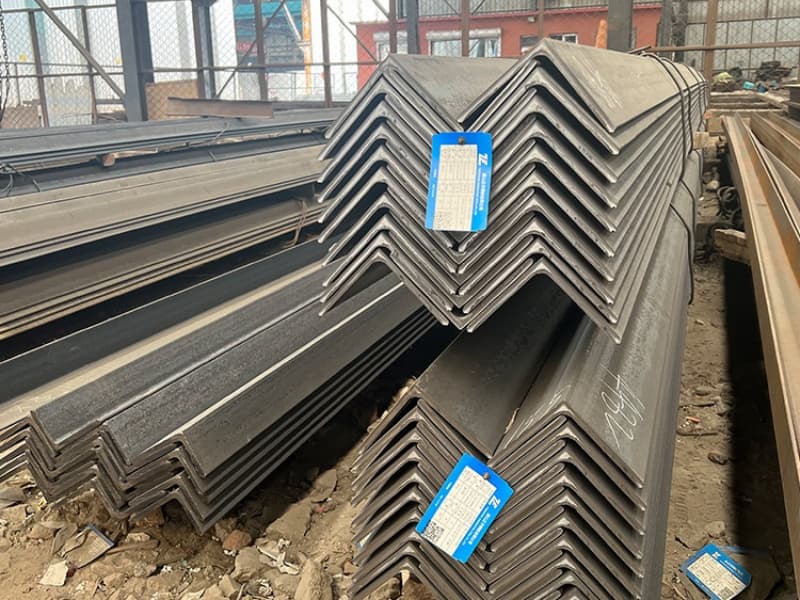
How Do You Resolve a Conflict Before the Angle Steel Leaves the Mill?
The material is rolled, stacked, and waiting. Every day you wait, the mill’s delivery window shrinks and your yard’s steel forward plan slips with it.
Freeze the order in writing, issue a technical query (some yards call it an RFI or TQ) that states both conflicting values side by side, and require a written answer from the design office plus surveyor confirmation before release. Never accept a verbal answer on a marine grade or dimension.
Freeze First, Argue Never
The moment you spot the conflict, send one email that does three things: states the conflict plainly, puts the order on hold, and asks for a specific decision. Not a vague “please clarify.” A specific decision: “Drawing rev.3 calls for L150x90x9 in grade AH36. PO-2231 specifies L150x90x12 in grade A. Please confirm which governs production.”
I tell my clients to copy everyone on that email: their own design office, our sales desk, and our production planner. When all three parties see the same sentence at the same time, the answer comes back in hours instead of weeks. At our end, we physically tag the batch “ON HOLD — TQ PENDING” in the yard. The tags cost us a few minutes. They have saved clients from shipping days of wrongly configured angle steel more than once.
Write the Technical Query So It Can Be Answered
A good TQ has a fixed shape. I coach buyers on it because a sloppy query generates a sloppy answer. Include:
- The PO number and drawing number, with revision.
- The exact conflict, quoted from both documents, character for character.
- The affected quantity, heats, and (if known) certificate numbers.
- The proposed resolution, if you have one. Proposing an answer speeds everything up.
- The deadline: when the mill must release material to keep your shipment window.
That last point is the one buyers forget. A TQ without a deadline floats in an inbox forever. A TQ that says “we need written confirmation by Friday 12:00 to hold the vessel booking” gets answered by Thursday.
Bring in the Classification Society Early
If the conflict touches a grade, a material class, or a hull location requirement, loop in the surveyor before you release anything. Classification rules assign minimum grades by structural member class and thickness. A piece that reads as “just a bracket” on the drawing may sit in a Class II location under class rules, which changes the minimum grade entirely. The surveyor does not need a meeting. He needs the TQ, the drawing extract, and the draft disposition. Send those, and his written confirmation becomes part of your record.
Here is the decision table we recommend to buyers when a conflict is confirmed:
| Conflict confirmed on | Resolve with | Written approval needed from | Typical time |
|---|---|---|---|
| Section size only | Design office TQ | Yard designer | 1–3 days |
| Grade or material class | TQ + class rules check | Designer + surveyor | 2–5 days |
| Tolerance standard | TQ naming the governing standard | Designer | 1–2 days |
| Quantity or lengths | Production planning TQ | Planner + designer | 1–2 days |
| Anything already welded | NCR + engineering disposition | Designer + surveyor + owner’s rep | 5–20 days |
Notice the pattern. Every resolution path ends in writing. I once watched a Saudi client resolve a grade conflict with Gulf Metal Solutions’ procurement team entirely over a documented email thread with SGS copying the surveyor, and the surveyor accepted the disposition because the record was complete. Paper is not bureaucracy here. Paper is the product.
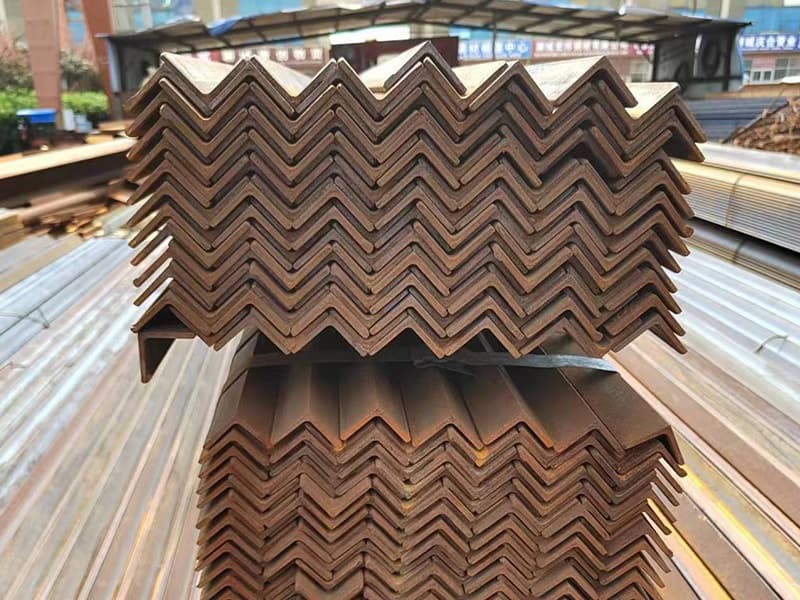
What Should You Do When Conflicting Marine Angle Steel Has Already Arrived?
The container is at your yard. The angle steel inside does not match the drawing. Your instinct is to start cutting the pieces that do fit and deal with the rest later.
Do not cut anything. Quarantine the batch, measure and document the actual condition against the drawing, raise a non-conformance report, and wait for an engineering disposition — use as is, rework, or reject — signed by the designer and accepted by the surveyor.
Quarantine and Document
Segregate the batch physically. Move it away from the fabrication line, tag it, and log it. Then measure what you actually received: leg lengths, thickness at three points, straightness, twist, grade stamp, heat numbers. Compare each measurement to the drawing, not to the purchase order — the drawing is the governing document for the ship. Photograph the mill stamps and the MTC together so the heat traceability chain stays intact.
The documentation matters more than the complaint. A disposition request backed by a clean measurement sheet gets approved fast. A phone call saying “it looks wrong” gets you another phone call three days later.
Raise the NCR with a Proposed Disposition
The non-conformance report is where the conflict gets a formal ending. There are only three dispositions that exist, and you should propose one rather than leaving the choice to the committee:
- Use as is, when the deviation is inside what the design can accept — for example, a section size that exceeds the drawing but does not affect fit-up or strength.
- Rework, when the material can be machined, ground, or re-cut into the drawing condition without harming the section properties.
- Reject, when the material cannot serve the drawing’s function and must go back to the supplier.
In my experience, most dimension conflicts end in “use as is” or “rework.” Grade conflicts almost always end in rejection, because a substitution of marine grade material touches class rules that no fabricator can rework their way around.
Then Fix the Process, Not Just the Batch
After the disposition, spend one hour asking how the conflict got through. Was the revision check skipped? Was the PO issued from an old material list? Was the receiving inspection checklist missing the drawing comparison step? The cheapest fix is a one-line addition to your receiving checklist: “compare heat stamp and section size to drawing rev. before release to fabrication.” Buyers who add that line rarely send me a second conflict report. The ones who treat each conflict as a one-off pay for the same lesson twice.
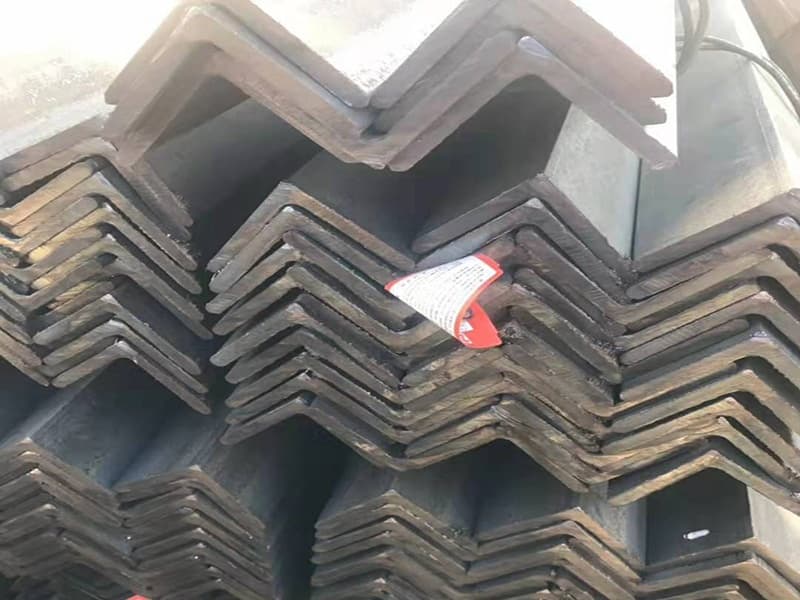
Here is the comparison table summarizing the whole playbook, from detection to closure:
| Situation | Immediate action | Formal document | Approver | Outcome path |
|---|---|---|---|---|
| Conflict found before order release | Correct the PO before quoting | Amended PO | Procurement | No conflict ever ships |
| Conflict found during production at the mill | Hold batch + issue TQ | Technical query | Designer (+ surveyor if grade) | Re-roll, rework, or amend drawing |
| Conflict found at receiving, uncut | Quarantine + measure | Inspection report + NCR | Designer + surveyor | Use as is / rework / reject |
| Conflict found after fabrication | Stop work in the zone | NCR + engineering disposition | Designer + surveyor + owner’s rep | Rework or reject, schedule impact |
| Grade mismatch (any stage) | Full stop, no exceptions | NCR + class rules check | Surveyor mandatory | Reject and re-order almost always |
The single thread running through every row is the same: detect early, document always, and let the drawing govern. Buyers who follow that sequence keep their class records clean and their fabrication lines moving. Buyers who improvise pay in surveyor visits and slipped keel-laying dates.
Conclusion
Stop work, put the conflict in writing, and route it through the designer and the surveyor before any angle steel is cut. Early detection turns a crisis into a formality.