
A missing leg dimension in a marine angle steel purchase order looks like a small typo on a Monday morning. Six weeks later it is idle welding crews, a rejected shipment at the quay, and a schedule hole you cannot fill.
A complete marine angle steel purchase order states five things on one line: leg dimensions A x B, thickness t, delivery length with tolerance, grade with its classification society, and the dimensional standard such as JIS G3192 or EN 10056-1. Miss any one of them, and the mill rolls a guess.
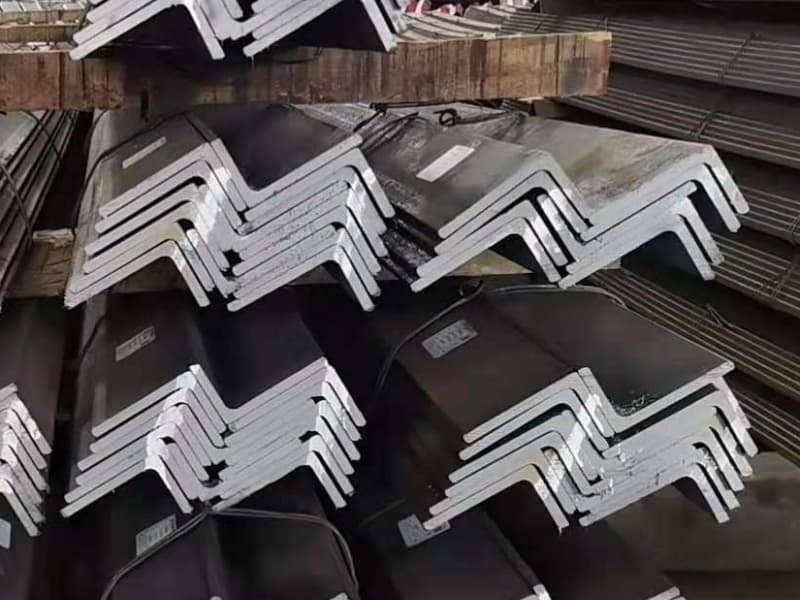
I have sold marine angle steel out of Shandong for years, and I can tell you the orders that go wrong are almost never the ones with difficult steel. They are the ones with half-written specifications. A buyer sends “AH36 angle, 12mm, 12 meters” and feels the job is done. But 12 what? Which leg? Which tolerance class? Which size table? The mill fills the gaps with its most common interpretation, and the most common interpretation is only sometimes yours. So in this article I want to walk through every dimension that belongs on the order line, show what the tolerance standards actually allow, and give you the checklist my own team runs before we confirm any marine angle steel order.
Which Dimensions Must Every Marine Angle Steel Purchase Order State?
An angle section is four numbers deep, and buyers usually write two of them. The missing two are exactly the ones that decide whether the steel fits your jigs.
The section itself is A x B x t: two leg lengths and the thickness between them. Add the delivery length with its tolerance, and you have everything a rolling mill needs to quote and roll the right marine angle steel section.
The Four Numbers That Define the Section
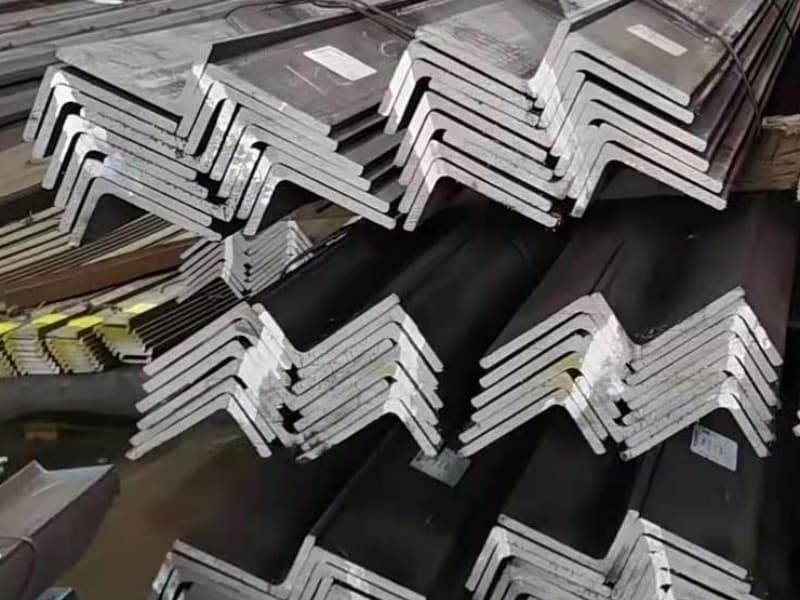
Every hot-rolled angle, equal-leg or unequal-leg, is fully described by A, B, t and length. A is the long leg, B is the short leg, t is the leg thickness. For equal angles A equals B, so you write 100 x 100 x 10. For unequal angles you must write both values and write them in the right order. Our standard marine range runs from 50 x 50 x 5 mm up to 250 x 250 x 20 mm for equal legs, and the unequal series in the shipbuilding world is dominated by sizes like 100 x 75, 125 x 75 and 150 x 90.
Here is the mistake I see most often: a buyer writes “L150x90x12” and means the short leg is 12 mm. The mill reads the section table and assumes t applies to the section thickness as rolled, which for that profile is a single thickness anyway, so this case works. But write “L150x90x10” when the rolling program carries both a 10 mm and a 12 mm variant of the same A x B, and now you have a coin flip. A yard in Vietnam once ordered on exactly this kind of shorthand; the mill shipped a different thickness interpretation than the drawing required, the steel could not be used, and the reorder cost the project two months. The fix costs nothing. Write the full designation the way your drawing shows it, and then repeat the thickness in words: “thickness 12 mm on both legs.”
Length: Exact, Random, or Cut-to-Size
Length causes more silent damage than thickness, because a wrong length sometimes still “fits” and nobody notices until the nesting plan collapses. State which of the three you are buying. Exact length means every bar is, say, 9,000 mm plus or minus a tolerance you set. Random mill length means the mill ships whatever its rolling program produced, typically in the 6 to 12 meter window, and you accept the mix. Cut-to-size means you want pieces sheared or sawn to your list, which adds a processing cost but can slash your offcut rate.
The tolerance matters as much as the number. If your fabrication plan needs 5,850 mm pieces with a maximum plus of 10 mm, write that. A generic “6 meters” invites bars at 5,920 mm, and suddenly your cutting list is short. I have watched a receiving crew measure a container load of angles one by one with a tape, at the quay, in the rain, because the purchase order only said “6 m” and the actual bars sat near the bottom of the random-length band. Nobody was at fault. The order was just silent.
The Radius Nobody Writes Down
The root radius (r1) and toe radius (r2) are part of every section table, and almost no purchase order mentions them. Usually that is fine, because the standard fixes them. But if your yard welds the angle into a jig designed around a specific root radius, or if your classification society surveyor checks section properties, the radius becomes real. When you reference the standard by name and edition, as the next section argues you should, the radius is implied and protected. When you do not, it is one more number the mill is free to interpret.
One Table That Ends the Ambiguity
JIS G3192-2008 is the size and tolerance standard most shipyard angle programs in Asia are built on. These are the allowances it gives, and they are generous enough that a careless order can drift a long way and still be “in standard”:
| Item | Nominal size | Tolerance |
|---|---|---|
| Leg length (A or B) | under 50 mm | plus/minus 1.5 mm |
| Leg length (A or B) | 50 to under 100 mm | plus/minus 2.0 mm |
| Leg length (A or B) | 100 to under 200 mm | plus/minus 3.0 mm |
| Leg length (A or B) | 200 mm and over | plus/minus 4.0 mm |
| Leg thickness (t) | under 6.3 mm | plus/minus 0.6 mm |
| Leg thickness (t) | 6.3 to under 10 mm | plus/minus 0.7 mm |
| Leg thickness (t) | 10 to under 16 mm | plus/minus 0.8 mm |
| Leg thickness (t) | 16 mm and over | plus/minus 1.0 mm |
| Straightness | per metre | 3 mm bow max |
| Right angle at root | apex deviation | 50 minutes or less |
Look at the leg-length row. A 150 mm leg can land at 147 mm and every piece is perfectly legal. If your welding jig was set with a 150 mm sample, you now know why the fit-up crew was grumbling. The point is not that the mill did something wrong. The point is that “standard tolerance” is a range, and only you know how much of that range your fabrication can absorb. Say it in the order.
What Happens When a Purchase Order Omits Tolerances and Standards?
When the order is silent on tolerance and standard, the steel is still “correct” on paper and still wrong on your cutting line, and that gap is the most expensive kind of quality problem because nobody can be blamed.
An order without a dimensional standard lets the mill pick between JIS, EN, GB and ASTM tolerance bands that differ by up to nearly a millimetre on thickness. Two fully compliant shipments of the same nominal section can therefore be non-interchangeable on your line.
Why Two “Compliant” Shipments Are Not Interchangeable
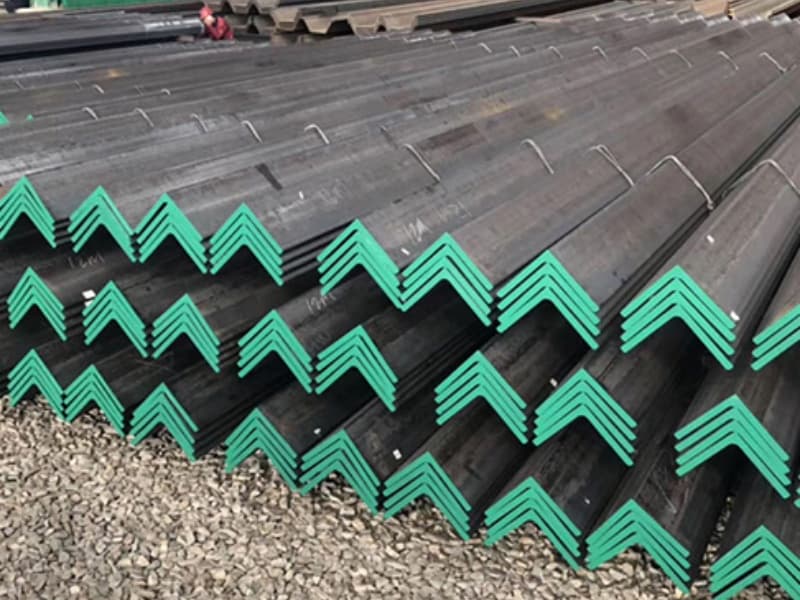
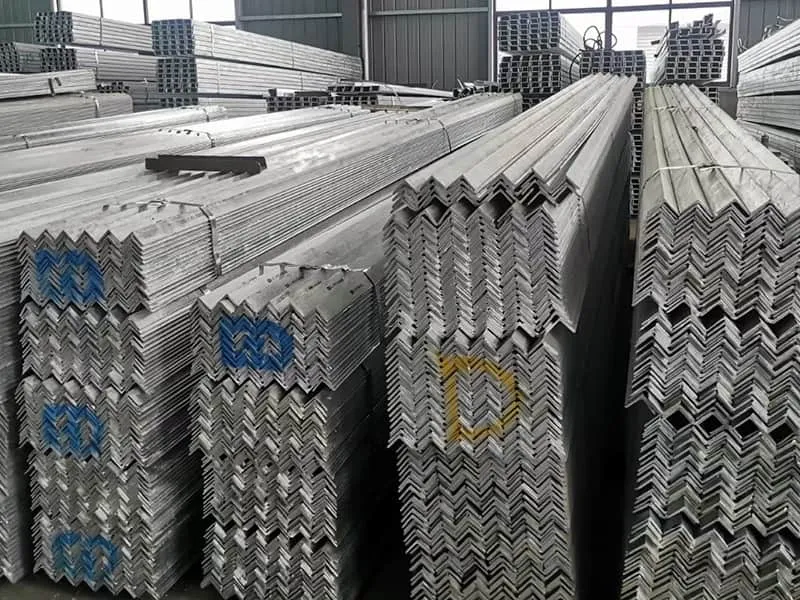
The standards do not agree with each other, and they do not try to. A nominal 10 mm leg thickness sits inside different tolerance windows depending on which book you cite. The table below puts the main dimensional standards side by side for a typical 6 m bar, and the spread is not cosmetic:
| Standard | Leg thickness tolerance (up to 10 mm) | Length tolerance (6 m bar) | MTC reporting habit |
|---|---|---|---|
| EN 10056-1 | plus/minus 0.4 mm | plus/minus 10 mm | mean thickness per batch |
| ASTM A6/A6M | plus/minus 0.76 mm | plus/minus 7.6 mm | sampled piece measurements |
| GB/T 706-2016 | plus/minus 0.3 mm (t up to 6 mm) | plus/minus 10 mm | average plus traceability |
| JIS G3192-2008 | plus/minus 0.7 mm (6.3 to 10 mm) | covered by shape tolerances | per heat, per standard table |
Read that first column again. The same “10 mm” angle can arrive at 9.6 mm under one standard and 9.24 mm under another, and both shipments are fully certified. Now multiply the difference across a bulkhead frame with twelve welded connections. Leg misalignment of even 0.8 mm accumulates at every joint, bolt holes drift, and the erection crew burns days on rework that no purchase order budgeted for. This is why I keep saying: name the standard and the edition year in the order. “Per EN 10056-1” is a sentence of six words that buys you a defined envelope. Omitting it buys you the mill’s default, which is whatever the mill rolls most often.
I will add a practical note from our side. When a customer names the standard, our quotation states the tolerance line back to them explicitly, and our mill test certificates report the actual measured values. When a customer does not name it, we still ship to a standard, but we pick it ourselves. Most of the time we guess right, because shipbuilding defaults are well known. But “most of the time” is not a procurement strategy, and I would rather be pinned to your standard than trusted with mine.
The Twelve-Millimetre Lesson
I mentioned the Vietnamese yard earlier, and it deserves its own paragraph because it is the cleanest illustration of how a missing dimension compounds. The purchase order said “12mm AH36 angle”. The drawing called for an unequal section where the thickness of the shorter leg was the critical value in the design. The mill read “12mm” against its standard section table and shipped a profile that satisfied the grade, the certificate, and the nominal description, and still could not be used. Every document was correct. The steel was scrap for that project. Reorder, freight, idle labor, penalties. All of it traces back to one line that a two-minute check would have caught: state A, state B, state t, and tie all three to the drawing revision number.
If your specification lives only in an email thread or a phone call, you do not have a specification. You have a story, and stories change between the sales desk and the rolling line.
Heat Numbers Close the Loop
Dimensions do not end at the section profile. Traceability is a dimension of a different kind, and it fails the same way. When the order does not require heat numbers marked on every piece and listed on the mill test certificate, your receiving team cannot verify that the material on the truck matches the certificate in the envelope. Mixed-grade shipments are the nightmare case: AH36 and Grade A look identical once rolled, and the only honest difference is the stamped heat number. Sorting a mixed 200-tonne delivery can take days, and during those days nothing goes to cutting. Require, in writing, that each bundle carries a tag with heat number, grade, size and standard, and that the MTC (EN 10204 3.1 as a baseline, 3.2 when your class surveyor demands it) lists the same heat numbers. That single requirement lets a two-person receiving team clear a container in an hour instead of a day.
How Should You Build the Specification Line Before You Confirm the Order?
The good news is that this entire class of problem disappears with one disciplined habit: a fixed specification block that every marine angle steel order repeats, line by line, before anyone signs.
Write the order as a specification block, not a sentence. One line each for section, standard, grade, length, tolerance, certificate and marking. If any line is empty, the order is not ready to send, and a good supplier will tell you so.
The Order Line, Item by Item
Here is the block my team fills in with customers, and I recommend you steal it outright. Every line maps to a failure mode we have actually seen:
| Line | What to write | Example entry |
|---|---|---|
| Section | A x B x t in mm, both legs | L150 x 90 x 12 |
| Dimensional standard | Name plus edition | JIS G3192-2008 |
| Grade | Society prefix plus grade | ABS AH36 |
| Impact test | Temperature and direction | Charpy V-Notch at -20 C, longitudinal |
| Delivery condition | Rolling route | Normalized or as-rolled, state which |
| Length | Type, value, tolerance | Exact 9,000 mm, plus 10 / minus 0 |
| Certificate | EN 10204 class | 3.1 (3.2 with class survey) |
| Marking | What is stamped or tagged | Heat number, grade, size on every piece |
| Quantity | Pieces and theoretical weight | 180 pieces, about 26.5 tonnes |
Two lines in that table deserve a second look. The impact test line exists because AH36 is only AH36 if the Charpy test ran at the temperature your design assumes; a certificate showing impact values at 0 C does not satisfy an AH36 requirement, and I have seen a buyer discover this after delivery. The delivery-condition line exists because normalized and thermo-mechanically rolled material behave differently in welding, and your welding procedure was qualified for one of them, not “either”.
Drawings Need a Number Line Too
Many buyers order from drawings, and drawings are good, but they are not a substitute for the block above. A drawing tells the fabricator what to build; the purchase order tells the mill what to roll. The bridge between them is a material takeoff: every angle section on the drawing, listed with its full designation, length, grade and quantity, one row per line item. Then the purchase order references the drawing revision and reproduces the takeoff. When the drawing revises, the takeoff revises, and the revision letter appears on the order. Without that link, a drawing change after order placement is how “revised” steel and “original” steel end up in the same bundle.
When we quote against a drawing-driven enquiry, we count the takeoff lines back against the drawing before we price anything. It takes our team under an hour, and on one recent project it caught a section that appeared in the bill of materials but not on any drawing. The customer fixed the takeoff in a day. Imagine that same error found at the quay instead.
A Two-Minute Check That Saves Six Weeks
Before you confirm any marine angle steel purchase order, read your own specification block and answer five questions. Can a stranger roll the right section from my section line alone? Did I name the standard and its edition? Does every dimension carry a tolerance, not just a number? Does the grade line include the classification society and the impact test temperature? And can someone at the receiving gate match every piece to a heat number on the certificate? If all five answers are yes, send it. If any answer is no, the order is not ready, no matter how urgent the schedule feels.
We built this habit with a distributor in Saudi Arabia who came to us after a bad experience with slow, inconsistent suppliers. Their first enquiry reached us half-specified, and instead of quoting a guess, our export desk sent back the empty lines and asked. They filled them in the same day, the shipment went to Dammam clean, and the third-party inspection at the mill passed on the first visit. That buyer told us later that the two-hour response speed was what won us the order. Honestly, I think it was the questions. Fast answers are nice. Right answers keep a hull on schedule.
Conclusion
A marine angle steel purchase order protects your schedule only as far as its dimensions are complete. Specify section, standard, grade, length and marking on every line, and the mill has nothing left to guess.