
Ordering marine angle steel straight from a ship’s drawings feels impossible when the material list is incomplete. A wrong or rushed order stalls hull erection and forces you to buy emergency steel at premium prices. Matching orders to the material list line by line fixes it.
Match marine angle steel orders to a shipbuilding material list by extracting every line item’s section size, grade, length, and quantity, nesting those part lengths against standard stock lengths of 6, 9, or 12 meters, adding kerf and cutting losses of 2 to 5 percent, then confirming each line against the mill’s section schedule before release.
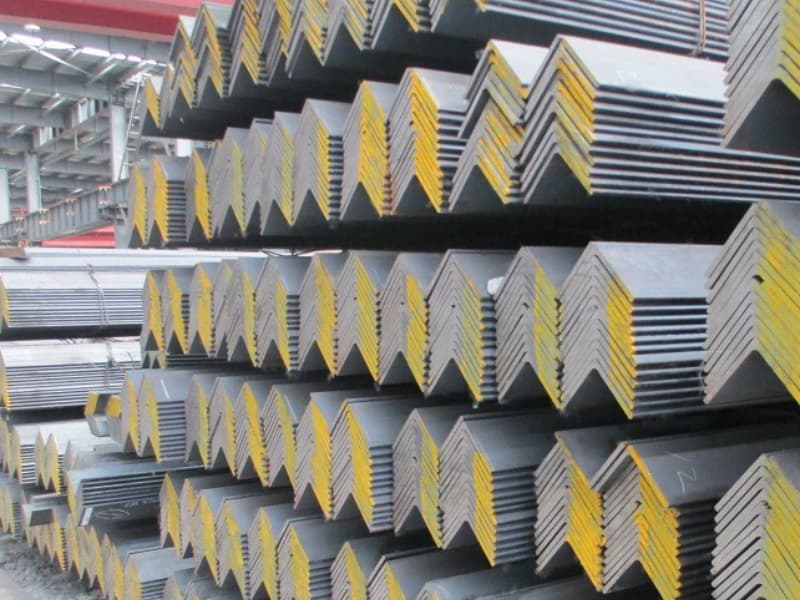
When I walk buyers through this process for the first time, most of them realize the problem was never the steel. It was the order document. The material list already contains nearly everything a supplier needs, but only if you read it the way a mill reads it. Below I break the matching process into the steps we use every day at Yichen Steel, including the checks that have saved our clients the most money on shipments to Vietnam, Saudi Arabia, and Mexico.
What Should a Shipbuilding Material List Contain Before You Order Marine Angle Steel?
A vague material list forces the supplier to guess, and guessed orders come back wrong. If the list lacks one key column, the quotation you receive is useless, and every revision cycle costs you another week of hull erection schedule.
A usable shipbuilding material list for marine angle steel must contain, per line item: the section designation with leg sizes and thickness, the material grade with its classification society notation, the cut length or stock length required, the quantity of pieces, the structural member it belongs to, and the block or ship number it is assigned to.
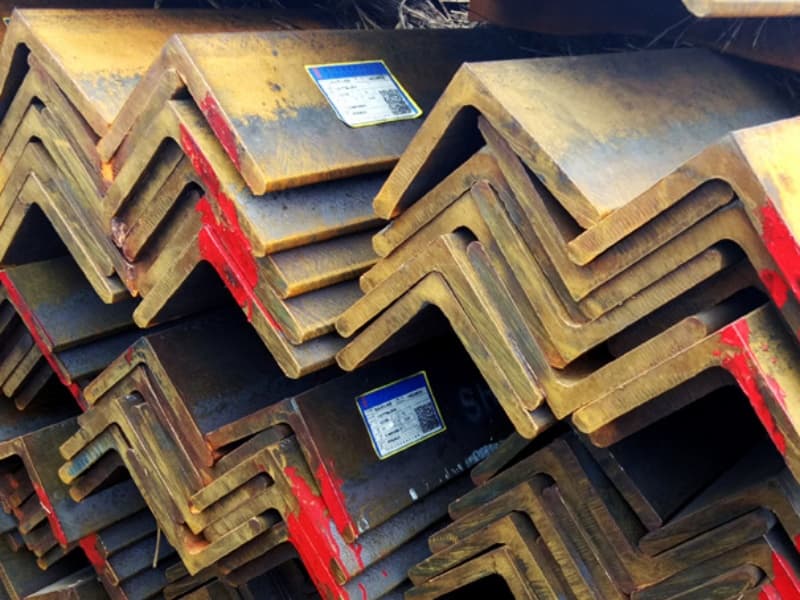
The Seven Columns That Decide Everything
In my experience, the difference between a clean order and a disputed one comes down to whether the material list was built for the design office or for procurement. Design lists describe shapes. Procurement lists describe steel that a mill can actually roll and a warehouse can actually pick. When I check a client’s list before quoting, I look for seven fields on every angle line:
| Field | Example Entry | Why the Supplier Needs It |
|---|---|---|
| Section designation | L100 × 100 × 10 | Fixes legs and thickness; tells us which rolling schedule it belongs to |
| Material grade | AH36 (ABS) | Sets price, inventory location, and which certificate the mill must attach |
| Cut length | 6,250 mm | Determines nesting and whether we cut or ship stock length |
| Piece count | 46 pcs | Drives total tonnage and bundle packing |
| Member reference | Frame 62–78, starboard | Lets the yard match delivered bars to erection sequence |
| Block / ship ID | Hull 1042, Block B-03 | Keeps multi-ship orders separated at packing |
| Surface / treatment | Shot-blasted SA2.5, primer | Triggers pre-treatment line or plain mill finish |
If any of these are missing, we quote assumptions, and assumptions become claims later. I once reviewed a list from a fabricator in Myanmar that had 212 angle lines and not a single grade entry. Every line just said “angle steel.” We could not quote it at all, because grade A and grade AH36 angle can differ in price by 15 to 20 percent, and welding procedures differ too. The buyer spent nine days rebuilding the list before we could even start.
Reading the List the Way the Mill Does
A mill does not roll “pieces.” It rolls sections to a section schedule. So the second habit I teach buyers is to translate each line into rolling language. An entry like “frame bar, L150×90×10, 40 pcs” means nothing to the mill until it becomes “unequal angle 150 × 90 × 10 mm, grade A, 12 m stock, cut to list.” The mill also cares about which leg is the heel, because unequal angles have an orientation when fitted. If the yard flips a stiffener the wrong way, the flange lands on the wrong side of the plate and the fitters grind it back down. I have watched crews at a Dammam fabrication yard burn a full shift redoing stiffener fit-up on one bulkhead for exactly that reason. That observation sounds small, but it is the kind of detail that separates a supplier who ships steel from a supplier who ships steel that fits.
Grade Notation: The Column Buyers Get Wrong Most Often
Grade looks like the easiest column, and it is the one that causes the most disputes. The issue is that a grade is not just a chemistry code. It is chemistry plus delivery condition plus toughness class plus the society that certified it. “AH36” by itself is incomplete. “AH36, ABS, normalized, EN 10204 3.2” is an orderable line. The same section in AH36 under CCS and AH36 under LR comes from different rolling schedules, different certificate sets, and sometimes different mills, and your classification surveyor will care which one arrived.
I ask buyers to write the grade exactly as their approved drawing states it, society first. If the drawing says “equal angle, grade B, LR,” the PO line should not say “A grade, any society.” A yard we support in Romania learned this the hard way when their surveyor refused a bulkhead stiffener set because the MTC carried a society endorsement the approved drawings did not list. The steel was good. The paperwork did not match the approval. The bars stayed in the yard store for two months until a re-inspection cleared them.
The practical fix costs nothing. Before you release the order, open your approved plan approval documents, find the steel section approval sheet, and copy the grade string from it, character for character, into the material list. Do this once per project and every downstream quotation, certificate, and inspection conversation aligns automatically. When I quote against a list that carries full grade strings, I can confirm stock and certificate scope in hours instead of days, because there is nothing to guess and nothing to double-check with the mill.
How Do You Convert Material List Line Items into the Right Marine Angle Steel Order Quantities?
This is where most money leaks. Buyers add a flat 5 percent “just in case” on top of every line, order too much on some sections, not enough on others, and pay for offcuts nobody can use.
Convert each material list line into an order quantity by summing piece lengths per section size, nesting those lengths against 6, 9, or 12 meter stock bars, adding one kerf allowance of 2 to 5 mm per cut, and rounding up to whole bars, so the order quantity is a bar count, not a tonnage guess.
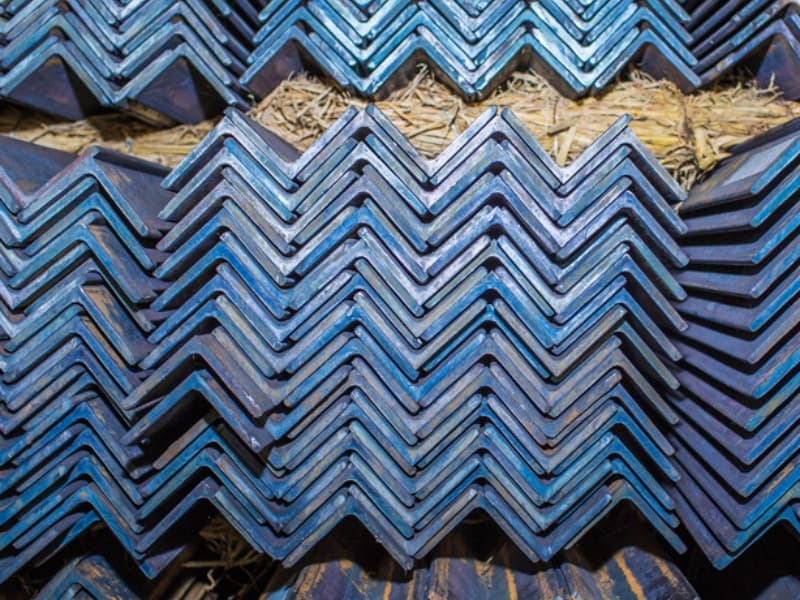
Nest Before You Order
This principle is written into Chinese shipyard practice: national standard GB/T 37535-2019 explicitly advises yards to complete nesting before ordering, and to select steel specifications from the nesting results rather than from rough estimates. The same logic applies whether you are a state yard or a 40-worker fabricator. Take every cut length required for one section size and group them. Sort from longest to shortest. Then fit them into stock bars.
Here is a worked example for a real-looking line group, L100 × 100 × 10, grade A, 12 m stock:
| Part Lengths (from list) | Nesting into 12 m Bars | Waste per Bar |
|---|---|---|
| 3 × 3,800 mm | 3,800 × 3 = 11,400 mm + 2 cuts | ~0.58 m |
| 6,000 + 5,200 mm | 6,000 + 5,200 = 11,200 mm | ~0.78 m |
| 2 × 5,800 mm | 5,800 × 2 = 11,600 mm | ~0.38 m |
| 4,000 × 2 + 3,500 mm | 11,500 mm used | ~0.48 m |
Without nesting, a buyer looking at 12 bars of L100×100×10 would have ordered by tonnage and discovered, mid-fabrication, that two part lengths did not fit the offcuts. With nesting, the bar count is exact and the waste per bar is visible before the money leaves the account.
Kerf Loss, Tolerance, and the Small Additions That Matter
Every cut consumes steel. A saw blade takes 3 to 5 mm per cut, plasma takes about 2 to 3 mm, and laser takes 1 to 2 mm. On a 46-piece line that is 100 to 250 mm of total kerf, which quietly consumes one extra bar across a large order. My rule is simple: add one kerf per cut into the nesting math, and only after that round up to whole bars.
Then add the length tolerance. Our angle bars ship with a length tolerance of ±50 mm, so a bar ordered as 12 m can arrive between 11.95 and 12.05 m. If your nesting leaves only 30 mm of slack, a short bar breaks the nest. I keep at least 100 mm of slack per bar in any plan I review. It sounds conservative, but I have never seen a yard complain about 100 mm of spare bar. I have seen them stop work for a missing one.
From Bars to Tonnes for the Quotation
Suppliers quote in tonnes, yards cut in pieces, so the order must state both. The theoretical weight of equal angle is straightforward to verify: take the section weight per meter from the standard table, multiply by the total nested meters, and you get the order tonnage. For example, L100 × 100 × 10 weighs about 15.1 kg/m. If the nested plan consumes 20 bars at 12 m, that is 240 m, or roughly 3.63 tonnes. When the quotation arrives, compare its tonnage against this arithmetic, not against your feeling. If a supplier’s figure drifts more than 2 or 3 percent from your theoretical weight, ask why before signing. Sometimes it is a different section schedule. Sometimes it is an error that would have cost you the difference.
How Should You Group Angle Lines Before Sending the Order to Your Supplier?
A material list sorted by structural member is readable for the design office but chaos for the warehouse. If you send forty scattered lines across one ship, the supplier quotes them one by one, misses consolidation discounts, and packs bundles that the yard must re-sort at receiving.
Group material list lines by section size, then by grade, then by length requirement, so one angle order collapses into a handful of order groups, each quoting cleanly from a single rolling schedule and packing into bundles the yard can receive in sequence.
From Forty Lines to Six Groups
When I receive a list sorted this way, quoting takes hours. When I receive one sorted by frame number, I spend a day re-sorting it myself, and every manual step I perform is a step where a transcription error can slip in. Here is how the consolidation typically looks for a small vessel project:
| Order Group | Section and Grade | Total Nested Meters | Approx. Tonnage | Stock Length |
|---|---|---|---|---|
| 1 | L75 × 75 × 6, grade A | 310 m | 2.16 t | 12 m |
| 2 | L100 × 100 × 10, grade A | 240 m | 3.63 t | 12 m |
| 3 | L150 × 90 × 10, grade A | 186 m | 4.16 t | 12 m |
| 4 | L150 × 150 × 12, AH36 (CCS) | 144 m | 4.80 t | 12 m |
| 5 | L200 × 100 × 12, AH36 (CCS) | 96 m | 4.02 t | 12 m |
| 6 | L200 × 200 × 20, AH36 (CCS) | 48 m | 3.34 t | 12 m |
Six groups replace eighty-one individual lines. Each group quotes against one weight table, one certificate scope, and one packing pattern. Tonnage also becomes visible immediately: the buyer can see that groups 4 to 6 carry the high-strength steel, which costs more per tonne and deserves tighter scrutiny, while the mild-steel groups can move fast on price.
Why Grouping Speeds Up Production and Shipping Too
Grouping does more than tidy the paperwork. It changes what the supplier can promise. When all grade A angle for a ship consolidates into one tonnage block, we can pull it from stock in a single picking run, blast and prime it in one pass, and load it as complete bundles. When the same tonnage arrives scattered across twenty lines, bundles get split, strapping increases, and part shipments become more likely because one slow line holds up the whole set.
I saw this on a shipment we prepared for a Saudi fabricator last year. Their first list arrived member-sorted and produced eleven part shipments over five weeks. Their second project list arrived grouped by section, and the same tonnage moved in three shipments, each one complete and insurable as a set. Their receiving team told me the second delivery took a third of the unloading time. Nothing about the steel changed, only the shape of the order document. That is the quiet advantage of matching your order to the list the right way: the same steel arrives sooner, cleaner, and with fewer chances for a bundle to be left behind at the port.
Which Mistakes Turn a Clean Material List into a Costly Wrong Order?
Even a perfect list gets sabotaged at the last step, when someone copies it into a purchase order by hand. Transposed digits, dropped grade notations, and mixed-up unequal-angle orientations are the errors we see most in claims and disputes.
The costliest matching mistakes are transcribing section sizes by hand, ordering equal angles where the drawing calls for unequal ones, ignoring length tolerance in nesting, splitting one ship’s order across inconsistent grades, and omitting certificate requirements, so the delivered steel fails documentation review even when the steel itself is sound.
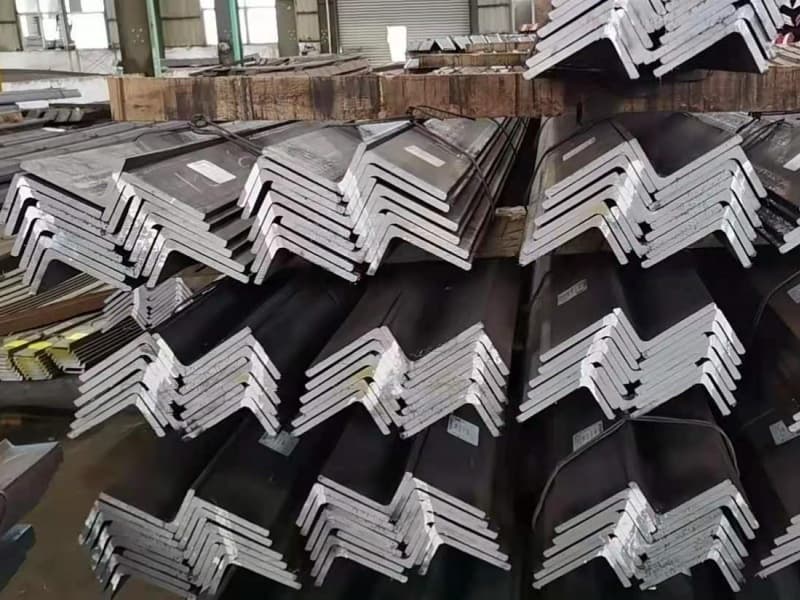
The Five Errors We See Most, Side by Side
I keep a mental shortlist of the failure modes that come up again and again in enquiry emails. It is worth putting them in one place, because every one of them is cheap to prevent and expensive to discover:
| Mistake | Typical Consequence | Prevention That Actually Works |
|---|---|---|
| Hand-copying lines from list to PO | Transposed sizes, e.g. L150×90 ordered as L105×90 | Attach the material list to the PO as the binding document |
| Equal angle substituted for unequal | Fit-up failure at erection, rework and grinding | Quote section designation with leg order, e.g. 150 × 90, not 90 × 150 |
| No tolerance allowance in nesting | Short bars break the cut plan mid-production | Keep ≥100 mm slack per stock bar |
| Grades mixed across one vessel | Classification review rejects the documentation set | Lock grade per ship and state it on every line |
| Certificate scope left unstated | Steel arrives, but MTC lacks the society endorsement the surveyor wants | Name the society and certificate type (EN 10204 3.1/3.2) in the order |
The last row deserves a story. A client in Qatar once received a full angle shipment that was metallurgically fine, but the mill test certificates were issued without the classification society endorsement their surveyor required. The steel sat on the quay for three weeks while documents were reissued. The steel was never the problem. The order line that said nothing about certification was.
One Checklist Before You Release the Order
Before I confirm any large angle order, I run the same five checks in under ten minutes. First, does every PO line trace back to a list line, one to one? Second, do the nested bar counts match the piece counts? Third, is the grade notation identical on the list, the PO, and the proforma invoice? Fourth, does the certificate requirement appear in writing? Fifth, does the packing plan keep blocks and ships separated so the yard can receive in erection sequence? This checklist is not clever, and that is the point. The buyers who skip it are usually the ones who contact me in a hurry two months later. The buyers who run it are the ones whose emails I see only at enquiry time, because nothing goes wrong.
Conclusion
Match orders to the material list line by line, nest before ordering, and put grades, lengths, and certificates in writing. That discipline turns angle steel purchasing from firefighting into routine.