
A wrong piece count stops a fabrication line. You order by tonnage, the cutting list runs short, and the yard waits weeks for a top-up. The arithmetic has an order, and most buyers skip it.
Count the fabricated pieces on the drawings first, then convert those cut lengths into 6, 9 or 12 m stock bars, then round up to whole bars per section size. The number on your purchase order is a bar count, not a drawing piece count, and never a tonnage estimate.

Most buyers jump straight from a drawing to a weight. It feels faster. Then the mill rolls 12 m bars, the yard cuts them into 5.2 m frames, and almost two metres per bar goes into the scrap skip. The weight was right. The piece count was wrong, and the weight never told you.
I have quoted enough marine angle steel orders from Liaocheng to know where this goes wrong. The buyer sends a bill of materials with a clean tonnage on it. Nobody asks how many bars that tonnage becomes. The answer decides whether the yard can cut the job from one delivery or needs a second shipment at spot price.
Which Piece Count Are You Actually Trying to Calculate?
Three different counts live inside one order, and mixing them is the first mistake. A drawing count, a bar count and a delivery count are not the same number. Each one is correct for a different audience.
You need three counts: fabricated pieces on the drawings, stock bars you purchase, and physical pieces delivered. Convert drawing pieces into bars by nesting cut lengths against 6, 9 or 12 m stock, then allocate bars into 2 to 5 tonne bundles. Never send a drawing piece count to a mill as an order quantity.
Why One Number Cannot Serve Three Purposes
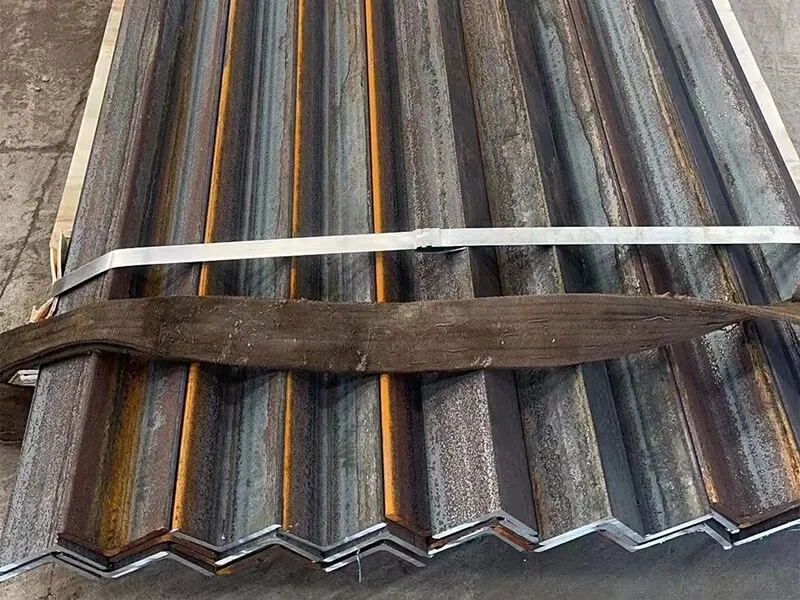
A drawing count answers a fabrication question. How many members does the fitting crew handle? A bar count answers a purchasing question. How many pieces does the mill roll and invoice? A delivery count answers a receiving question. How many pieces arrive on the quay, and does the packing list agree?
These numbers drift apart for structural reasons, not because anyone made a mistake. If a drawing calls for 380 members of 5.2 m, the drawing count is 380. Nest those into 12 m bars and four members fit per bar with 1.2 m left over, so the bar count is 95. Add a test piece per heat and one spare bar per section, and the delivery count reaches 97. Three numbers, all correct, all different.
When a buyer sends 380 as the order quantity, the mill has to guess. Some mills read it as 380 bars, which is four times the steel needed. Others read it as 380 metres, which is a fraction of the job. Both readings are expensive, and both take a week of emails to unwind.
The Three Counts Side by Side
| Count | What it measures | Who uses it | How it relates to the next count |
|---|---|---|---|
| Drawing pieces | Members to fabricate | Yard planning, fitting crew | Base figure, straight from the cutting list |
| Stock bars | Bars to purchase and roll | Mill, exporter, purchase order | Usually 15 to 30% fewer pieces than the drawing count on short members |
| Delivered pieces | Physical bars in bundles | Receiving, surveyor, customs | Bars plus test pieces plus spares, packed 2 to 5 t per bundle |
The gap between the first row and the second row is the whole point of this article. On long members that gap is small. On short members it is enormous, because four or five short members come out of every stock bar.
Where the Confusion Comes From
Chinese shipyard practice already treats this as a formal step. The national standard GB/T 37535-2019 tells yards to finish nesting before ordering, and to choose steel specifications from the nesting result rather than from a rough estimate. That is the same instruction I give every new buyer, just written in a standard.
I learned this the hard way early in my export years. A buyer in [Zora will replace] sent a material list with 640 pieces of L75×75×8 at 2.4 m. I quoted the tonnage, he approved it, and we shipped 128 bars of 12 m. He had expected 640 bars. The steel was correct and the money was correct, but his receiving clerk spent two days convinced we had short-shipped him by 80%. We fixed it with a photo of the bundle tags and a one-page nesting sheet. Since then I attach that sheet to every quotation above 20 tonnes. It costs me twenty minutes and saves a fortnight of argument.
How Do You Count Fabricated Pieces from a Drawing?
Frames, longitudinals, brackets and deck beams are each counted differently. A missed row in a bracket schedule is easy to miss and expensive to recover from.
Count fabricated pieces by starting at frame zero at the aft perpendicular, dividing block length by frame spacing and adding one, doubling for port and starboard, then adding brackets, deck beams and lugs from the detail sheets. A transverse frame on a double-sided hull is two pieces, not one.
Start at Frame Zero, Not at One
Ship drawings number frames from a datum. The most common datum is the aft perpendicular, marked Frame 0, with numbers rising toward the bow. Some large commercial vessels use the midship section as zero instead, and mark frames forward as F1, F2 and aft as A1, A2. Whichever convention the yard uses, the count for a block comes from the spacing, not from the highest frame number printed on the sheet.
The formula is simple. Pieces in a block equals block length divided by frame spacing, plus one, then multiplied by two for a double-sided hull. A 30 m block at 750 mm spacing has 40 spaces, so 41 frame positions, so 82 members once both sides are counted. If your take-off says 40, you are short by 42 pieces before you have cut anything.
Get the Spacing from the Class Rule, Not the Drawing
Classification societies set standard spacing by rule, and the yard then adjusts it. The Korean Register and ClassNK rules both give standard transverse spacing as 2L + 450 mm, where L is rule length in metres, and standard longitudinal spacing as 2L + 550 mm. Spacing in the fore and after peaks is capped at 610 mm, or the standard spacing, whichever is smaller.
For a 100 m vessel that puts standard transverse spacing near 650 mm, and a designer will often round to 600 or 700 mm for a clean frame grid. The point for a steel buyer is this. A one-hundred-millimetre change in spacing on a 30 m block moves the frame count by about six positions, which is twelve members on both sides. Ask for the spacing figure, not just the block length, because the block length alone cannot give you a piece count.
Count the Brackets Separately, Then Nest Them
Brackets are where piece counts really run away. A transverse frame usually carries a bracket at the tank top and one at the deck, on both sides. That is four brackets per frame position, plus collar plates at openings and lug plates for lifting.
The trap is that brackets are short. A 400 mm bracket comes out of an offcut that would otherwise be scrap. So brackets belong in the fabrication piece count but should not drive the bar count. When I build a take-off sheet I put brackets on their own line, marked as nested from offcuts. That keeps the fitting crew supplied and keeps the purchase order honest at the same time.
| Element | Typical multiplier | Counts toward bars? |
|---|---|---|
| Transverse frame | 2 per frame position, port and starboard | Yes |
| Frame bracket | 2 to 4 per frame position | No, nested from offcuts |
| Deck beam | 1 per frame position per deck | Yes |
| Longitudinal stiffener | 1 per line, full block length | Yes |
| Lug or collar plate | Per detail sheet | No, nested from offcuts |
What the Drawing Always Leaves Out
Three things never appear on a cutting list and always appear on a delivery. Test pieces, spares and sniped ends.
Test pieces are a class requirement, not a mill habit. Under IACS Unified Requirement W11, one tensile test comes from a batch unless the finished weight passes 50 tonnes, in which case one extra test is taken from a different piece for each 50 tonnes. Impact tests on sections run at one set per 25 tonne batch for the higher grades, and tighten further when material is supplied as rolled. ClassNK’s W16 puts section testing at one sample per 25 tonne batch as well. Those test pieces are cut from real bars, so a 60 tonne order can absorb two or three bars before a single member is fabricated.
Spares are your decision, not the mill’s. For a 300 piece order I usually suggest one bar per section size, which is under one percent. On a first order with a new yard I push it to two. Sniped ends are the crushed or bent first fifty millimetres of a bundle that never survives handling, and a hundred millimetres of slack per bar covers them.
How Do You Convert Fabricated Pieces into Bars to Order?
A cutting list of four hundred members is not an order. The mill sells bars in standard lengths. How you nest those members decides the bar count, and the bar count decides the money.
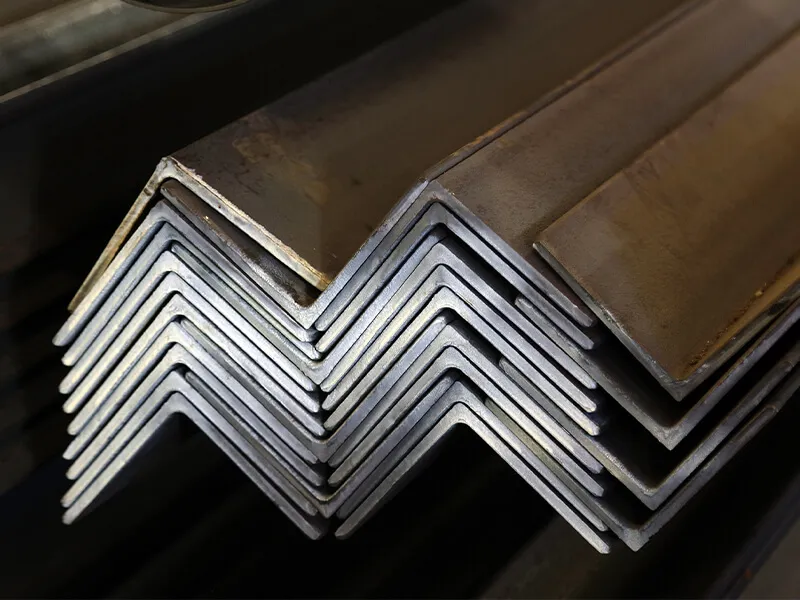
Convert fabricated pieces into bars by grouping cut lengths per section size, sorting longest to shortest, fitting them into 6, 9 or 12 m stock with one kerf allowance of 2 to 5 mm per cut, then rounding up to whole bars. Add one test piece per 25 to 50 tonne batch and one spare bar per section.
Nest Longest First, Always
The nesting rule that survives contact with a real yard is this. Sort every cut length for one section size from longest to shortest, then fill each bar from the top down.
Long members are inflexible. A 5.8 m member only fits a 12 m bar twice, and only if the kerf allows. Short members are flexible, because a 900 mm bracket fits any gap left over. If you nest short pieces first you consume the long gaps with small parts, and the long members then need bars of their own. The same set of members can need 92 bars or 108 bars depending on nothing but the order you load them in.
Watch the Kerf, Then Watch the Length Tolerance
Every cut consumes steel. A band saw takes roughly 3 mm, plasma about 2 to 4 mm, and a shear takes nothing but distorts the end. On a 400 piece order at 3 mm per cut that is 1.2 m of steel, which is a tenth of a bar. Small, but it decides whether your last member fits.
Length tolerance matters more. Under EN 10056-2 practice, random lengths run at plus zero to plus 40 mm, and exact cut lengths at plus zero to plus 5 mm. A bar ordered as 12 m can arrive at 12.04 m, which is harmless, or at 11.96 m if the mill supplies to a minus tolerance under another standard, which is not. If your nest leaves thirty millimetres of slack, a short bar breaks the plan and the member gets cut from the next bar.
My rule is one hundred millimetres of slack per bar. It sounds wasteful. It has never once cost a client a delivery, and I have watched a yard stop work for a missing four hundred millimetres.
A Worked Nesting Table for One Section Size
Take L100×100×10 at 15.10 kg/m, 12 m stock, grade A, and a frame package with four cut lengths.
| Cut length (mm) | Qty | Nest per 12 m bar | Bars used | Offcut per bar |
|---|---|---|---|---|
| 5,800 | 20 | 2 × 5,800 = 11,600 | 10 | ~0.4 m |
| 3,800 | 24 | 3 × 3,800 = 11,400 | 8 | ~0.6 m |
| 2,300 | 30 | 5 × 2,300 = 11,500 | 6 | ~0.5 m |
| 900 (brackets) | 80 | 13 × 900 = 11,700 | 7 | ~0.3 m |
| Total | 154 pieces | 31 bars |
Thirty-one bars, 372 m of steel, against 154 fabricated pieces. That is the ratio buyers miss. Add one test piece bar and one spare bar, and the purchase order reads 33 bars, or about 6.0 tonnes at table weight. If the buyer had ordered 154 pieces he would have needed a conversation. If he had ordered by tonnage alone he would have ordered the weight and hoped.
Test Pieces Change the Batch, Not Just the Count
Here is the part most take-off sheets ignore. Test frequency is set per batch, and a batch is defined by heat, thickness and condition. One tensile test per batch, with an extra one for each 50 tonnes above the first, and impact tests at one set per 25 tonnes on sections. ClassNK’s W16 spells out the same logic.
So an order that mixes three section sizes from three heats needs three sets of tests, and each set consumes a bar end. That is why a 60 tonne order spread across four sizes loses four test pieces, while the same 60 tonnes in one size loses two. If your project can standardise on fewer sections, you pay less in test pieces as well as less in handling.
What Piece Count Belongs on the Purchase Order?
The purchase order needs one number per section size, expressed in bars, with the bundle allocation shown. That is the sheet the mill schedules from and the sheet your receiving clerk checks against.
Put a bar count per section size on the purchase order, not a drawing piece count. State the bar length, the grade and society, the total pieces, and the bundle breakdown. A mill schedules from bars and bundles, so a piece count without a length invites a wrong quote.
Bundle Size Decides How Your Yard Unloads
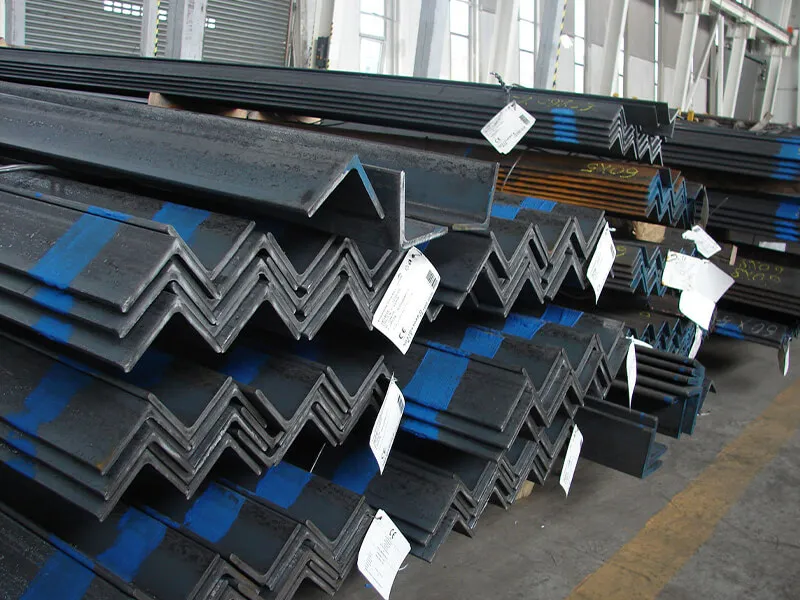
Export angle bundles run 2 to 5 tonnes, strapped with four to six steel bands, separated with timber, and tagged with heat number, grade, size and quantity. That tag is the only reliable link between a bundle and a mill certificate, so never accept a shipment where the tag is missing and the stencil is the only mark.
The trap is that a bundle of small angle and a bundle of large angle are not the same physical thing. At 3 tonnes, a 50×50×5 bundle holds about 66 bars at 45 kg each. A 150×150×10 bundle holds about 11 bars at 273 kg each. Both are 3 tonnes. One is a single crane lift your crew handles by hand, the other is a lift that needs the right slings and a firm landing area.
| Section (mm) | kg/m | kg per 12 m bar | Bars per 3 t bundle | Bars per 25 t container load |
|---|---|---|---|---|
| 50 × 50 × 5 | 3.77 | 45 | ~66 | ~553 |
| 75 × 75 × 8 | 9.03 | 108 | ~28 | ~230 |
| 100 × 100 × 10 | 15.10 | 181 | ~17 | ~138 |
| 150 × 150 × 10 | 22.77 | 273 | ~11 | ~91 |
| 200 × 200 × 20 | 59.70 | 716 | ~4 | ~34 |
Read that table as a loading plan, not a curiosity. A 20 ft container takes roughly 24 to 26 tonnes of angle and a 40 ft takes 26 to 28, so the same 25 tonnes is 553 pieces in small angle and 34 in heavy angle. The piece count drives how long unloading takes, how many crane lifts you book, and how much yard space the delivery occupies before fabrication starts.
Reconcile the Count on the Quay, Not at Month End
Counting at receipt is cheap. Counting after the steel is issued to fabrication is not, because the evidence has walked away.
The routine my clients at Gulf Metal Solutions in Dammam follow is simple. They check the packing list against the order before the vessel departs, then count bundles and pieces at the port against the same sheet, and file any variance while the bars are still on the quay. When something is short, the bundle tag and the nesting sheet turn a hostile call into ten minutes of arithmetic. That is also why they keep ordering: the numbers reconcile, so nobody spends a week defending a half-tonne.
Three checks close the loop. Count bundles against the packing list first, because a missing bundle is the largest error and the easiest to spot. Count pieces inside each bundle against the tag, not the whole shipment, because a five-piece shortfall in one bundle is invisible in a total. Then compare the total bar count against your own nesting sheet, and treat any difference over one percent as a question for the supplier rather than a rounding error.
The One Number to Send
When a project has more than one section size, send one line per size: section, grade and society, bar length, number of bars, and total pieces. Then add two lines at the bottom for test pieces and spares, clearly labelled as such. A mill can schedule that sheet the same day. A drawing count cannot be scheduled at all.
If you are still building the take-off, start from the drawings rather than the tonnage, and keep the nesting sheet with the purchase order. Two documents, one arithmetic chain, and no argument at the gate.
Conclusion
Count drawing pieces, nest them into stock bars, add test pieces and spares, then order bars per section size. Do that and the tonnage takes care of itself.