
You buy 60 tonnes for a 52-tonne job, then hunt a bracket in week nine. The waste is not the saw. It is the order, the rack and the tag.
Cut fabrication waste in a marine angle steel workshop by closing four leaks: order in bars instead of tonnes, nest the longest members first, keep remnants above 600 mm on a tagged rack, and protect bundles from handling damage. Shops that close all four hold total loss near 3 to 7 percent.
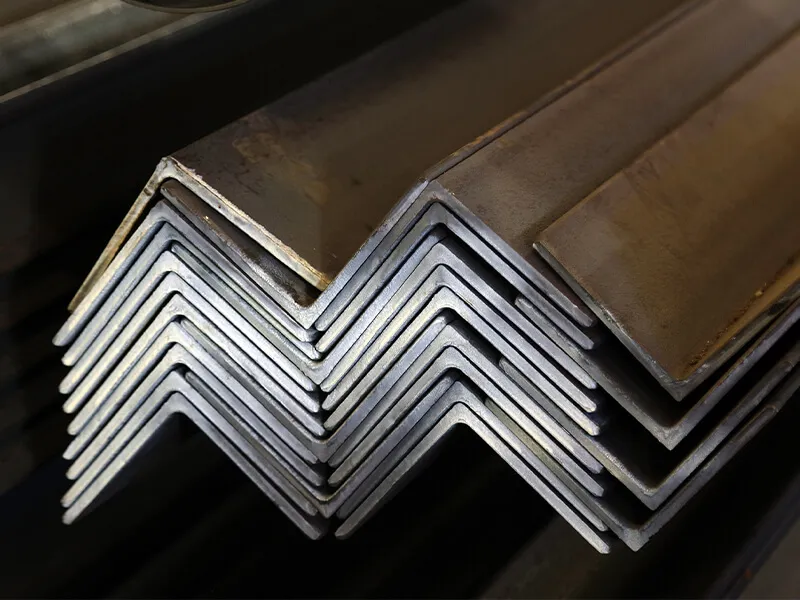
Most shops I visit can tell me their scrap rate to one decimal place. Very few can tell me how many bars they consumed last month, how many metres of usable offcut are sitting on the rack, or which heat number the bracket on bench three came from. That gap is where the money goes. Angle steel is a cheap material per tonne and an expensive one per mistake, because every wasted bar also carries freight, handling, storage and a slice of the purchasing team’s time.
The good news is that this kind of waste is boring. It comes from four places, and all four are fixable with a spreadsheet, a paint marker and one rule about how you buy. Nothing in this article needs a new machine.
Where Does Fabrication Waste Actually Hide in a Marine Angle Steel Shop?
The scrap skip shows the smallest loss. The expensive waste sits in the purchase order, the remnant rack and the reorder.
Most fabrication waste hides before the saw starts: an allowance stacked on top of tonnage rounding, a remnant rack nobody nets against, and damaged bundles written off quietly. Measure waste in pieces and bars, not only in kilos, or the largest leaks stay invisible.
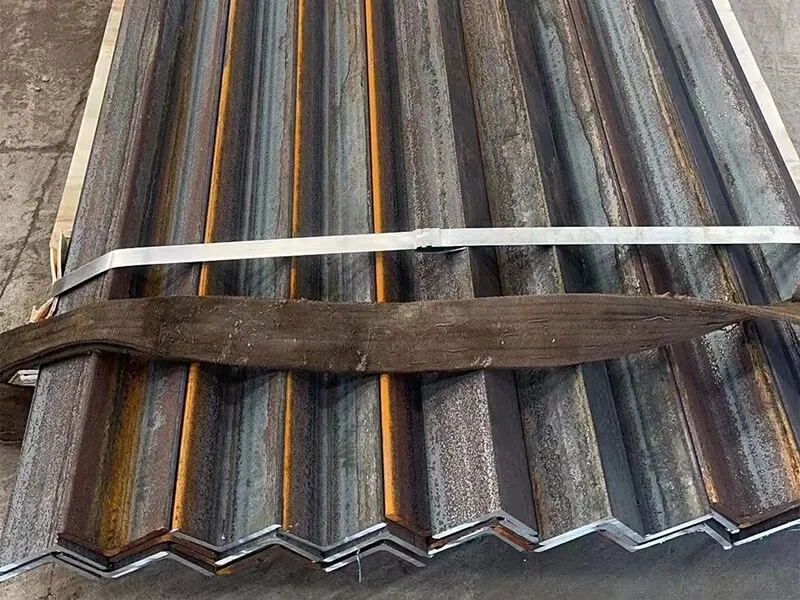
The allowance that quietly becomes inventory
Ask a planner how much angle steel a hull block needs and you will usually hear a theoretical weight plus a coefficient. On profiles that coefficient is commonly 10 to 15 percent, and it exists for good reasons: short offcuts that cannot be joined, small drawing changes after the material is ordered, and the occasional bar damaged in handling.
The problem is what happens next. The allowance is applied once, then the total is rounded up to whole bars, then rounded again to a container or a mill minimum. Each step is defensible on its own. Stacked together, they turn a 10 percent allowance into 20 percent of delivered steel. And because that steel is physically present in the yard, it does not look like waste. It looks like stock. Nobody writes it off, so nobody manages it.
I have watched a workshop with a 52-tonne requirement receive three containers and call the surplus safety stock. Nine months later the same surplus was still there, rusting at the ends, while the planner ordered a fourth size because the drawings had changed.
The measurement problem: kilos hide the shortage
A scrap rate measured in tonnes will always flatter a shop. Cut 900 mm brackets from 12 m bars and the offcuts weigh very little, so the scrap rate looks excellent. Meanwhile the yard is short of pieces, because the number that matters on the line is pieces, not kilos.
Our own rule when we quote a project is simple. Report the balance in bars and metres per section size, and convert to tonnes last. If the remnant rack shows 114 m of L100 x 100 x 10 sitting in the corner, the next requisition for that size is wrong by default. Check the standard lengths and weights before you build the requisition, because a size change moves the bar count, and the bar count moves the money.
Standardising sizes before you standardise anything else
One more leak hides in the design phase. Every extra angle size in a project adds a remnant stream, a test batch, a rack position and a picking decision. Yards that cut their size list from nine to five usually report better utilisation without changing a single nesting rule, simply because each size now runs long enough to use its own offcuts on the next block.
This is also where the order sequence matters. Chinese standard GB/T 37535-2019 sets the order plainly: allow the design cycle to finish, wait for drawing approval, then nest, then order the specifications that the nesting result actually calls for. Yards that order early to protect the schedule are buying steel before they know what the steel is for.
Four leaks, one owner each
| Waste source | Typical magnitude | Where it shows up | Who should own it |
|---|---|---|---|
| Allowance stacked on rounding | 8 to 20 percent of delivered tonnes | Yard stock that never gets issued | Planning |
| Bar-end offcut from poor nesting | 3 to 16 percent, length dependent | Scrap skip, invisible in tonnage | Nesting engineer |
| Handling and storage damage | 1 to 2 percent | Bent bars, rusty ends, rejected pieces | Warehouse |
| Untraceable remnants | Up to the full remnant | Remnant rack, then the skip | Quality |
None of these four appears on a cutting machine report. That is why shops keep buying software for the saw and keep losing money at the rack.
How Do Bar Length and Cut Sequence Decide Your Offcut?
A 100 mm change in member length can cost you sixteen percent of the order. Bar geometry, not operator skill, sets the floor.
Bar-end offcut is pure arithmetic: mill bars come in 6, 9 or 12 m, members come at whatever length the designer chose, and the remainder is scrap. Nest the longest members first, add kerf and end trim, and check the fit before the purchase order leaves the office.
The 2.4 metre and 2.5 metre lesson
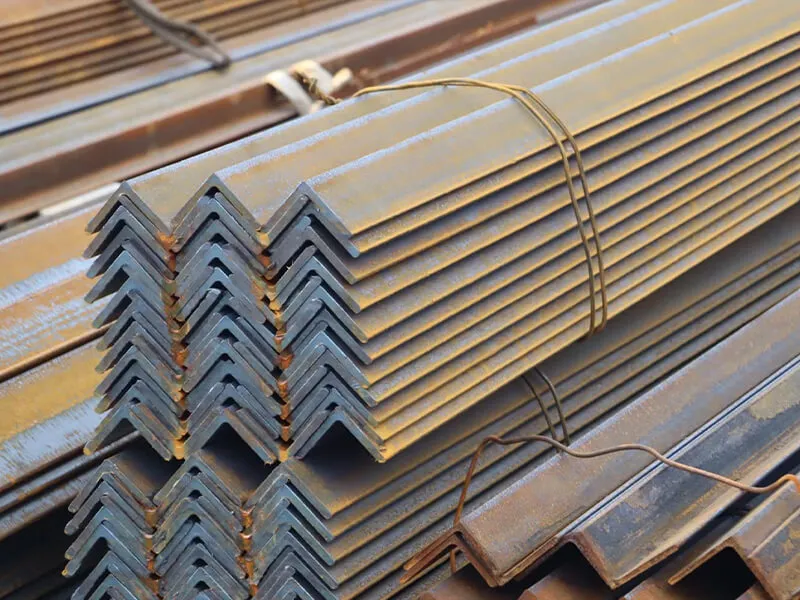
Take a 12 m bar of L100 x 100 x 10 at about 15.1 kg/m. Five members of 2,400 mm fill it exactly, and the offcut is a saw kerf. The same bar with 2,500 mm members takes four, and gives up 2 m every time. That is 16.6 percent of the bar, gone, for a 100 mm difference on a drawing.
Now scale it. A hull block with 400 of those 2,500 mm members needs 100 bars. The same block redesigned to 2,400 mm needs 80. Twenty bars of angle steel, plus twenty bars of freight and twenty bars of handling, saved by one conversation between the naval architect and the nesting engineer.
Most designers will take that conversation, but only if somebody brings the arithmetic to them. In my experience the request lands better when you show the bar table rather than the principle. A designer can argue with a slogan. A designer cannot argue with five members per bar.
Longest first, then fill the gaps
The rule that survives contact with a real yard is this: sort every cut length for one section size from longest to shortest, then fill each bar from the top down.
Long members are inflexible. A 5,800 mm member fits a 12 m bar twice and no more. Short members are flexible, because a 900 mm bracket will sit in any gap you leave. If you nest short pieces first, you consume the gaps that the long members needed, and the long members then claim whole bars for themselves. The same 154-piece package can need 31 bars or 38 bars depending only on load order.
There is a second rule underneath it. Do not chase the last 200 mm on every bar. A nest that is perfect on paper but leaves no slack will break at the saw the first time a bar arrives 30 mm short or a blade wanders. Take the 3 percent loss on one bar and keep the batch moving.
Kerf, end trim and the last piece
Kerf is small and it is not optional. A band saw removes about 3 mm per cut, plasma 2 to 4 mm, laser under 1.5 mm, and a shear removes nothing but distorts the end. On a bar with four internal cuts you lose 12 mm, which is 0.1 percent of length and irrelevant to weight. It becomes relevant at the last piece: if five members plus five kerfs are supposed to fill 12 m exactly, forgetting the kerf means the fifth member comes up short on every bar in the bundle.
End trim is bigger and it is the number buyers forget. Mills deliver standard lengths to a plus tolerance, and EN 10056-2 practice allows random lengths of roughly plus 0 to plus 40 mm, with cut lengths tighter at plus 0 to plus 5 mm. But a shop that squares both ends before the first cut removes 20 to 40 mm per bar. On 900 bars that is a real quantity of steel, and it belongs in the nesting sheet as a flat allowance.
My own rule is 100 mm of slack per bar. It looks wasteful on paper. It has never once cost a delivery, and I have watched a yard stop for a missing 400 mm.
Fewer sizes, fewer test pieces, less waste
Standardising on fewer angle sizes is the least glamorous saving in the list and often the largest. Fewer sizes mean longer nesting runs, fewer remnants per size, fewer test pieces, and faster picking at the rack. Classification rules make this concrete: tensile and impact test frequency is set per batch, and a batch is defined by heat, grade and section. An order spread across four sizes from four heats consumes four sets of test material. The same tonnage in two sizes consumes two.
There is a tolerance argument on the same page. Under EN 10056-2, leg width is allowed to vary by about plus or minus 1.0 mm up to 100 mm leg, plus or minus 1.5 mm from 100 to 150 mm, and plus or minus 2.0 mm above that. Thickness moves by roughly plus or minus 0.5 mm under 10 mm and plus or minus 0.7 mm from 10 to 20 mm. Mixing sizes does not just multiply remnants. It multiplies the places where a fit-up gap can open up.
| Section size | Cut length | Pieces per 12 m bar | Offcut per bar | Loss on that line |
|---|---|---|---|---|
| L100 x 100 x 10 | 5,800 mm | 2 | about 0.4 m | 3.3 percent |
| L100 x 100 x 10 | 3,800 mm | 3 | about 0.6 m | 5.0 percent |
| L100 x 100 x 10 | 2,400 mm | 5 | about 0.0 m | under 0.5 percent |
| L100 x 100 x 10 | 2,500 mm | 4 | about 2.0 m | 16.6 percent |
| L100 x 100 x 10 | 900 mm bracket | 13 | about 0.3 m | 2.5 percent |
The table is the whole argument. Two lines that look similar on a drawing behave completely differently on a bar. If you can move a member from the 2,500 mm row to the 2,400 mm row without touching the structure, you have paid for the meeting several times over.
Which Workshop Habits Turn Good Steel into Scrap?
The saw is innocent. Forklifts, wet dunnage and a missing paint mark destroy more angle steel than bad cutting ever does.
Handling damage, rust in storage and lost heat numbers turn usable steel into scrap faster than any cutting error. Keep bundles on dunnage, transfer the heat number before the first cut, and hold every remnant above 600 mm on a tagged, countable rack.
Handling: the quiet one to two percent
Angle steel is a stiff, thin-walled section and it twists easily. A bundle dropped a metre onto hard ground bends the outer bars. A forklift pushing instead of lifting bends the legs. A sling placed at one third points instead of under the bundle bends it in the middle. None of that damage shows up in a cutting report, and all of it ends up either straightened by hand, which never fully recovers straightness, or cut back, which produces a short offcut nobody can use.
The fix costs almost nothing. Lift from below, never drag. Keep the bundle strapped until it is on the rack. Store on timber dunnage at least 150 mm off the ground, with the rack graded so water runs away from the steel, and keep the ends off bare concrete. Angle steel that sits in standing water rusts at the ends first, and the ends are exactly the part the saw cuts off and throws away.
The tag rule a surveyor will test
This is where a marine workshop separates itself from a general fabrication shop. When a bracket is cut from a remnant, the bracket inherits that remnant’s heat number. If the tag is lost when the bar leaves the saw, the piece has no traceable origin, and a classification surveyor can reject the assembly even when the chemistry is right.
CCS inspection guidance is explicit about it. The yard must have a workable method to transfer the marks from the mill product to the cut part number, and the leftover material must still be identifiable with its original marks so that grades and heats do not get mixed. Surveyors check this by picking a part and tracing it backwards through the block.
Four seconds with a paint marker, before the bar leaves the saw, is the whole control. Write the heat number and the section size on the offcut, photograph the bundle tag, and log the remnant in the register with the same number. If your shop cannot do that, the safest policy is to treat every untagged remnant as scrap, because a rejected assembly costs far more than a bar of angle steel.
A remnant register with a threshold, not a pile
Every shop has a remnant pile. Few have a remnant register, and the difference is a decision about what counts as usable material.
Pick one threshold per project, write it at the top of the nesting sheet, and apply it every time. For angle steel in ship repair work, most shops I deal with set it between 600 and 1,000 mm, depending on what they build. Anything shorter is scrap, full stop. That single rule explains a puzzle I see often: a shop reporting 12 percent scrap and still short of steel. The scrap rate counts kilos. The shortage counts pieces.
Above the threshold, grade the remnant so the planner knows where it can go. A three-class system is enough, and it matches what Chinese yards already do with plate offcuts.
| Remnant class | Length | Where it can be used | Storage |
|---|---|---|---|
| A | 1,000 mm and above | Frames, brackets, stiffener segments | Tagged rack, logged in register |
| B | 500 to 1,000 mm | Clips, lugs, small brackets, temporary works | Tagged bin by section size |
| C | under 500 mm | Scrap, or cut into test coupons | Skip, weighed monthly |
The rule that goes with the table is the one I would enforce first: no piece of angle steel longer than 500 mm leaves the shop floor as waste without a written reason. Not because 500 mm is magic, but because the rule forces somebody to look at the piece before it goes in the skip. In most shops that check alone recovers more steel in a month than any software purchase.
Cut the rework loop, not just the offcut
Waste also comes from pieces cut correctly to a drawing that was wrong. A frame that has to be recut is not a cutting loss, it is a design release problem, and it hides inside the same scrap number.
The control is a first-piece check. Cut one member of each new length, fit it against the jig or offer it up on the block, and only then run the batch. If the fit is wrong, you lose one piece instead of forty. And keep the drawing revision number on the cut list, not just in the transmittal, because the most common cause of a wrong batch is a superseded revision nobody at the saw had seen. This is also why I ask for the cut list and revision together before quoting a project, not the weight summary alone.

| Waste source | Realistic loss | Countermeasure | Cost to fix |
|---|---|---|---|
| Allowance stacked on rounding | 8 to 20 percent | Order in bars from a nested cut list | One planning day |
| Poor nesting order | 3 to 16 percent | Nest longest first, add kerf and end trim | One spreadsheet |
| Handling and storage damage | 1 to 2 percent | Lift from below, dunnage 150 mm, strap bundles | Training and timber |
| Untagged or unlogged remnants | Up to the full remnant | Paint-mark the heat number, log every piece above 600 mm | A marker and a clipboard |
| Rework from superseded drawings | 1 to 3 percent | First-piece check, revision on the cut list | One hour per batch |
Read the cost column next to the loss column. The three largest losses in a marine angle steel workshop are fixed by planning discipline, not by capital equipment. That is the part I find hardest to explain to buyers who arrive asking for a better saw.
One more thing belongs on this page. Steel is often quoted at roughly 15 percent of a newbuilding’s price, which means a 3 percent material saving is worth about 0.45 percent of the ship. On a single vessel that is small. Across six hulls in a series, with the same cut list and the same rack, it is a number that shows up in the yard’s annual report, and it costs nothing but attention.
Conclusion
Fabrication waste in an angle steel workshop is an ordering and bookkeeping problem long before it is a cutting problem. Buy in bars, nest longest first, tag every remnant.