
Running two or three vessels at once should double your output. Instead, it doubles your steel chaos. One project hogs the shared sizes, another stops for material, and your yard turns into a guessing game.
Manage marine angle steel across multiple shipbuilding projects with one central allocation ledger, size-tiered safety stock, a BOM-based rolling forecast, and heat-number traceability that survives every transfer between projects. Keep the steel in one shared pool and allocate it by project on paper, not by stacking it in separate piles.
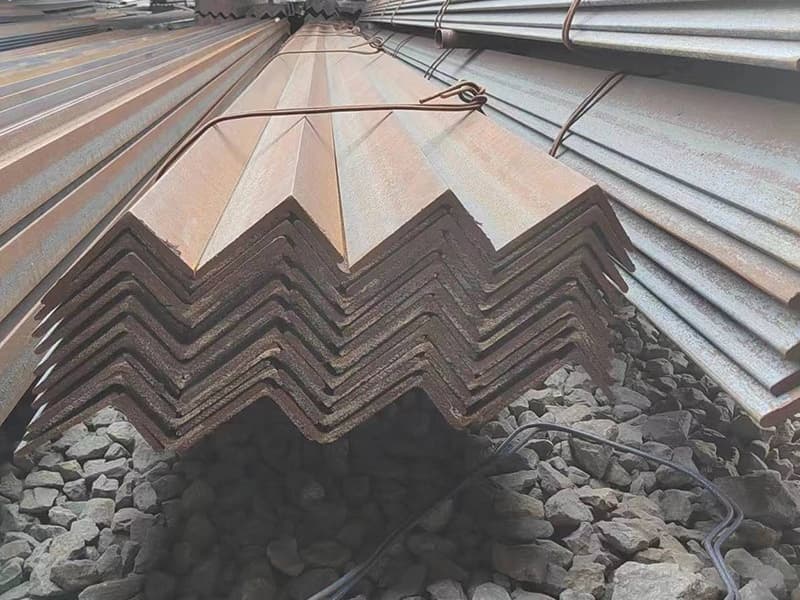
I am Zora Guo, and I export marine angle steel from Liaocheng, Shandong to shipyards in Vietnam, Qatar, Saudi Arabia, and Malaysia. The buyers who handle multi-vessel programs well all run the same four disciplines. The ones who struggle all skip at least one of them. In this article I will walk through each one: how to organize a shared yard, what demand numbers to trust, which stock levels to hold, and how to keep traceability alive when steel moves between projects mid-build.
How Do You Organize One Angle Steel Yard When Several Projects Compete for the Same Steel?
Your yard has one set of racks. Your projects each want “their” steel. When the foreman for Vessel 2 sees the last bundles of L100x100x10 sitting in the corner, he takes them, and Vessel 1’s hull block stalls the same afternoon.
Use a central shared pool with allocation done on paper, not in the yard. Physical steel stays organized by size and grade. Project ownership lives in the inventory system, where every issue is booked against a project code and every remaining balance is visible to all planners at once.
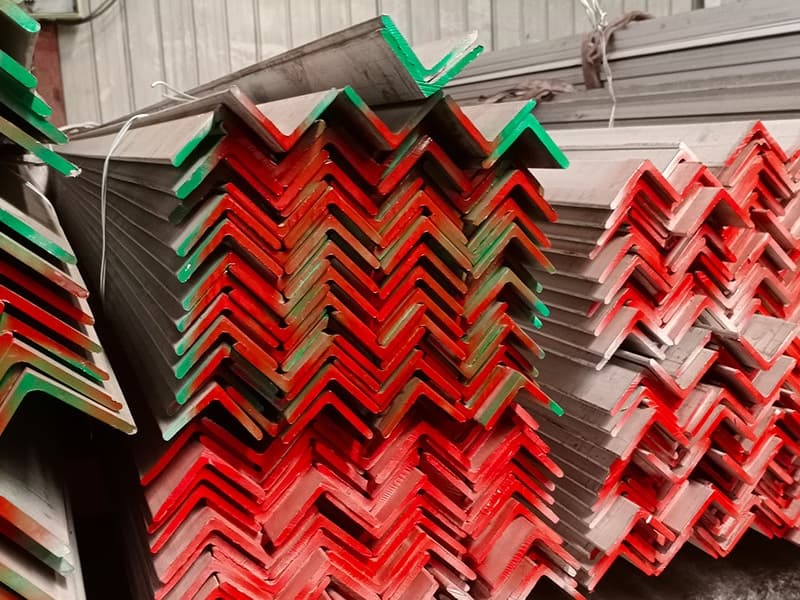
The alternative — splitting the yard into fenced project zones — feels safer and usually fails. I walked through a Vietnamese shipyard two years ago that ran three 60-meter barges side by side. Each project had its own corner of the yard. The corners were full, the aisles were choked, and the crane operator spent more time re-stacking than lifting. Worse, Project A had 40 tons of surplus L125x80x8 rusting under its tarp while Project B was air-freighting the same size from a local trader at three times the price. The steel was 30 meters away and nobody could see it. That visit changed how I advise buyers: the problem is almost never physical shortage. It is invisible allocation.
Central Pool vs Project Zones
| Aspect | Central shared pool | Per-project fenced zones |
|---|---|---|
| Yard space | One bay per size, compact | Space duplicated per project |
| Visibility of surplus | Instant, system-wide | Hidden inside each zone |
| Cross-project lending | Normal, one ledger entry | Requires negotiation and re-labeling |
| Risk of mixed heats | Controlled by tags | Lower, but steel still moves |
| Congestion | Low | High, aisles blocked by duplicate stacks |
| Best for | 2+ projects sharing sizes | Single very large project |
Make the Allocation Ledger the Single Source of Truth
The ledger needs five columns per transaction: date, project code, size and grade, heat number, and quantity in tons or meters. Every issue to fabrication, every transfer between projects, every return of an offcut gets one row. When the numbers live in one spreadsheet that all planners open, the “who took my steel” argument disappears. I ask clients to send me this ledger every week alongside the forecast. It takes them ten minutes, and it lets me reserve mill capacity for the sizes that all their projects share.
Handle Project Delays and Surplus Without Panic
Projects slip. A hull block weld fails inspection, a launch date moves three weeks, and suddenly that project’s allocated angle steel sits idle while the next vessel waits. The central pool turns this from a crisis into a ledger edit. Because the surplus steel is not fenced inside a project corner, the planner of the next vessel sees it, requests a transfer, and the yard crew re-tags the bundles. One client avoided a repeat order of 25 tons of L150x150x15 exactly this way — the surplus from a delayed tanker conversion covered the tugboat deck phase. Without the shared pool, that 25 tons would have been purchased twice. I tell buyers the same thing every time: a shared pool is not a storage choice, it is a cash-flow choice.
Tag Steel for the Yard Crew, Not for the Office
Paper allocation fails if the yard crew cannot see it. Use painted color bands or plastic tags on every bundle: one color per project, refreshed whenever steel transfers. The tag carries the project code and the heat number. When a bundle moves from Vessel 1 to Vessel 2, the tag gets re-painted and the ledger gets a row, in that order. Skip either half and within a month the yard and the paperwork disagree — and the paperwork always loses to what the crew can physically touch.
What Demand Numbers Should Drive Marine Angle Steel Orders Across a Whole Fleet?
Guessing per project produces either a yard full of rusty surplus or a stoppage every fortnight. The fix is boring arithmetic done weekly.
Build the demand plan from each vessel’s bill of materials, phase by phase, then roll every project up into one table of size-by-week tonnage. Research on barge construction found that lot-for-lot ordering suits angle sections best, while periodic ordering suits plate — so order angles close to need, and consolidate the shared sizes into fewer, larger shipments.
The starting document is the BOM. For angle steel it lists, per vessel: project code, phase (hull blocks, decks, bulkheads, superstructure), size, grade, length count or tonnage, and the week the steel is needed. One client in Malaysia builds tugboats and had twelve BOMs running at once. Before they rolled these up, each project engineer ordered independently. After they started the weekly roll-up, their emergency orders dropped by roughly 80 percent. Nothing fancy — one spreadsheet, updated every Friday.
Roll Up All Projects Into One Table
Here is the shape of the consolidated view, with example numbers for a three-vessel program:
| Week needed | L75x75x8 (t) | L100x100x10 (t) | L125x125x12 (t) | L150x150x15 (t) | Projects served |
|---|---|---|---|---|---|
| 4 | 5 | 27 | 8 | 0 | V1 hull, V2 hull |
| 6 | 0 | 33 | 10 | 5 | V1 hull, V3 hull |
| 8 | 5 | 20 | 16 | 0 | V1 deck, V2 deck |
| 10 | 0 | 15 | 12 | 8 | V2 deck, V3 bulkhead |
The magic is in the totals column. Two projects needing the same size in the same week become one purchase line instead of two small ones. Fewer lines mean better mill pricing, one inspection visit instead of two, and one customs file instead of two.
Match the Ordering Method to the Material
A 2026 study from Batam Polytechnic on barge construction tested three material-requirements-planning methods on unequal angle, inverted angle, and plate: lot-for-lot (LFL), economic order quantity (EOQ), and periodic order quantity (POQ). The result matched what I see in practice. LFL — ordering exactly what the next weeks need — came out best for the angle sections, because their demand is lumpy and size-specific. POQ — ordering on a fixed calendar — was most cost-efficient for plate, which is consumed smoothly. Practical translation for angle steel: order per-size against the rolled-up table, do not smooth it into fixed monthly quantities, and never hold safety stock on a size only one project uses once.
Run a Rolling Forecast With Your Supplier
Give your supplier three layers: the next four weeks firm, weeks five to eight estimated, weeks nine to twelve planning. Update it weekly. My own clients who do this get their shared sizes shipped within days of release, because I have already reserved mill capacity against the estimate layer. The clients who send a fixed twelve-month order instead always end up amending it — and amendments cost more than the forecast ever did.
Which Stock Levels Protect Every Project Without Tying Up Your Cash?
Too much steel eats cash and yard space. Too little stops cranes. Multi-project yards feel this twice as hard, because one shortage hits several schedules at once.
Set safety stock per size using weekly usage across all projects, lead time, and a reliability buffer of 1.3 to 1.5. Apply a min-max band to medium-use sizes, hold buffer only on sizes shared by several projects, and order project-exclusive sizes lot-for-lot with zero standing stock.
The formula I use with clients: safety stock (tons) = average weekly usage across all projects × supplier lead time in weeks × buffer factor. Lead time for me to Dammam runs about 5 weeks including production, shipping, and customs. Buffer 1.3 for a supplier you trust, 1.5 for a new one. A yard consuming 20 tons per week of L100x100x10 across three vessels, with a 6-week lead time, holds 20 × 6 × 1.3 = 156 tons minimum. Below that line, they order the next release.
Tier Your Sizes by How Many Projects Share Them
| Tier | Example sizes | Usage pattern | Stock rule |
|---|---|---|---|
| A — shared daily | L100x100x10, L125x125x12 | Every project, every week | Safety stock 3–4 weeks + scheduled releases |
| B — shared occasionally | L150x150x15, L200x100x14 | Most weeks, one or two projects | Min-max band: min 2 weeks, max 5 weeks |
| C — single-project | L250x90x12 odd sizes | One BOM, one time | Zero stock, order lot-for-lot |
| D — rare/custom | Non-standard legs | Once per program | Order with the project, no buffer |
The Pareto pattern repeats at almost every yard: around 20 percent of the sizes carry 80 percent of the tonnage, and those are exactly the sizes every project fights over. Buffer those. The long tail gets nothing.
Price the Two Failure Modes Honestly
Holding cost on section steel typically runs 50 to 100 dollars per ton per year once you count space, insurance, rust re-blasting, and tied-up cash. A fabrication stoppage while steel is missing costs far more — my clients estimate 1,000 to 5,000 dollars per day of idle crews. That asymmetry is why the buffer belongs on tier A. But the asymmetry also has a ceiling: buffer beyond about six weeks of usage is just slow-motion cash loss. When one Qatar client cut his blanket stock from 600 tons to a tiered 350 tons, he freed roughly 200,000 dollars of working capital [Zora will replace] and never missed a hull block date.
Adjust the Buffer When Lead Time Moves, Not When Panic Arrives
Lead time is not a constant. Mill schedules tighten around Lunar New Year, port congestion stretches customs clearance, and the shipping line that ran weekly suddenly runs fortnightly. When your lead time grows from 5 weeks to 7, your safety stock formula automatically demands a higher minimum — if you update the number. The yards that get caught are the ones whose formula still says 5 weeks because nobody touched it since spring. I check my own published lead times to each port corridor every month and tell clients when the number moves. Do the same with your supplier: one line in the weekly sync, “lead time this week is X weeks”, keeps the formula honest. Review the buffer factor itself quarterly against actual delivery performance. If your supplier hit every promised date for three months, step the buffer down from 1.5 toward 1.3. If two shipments slipped last quarter, step it up before the next shortage, not after.
Recount the Tiers, Not the Whole Yard
Cycle counting beats the annual wall-to-wall count. Count tier A sizes weekly, tier B monthly, tier C only when issued. Small frequent counts catch the drift — bundles issued without a ledger row, offcuts never booked back — while the error is one day old instead of one quarter old. A steel service center that digitized its certificates and added barcode scanning at receipt reported shipping errors down 40 percent within six months; the counting habit is the cheap version of the same discipline.
How Do You Keep Heat Number Traceability Intact When Steel Moves Between Projects?
Multi-project yards break traceability more often than single-project ones, because steel gets re-assigned mid-build and the paperwork trails behind.
Keep the heat number anchored to every bundle from mill certificate to fabrication, record every project transfer in the ledger, store batches segregated by heat with color-coded tags, and cycle-count discrepancies weekly. The heat number is the thread that connects your steel to its mill test certificate wherever the steel travels.
The mill assigns a heat number to each melt. It ties the steel to its chemistry and mechanical test results on the EN 10204 3.1 or 3.2 certificate. That number must survive every move: into your yard, out of it to a different project, and back in as an offcut. When the classification surveyor later asks which heats went into Vessel 2’s transverse bulkhead, the answer should take minutes, not a morning of digging through folders.
Three Rules That Keep the Thread Unbroken
First, the heat number is marked on every bundle — stamped or paint-marked — and repeated on the packing list and the ledger row. Second, different heats of the same size are never restacked together without re-tagging; in our own Liaocheng warehouse we keep batches segregated with color-coded tags, and I ask clients to do the same. Third, when steel transfers between projects, the transfer row carries the heat number, not just the tonnage. A transfer recorded as “30 tons to Vessel 2” is a traceability hole. The same 30 tons recorded as “heat H4827, 12 tons; heat H5103, 18 tons” is an audit-ready record.
Close the Loop With Offcuts and Cycle Counts
Offcuts are where multi-project systems quietly fail. A 1.9-meter offcut of L100x100x10 from Vessel 1 is real stock with a real heat number. Book it back into the ledger with its own row, its heat, its location — or it vanishes from the system while sitting visibly in the yard, and someone orders new steel to replace steel that already exists. Every cycle count should reconcile three numbers: ledger balance, physical count, and open allocation. When they disagree, fix it that day.
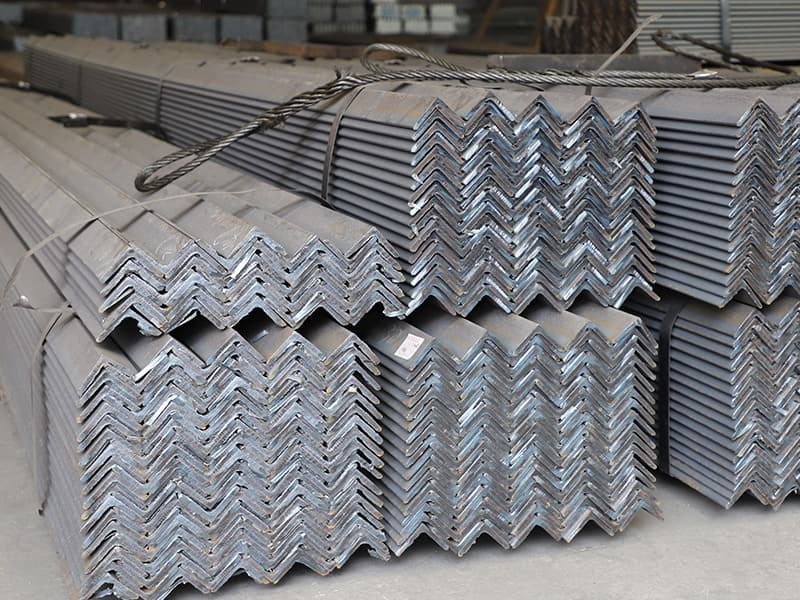
One more habit from the port side: when we shipped angle steel to Gulf Metal Solutions in Saudi Arabia, their SGS inspector needed to verify each batch separately before loading to Dammam. Because every bundle was tagged by heat and stored segregated, the inspection took half a day. At a yard where heats were mixed, the same inspection would have meant unstacking half the bay. Traceability is not paperwork for its own sake — it is the speed at which your yard can prove itself to a surveyor, a class society, or a client.
Managed vs Unmanaged Multi-Project Inventory
| Practice | Unmanaged yards | Managed multi-project yards |
|---|---|---|
| Allocation | Whoever reaches the pile first | Ledger rows against project codes |
| Demand planning | Per-project guesses | One rolled-up size-by-week table |
| Stock policy | Blanket buffer on everything | Tiered by shared usage, LFL on the tail |
| Transfers | Steel moves, records lag | Transfer rows carry heat numbers |
| Offcuts | Disappear from the system | Booked back with heat and location |
| Surplus visibility | Hidden in project corners | Instant, system-wide |
| Surveyor audit | Days of document digging | Minutes from the ledger |
Conclusion
Run one shared pool, allocate on paper, roll up every BOM into one weekly demand table, tier your safety stock, and keep heat numbers on every transfer. Multi-project inventory is a discipline, not a bigger warehouse.