
Most yards chase angle steel labor cost on the shop floor, after the steel has been bought, stored and moved three times. The cheaper fix starts weeks earlier, in the purchase order.
Labor cost on marine angle steel is mostly the cost of touching the material too often and cutting it twice. Plan lengths, bundle sizes and grade per block before you order, and you remove handling, rework and waiting hours that no welding productivity program can recover later.
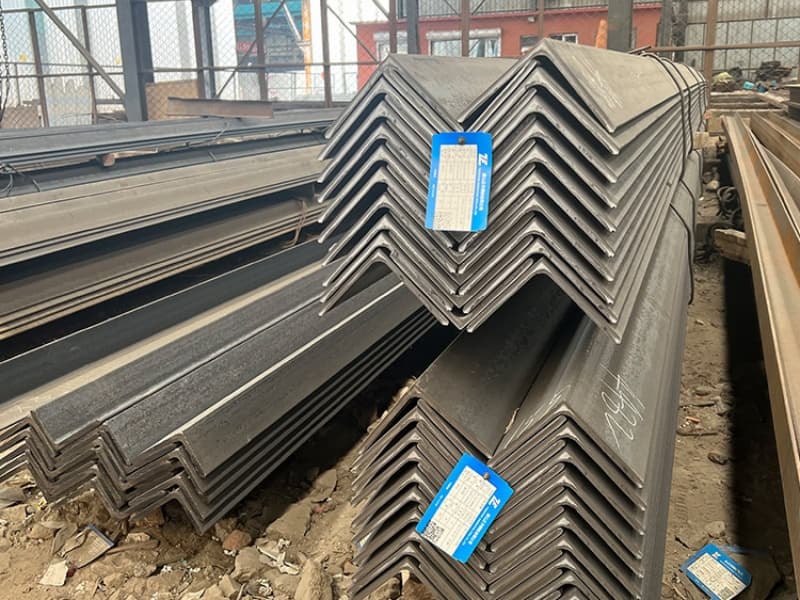
I have spent enough mornings in fabrication yards to know how this conversation usually starts. A production manager tells me his welding hours are too high, and he wants a better welder, a faster machine, or a cheaper consumable. Then we walk the shop and find the real problem standing in the corner: four bundles of L100×100×10 that nobody has opened because the block they belong to was re-sequenced last week. The welders are not slow. The material is simply in the wrong place, in the wrong length, at the wrong time.
That is a planning failure, and it is paid for in man-hours. Angle steel is a secondary structural product. Per tonne it is cheap compared with plate, so buyers spend their attention on the price per tonne and almost none on how the material will flow through the yard. But on a hull block, the angle is where a large share of the fit-up labor sits, because every bracket, stiffener and frame needs to be cut, carried, aligned, clamped and welded. Each of those steps has a labor content, and planning decides how many times each step happens.
Below I set out what we see from the supplier side, working with yards in Vietnam, the Gulf and Southeast Asia, and what a buyer can change in the purchase order before the steel is even rolled.
Where Do Labor Costs Actually Hide in Marine Angle Steel Work?
Your cost sheet shows a steel price per tonne and a welding hours figure. It hides the third line: every extra lift, search and re-stack a bundle takes before a fitter ever touches it.
Most marine angle steel labor cost sits in handling and rework, not in welding speed. A bundle picked, moved and re-stacked four times before cutting costs more in crane time and man-hours than the same bundle cut once from a planned kit.
Counting Touches Instead of Counting Tonnes
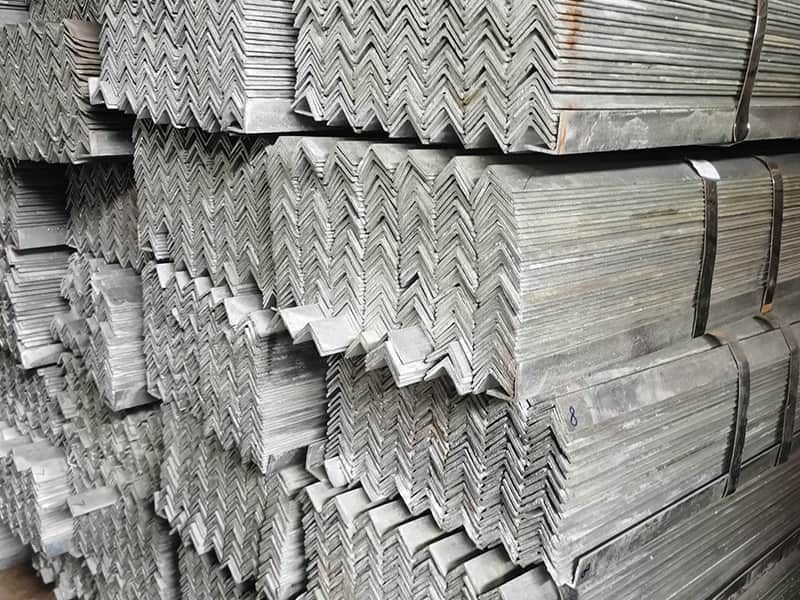
When I audit a yard’s angle steel flow with a customer, I stop asking about tonnes and start counting touches. A touch is any time the material is picked up: mill bundle onto the truck, truck onto the storage rack, rack onto the transfer trolley, trolley onto the saw table, saw table onto the fit-up bench.
Each touch needs a crane, a rigger, and usually two hands to guide the bundle. None of that appears in a welding hours report. It appears in the overhead, in crane availability, and in the overtime that nobody can explain at the end of the month.
Here is the pattern I see most often on a mid-size hull block, and the difference between a planned and an unplanned flow:
| Flow step | Unplanned yard | Planned yard | Why the difference exists |
|---|---|---|---|
| Receiving | Bundle dropped wherever space allows | Bundle tagged and placed by block number | Storage layout decided from the cutting list |
| Storage | Mixed sizes in one rack, first-in-last-out | One size per bay, block-sequenced | Picking is a straight lift, not a search |
| Issue to shop | Whole bundle dragged to the saw | Partial bundle kitted for one block | Cranes move kilos, not tonnes |
| Cutting | Cut piece-by-piece from the drawing | Cut from a nest with remnant logged | Saw time and offcut waste both fall |
| Delivery to fit-up | Loose bars carried by hand | Kit trolley delivered to the station | Fitters stay at the joint |
| Rework | Wrong length found at assembly | Checked at the cut, before transport | Rework happens where it is cheapest |
The number of touches is not a detail. It is the single biggest lever a buyer controls, because it is set by how the order is structured: what lengths, what bundle weights, what tagging, what delivery sequence.
What One Wasted Lift Actually Costs
Put rough numbers on it. A 2 tonne angle bundle lifted by an overhead crane takes about 15 to 20 minutes door to door once you include rigging, slinging, guiding and re-stacking. That is a crane hour plus two riggers on the floor, so roughly 0.5 to 0.7 man-hours for the lift alone, before anybody looks at the drawing.
Multiply by four touches on a 2 tonne bundle and you have spent around 2.5 man-hours per 2 tonnes, which is over 1 man-hour per tonne, purely on moving steel from one square metre of concrete to another. On a block that consumes 30 tonnes of angle, that is 30 man-hours. At a loaded shop rate of USD 12 to 18 per hour [Zora will replace], that is a few hundred dollars per block that produced nothing.
Now compare that with the price difference between two mills quoting the same L100×100×10. The spread is often USD 15 to 25 per tonne. On 30 tonnes that is USD 450 to 750. So a bad handling plan can eat the entire saving from shopping the order around, and nobody in the meeting will notice, because the two numbers sit in different cost centres.
I saw this clearly in a yard in [Zora will replace] last year. The fitter walked 60 metres twice because the L75×75×6 he needed was buried behind a stack of L100×100×8 that belonged to a later block. Two trips, maybe six minutes. Multiply that by every fitter, every shift, every week, and it is a full-time job that produces nothing but footprints.
How Should You Plan Cuts and Bundles So Fitters Do Less Rework?
Cutting is where a small drawing error becomes a large labor bill. If a fitter finds a 40 mm short bar at the joint, the fix is not a 40 mm fix, it is a re-cut, a re-transport and a re-fit.
Plan cuts from the block sequence, not from the stock list. Order lengths that divide cleanly into the parts you need, kit each block separately, and put the identification on the piece at the saw. Fitters then assemble instead of searching, measuring and re-cutting.
Order Lengths That Match the Block, Not the Catalogue
The standard mill lengths are 6 m, 9 m and 12 m. Buyers default to 12 m because the price per tonne looks best and there is less handling per tonne at the mill. That logic holds for a warehouse. It often fails in a fabrication shop.
Take a block that needs 4.2 m stiffeners. From a 12 m bar you get two pieces and a 3.6 m remnant. From a 9 m bar you get two pieces and a 0.6 m remnant that is usually scrap. On paper the 12 m bar wins. But the 3.6 m remnant is only an asset if somebody logs it, stores it and issues it to the next block. In most yards I visit, it goes on the floor beside the saw and becomes invisible within a week.
| Ordered length | Pieces per bar for a 4.2 m part | Remnant left | Realistic outcome in an average yard |
|---|---|---|---|
| 6 m | 1 | 1.8 m | Useful for brackets if logged, otherwise scrap |
| 9 m | 2 | 0.6 m | Scrap |
| 12 m | 2 | 3.6 m | High value if tracked, dead stock if not |
There is a second effect. A 12 m bar of L150×150×12 weighs about 325 kg. Two men cannot shift it; you need the crane for every single part. A 6 m bar of the same section is half the weight, and on many sections below L75 it can be handled by two people with a trolley. Shorter stock means fewer crane calls, and crane calls are the bottleneck in most shops.
So the planning question is not “which length is cheapest per tonne”. It is “which length produces the fewest crane calls and the least dead remnant for this block”. For yards without a remnant management system, 6 m and 9 m stock often beats 12 m on total labor, even at a slightly higher price per tonne.
Sequence the Bundles to the Assembly Sequence
Angle steel for a hull block is consumed in a fairly predictable order: frames first, then brackets, then the small fittings that close the block. If the bundles arrive in that order, the crane makes one trip per bundle. If they arrive by size, the crane makes a trip per size, and the fit-up crew waits.
I ask customers to give us the block sequence with the order, and we pack and mark accordingly. It costs nothing at our end. At the receiving yard it converts the storage area from a search problem into a queue.
Put Identification on the Piece at the Saw
A bundle tag is only useful until the bundle is opened. After that, the heat number and grade have to travel with the individual piece, or the traceability chain breaks.
Classification society rules require the steel to remain identifiable to its mill certificate after cutting. In practice, that means the yard has to transfer the mark, usually with a paint stencil, a tag or a stamp, and keep the remnant identifiable too. If your planning assumes the fitter will “know” which pile is AH36, you are one substitution away from a surveyor hold point.
The labor cost of marking is seconds per piece. The labor cost of an unmarked pile is a full re-inspection, and sometimes a cut-out and re-weld. I have never seen a yard regret buying 20 minutes of marking time.
Which Purchase Order Details Drive Site Labor?
Two orders can carry the same grade, the same tonnage and the same price, and still produce very different shop hours. The difference is in the specification lines that buyers treat as boilerplate.
Length, straightness, squareness, bundle weight and tagging decide how much the yard has to correct on site. Tight, standard-based tolerances and realistic bundle weights remove grinding, clamping and re-cutting. Loose or unstated tolerances push that work onto your fitters at two to three times the cost.
Length and Leg Tolerance Decide How Much You Grind
EN 10056-2 sets the tolerances for hot-rolled angles. Leg length is not exact, and neither is squareness. The permitted deviation grows with the section:
| Nominal leg h | Leg tolerance | Straightness (over length L) | Out of squareness |
|---|---|---|---|
| h ≤ 50 mm | ±1 mm | 0.4% of L | 90° ± 1° |
| 50 < h ≤ 100 mm | ±2 mm | 0.4% of L | 90° ± 1° |
| 100 < h ≤ 150 mm | ±3 mm | 0.4% of L | 90° ± 1° |
| 150 < h ≤ 200 mm | ±4 mm | 0.2% of L | 90° ± 1° |
| h > 200 mm | +6 / −4 mm | 0.1% of L | 90° ± 1° |
Read the straightness column against a 12 m bar and the numbers get real. At 0.4% of length, a compliant L100×100×10 can arrive with a 48 mm bow and still be within standard. On a frame that has to land inside a 3 mm gap, that bow is pulled straight with clamps, or cut and re-welded. Either way, a fitter spends time correcting something the standard allowed.
This is not an argument for demanding impossible tolerances. It is an argument for knowing what you bought. If the joint is tolerance-sensitive, say so in the order and ask for straightness better than the default, or plan a straightening step. What you must not do is assume the bar is straight because the certificate says the chemistry is correct.
Grade Substitution Is a Labor Decision, Not Only a Cost Decision
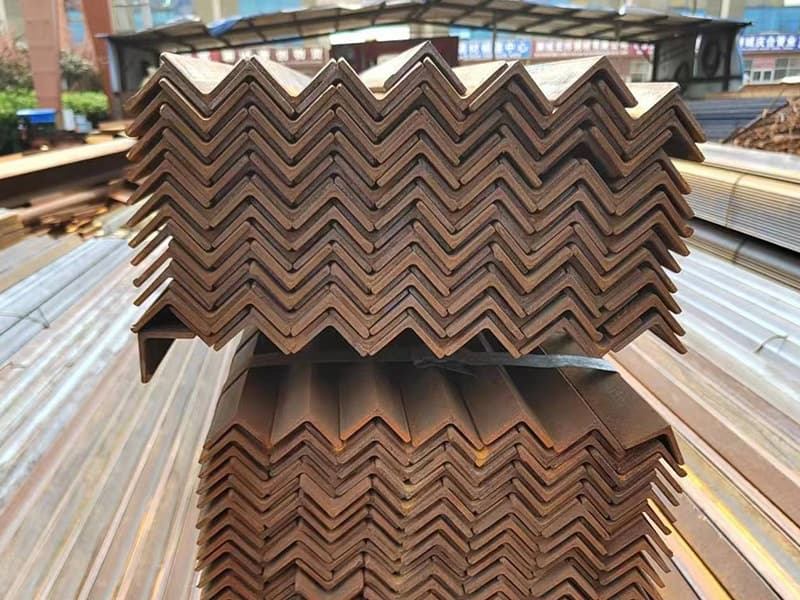
Every yard has a story about substituting AH36 with grade A to save money. Sometimes the substitution is legitimate and approved. Often it is approved on the drawing and never checked against the weld procedure.
High-strength angle is not just stronger steel. It is a different welding regime: preheat rules, heat input limits, consumable matching and, in some cases, low-hydrogen practice. A fitter who welds AH36 with the same settings he used on grade A is producing a joint that may pass visual inspection and fail the surveyor.
There is also a weight effect that buyers miss. Because AH36 has a minimum yield of 355 MPa against 235 MPa for grade A, a designer can often use a smaller section for the same load. That reduces steel weight, and it also reduces weld length and filler metal, because a smaller leg needs a smaller fillet.
That decision belongs to the designer and the classification society, not to the purchasing officer at the counter. My point is narrower: when a substitution is proposed, price it in labor as well as in tonnes. A cheaper grade that requires a bigger section, more weld and more straightening is not cheaper.
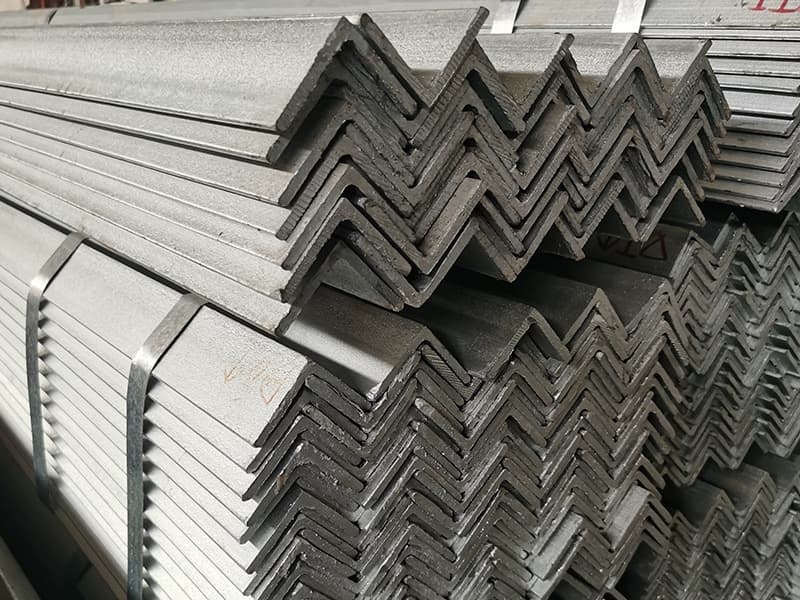
The table below is the comparison I use when a buyer asks whether to standardise on one grade or mix grades across a block.
| Grade | Min yield | Impact test | Typical use on a hull | Labor implication |
|---|---|---|---|---|
| A | 235 MPa | Not required | Internal structure, non-critical secondary members | Easy to weld, but often needs a heavier section for the same load |
| B | 235 MPa | 0 °C | Hull secondary structure in warmer service | Same as A with a toughness requirement |
| D | 235 MPa | −20 °C | Structures exposed to lower service temperature | Controlled welding, tighter procedure control |
| AH32 | 315 MPa | 0 °C, 31 J | Strength deck and shell secondary members | Lower preheat burden than AH36, smaller sections than A |
| AH36 | 355 MPa | 0 °C, 34 J | Heavily loaded frames, brackets, foundations | Highest weld discipline of the group, smallest sections |
The labor column is the one that gets left out of the meeting. A yard that mixes grade A and AH36 in the same block, without separating storage and welding procedure, pays for it twice: once in the extra section weight, and once in the rework when a joint is welded to the wrong procedure.
How Do You Measure Whether the Plan Worked?
Planning without measurement drifts back to habit within two blocks. You need four or five numbers that a foreman can collect without a new software system.
Track touches per tonne, cut yield, fitter hours per tonne, rework rate and remnant reuse. Five numbers, collected weekly, show whether material planning is removing labor or just moving it around. Without them, every improvement is an opinion.
The Five Numbers Worth Collecting
Start with touches per tonne, because it is the easiest to count and the fastest to improve. Assign one person to mark every crane lift on a whiteboard for a week. Most yards are surprised by the result, and the surprise is usually a storage layout problem rather than a discipline problem.
Then add cut yield: the ratio of finished part weight to issued bar weight. If yield sits below 85%, the cutting plan or the ordered lengths are wrong. Then fitter hours per tonne by block, which is your real productivity measure. Then rework rate, meaning the share of joints that need correction before inspection. Then remnant reuse, meaning how much of the offcut actually comes back into a block.
| Metric | What it exposes | Rough starting point to aim for |
|---|---|---|
| Touches per tonne | Storage layout and picking discipline | Fewer than 3 per tonne from gate to fit-up |
| Cut yield | Ordered lengths and nesting quality | 88% or better on angle work |
| Fitter hours per tonne | Real assembly productivity | Benchmark against your own best block, not an industry average |
| Rework rate | Tolerance and identification failures | Under 3% of joints |
| Remnant reuse | Whether offcuts are an asset or clutter | At least half of remnants above 1 m returned to stock |
Do not import an industry benchmark for fitter hours per tonne. Yard layouts, crane density, block complexity and labor skill vary too much for a single number to mean anything. Compare a block against your own previous block of similar complexity, and you get a signal you can act on.
Start With One Block, Not With a System
The mistake I see is a yard buying a material management module before it has fixed its storage layout. Software will happily tell you that the bundle is in bay 7 when the real problem is that bay 7 is 200 metres from the saw.
Pick one block. Get its cutting list early, order the lengths that suit it, kit it, tag it, and count the touches. Then compare the fitter hours with the previous similar block. If the number moves, you have a case for extending the method. If it does not, you have learned something cheap.
This is also where supplier behavior matters. A mill or trader that can hold a block-sequenced delivery, pack to your bundle weight limit and print tags with size, grade, heat number and block number is doing part of your planning for you. Our own dispatch routine at Liaocheng is built around that, and it is the reason a distributor in Dammam told us the packing was the best he had received on ship plates, which is the kind of comment that gets repeated to other buyers.
For a yard that wants to compare handling options before ordering, our marine angle steel inventory page lists the sections and lengths we hold, and the packing and loading notes cover bundle weights and marking practice.
Conclusion
Angle steel labor cost is decided before the steel is rolled: in lengths, bundle sizes, tagging and grade per block. Plan those four things, count the touches, and the shop hours follow.