
Your ERP says 42 tonnes of marine angle steel are on the shelf. The yard count finds 39.6. That gap stalls hull blocks and forces panic spot-buys.
Control inventory differences by recording every steel movement as a transaction, counting bundles and pieces physically, reconciling theoretical mass against weighbridge mass at bundle level, running ABC cycle counts through the year, and investigating every variance’s root cause before you adjust the ERP.

I have walked this reconciliation more times than I can count, both across our own Liaocheng warehouse and with buyers in Dammam and Ho Chi Minh City. The pattern never changes: the ERP is not lying on purpose. It is faithfully repeating what somebody typed, weeks after the steel actually moved. The fix is not a better system. It is a tighter set of habits around the one you already run. Below I break down where the differences come from, how we count so the two numbers agree, and which variances deserve action instead of a shrug.
Why Do ERP Records and Physical Steel Stock Drift Apart in the First Place?
Every mismatch starts as a missing or mistyped transaction, not as steel walking away. Catch the nine repeatable leaks early and the year-end count stops being a surprise.
The drift comes from nine repeatable leaks: unverified receiving, unit-of-measure mix-ups between bars and tonnes, unrecorded yard moves, cut-off timing, unposted scrap, dead remnant lines, nested mixed-heat bundles, uncontrolled manual adjustments, and damaged stock nobody wrote off.
The Unit-of-Measure Trap: Pieces, Bars, and Tonnes
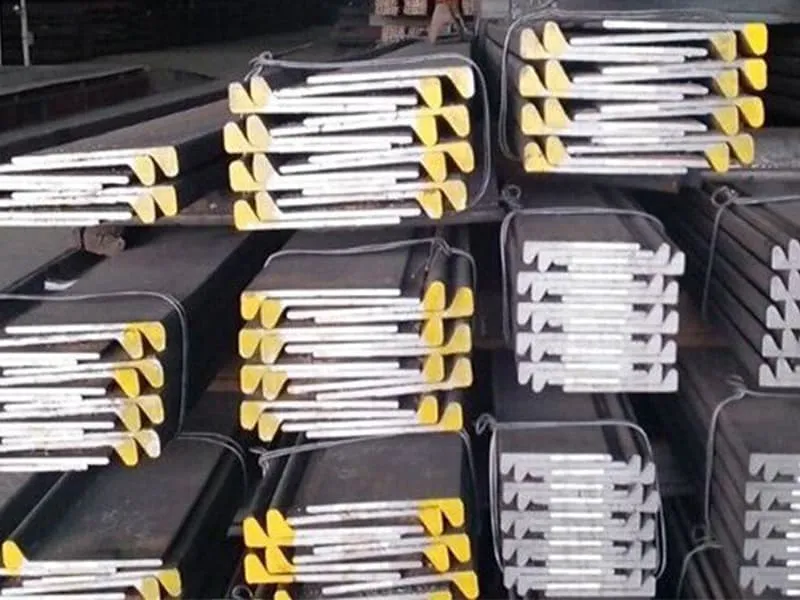
Marine steel lives in three units at the same time, and that is where most differences are born. A bar of L100×100×10 marine angle weighs 15.12 kg per metre, so a 12 m bar is about 181 kg. Sixty-six of those bars make roughly a 12-tonne bundle. Now picture a goods-in clerk who counts “40” and types 40 into a field the ERP reads as bundles. That single keystroke turns 7.2 tonnes of received steel into 480 tonnes on the books, and the error will not surface until somebody physically counts. The same trap works in reverse at dispatch: a truck loaded with bars leaves the yard, but the driver’s paperwork says tonnes, so the deduction posts against a different base. Our own rule after being burned once is blunt: every line in the system carries a triple unit — pieces first, length in metres second, mass in kilograms third — and the pieces count is the primary key. Weight is a property we verify, never the thing we count. A purchase order written only in tonnes is an invitation to this mess, because tonnes cannot be counted, only computed.
Piece-Count Bundles and Weighed Bundles Behave Differently
Steel mills bundle two ways, and the difference quietly biases your books. A weighed bundle has been on the weighbridge, so its tag mass is real. A piece-count bundle is priced from piece count times theoretical mass, ignoring rolling tolerance. If your goods-in copies that tag into the ERP as gospel, a systematic drift builds up bundle by bundle. Section tables also carry tolerance: EN 10056-2 permits a mass variance of about ±4% on hot-rolled sections, and mills rolling to the positive side deliver bundles a few percent heavier than the theoretical figure you booked. None of this is a defect. It only becomes a “difference” because the two sides of your ledger use different bases. The cure is boring and effective: weighbridge every bundle at receipt, and record both figures — theoretical and weighed — with a short note saying which one the ERP balance runs on.
Timing and the Cut-Off Problem
Some differences are not errors at all; they are timing. A truck leaves the yard at 16:00 with 18 tonnes of bulb flat, and the dispatch transaction posts at 17:05. Count in that window and the two numbers will disagree forever, no matter how clean your process is. The same applies to goods-in: steel parked at the gate at 18:40 on Friday belongs to no ledger until Monday morning. This is why every serious count I have joined starts with a cut-off rule — freeze transactions, walk the yard, note every lorry and staging area physically present, and only then compare. Auditors call this cut-off discipline. Yard crews call it common sense.
The Nine Leaks at a Glance
| # | Leak | Where it starts | What it looks like in the yard | First response |
|---|---|---|---|---|
| 1 | Unverified receiving | Goods-in | Books say received; pallet slots empty | Count and weigh before posting, not after |
| 2 | Unit-of-measure mix-up | Goods-in / dispatch | Differences in whole bundles or 10× lots | Triple unit on every line, pieces primary |
| 3 | Unrecorded yard moves | Internal handling | Steel “missing” from A-3, found in overflow | Every move gets a transaction, no exceptions |
| 4 | Cut-off timing | Count day | Truck left at 16:00, posted at 17:05 | Freeze and note staging before comparing |
| 5 | Unposted scrap | Cutting line | Offcuts vanish; ERP keeps full bars alive | Weigh and book scrap daily |
| 6 | Dead remnant lines | Cutting line | Half bars counted as whole bars | Cut creates a child line, parent closes |
| 7 | Nested mixed bundles | Mill or yard | AH36 bars inside a grade A bundle | Open and verify nested bundles at receipt |
| 8 | Uncontrolled adjustments | Office | Weekly −50 corrections with no reason code | No adjustment without root cause and sign-off |
| 9 | Damage never written off | Storage | Rusted pitted plates still “saleable” in ERP | Quarterly condition review, write-off workflow |
I keep this table pinned above the desk in our office, and I would honestly rather train a new clerk on it than on the ERP screens. The screens change with every software update. The leaks never do. When a buyer asks me why our packing lists match their receiving tallies so closely, this discipline is the unglamorous answer — and it is the same reason clients like Gulf Metal Solutions in Saudi Arabia could reconcile our Dammam deliveries the same afternoon the vessel berthed, instead of a month later.
How Should You Count Marine Steel So the Count Matches the System?
Counting steel the way the ERP thinks turns a two-day argument into a 30-minute verification. Count at bundle level, in the same units, and most discrepancies dissolve before they exist.
Count bundles and pieces physically, weigh them against the theoretical mass you booked, reconcile line by line at bundle level with the heat number as the key, and never compare a tonne figure against a piece figure — that comparison manufactures differences out of nothing.

Reconcile at Bundle Level, Not at Order Level
The worst reconciliation I ever sat through compared one number against another: ERP said 128.4 tonnes, the count team said 126.9, and for two days nobody could say which bars were missing. Order-level totals hide everything. Bundle-level comparison exposes everything. When the count walks the yard, every bundle gets three numbers written down: bundle tag ID, piece count, and weighbridge mass. The ERP holds the same three numbers per bundle line, because our goods-in process created one line per bundle rather than one line per purchase order. Comparing 66 lines of three numbers each takes an afternoon. Comparing two big tonnes figures takes a week and still ends in a shrug. This is the single highest-leverage habit in the whole exercise, and it costs nothing but the discipline to post receipts bundle by bundle. Where a supplier delivered loose bars without tags, we count pieces and flag the line for re-tagging before it enters the racks — an untagged line is a future difference in waiting.
Theoretical Mass and Weighbridge Mass Are Different Animals
Here is the example I show every new buyer. Twenty marine steel plates, 10 mm thick, 2 m wide, 12 m long. Theoretical mass: 10 mm × 24 m² × 7.85 g/cm³ gives 1,884 kg per plate, so 37,680 kg on the books. But plate thickness tolerance allows roughly ±0.4 mm at this gauge, and the mill rolled these at 10.4 mm. The weighbridge reads 39,190 kg. On paper the yard “gained” one and a half tonnes overnight. Nothing was gained, nothing was stolen — the two numbers simply use different definitions of a plate. This is why our inventory lines store both figures, and why our variance reports compare weighed-to-weighed and theoretical-to-theoretical, never one against the other. When a difference does appear, we first ask which basis each side used. Half the time the mystery ends right there, and the remaining half gets a real investigation instead of a wild chase through empty racks.
Heat Numbers Are the Reconciliation Key
Quantity is only half of inventory accuracy. A bundle can be perfectly present and still wrong, because the wrong grade sits inside it. Nested bundles are the classic trap: a mill packs AH36 bars into a bundle tagged grade A, or mixes two heats from the same shift. The piece count matches, the mass matches, and the steel is still unusable for the hull block it was allocated to. So every count verifies the heat number on the tag against the mill test certificate, not just the mass. When we ship to Qatar or Vietnam, the packing list carries one line per heat, and buyers who repeat that structure in their own ERP inherit our traceability for free. I watched a yard in Southeast Asia catch exactly this during a routine count — six AH36 bars hiding in a grade A bundle, found because a clerk compared heat numbers instead of trusting the tag. That count took an extra hour. It prevented a classification rejection that would have cost weeks.
Which Unit Basis Should Each Record Run On?
| Record type | Primary unit | Secondary unit | Where this basis lies to you |
|---|---|---|---|
| Purchase order line | Tonnes (theoretical) | Pieces | Hides rolling tolerance, ±4% on sections |
| Goods-in bundle line | Pieces | Weighed mass | Honest only if every bundle is weighed |
| Rack location record | Pieces | Heat number | Hides nested mixed-grade bundles |
| Cutting order consumption | Pieces cut | Mass booked out | Offcuts vanish unless booked as scrap |
| Dispatch / B/L | Tonnes (weighed) | Bundles | Differs from PO basis by tolerance drift |
| Annual financial ledger | Tonnes (theoretical) | Value | Reconciles to nothing physical by itself |
Which Counting Routine Keeps the Variance From Coming Back?
A clean count decays in weeks if daily habits stay loose. Cycle counting, root-cause investigation, and cut-off discipline keep the two ledgers honest all year instead of once each December.
Run ABC cycle counts — fast-moving sizes monthly, slow sizes quarterly, dead lines yearly — investigate every variance before adjusting it, and enforce one cut-off rule on count day. Adjusting the number without finding the cause guarantees the same difference returns next month.
ABC Cycle Counting for a Steel Yard
Counting everything once a year is the weakest possible routine, because a difference can sit undetected for eleven months and the trail goes cold. Cycle counting spreads the work instead. Split the stock into three classes. A-class is the fast movers — the common angle sizes like L50×50×5 and L100×100×10 in AH36 and grade A, the ones that leave the rack daily — and gets counted monthly. B-class covers the mid-frequency sizes and the thicker high-strength lines, counted quarterly. C-class is the slow, awkward stock: odd leg lengths, single leftover bundles, that one 200 mm leg section waiting for a special project — counted yearly or whenever a pick touches it. The numbers behind this are not exotic: most warehouses target a record accuracy of 98% or better, and a monthly A-class cycle is what actually holds that line. Our yard runs each cycle on a Tuesday morning before dispatch opens, three people, half a day. Because the scope is small, the count is careful; because the count is frequent, differences are found while the paperwork trail is still warm.
Investigate Before You Adjust
The most valuable lesson I have learned from watching yards fix this problem: when the count finds 950 pieces where the ERP claims 1,000, the adjustment is the easy part and the useless part. Typing −50 makes today’s report look clean and teaches nobody anything. Next month the same hole reopens, maybe 40 pieces this time, and the ledger becomes a subscription to permanent noise. So our rule is a sequence, not a suggestion: identify the variance, isolate the affected location, investigate the transaction history for that bundle, name the root cause with a reason code, correct the process, and only then post the adjustment with the code attached. The reason codes matter more than they sound. If half a year of variances codes out to “receiving posted before verification”, you know exactly which habit to fix, and the variance curve actually falls. If every adjustment is coded “unknown”, the counting routine is working but the business process is not — and no amount of scanning hardware will save it.
Cut-Off Discipline on Count Day
Even a perfect cycle count produces fake differences without a cut-off rule. On count morning we freeze all transactions, walk the gate and the staging area first, and list every truck, every half-loaded lorry, and every bundle waiting on the pavement. Those get documented as in-transit or staged, with times, before any comparison happens. Dispatch paperwork closes the previous evening; nothing loads during the count. It feels bureaucratic until you see the alternative: a yard where the count team and the loading crew work simultaneously, and the reconciliation meeting argues about steel that legitimately left two hours ago. Cut-off discipline costs one hour on count day. Skipping it costs a day of false variance chasing, every single time.
What Does a Difference That Deserves Action Actually Look Like?
Not every variance deserves the same response. Some are tolerance noise, some are leaks, a few are alarms. Knowing which is which separates a controlled yard from a chaotic one.
Treat variances inside your declared tolerance band as noise to log, variances from 0.5% to 2% as pattern signals to investigate, and anything larger — or any heat-number gap — as a stop-and-freeze event that halts dispatch from that location until it is explained.
Tolerance Noise, Process Leaks, and Real Alarms
Three bands keep the response proportionate. Band one is noise: differences within the mass tolerance you declared at goods-in — the weighed-versus-theoretical gap from rolling tolerance, typically a few percent on sections and well inside EN 10056-2’s ±4%. Log it, trend it, adjust with the standard reason code, and move on. Band two is a signal: differences from roughly 0.5% to 2% that repeat in the same location, the same size, or the same clerk’s shifts. One −40-bar variance is an event; the third month running is a process leak, and the transaction history will name it. Band three is an alarm: anything over 2%, any missing heat, any bundle whose tag and contents disagree. That gets the location frozen — no dispatch from those racks until a physical recount and a certificate match explain it. Freezing sounds dramatic, but shipping the wrong grade to a hull block costs infinitely more than a delayed lorry. One Dammam buyer I work with applies the same logic at receiving: his crew counts and weighbridges every bundle the same shift the vessel berths, files any protest within the contractual window, and has not lost a claim to a missed deadline in three years [Zora will replace].
Size the Response to What the Difference Can Cost
A variance of 200 kg on a 40-tonne plate stock is noise. The same 200 kg missing from a single AH36 heat booked against a classification survey is a project risk, because the surveyor will ask for the certificate of the exact heat installed, and a missing heat stops the block. This asymmetry is why value-based materiality alone is not enough for marine steel — the response has to scale with traceability risk too. A 0.8% tonnes gap on grade A structural offcuts barely matters. The same gap on DH36 destined for a cold-service cargo tank is an alarm regardless of the money. I size the response on two axes at once: mass percentage and certificate criticality. It takes an extra ten seconds per variance and it has saved us from two genuinely bad shipments that a pure value threshold would have waved through.

Spreadsheet, WMS, or ERP: Which Should Hold the Truth?
| Aspect | Paper / spreadsheet | Warehouse management system | Full ERP inventory module |
|---|---|---|---|
| Transaction discipline | None — edits are invisible | Good — scans force events | Strong — finance-locked postings |
| Unit-of-measure control | Manual, error-prone | Configured per item | Configured, but master-data dependent |
| Bundle / heat-level lines | Possible, never enforced | Natural fit | Natural fit if goods-in posts per bundle |
| Cycle-count support | Manual sheets | Built-in count tasks | Built-in with reason codes |
| Cut-off enforcement | Hope | Task freezing | Period closing |
| Effort to run | Near zero | Moderate | Highest |
| Failure mode | Silent drift | Scan workarounds | Garbage-in master data |
The honest answer after running all three at different scales: the tool matters less than the transaction discipline behind it. A spreadsheet run with bundle-level lines, weighbridge figures, and signed adjustments beats an ERP fed by lazy goods-in entries. But discipline decays as volume grows, and a scanning WMS enforces what a spreadsheet merely requests. Where buyers should care is at the interface: when we quote and ship, our figures carry pieces, lengths, and both mass bases per heat, so your receiving team can land our packing list straight into their ERP without inventing conversions. That hand-off — Gulf Metal Solutions calls it the reason their reconciliation meetings got short — is where most buyers’ differences are actually born, and it is the cheapest place to kill them.
Conclusion
Control the difference at the transaction: count pieces, weigh every bundle, reconcile by heat, cycle-count by class, investigate before adjusting. Clean habits, not new software, keep ERP and yard aligned.