
An unidentifiable marine angle steel bundle can stop a classification survey cold. The fix costs a marker and ten minutes of habit — built before the steel ever ships.
Identify every marine angle steel bundle by four linked fields — grade, size, heat number, and bundle weight — carried on two tags on opposite straps, matched to the mill test certificate, and re-marked piece by piece before the straps are cut.
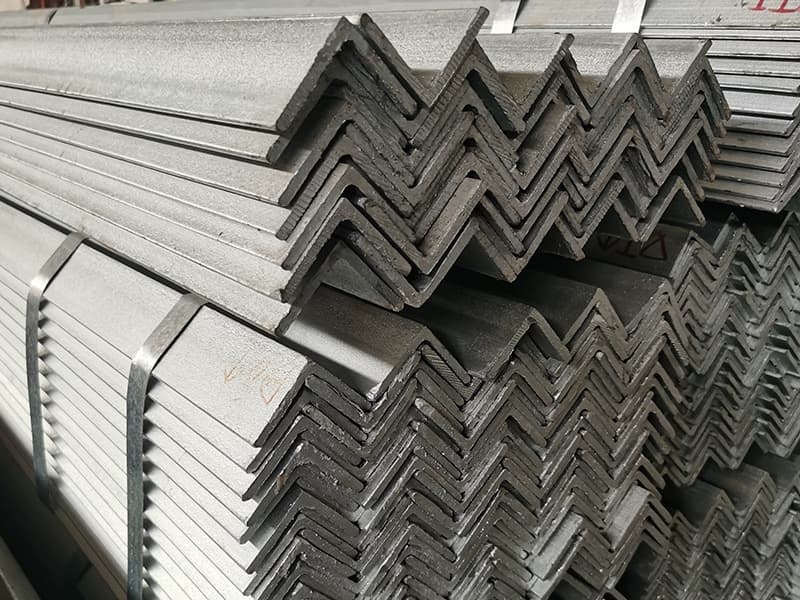
I have stood in enough receiving bays to know the pattern. The truck backs in, the straps gleam, the paper looks right — and then somebody slices the banding with a grinder before anyone reads a tag. At that moment, the cheapest unit of traceability in the whole yard disappears. A bundle is the last time the heat number travels with the steel for free. Once it is broken into loose bars, every mark has to be rebuilt by hand, and rebuilt marks are where mistakes live. So identification is not a paperwork habit. It is a physical one, and it has to survive rain, rust, forklifts, and the warehouse worker who is in a hurry. In this article I will walk through what a proper bundle tag carries, how to rebuild an identity when a tag goes missing, why the first cut is the dangerous moment, and how to test whether your own system actually works.
What Should a Marine Angle Steel Bundle Tag Actually Carry?
Weak tags create silent gaps in the certificate chain. A bundle that cannot prove which melt it came from is unprovable steel, no matter how good the test results look on paper.
A compliant marine angle steel bundle tag carries grade, heat number, size, and bundle mass, printed or painted on durable material, attached in duplicate on opposite straps, and matched line by line to the EN 10204 3.1 mill test certificate before the shipment is accepted.
The Four Fields the Certificate Chain Depends On
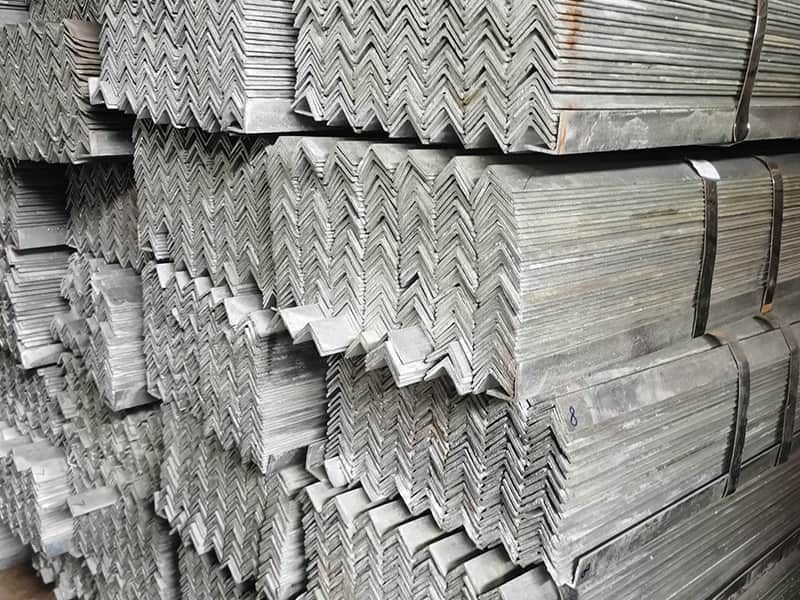
Classification rules are unambiguous about this. Under IACS UR W11, hull structural steel must carry the grade, the heat number, and a piece identification, applied so the surveyor at the yard can trace any bar back to the witnessed test results that released it. For sections shipped in bundles, that identity lives on the tag, because individual bars are small and often carry only a painted grade mark. The trade convention — and the way we tag every export bundle leaving our Liaocheng warehouse — is the four-field minimum: grade, heat number, size, and mass. Grade tells the storekeeper whether the bundle is allowed on a strength member. Size prevents the nearest-lookalike error between an L150×150×12 and an L150×100×12 that look identical from ten metres. The heat number is the only link to the chemistry and the Charpy results on the EN 10204 3.1 certificate. The mass lets the receiver cross-check the load against the truck weighbridge before signing.
Why Two Tags on Opposite Straps
One tag is one point of failure. Straps get cut, tags tear off under slings, and paint washes out in monsoon rain. Standard export practice is two tags per bundle on opposite sides, written in English as well as the mill’s own language, so the receiving crew at a Middle East or Southeast Asian port never depends on one surviving label. I prefer weatherproof laminated card wired on with tie wire over paper labels in plastic sleeves — sleeves collect water, and water plus printing equals a blank tag. If your supplier offers only a single tag on one end, ask them to double it. That is a two-minute request at packing, and it is far cheaper than reconstructing an identity at the quay.
The Tag Material Is Part of the Specification
Buyers obsess over what the tag says and forget what the tag is made of. A printed paper tag in a plastic sleeve will not survive a month outdoors, and export bundles sit in open stockyards, on quays, and inside humid containers for weeks before anyone reads them again. Our standard is a laminated synthetic card, tied with galvanised tie wire at two points so it cannot spin away from the strap, with the heat number additionally painted directly onto the end bar of the bundle in characters about fifty millimetres tall. Paint on steel outlives every label, so the tag is for reading and the paint is for proof. Ask your supplier to confirm the tagging medium in writing before the first shipment — it is a fair question, and a supplier who bristles at it is telling you something about their yard.
Here is how each tag field connects to the next document in the chain:
| Tag field | Where it comes from | Where it must appear next |
|---|---|---|
| Grade (e.g. AH36) | Mill’s rolling plan and certificate | Ledger row, yard location code, cut-piece mark |
| Heat number (e.g. H4827B) | Mill melt records, EN 10204 3.1 certificate | Packing list, MTC archive, offcut tag |
| Size (e.g. L150×150×12) | Rolling schedule | Picking slip, nesting plan |
| Bundle mass (e.g. 12.4 t) | Theoretical calculation from kg/m × count | Weighbridge ticket, commercial invoice |
The point of the table is that no field stands alone. Each one is repeated on at least two documents downstream, so a single lost tag still leaves a recoverable thread. When we shipped angle steel to Gulf Metal Solutions in Saudi Arabia, their SGS inspector walked the loading point at Dammam checking tags against mill certificates bundle by bundle — and because every bundle carried its pair of tags, that inspection took half a day instead of a week of unstacking.
How Do You Rebuild a Bundle’s Identity When the Tag Is Missing?
A torn or illegible tag looks like a paperwork nuisance. In classed construction it is worse: unidentified steel is unsuitable steel, and it cannot re-enter stock on a guess.
When a bundle tag is missing, rebuild the identity from the mill stencil on the bars, cross-check against the packing list and certificate by heat and piece count, and reconcile the theoretical weight against the kg/m formula. Steel that cannot be matched to a certificate stays quarantined.
Read the Mill Stencil Before You Trust Anything Else
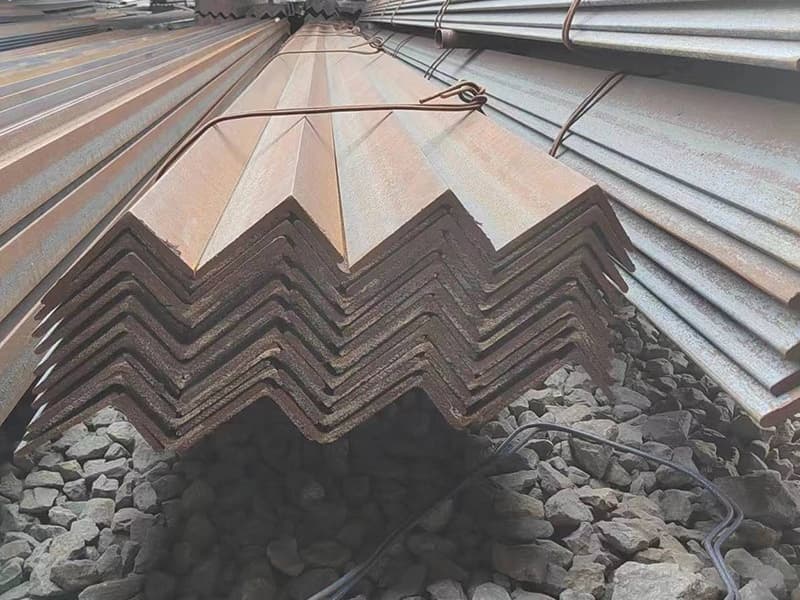
The mill applies the most durable marks, and the tag is only a copy of them. On hot-rolled sections, look for the stencilled or paint-marked grade and heat on the web or inner leg face, and the class society brand where the steel was certified. Class stamps are applied by the surveyor’s stamp — pressed into the steel, not painted — so they survive conditions that destroy ink. Read the stencil first, then the tag, then the certificate, and all three must agree on grade and heat. If the stencil shows only the size and the heat appears only on the missing tag, do not guess: paint the heat number onto at least two bars in the bundle with a permanent marker before any further handling, and record in the ledger that the identity was reconstructed at receiving. If the stencil and the certificate disagree, stop and call the supplier. Never average the difference, and never assume the certificate is the correct one just because it looks official.
Cross-Check by Weight When the Marks Have Faded
Rust hides stencils. When half the bars are unreadable, weight arithmetic gives you a second, independent line of evidence. For an equal-leg angle, the theoretical mass is [(A + B) − t] × t × 0.00785 kg per metre, so an L150×150×12 bar runs about 27.3 kg/m. Count the bars, measure one length, multiply, and compare against the packing list mass. EN 10056-2 allows a mass deviation of ±4% for sections over 4 mm thick, so a 12-tonne bundle claim should land between roughly 11.5 and 12.5 tonnes. A 15% gap means the piece count is wrong, the length is wrong, or the identity belongs to another bundle entirely — and every one of those possibilities changes what you write in the ledger. I watched a receiver in [Zora will replace] accept a bundle on piece count alone and skip the weight check; the bundle turned out to be a shorter length of the same size, and the difference only surfaced three weeks later when the nesting plan came up short. Ten seconds on a weighbridge would have caught it at the gate.
Each identity clue earns a different level of trust:
| Identity clue | What it proves | Reliability |
|---|---|---|
| Surveyor’s class stamp pressed into steel | Grade certification by that society | Highest — survives weather and handling |
| Mill stencil of heat number on bar | Direct link to the MTC | High if legible, fades with rust |
| Bundle tag (duplicate pair) | Grade, heat, size, mass as shipped | High while attached, fragile when cut |
| Painted grade mark on leg face | Grade only, not the heat | Medium — wear and repaint are common |
| Theoretical weight reconciliation | Consistency check on count and size | Supporting evidence, not proof of grade |
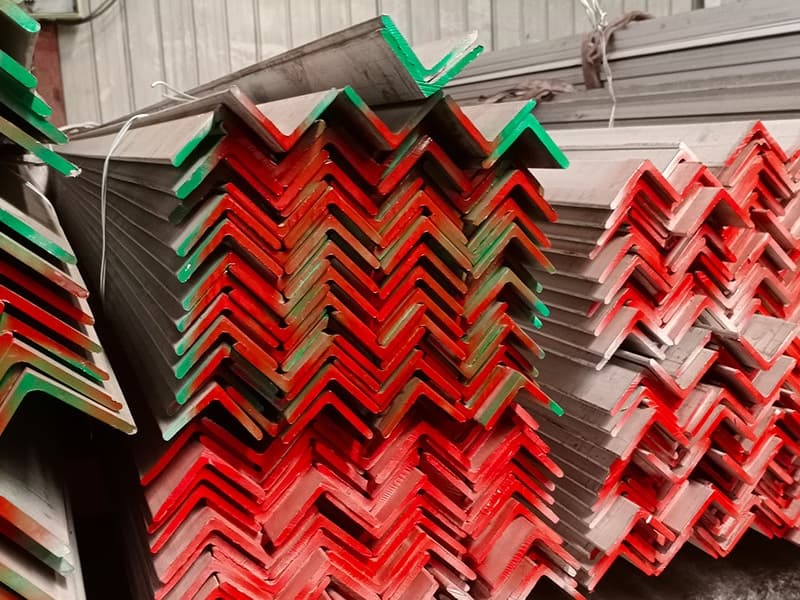
| Colour code on end faces | Segregation scheme within your yard | Only as good as the register behind it |
Weight and colour codes support the chain; they never replace it. The stencil-and-certificate match is the decision, and everything else just helps you get there.
Why Does Traceability Break at the Moment the Straps Are Cut?
Yards keep bundles intact and tagged for weeks. Then fabrication starts, the banding is cut, and the identity scatters across fifty loose bars that all look the same.
Traceability breaks at strap-cutting because the bundle was carrying the identity. Cut-piece re-marking — transferring the grade and heat onto every bar before the straps come off, and recording the break in the ledger — keeps the heat number alive into fabrication.
The Bundle-Break Protocol That Keeps the Heat Alive
The rule is simple and almost universally skipped: mark before you cut the straps. Before any banding is removed, transfer the grade and heat number from the tag onto at least one end of every bar — paint marker or soapstone, large enough to read with gloves on. Two minutes for a fifty-bar bundle. Then record the break in the ledger: bundle number, heat, piece count, destination location code, date. From that point the bundle stops existing as a traceable unit and fifty individually marked bars take over. What I see in yards that skip this step is a quiet drift — the tag ends up in a drawer, the bars end up in three different racks, and six months later nobody can say which heat went into a bulkhead. The surveyor then asks the question the hard way.
What Every Cut Piece Must Inherit
The chain does not stop at the saw. Every length cut from a marked bar inherits the heat number on its own tag or paint mark, and the cutting list records which heat went to which job. Offcuts get the same treatment: a 1.9-metre remnant is real stock with a real heat number, so it gets a tag with the heat, size, and length, and its own ledger row. If it is booked as “offcut” without the heat, it is dead steel for classed work — usable only for non-certified items. This is also where a good supplier earns his fee. Our packing lists list heat numbers bundle by bundle, and I encourage buyers to keep that mapping alive on their side after receipt, because the certificates are filed by heat, not by purchase order. When [Zora will replace] a classification surveyor asks which heats went into a vessel’s transverse bulkhead, the answer should take minutes from the records, not a morning of unstacking racks.
Who Owns the Mark — Supplier or Yard?
Buyers sometimes assume re-marking is the supplier’s job and suppliers assume the yard took over at the gate. The honest answer is that ownership transfers with the straps. Our responsibility ends at the point where the bundle, tagged and photographed, is handed over or loaded; from that moment the receiving yard owns every mark on the steel. Write the boundary into the purchase order: the supplier guarantees tag pairs, certificate matching, and pre-loading photographs, and the buyer guarantees piece re-marking and bundle-break logging after receipt. When both sides believe the other is doing it, nobody does it — and the gap only shows up in front of a surveyor. One line in the contract costs nothing now and saves an argument later, which is why every large angle steel order we confirm includes the tagging scope as a written clause.
Here is the transfer chain, and where each step usually fails:
| Transfer step | What gets recorded | Typical failure mode |
|---|---|---|
| Tag → bars (before strap cut) | Grade + heat paint-marked on each bar | Straps cut first, marking “later” |
| Bundle break → ledger | Break event, heat, count, new location | Ledger row never written |
| Bar → cut pieces | Heat on each piece tag and cutting list | Only length recorded, heat dropped |
| Remnant → stock | Heat, size, length on remnant tag | Booked as “offcut” without identity |
| Piece → installed location | Heat mapped to block or sub-assembly | Weld map and MTC archive never linked |
How Do You Test Whether Your Bundle Traceability System Actually Works?
A tagging procedure that lives in a binder proves nothing. The only test that matters is whether a stranger can walk into your yard and trace steel backwards in real time.
Test bundle traceability with a reverse trace: pick one random installed member, and trace it back to its heat number, mill test certificate, and receiving record within fifteen minutes, using only the yard’s own tags and ledger. Time it, record it, and fix whatever breaks.
The Fifteen-Minute Reverse Trace
The test runs against the direction the steel flowed. Pick any welded stiffener or bracket on a block — a real part, chosen at random. From the part, go to the piece mark; from the piece mark, to the cutting list; from the cutting list, to the bar and its heat; from the heat, to the bundle tag photo or record and the mill test certificate. If any link in that chain is missing, you have found the exact place your system leaks, and you fix that link rather than rewriting the whole procedure. I run the same exercise with our own shipments when a client’s inspector is booked: pull a random bundle from the export queue and produce its certificate, its tag pair, and its photos within minutes. It keeps us honest, and it is the reason inspections in Dammam went smoothly — the inspector’s first question is always “show me, not tell me.”
The Habits That Keep the Chain Alive Year After Year
Three habits separate yards that pass this test from yards that fail it. First, photograph every bundle at receiving and again at container loading — four frames per bundle costs nothing, and photographs survive when tags do not; we shoot the loaded container interior before the doors close on every export order for exactly this reason. Second, sample-check at least one bar per bundle against its certificate on arrival, matching heat numbers between stencil, tag, and paper, and write the check down — an unrecorded check never happened as far as an auditor is concerned. Third, keep the identity discipline physical, not just digital. A ledger entry without a mark on the steel is a promise, and a mark on the steel without a ledger entry is a rumour; traceability only exists where the two agree.
The two operating styles, side by side:
| Practice | Guess-and-go yard | Traceable yard |
|---|---|---|
| Tags at receiving | Read once, then ignored | Verified against certificate, duplicated, photographed |
| Strap cutting | Cut first, mark if convenient | Mark every bar, then cut, then log the break |
| Missing tag | Bundle re-entered stock on assumption | Quarantined until stencil + weight + certificate agree |
| Offcuts | Piled unmarked | Tagged with heat, size, length, own ledger row |
| Surveyor request | Days of document digging | Fifteen-minute reverse trace |
| Cost of the discipline | None — until one claim | A marker, a laminated card, ten minutes per bundle |
Conclusion
Tag every bundle twice, verify against the certificate, mark before the straps are cut, and test the chain backwards. Traceability survives on physical habits, not binders.