
Your marine project’s budget is tight. A supplier quotes a surprisingly low price per kilogram for angle steel. You feel relieved. But this relief can vanish when hidden costs appear, quality fails, or shipments are delayed. Managing suppliers effectively means looking beyond the first quote. It means understanding what you are really buying and building a partnership based on clear specifications and reliable processes.
Best practices for managing marine angle steel suppliers involve a proactive, multi-step approach. You must define precise technical requirements, verify mill certifications, insist on third-party inspection rights, and evaluate total cost including logistics. Building a relationship with a responsive, specialist supplier who understands marine applications is more valuable than chasing the lowest per-unit price alone.
Finding a good supplier is one thing. Managing that relationship to ensure consistent project success is another. It requires moving from simple buying to technical procurement. Let’s start with a common question that often leads to misunderstandings: the price per kilogram. Understanding this fully is your first defense against budget overruns and quality issues.
What is the price of 40x40x5 angle per kg?
You receive ten quotes for 40x40x5mm angle steel1. The prices per kilogram are all different. This difference can be confusing and frustrating. The lowest number might seem attractive, but it rarely tells the whole story. The final cost to your project depends on many factors beyond the basic weight price.
The price of a 40x40x5mm steel angle per kg is not a fixed number. It varies based on the material grade2 (e.g., ASTM A36 vs. marine grade), the quantity ordered, surface treatment, current raw material costs, and Incoterms. As a rough market indicator, for standard carbon steel, it might range between $0.50 to $0.90 per kg EXW, but marine-grade material will be significantly higher due to alloying and certification.
Deconstructing the "Price per Kg": A Total Cost Analysis
Focusing only on the per-kg rate is a common mistake that leads to project problems. We need to break down what influences this price and what other costs are involved.
1. The Core Price Drivers:
- Material Grade: This is the biggest factor. ASTM A36 carbon steel is the baseline. A marine grade like AH36, with its specific chemical composition and guaranteed mechanical properties, commands a premium. This premium is for the added alloys (like Ni, Cr, V) and the stringent production controls.
- Raw Material Market: Steel prices are tied to global iron ore and scrap metal prices. They fluctuate daily. A quote is valid for a limited time. A supplier locking in a price for you assumes market risk.
- Order Quantity (MOQ): Larger orders mean better economies of scale for the mill and the supplier. The price per kg for a 20-ton order will be better than for a 2-ton order. Good suppliers offer flexible MOQ, but you should know the cost implications of smaller batches.
- Mill Source and Certification: Steel from a large, certified mill (with approved quality management systems) costs more than steel from a smaller, uncertified source. The certificate (like an EN 10204 3.1 or 3.2) is a product with its own value, ensuring traceability.
2. The "Hidden" Cost Components:
The EXW (Ex-Works) price per kg is just the beginning. Your total landed cost includes many other items.
| Cost Component | What It Covers | Why It Matters for Management |
|---|---|---|
| Material Price | Base cost of the steel per ton or kg. | Must specify grade, standard, and required certificates clearly. |
| Processing | Cutting to length, shot blasting, priming. | Adds cost but saves time and money on your site. Negotiate what’s included. |
| Testing & Certification | Mill Test Certificate, third-party inspection (SGS/BV). | Non-negotiable for marine projects. Confirm who pays for 3rd party inspection. |
| Packaging | Waterproof, heavy-duty packaging for sea freight. | Prevents damage and corrosion in transit. Gulf Metal Solutions specifically praised our packaging. |
| Inland & Sea Freight | Transport from mill to port, and to your destination port. | Varies wildly by route and season. Get a firm, all-in shipping quote. |
| Insurance | Cargo insurance for the voyage. | Essential for risk management. |
| Import Duties & Taxes | Fees levied by your country. | Understand these beforehand to avoid surprises. A good supplier can advise. |
3. The Real Cost of a "Low Price":
A very low quote often means compromises: non-certified material, poor surface preparation, weak packaging, or hidden fees added later. The real cost emerges as delays from rejected materials, fabrication problems from inconsistent quality, or premature corrosion.
My Insight from the Field
I once had a client in the Philippines who insisted on the lowest per-kg price for an angle order. We presented our quote for certified AH36 material. They chose a cheaper offer from another trader. Later, they contacted us urgently. The delivered angles failed their ultrasonic testing for internal flaws, and the mill certificates looked forged. Their project was stalled. They had to pay for emergency air freight for a small batch of our material to keep working, spending far more than our original quote. The lesson is clear. The true "best practice" is to define your total budget for project-ready material at your workshop, not just for raw steel at a foreign port. Managing a supplier means agreeing on all these cost elements transparently from the start.
What is ASTM a 36 steel angle?
You see "ASTM A361" on many supplier websites and quotes. It is a common specification. But is it suitable for your marine project? Many buyers assume it is a marine grade2, but this assumption is risky. Using the wrong specification can compromise the entire structure’s safety and longevity. Knowing exactly what A36 is, and what it is not, is fundamental to proper supplier management.
ASTM A361 is a standard specification for carbon structural steel shapes, plates, and bars. An ASTM A361 steel angle meets minimum yield strength3 (36,000 psi / 250 MPa) and tensile strength requirements. It is a general-purpose steel used in bridges, buildings, and general fabrication. However, for critical marine applications, specific marine grades like AH36 or ABS Grade A are required due to their guaranteed toughness and corrosion-resistant chemistry.
ASTM A361 in Perspective: Strengths, Limitations, and Misapplications
To manage a supplier, you must be able to specify the correct material and reject substitutions. Let’s examine A36 in detail.
1. Key Properties and Typical Use Cases:
- Strength: The "36" stands for a minimum yield strength3 of 36,000 psi. This is a moderate strength level, sufficient for many static structural applications.
- Chemical Composition: A36 has limits on carbon, manganese, phosphorus, and sulfur, but these limits are relatively broad. It is not alloyed for specific properties like weather resistance or low-temperature toughness.
- Primary Applications: It is the workhorse steel for non-marine construction: building frames, support brackets for industrial equipment, general framework, and non-critical infrastructure. Its advantage is availability and lower cost.
2. Why ASTM A361 Is Generally NOT a Marine Grade:
This is the critical distinction every marine project manager must understand.
- Lack of Toughness Specification: A36 does not require Charpy V-notch impact testing4. Marine steels (like ABS, LR, DNV grades) must pass impact tests at specific low temperatures (e.g., -20°C). This toughness prevents brittle fracture in cold ocean environments.
- Corrosion Resistance: A36 has no mandatory alloying elements (like copper) to improve atmospheric corrosion resistance5. In a saltwater environment, it will corrode faster than a steel formulated for marine service.
- Certification and Traceability: While A36 can come with a certificate, marine grade2s are produced under strict survey by classification societies (ABS, Lloyd’s, DNV, etc.). Each plate or section is individually stamped and certified, ensuring traceability back to the heat of steel.
3. Comparison Table: A36 vs. a Basic Marine Grade
This table makes the practical differences clear:
| Property / Requirement | ASTM A361 Angle | Marine Grade Angle (e.g., ABS Grade A / AH32) | Implication for Marine Use |
|---|---|---|---|
| Governing Standard | ASTM A361 (General Construction) | ABS Rules / EN 10025-5 / etc. (Marine Specific) | Marine standards are legally required for classed vessels. |
| Yield Strength | Min. 250 MPa | Min. 315 MPa (AH32) | Marine grade offers higher strength, allowing lighter structures. |
| Impact Toughness | Not Required | Mandatory. Tested at -20°C or -40°C. | Critical. A36 may become brittle in cold water, risking catastrophic crack propagation. |
| Chemical Composition | Broad ranges for C, Mn, P, S. | Tighter controls, often with added Cu, Ni, Cr for corrosion/weldability. | Marine chemistry enhances longevity and weld performance in harsh conditions. |
| Primary Certification | Mill Test Certificate (MTC) | MTC + Class Society Certificate (e.g., ABS, BV, DNV) | The class certificate is proof of suitability for marine service. |
| Typical Cost | Lower | Higher (due to alloying and certification) | The cost premium6 buys essential safety and performance. |
My Insight from the Field
A project contractor in Thailand was building pontoons for a floating dock. They used A36 angles for the internal framing, thinking it was "strong enough." Within 18 months, several critical weld joints showed fatigue cracks, and general corrosion was severe. The repair cost was huge. In their next project, we worked with them. We explained the need for at least a commercial marine grade2. We supplied ABS-certified angles. The initial cost was about 15% higher, but the dock is now in its fifth year with only routine maintenance. Managing your supplier means you must have the technical knowledge to specify the right material. Do not let a supplier suggest A36 as a "cost-saving" alternative for marine applications. It is a different product for a different purpose.
What is marine grade steel1 material?
You tell your supplier you need "marine grade steel1." This seems like a clear request. But different suppliers might interpret this phrase differently. One might send you a painted steel. Another might send you a high-toughness, class-certified alloy steel. This ambiguity can cause major problems. A best practice is to use precise, standardized terminology that leaves no room for error.
Marine grade steel material refers to steel produced to specific classification society2 rules (like ABS, Lloyd’s, DNV) or international standards (like EN 10025-53). These steels have enhanced properties for the marine environment: guaranteed notch toughness at low temperatures, controlled chemical composition for better weldability and corrosion resistance, and mandatory individual certification for traceability.
Defining "Marine Grade": Standards, Grades, and the "Must-Have" Documents
Let’s remove the ambiguity. Managing a supplier means you can specify the exact standard, grade, and supplementary requirements.
1. The Two Pillars of Marine Steel: Classification Societies and International Standards.
-
Classification Society (Class) Steels: These are the most stringent. Societies like American Bureau of Shipping (ABS), Lloyd’s Register (LR), and DNV publish their own rules. Steel mills must be approved by these societies to produce such steel. Each single piece is tested and stamped.
- Common Grades: A, B, D, E, AH32, DH36, EH40. The letters indicate increasing toughness levels (A is basic, E is for extreme low temperatures). The "H" indicates high strength.
- Use: Mandatory for the hull and primary structure of classed vessels (ships, oil tankers, offshore platforms).
-
International Standard Steels: These are defined by standards like EN 10025-53 (European) or ASTM A131 (American). They mimic class requirements and are often used for non-classed marine structures, port equipment, or coastal construction.
- Common Grades: S235J0, S235J2, S355J0, S355J2 under EN 10025-53. The "J2" or "J0" indicates impact toughness4 level.
- Use: Marine construction, unclassed barges, dockyards, sea walls.
2. The Key Enhanced Properties:
Why are these steels special? They are engineered for three harsh marine challenges:
- Toughness Against Brittle Fracture: The ocean, especially in deep waters or polar routes, is cold. Standard steel can change from ductile to brittle. Marine grades are impact-tested to ensure they absorb energy without cracking.
- Corrosion Resistance: While not stainless, marine grades often have added Copper (Cu), Chromium (Cr), and Nickel (Ni). These elements form a more adherent, protective rust layer, slowing down the corrosion rate in salt air and splash zones.
- Weldability: Marine structures are welded extensively. The chemical composition (notably a controlled Carbon Equivalent value) ensures the steel can be welded without forming hard, crack-sensitive microstructures in the weld zone.
3. The Non-Negotiable: Certification and Traceability.
This is the most critical part of supplier management. You must receive and verify the correct paperwork.
- Mill Test Certificate5 (MTC): A standard certificate showing heat number, chemical analysis, and mechanical test results.
- Class Society Certificate6: This is the gold standard. It is issued by the classification society2‘s surveyor who witnessed the production and testing. It states the steel complies with that society’s rules. The steel will have the society’s stamp physically rolled onto it.
- 3.2 Certificate: According to EN 10204, a Type 3.2 certificate is a declaration of conformity with the order, issued by the manufacturer’s authorized inspection representative independent of the manufacturing department. This is common for EN standard steels.
My Insight from the Field
A new client from Romania contacted us. They needed "marine grade angles" for a ship repair. Their previous supplier had provided material with only a generic MTC. The shipyard’s surveyor rejected it because it lacked a specific class certificate. The project was delayed. We asked them a simple question their last supplier didn’t: "Which classification society2 does the shipowner specify?" They needed LR (Lloyd’s Register) grade. We immediately provided relevant LR-certified mill certificates for their review. This built instant trust. The order proceeded smoothly. This experience shaped our process. Now, our first question to any client is always about the required standard and certification. It stops problems before they start. A best-practice supplier will ask you these detailed questions.
What is the weight of 75 75 6mm ms angle?
You are creating a bill of materials or planning logistics. You need to know the weight of the steel. An accurate weight calculation is crucial for cost estimation, shipping arrangements, and structural load calculations. Relying on a supplier’s generic number or an online calculator without understanding the theory can lead to significant errors. Managing this basic data accurately is a sign of professional procurement.
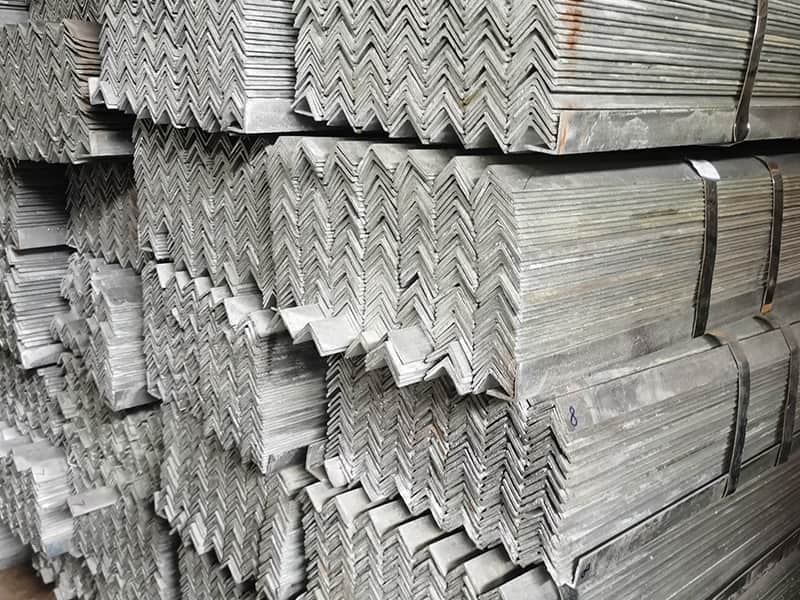
The theoretical weight of a 75mm x 75mm x 6mm mild steel (MS) angle1 is approximately 6.8 kilograms per meter. This is calculated using the formula: Weight (kg/m) = [ (A+B) – t ] t 0.007852, where A & B are leg lengths (75mm), and t is thickness (6mm). Always confirm the actual weight from the supplier’s mill certificate3, as manufacturing tolerances4 can cause slight variations.
Mastering Weight Calculations: From Theory to Practical Procurement
Knowing how to calculate and verify weight is a fundamental skill. It affects cost, logistics, and even design.
1. The Calculation: Breaking Down the Formula.
The standard formula is: Weight (kg/m) = [(Side A + Side B) – Thickness] × Thickness × Density of Steel.
- For a 75x75x6mm equal angle: [(75 + 75) – 6] × 6 × 0.00785 = [144] × 6 × 0.00785 = 864 × 0.00785 = 6.7824 kg/m.
- Why subtract the thickness? The formula accounts for the overlap at the corner. The simple "cross-sectional area x density" method would double-count the metal in the corner. This formula gives the correct theoretical weight.
2. The Importance of Tolerances: Theory vs. Reality.
The calculated weight is theoretical. Actual rolled steel sections have manufacturing tolerances4 defined by standards like ASTM A65 or EN 10056. These tolerances affect the actual weight.
- Thickness Tolerance: A 6mm thick leg might legally be 5.5mm or 6.5mm. This changes the weight.
- Leg Length Tolerance: The 75mm leg might be 73mm or 77mm.
- Sectional Weight Tolerance: Standards often allow the actual weight per meter to be within +/- 2.5% to 5% of the theoretical weight.
- Practice: For precise costing (especially for large orders), use the theoretical weight for estimation6. For final invoicing, it is best practice to use the actual weight as recorded on the mill certificate or verified during inspection. Reputable suppliers will invoice based on actual weight.
3. Why This Matters in Supplier Management:
- Cost Control: If you agree on a price per metric ton, a 5% weight over-tolerance means you pay for 5% more steel. You need to agree with the supplier on the basis for invoicing: theoretical or actual weight.
- Logistics Planning: If you underestimate the total weight by 5%, you may face unexpected freight charges or need to rearrange shipping space at the last minute.
- Structural Engineering: While engineers use theoretical weights for design, large negative tolerances could affect the safety factor. Consistent material from a reliable supplier ensures the actual product is close to the design specifications.
4. Beyond Simple MS: Adjusting for Different Materials.
The formula uses a density of 7850 kg/m³ (0.00785 kg/cm³). This is for mild steel. If you are using a different grade, the density is almost the same, but the weight calculation process is identical. The key difference with high-strength marine grades7 is not density, but the fact that you can use a thinner section to achieve the same strength, thereby reducing weight – a major advantage.
My Insight from the Field
We had a client in Pakistan who ordered a large batch of 75x75x6 angles. Their budget was based on a simple online calculator. Our quote, based on the precise theoretical weight, was slightly higher in total cost because our calculated weight per meter was more accurate than the rough number they used. They were concerned. We explained the calculation and sent them the ASTM tolerance table. We also promised invoicing based on the actual mill certificate weight. After delivery, the actual weight was within 1.5% of our theoretical calculation, validating our quote. Their trust increased because we were transparent and precise about this basic detail. They later told us their previous supplier had used overly simplified weights, leading to hidden freight cost increases. Managing weight accurately is a sign of a professional and trustworthy supplier.
Conclusion
Managing marine angle steel suppliers well is technical procurement. It requires clear specifications, a focus on total cost and certification, and building a partnership with a specialist who provides reliability, not just a product.
-
Understanding the weight of this specific angle is crucial for accurate cost estimation and logistics planning. ↩ ↩ ↩ ↩ ↩ ↩ ↩ ↩ ↩ ↩ ↩
-
This formula is essential for precise weight calculations, ensuring accurate procurement and cost management. ↩ ↩ ↩ ↩ ↩ ↩ ↩ ↩
-
Verifying actual weight ensures accurate billing and prevents unexpected costs in logistics. ↩ ↩ ↩ ↩ ↩ ↩
-
Knowing manufacturing tolerances helps in understanding weight variations and ensuring accurate invoicing. ↩ ↩ ↩ ↩
-
ASTM A6 sets standards for steel tolerances, crucial for ensuring quality and compliance in procurement. ↩ ↩ ↩
-
Using theoretical weight helps in budgeting and planning, ensuring financial accuracy in projects. ↩ ↩ ↩
-
Exploring differences in weight calculation for various steel grades can optimize material selection and cost. ↩