
Your shipyard production line stops. The scheduled delivery of angle steel is delayed again. You call your supplier, but they cannot give you a clear answer. This uncertainty costs you money every hour. A reliable supply chain is not a luxury. It is the foundation of your project’s success and your company’s reputation. Building it requires careful planning and choosing the right partners.
Building a reliable marine angle steel supply chain involves establishing partnerships with certified, responsive suppliers who offer transparent pricing, accurate material data, and robust logistics. It requires moving beyond single transactions to create a predictable, quality-assured flow of materials from the mill to your fabrication line, supported by clear communication and contingency planning.
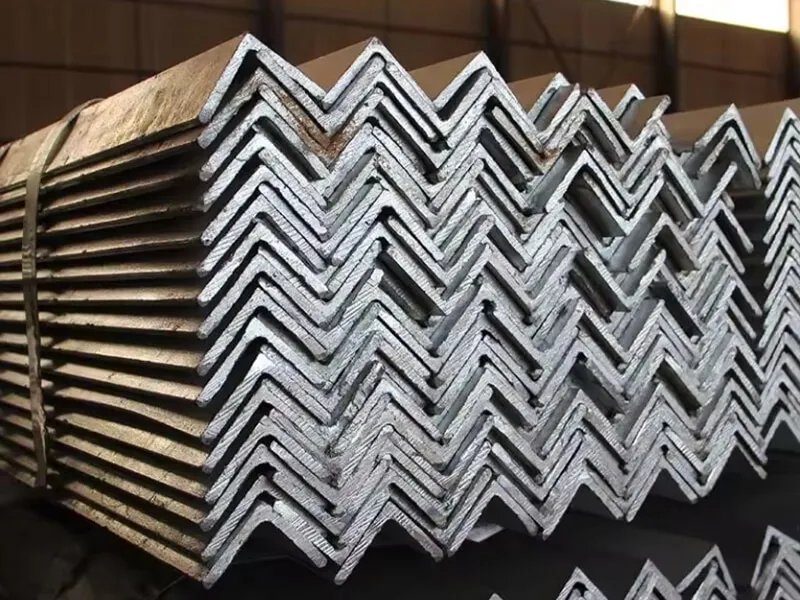
Reliability starts with mastering the fundamentals. You cannot manage what you do not measure or understand. Before you even talk to a supplier about delivery schedules, you need to have absolute clarity on the basics of the material itself. This knowledge is your first step towards building a supply chain you can truly depend on.
What is the weight of 75 75 6mm ms angle?
You are preparing a shipping plan. You need to know the exact weight of your angle steel order to book container space. If your weight calculation is wrong, you face extra freight charges1 or worse, your shipment gets left at the port. An accurate weight is not just a number. It is a critical piece of data that affects your logistics, costing, and project planning from day one.
The theoretical weight2 of a 75mm x 75mm x 6mm mild steel (MS) angle3 is approximately 6.8 kilograms per meter. This is calculated using the standard formula: Weight (kg/m) = [ (A+B) – t ] t 0.00785, where A and B are leg lengths (75mm) and t is thickness (6mm). For reliability, always cross-check this with the actual weight on the mill certificate, as manufacturing tolerances apply.
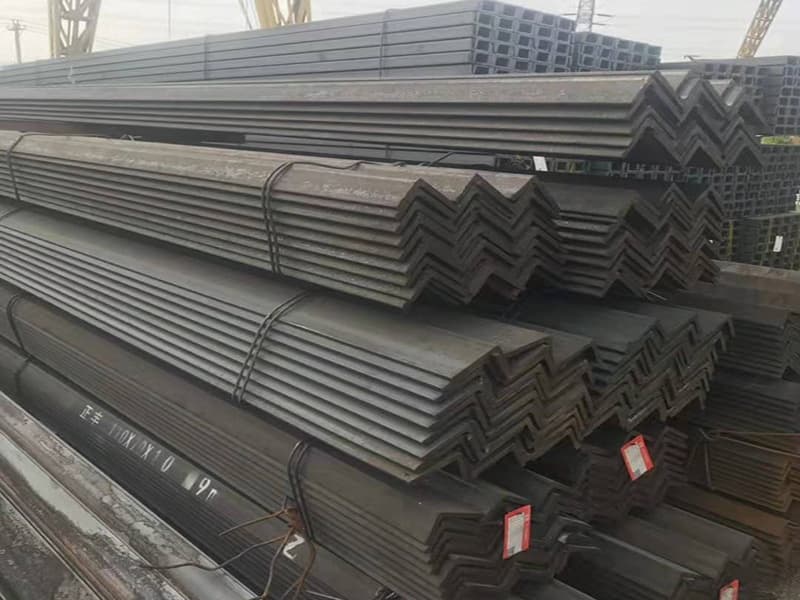
Accuracy in Weight: The Cornerstone of a Reliable Supply Chain
Mistakes in weight calculations ripple through your entire operation. Let’s break down why precision here matters so much and how it connects to supply chain reliability4.
1. The Direct Impact of Weight Errors.
- Logistics and Freight Costs: Freight charges are based on weight or volume. An underestimate means you might book a 20-foot container when you need a 40-foot one. You will face last-minute premium charges to upgrade or split the shipment. An overestimate means you pay for unused space, wasting money.
- Structural Engineering and Safety: While engineers use theoretical weight2s for design, consistent, predictable material weight is an indirect indicator of dimensional consistency. Large deviations could signal a problem with the rolling process.
- Cost Accounting and Budgeting: For large orders, a 2% error in weight calculation can translate to thousands of dollars. Your project budget must be based on the most accurate data possible.
2. Theoretical vs. Actual Weight: Building Trust with Data.
A reliable supplier provides transparent data. The theoretical weight2 is a good estimator. The actual weight5 is the truth.
- Theoretical Weight: This is calculated from the nominal dimensions. It is what you use for initial quotes and plans.
- Actual Weight: This is the weight recorded on the Mill Test Certificate (MTC)6 or verified at the weighbridge. Reputable suppliers will invoice based on actual weight5, not theoretical weight2. This practice is fair and builds trust.
- Tolerances: Standards like EN 10056 or ASTM A6 allow tolerances7 on thickness and leg length. Therefore, the actual weight5 per meter can legally be within a range (e.g., +/- 5%) of the theoretical weight2. A reliable supplier’s product will consistently land in the middle of this range, not at the extreme edges.
3. A Practical Example: From Calculation to Container.
Let’s say you need 5,000 meters of 75x75x6 angle for a project.
- Theoretical Total Weight: 5,000 m * 6.8 kg/m = 34,000 kg (34 metric tons).
- Considering Tolerance: The actual weight5 could be between 32,300 kg and 35,700 kg (34,000 kg +/- 5%).
- Reliable Supply Chain Action: A good supplier will inform you of the approximate actual weight5 before loading. They might say, "Our pre-shipment check shows an average of 6.83 kg/m, so expect about 34,150 kg total." This allows you to book the correct shipping space accurately. An unreliable supplier will just ship it and send you a surprising invoice later.
My Insight from the Field
We had a client in Mexico who constantly had issues with freight costs being higher than quoted. Their previous supplier always used the bare minimum theoretical weight2 for quotes but invoiced on actual weight5, which was always 4-5% higher. This created budget overruns and distrust. When they started working with us, we provided a detailed breakdown. We gave the theoretical weight2 for planning and then, before shipment, we provided a draft weight memo based on the mill certificate. The final invoice matched this memo exactly. This transparency eliminated their budgeting8 uncertainty. For them, this predictable accuracy was the first tangible proof of a reliable supply chain. It showed them we managed details with care.
What is the price of 75x75x6 angle1 per kg?
You receive a quote. The price is $0.70 per kg. This seems clear. But is this the price for raw black steel2, or for shot-blasted and primed material3? Does it include the certification fee4? Ambiguity in the price basis is a major source of conflict and broken promises in the supply chain. A reliable partnership is built on a fully defined, all-inclusive price structure.
The price per kg for a 75x75x6mm angle is a variable that must be qualified. A reliable quote clearly states what is included: the base material grade (e.g., AH36 vs. A36), surface condition (as-rolled, blasted, painted), certification type (Mill cert vs. Class cert), packaging standard5, and the Incoterms point (EXW, FOB, CIF). The lowest per-kg rate often excludes critical elements, leading to hidden costs and delays.
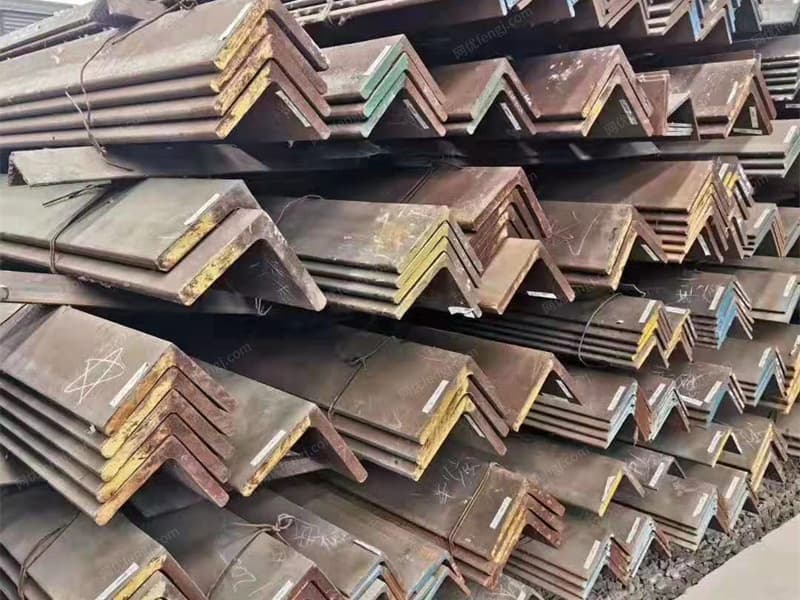
Deconstructing the Price Quote: The Anatomy of a Reliable Offer
To build a reliable supply chain, you must move past comparing single numbers. You must compare comprehensive packages.
1. The Layers of a Transparent Price.
A trustworthy supplier breaks down the cost. This clarity prevents disputes later.
| Price Component | What It Should Cover | Why It Matters for Reliability |
|---|---|---|
| Base Material Price | Cost of the steel per ton from the mill. Must specify grade (e.g., ABS AH36). | The core cost. Fluctuates with raw material markets. A reliable supplier gives a valid period for the quote. |
| Processing Surcharge | Cost for shot blasting, primer painting, or cutting to length. | These services prevent corrosion during transit and save you time. They should be optional but clearly priced. |
| Testing & Certification Fee | Cost for the Mill Test Certificate6 (MTC) and any Third-Party Inspection (e.g., SGS). | Non-negotiable for marine projects. It should be a fixed, stated cost, not hidden. |
| Packaging Cost | Cost for waterproof, sturdy steel strapping and wrapping. | Gulf Metal Solutions specifically noted our packaging was the best. Good packaging prevents damage, a key to reliable delivery of intact goods. |
| Inland Freight | Transport from mill to loading port. | Should be a clear line item. Fluctuations in diesel prices can affect this. |
| Admin & Documentation Fee | Cost for export documents, bill of lading, etc. | Often a small fixed fee. Transparency here shows an organized supplier. |
2. Incoterms7: Defining the Handover Point of Reliability.
The price is meaningless without defining the Incoterms7. This term dictates who is responsible and bears the risk at each stage.
- EXW (Ex-Works): Your reliability challenge starts at the supplier’s factory gate. You manage all logistics and risk.
- FOB (Free On Board): The supplier’s reliability is proven by getting the goods safely onto the ship at the port. Risk transfers to you once on board.
- CIF (Cost, Insurance, and Freight): The supplier’s reliability extends to delivering the goods to your destination port. They manage the main sea freight and insurance.
- For Reliability: Many of our clients, like those in Saudi Arabia or the Philippines, prefer CIF to main port8 with optional customs support. This simplifies their process. They can trust us to handle the complex logistics, allowing them to focus on their core work. We become a single point of accountability.
3. The True Cost of an Unreliable "Low Price".
A supplier offering a very low base price per kg might be cutting corners. They might use inferior packaging, skip proper surface treatment, or use uncertified material. The "savings" disappear when you pay for repackaging, deal with surface rust, or have materials rejected by your surveyor. The project delays cost far more than the initial price difference.
My Insight from the Field
A project contractor in Qatar was evaluating two quotes for 100 tons of 75x75x6 AH36 angles. Our quote was $15/ton higher than the competitor’s. Our quote was detailed: it included the price for shot blasting, primer, ABS certification, and heavy-duty packaging, all on a CIF Dammam basis. The competitor’s quote was just a single "per kg" number on an EXW basis. We advised the client to ask the competitor for a breakdown. The competitor could not provide one clearly. The client chose us. He said, "Your quote showed me exactly what I am paying for. The other quote showed me only what I might be paying for, with many risks left to me." The delivery was seamless. This experience cemented for me that reliability is communicated through transparency, even in a quotation.
How to calculate angle formula?
Your team is preparing a bill of materials. You need to calculate the weight for ten different angle sizes. Doing this manually is slow and error-prone. Understanding the formula is not just academic. It empowers you to verify supplier quotes, create accurate budgets, and spot potential errors early. This technical competence is a pillar of managing a reliable supply chain.
The weight of a steel angle is calculated using the formula: Weight (kg/m) = [(A + B) – t] t 0.007851, where A and B are the leg lengths in millimeters, and t is the thickness in millimeters. The constant 0.00785 is the density of steel (7850 kg/m³) converted for mm measurements. For equal angles, A=B. This formula accounts for the overlapping corner area to avoid double-counting.

Mastering the Formula: From Basic Math to Supply Chain Control
Knowing how to calculate is powerful. Let’s explore the formula’s components and its practical applications in building supply chain reliability.
1. Breaking Down the Formula Step-by-Step.
Let’s use a 100x100x10mm equal angle as an example.
- Step 1: (A + B) – t. Add the two leg lengths, then subtract the thickness. (100 + 100) – 10 = 190 mm. This gives the total "effective length" of the two legs, accounting for the corner where they merge.
- Step 2: Multiply by thickness (t). 190 mm * 10 mm = 1900 mm². This is the cross-sectional area2 of the angle.
- Step 3: Multiply by density constant. 1900 mm² * 0.00785 kg/(mm²·m) = 14.915 kg/m. (Note: The constant 0.00785 comes from 7850 kg/m³ ÷ 1,000,000 mm²/m²).
- Why this works: The formula calculates the area of a rectangle with width (A+B-t) and height (t), which is geometrically equivalent to the angle’s area.
2. Practical Applications for a Reliable Procurement Workflow.
This skill is used in several key ways:
- Quick Verification3: A supplier sends a quote with a total weight. You can quickly calculate the theoretical weight for the given dimensions and quantity. A large discrepancy is a red flag requiring immediate clarification before proceeding.
- Budgeting and Comparison4: You can create your own cost models. If you know the market price per ton for a specific grade, you can calculate the approximate cost per meter for any size, allowing for quick budget estimates for different design options.
- Data Management: You can build simple spreadsheets or checklists. This standardizes your internal processes, making your team less dependent on a supplier’s potentially error-prone calculations.
3. Beyond the Basic Formula: Addressing Real-World Complexities.
The standard formula is for right-angled, equal-leg angles. Reliability comes from knowing the exceptions.
- Unequal Angles (L)5: The formula still works. Simply use the two different leg lengths for A and B. For a 150x90x10mm angle: [(150+90)-10] 10 0.00785 = 18.07 kg/m.
- Tolerances Revisited6: The formula uses nominal dimensions. The actual weight will vary. A reliable partner will help you understand the typical tolerance range for your ordered size, so your logistics planning has a buffer.
- Metric vs. Imperial7: Be careful with units. If dimensions are in inches, you need a different density constant (0.2836 lb/in³). Mixing units is a common source of major errors. A professional supply chain uses one consistent system, typically metric.
My Insight from the Field
A fabricator in Malaysia sent us a request for a quote for "L100x100x10, 5000m". Their attached specification sheet listed the weight as 15.1 kg/m. Our standard calculation gave 14.915 kg/m. This was a small but noticeable difference. Instead of just quoting, we contacted them. We asked which standard they were using (JIS, DIN, ASTM can have slightly different dimensional tolerances affecting weight). It turned out they had copied the weight from an old JIS standard table. We provided our calculation based on the more common DIN/EN standard and explained the variance. They appreciated our attention to detail. This small interaction prevented a potential future disagreement over invoice weight. It demonstrated that reliability is built on proactive communication8 about even minor technical details.
What are 7 types of angles?
You are reviewing a complex vessel design. The drawings call for angles, but they look different. Some have bulbs, some have lips. Specifying the wrong type can lead to the delivery of unusable materials, project delays, and costly redesigns. A reliable supply chain depends on you providing exact, unambiguous specifications. Knowing the full range of angle types is essential for this.
The seven common types of steel angles include: 1) Equal Angles1 (legs same length), 2) Unequal Angles2 (legs different lengths), 3) Bulb Angles3 (with a rounded bulb for stiffness), 4) Lipped Angles4 (with a return lip on the leg end), and also, considering broader categorization: 5) Marine Angles (certified to class rules), 6) Stainless Steel Angles (for corrosion resistance), and 7) Aluminum Angles (for lightweight structures). Each serves a distinct structural purpose.
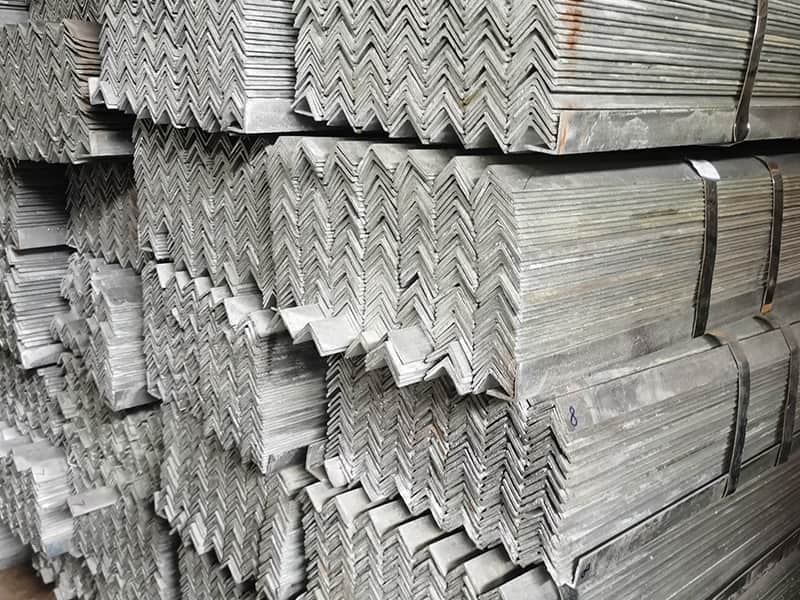
Navigating the Angle Spectrum: Precision in Specification
Reliability fails when there is ambiguity between you and your supplier. Let’s categorize these angles not just by shape, but by their role in a reliable procurement process.
1. Structural Shape-Based Types5 (The Core Four).
These are defined by their cross-sectional geometry.
- Equal Angles1 (L): The universal standard. Used for framing, bracing, and brackets where loads are symmetric. Reliability comes from vast availability and standardized sizing.
- Unequal Angles2 (L): Used when connection points or load requirements differ on two axes. Specifying this requires clear leg length order (e.g., 150x90mm: the 150mm leg is usually specified first). A mix-up here renders the material useless.
- Bulb Angles3: A specialized marine and construction profile. The bulb adds significant moment of inertia, making it excellent as a stiffener on ship hulls and decks. Reliability in sourcing these depends on finding a supplier with access to mills that roll these less-common sections.
- Lipped Angles4 (or Return Angles): Provides enhanced local stability to the free edge. Common in lighter structural applications and certain fabrication details. Often made by cold-forming standard angles.
2. Material & Application-Based Types6.
These are defined by the steel grade and its intended use, which is critical for marine supply chains.
- Marine-Grade Angles7: This is not a shape, but a qualification. It refers to angles made from steel produced to classification society rules (ABS, LR, DNV, etc.). They have certified toughness and chemistry. Specifying "Marine Angle" is insufficient. You must specify the grade and class (e.g., "ABS AH36 Equal Angle"). This is the single most important specification for reliability in marine projects.
- Stainless Steel Angles8: Made from alloys like 304 or 316 for exceptional corrosion resistance. Used in specific ship areas like chemical tanks, galleys, or exterior trim. Their supply chain is separate from carbon steel, with different mills, pricing, and lead times.
- Aluminum Angles9: Used in superstructures and high-speed crafts. As discussed earlier, this is a completely different supply chain based on extrusion.
3. Table: Angle Types and Their Reliability Considerations10.
This table links type to procurement strategy.
| Angle Type | Key Identifying Feature | Primary Marine Use | Reliability Focus in Sourcing |
|---|---|---|---|
| Equal Angle (e.g., L100x100x10) | Symmetrical L-shape. | General framing, brackets, supports. | Ensure consistent dimensional tolerances across large batches. |
| Unequal Angle (e.g., L150x90x12) | Asymmetrical L-shape. | Edge beams, specific bracket connections. | Clear specification. Double-check leg length order on all documents to prevent wrong delivery. |
| Bulb Angle | Rounded bulb on one leg tip. | Hull and deck stiffeners. | Verify supplier has a stable source at a specialized mill. Confirm the bulb dimensions meet the required standard. |
| Marine-Grade (Certified) | Class stamp and certificate. | All primary hull and structural components. | Non-negotiable. Verify the classification certificate authenticity for every batch. Use suppliers with direct mill agreements. |
| Stainless Steel Angle | Bright, non-magnetic finish. | High-corrosion areas, sanitary spaces. | Specify exact alloy (304, 316, 316L) and surface finish (2B, No.4). Supply chain is distinct. |
My Insight from the Field
We dealt with a shipyard in Romania building a chemical tanker. The drawings for the cargo tank supports called for "Stainless Angle, 80x80x8". We received the inquiry. Our first question was: "What is the specific alloy and grade required for this application?" The client’s engineer initially said, "Just standard stainless." We pressed gently, explaining that 304 is standard, but for a chemical environment, 316 or 317 might be needed. They checked with the classification society. The specification was indeed for 316L stainless steel angles. If we had supplied 304, it would have been a very costly mistake discovered during inspection, causing major delays. This experience taught us that part of building a reliable supply chain is being our client’s technical backstop. We must ask the detailed questions they might not think of in the rush of a project. Reliability is about preventing problems before the order is even placed.
Conclusion
A reliable marine angle steel supply chain is built on technical clarity, transparent partnerships, and meticulous attention to detail—from accurate weight calculations to precise material specifications.
-
Understanding Equal Angles is crucial for framing and bracing in construction, ensuring structural integrity. ↩ ↩ ↩ ↩ ↩
-
Explore Unequal Angles to learn how they cater to specific load requirements, enhancing structural design. ↩ ↩ ↩ ↩ ↩ ↩ ↩ ↩ ↩ ↩ ↩
-
Bulb Angles are vital for ship hulls; discover their unique benefits in marine engineering. ↩ ↩ ↩ ↩ ↩
-
Lipped Angles provide enhanced stability; understanding them can improve your structural applications. ↩ ↩ ↩ ↩ ↩
-
Understanding Structural Shape-Based Types helps in selecting the right angle for your project needs. ↩ ↩ ↩ ↩ ↩ ↩ ↩ ↩ ↩
-
Learn about Material & Application-Based Types to ensure the right material is used for specific applications. ↩ ↩ ↩ ↩
-
Marine-Grade Angles ensure compliance with safety standards; learn why they are essential for marine projects. ↩ ↩ ↩ ↩ ↩
-
Stainless Steel Angles offer corrosion resistance; explore their applications in various environments. ↩ ↩ ↩ ↩
-
Aluminum Angles are lightweight and versatile; discover their role in modern construction projects. ↩
-
Exploring reliability considerations can prevent costly mistakes in procurement and project execution. ↩