
Asia’s shipyards are operating at full capacity. Their new orders require specific, efficient materials. This is directly fueling a surge in demand for one critical component: bulb flat steel.
Bulb flat steel, also known as bulb plate, is experiencing significant demand growth in Asian shipyards. This is driven by the region’s dominance in constructing large, modern container ships and bulk carriers, where this profile is essential for building strong yet lightweight transverse frames and stiffeners.
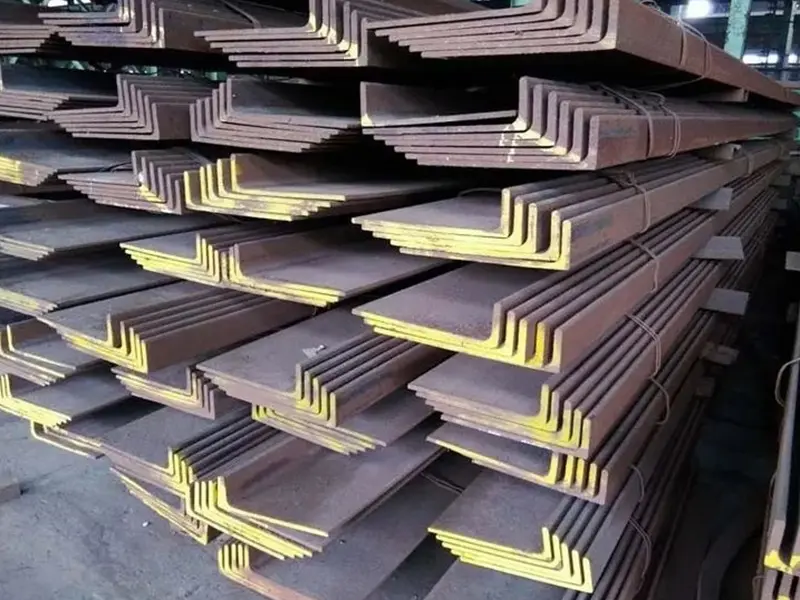
I see this trend clearly in our order books. Inquiries from Vietnam, the Philippines, and Thailand for bulb flats have increased sharply this year. The reason is simple. Asian yards are winning the contracts for the most advanced vessels. These vessels need materials that save both weight and labor. Bulb flat steel does exactly that. But to understand why this specific product is booming, we need to look at the bigger picture of steel in shipbuilding.
What is the use of flat steel1?
You see a ship’s smooth hull. Behind that smooth surface is a skeleton. Flat steel forms the basic bones and ribs of that skeleton, providing the essential framework for the entire vessel.
Flat steel is primarily used to fabricate the internal structural framework2 of a ship. This includes frames, stiffeners3, and longitudinals that reinforce the hull plating, decks, and bulkheads, giving the vessel its structural integrity and resistance to bending and twisting forces at sea.
The Backbone of the Ship: More Than Just a Flat Piece
When people think of ship steel, they often picture the thick hull plates. But the flat steel1 working behind the scenes is equally vital. Its use is about creating an efficient, lightweight grid system. The hull plate is like the skin. The flat steel1 profiles are the ribs and spine. They prevent the thin skin from buckling under the immense pressure of water and cargo.
Primary Functions in Structure:
- Stiffening: The main job of flat steel1 bars is to act as stiffeners3. They are welded perpendicular to frames or longitudinals. This creates a grid that dramatically increases the panel’s resistance to deformation. A large, flat area of hull plate with no stiffeners3 would bend easily. Add a network of flat steel1 stiffeners3, and it becomes rigid.
- Frame Construction: Ships have vertical frames that run from the keel to the deck. These frames are often built using a combination of steel plates and flat steel1. The flat steel1 can form the web (the vertical part) of a built-up frame section.
- Brackets and Connections: Flat steel is cut and shaped to make countless brackets, gussets, and connecting pieces. These small parts are crucial for joining larger structural members together securely.
The Evolution to Bulb Flat Steel:
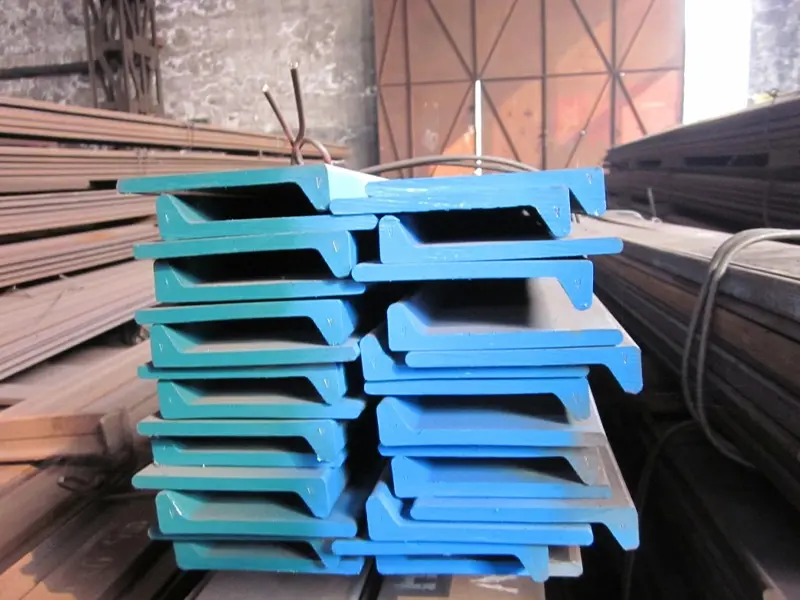
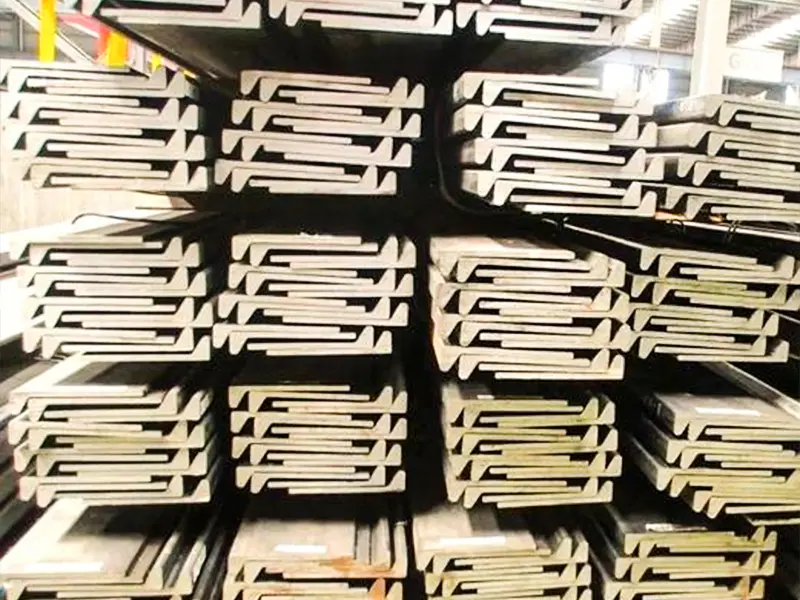
Traditional flat steel1 has a simple rectangular cross-section. But a major innovation changed shipbuilding: the bulb flat. A bulb flat is a flat steel1 bar with a thickened, rounded edge (the "bulb") along one of its longer sides. This small change has a big impact.
The bulb provides extra material exactly where it is needed most—away from the neutral axis of the beam. This gives the profile a much higher section modulus with only a small increase in weight. In practical terms, a bulb flat can replace a much heavier built-up section made from a flat bar and an angle. This leads to direct weight savings for the ship.
Why This Matters for Asian Shipyards Now:
Asian shipyards4 in China, South Korea, and Japan are the global leaders in building large container ships and LNG carriers. These ship types are under extreme pressure to be efficient. Every ton of steel saved is a ton of extra potential cargo, or a ton less fuel burned. Therefore, these yards have fully adopted bulb flat steel5l](https://cnmarinesteel.com/the-role-of-bulb-flat-steel-in-ship-hull-reinforcement/)[^1] as the standard for transverse framing. They design with it from the start. The surge in orders for these large vessels directly translates into a surge in orders for bulb flats. The use of standard flat steel1 persists for smaller vessels, secondary structures, and repair work. However, for the high-value, high-efficiency newbuilds that define the market today, bulb flat steel5l](https://cnmarinesteel.com/the-role-of-bulb-flat-steel-in-ship-hull-reinforcement/)[^1] is the undisputed choice for critical stiffening applications. This shift in application preference is a key driver of the current demand growth we are witnessing.
Will steel demand1 increase in 2025?
Shipowners are placing orders now for delivery in 2025 and beyond. The current orderbook2 in Asian yards is strong, and new regulations are forcing fleet renewal3. This points to continued demand.
Yes, overall steel demand1 for shipbuilding is expected to increase in 2025. This growth is supported by a full orderbook2 at major Asian shipyards, a continued need for more environmentally efficient vessels, and ongoing replacements in aging global fleets, all requiring substantial tonnage of marine steel.
Analyzing the 2025 Outlook: A Mixed Picture with Clear Growth Drivers
Predicting steel demand1 is complex. We must look at different signals. My view, based on daily conversations with mills and clients, is that demand will grow, but the growth will be specific. It will not be a boom for all types of steel. The demand will be strongest for the steel used in the specific ships that yards are building.
Positive Drivers for Increased Demand:
- The Existing Orderbook: This is the most concrete factor. Major shipyards in China, Korea, and Japan have full schedules stretching into 2026. These contracts are signed. They require steel. The steel for ships to be delivered in 2025 will be mostly ordered and produced in 2024. This creates a solid baseline of demand.
- The IMO Regulatory Push4: The IMO’s Carbon Intensity Indicator (CII) and Energy Efficiency Existing Ship Index (EEXI) are not one-time events. They create ongoing pressure. Older, inefficient ships become economically unviable. This drives orders for new, efficient replacements. This "regulatory replacement cycle" is a multi-year trend that supports demand.
- Strategic Fleet Expansion: Some nations and shipping companies are expanding their fleets for strategic or trade reasons. For example, demand for LNG carriers5 remains high due to global energy security concerns. Each large LNG carrier requires over 40,000 tons of high-quality steel.
Potential Challenges and Uncertainties:
- Economic Volatility: Global economic growth directly affects trade volumes. If trade slows, the urgency for new ships may soften. However, the current orderbook2 provides a buffer against short-term economic dips.
- Steel Price Fluctuations: The price of iron ore, coking coal, and energy affects steel prices. Sharp increases can make newbuilds more expensive and potentially delay some investment decisions.
- Shipyard Capacity: There is a limit to how many ships can be built at once. Labor, crane, and dock space are finite. This capacity constraint might cap the number of new orders that can be placed for 2025 delivery, indirectly affecting the rate of new steel demand1 generation.
Demand by Steel Product Type:
The overall increase will not be even. We should expect stronger growth for advanced products6.
| Steel Product | Expected 2025 Demand Trend (for Shipbuilding) | Primary Reason |
|---|---|---|
| Standard Hull Plate (AH36/DH36) | Steady Growth | The backbone material for all vessels. Follows the overall orderbook2 trend. |
| Higher-Strength Plate (AH40, FH40+) | Above-Average Growth | Driven by the need for weight reduction in new designs to meet EEXI/CII targets. |
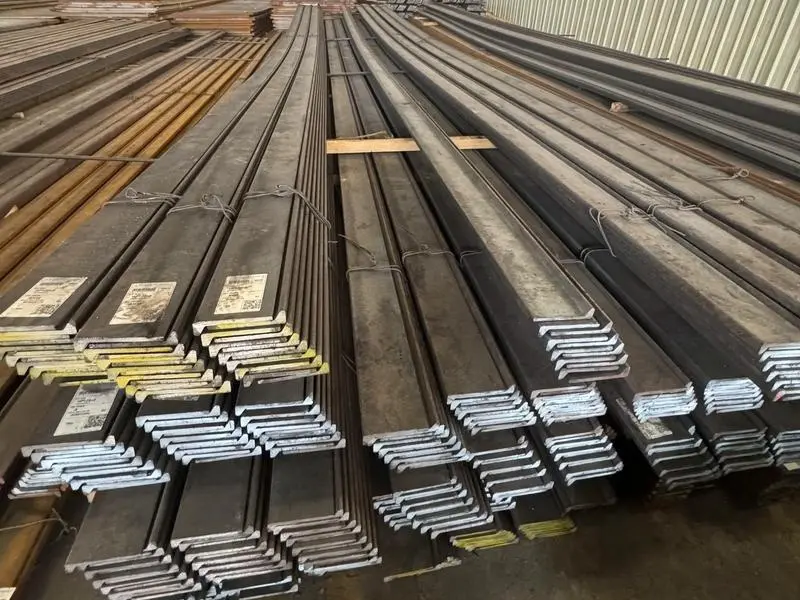
| Bulb Flat Steel | Strong Growth | Directly tied to the construction of large container ships and bulk carriers, which dominate Asian orderbook2s. |
| Standard Angle & Flat Bar | Moderate/Stable Growth | Used across all vessel types, but faces substitution by more efficient profiles like bulb flats in primary structures. |
| Specialty Steels (Corrosion Resistant) | Growing | Driven by specific regulations like PSPC for ballast tanks, ensuring long coating life. |
My On-the-Ground Insight:
Our mill partners in Shandong are planning their 2025 production schedules now. Their discussions are focused on allocating more capacity for higher-strength plates and bulb flats. They are receiving more inquiries with these specifications. This is a leading indicator. When mills adjust their product mix, it is because their customers—the fabricators and yards—are telling them what they will need. The feedback from our clients, like the project distributor in Saudi Arabia, is that their own clients are planning projects for 2025 that specify advanced materials. Therefore, while macroeconomic headlines may cause uncertainty, the specific, project-driven demand in the marine steel niche looks robust for 2025. The key for buyers is to plan their procurement early to secure supply from mills with the right product mix.
What does flat steel1 mean?
In a shipyard, "flat steel1" has a very specific meaning. It is not just any flat piece of metal. It refers to a standardized, long product with a simple rectangular cross-section2, ready to be cut and welded into the ship’s framework.
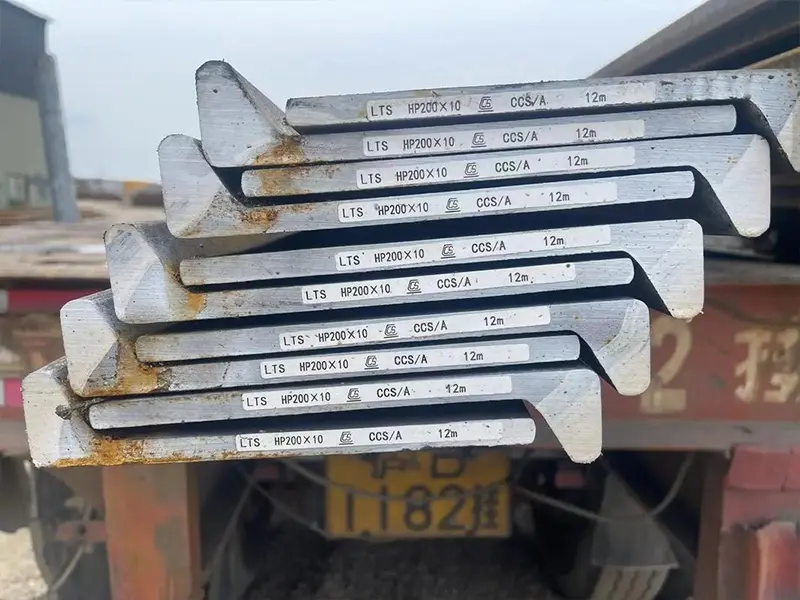
In shipbuilding and steel trading, "flat steel1" specifically refers to a long, flat-rolled steel product with a rectangular cross-section2. It is characterized by its width and thickness, and it is supplied in straight lengths or coils3. It is a fundamental raw material for fabricating stiffeners, brackets, and other structural components.
Demystifying the Term: Dimensions, Standards, and Distinctions
Understanding what "flat steel1" means requires clarity on its form, how it is measured, and how it differs from other similar products. This clarity prevents costly mistakes in ordering and fabrication.
The Physical Definition:
A flat steel1 bar is exactly what it sounds like. Imagine a long metal ruler. Its cross-section is a simple rectangle. The two key dimensions are:
- Thickness (t): This is the smaller dimension, typically ranging from 3mm up to over 50mm for very heavy bars.
- Width (w): This is the larger dimension, which can range from about 10mm to over 300mm.
The product is defined as "Width > Thickness." When the width is very large (e.g., 1500mm) and it is supplied in discrete sheets, it is called a "steel plate4." The line between very wide flat bar and plate can be blurry, but the term "flat steel1" in day-to-day shipyard talk usually refers to the bar product.
How It is Supplied:
Flat steel is supplied in two main forms:
- Straight Lengths (Bars): These are cut to specific lengths, usually 6m, 9m, or 12m. This is the most common form for shipbuilding, as the bars are cut and fitted directly.
- Coils: Thinner flat steel1 can be supplied in coils3. This is less common for primary ship structures but may be used for certain automated fabrication processes.
Why the Precise Definition Matters for Buyers:
When you order flat steel1, you must specify three things: Grade, Thickness, and Width.
- Example Order: "50 MT of Grade AH32 Flat Steel5, 12mm thick x 100mm wide, in 12m lengths."
If you only say "flat steel1," you will get questions from any professional supplier. The width and thickness determine the steel’s stiffness and strength. Using a 10mm x 50mm flat bar where a 12mm x 100mm is needed would lead to a structural failure.
Flat Steel vs. Plate vs. Bulb Flat: A Crucial Comparison:
Confusion between these terms is common. Let’s break it down:
| Product | Cross-Section Shape | Key Characteristics | Primary Shipbuilding Use |
|---|---|---|---|
| Steel Plate | A very wide, flat rectangle. Thickness varies. | Defined by large width (>> thickness). Comes in sheets. | Hull shell, decks, bulkheads – the primary plating. |
| Flat Steel (Bar) | A long, narrow rectangle. Width > Thickness. | Defined by specific width & thickness. Comes in bars or coils3. | Stiffeners, frames (as part of built-up sections), brackets, small structural parts. |
| Bulb Flat Steel | A flat bar with a rounded bulb along one long edge. | Has a higher sectional modulus than a plain flat bar of similar weight. | Primary transverse frames and stiffeners in modern ships, replacing heavier built-up sections. |
| Angle Steel (L-shaped) | An "L" shape, with two legs. | Good for connections and edge stiffening. | Deck edges, hatch coamings, connections between plates and frames. |
My Advice from Handling Orders:
I recall a client from Pakistan who once sent an inquiry just for "flat steel1." Our sales rep immediately called them. We asked for the drawing or specification. It turned out they needed bulb flats for ship frames, not standard flat bars. This early clarification saved weeks of potential back-and-forth and ensured they received the right product quote from the beginning. The term "flat steel1" is the starting point. As a buyer, you need to be ready to provide the next level of detail: the exact profile shape and dimensions you need. This precision ensures you get a fit-for-purpose material and a smooth procurement process.
What is the steel demand1 in 2030?
Looking to 2030 is about seeing the long-term waves, not the short-term ripples. Major global commitments will reshape entire fleets, setting a clear direction for steel demand1.
Steel demand for shipbuilding towards 2030 is projected to remain strong, driven by the industry’s long journey to meet the IMO’s 2030 decarbonization targets2. This will require both new, optimized vessels and retrofits, sustaining demand for advanced marine steel grades3 and efficient profiles like bulb flats4.
The 2030 Horizon: A Decade of Transformation and Sustained Need
The year 2030 is not just another year. It is a major checkpoint set by the International Maritime Organization (IMO). The IMO aims to reduce the carbon intensity of international shipping by at least 40% by 2030 compared to 2008 levels. This single goal is the central force that will shape steel demand1 for the rest of this decade.
The Dual Pathways to 2030: Newbuilds and Retrofits.
Demand will come from two main streams:
- Newbuild Vessels (The Replacement Fleet): A significant portion of the global fleet is old. These older ships cannot meet the 2030 CII standards economically. They will be scrapped. This creates a continuous replacement cycle. The new ships built between now and 2030 will be the most efficient in history. Their designs will maximize the use of high-strength steel and weight-saving profiles like bulb flats4 to achieve low carbon intensity from day one. This stream creates high, sustained demand for advanced steel products.
- Retrofits and Modifications (The Existing Fleet): Not all ships will be scrapped. Some will be modified to improve efficiency. This includes installing energy-saving devices (like new rudders or air lubrication systems), which require steel fabrication. It may also involve "slow steaming" adaptations. Retrofits create a different type of demand: often smaller batches, more varied in specification, and requiring steel that can be welded to existing structures. This supports demand for standard grades but with a high need for precise quality and certification.
Key Demand Drivers Specific to 2030:
- Green Fuel Transition: By 2030, we will see more ships capable of using alternative fuels like methanol, ammonia, or LNG. These vessels require special steel types. For example, tanks for ammonia or LNG need extremely low-temperature toughness (grades like EH36/FH36 and beyond). Demand for these special alloy and high-toughness steels5 will grow.
- Material Innovation: The push for efficiency will accelerate the adoption of new materials and composites. However, steel will remain the primary structural material due to its strength, cost, and recyclability. The demand will shift further toward steel that works best with new technologies (e.g., steel with perfect surface quality for new low-friction coatings).
- Regional Shipbuilding Shift: The dominance of Asian shipyards is likely to continue. However, we may see growth in other regions like the Middle East and Southeast Asia for specialized or regional vessels. This could diversify supply chains but keep overall demand high.
A Projected Demand Scenario for Key Products:
It is useful to think about relative growth rather than exact numbers.
| Steel Product | Projected 2030 Demand Trend & Rationale | Strategic Implication for Buyers |
|---|---|---|
| Standard Marine Plate | Moderate, Stable Demand. The fundamental material. Demand follows the overall pace of shipbuilding activity and fleet renewal. | Remains a commodity. Reliable supply chains and cost will be key. |
| Ultra-High-Strength & Special Alloy Plate6 | High Growth Demand. Essential for fuel-efficient newbuilds and containment systems for new green fuels (LNG, Ammonia). | Buyers must identify mills with technical capability for these niche products. Long-term supply agreements may become necessary. |
| Bulb Flat Steel | Very Strong, Sustained Demand. Will be the standard for framing in all major newbuilds. Retrofits may also use them. | This product moves from "special" to "standard." Securing a stable, high-quality source is a competitive advantage for any fabricator or yard. |
| Corrosion-Resistant Grades | Consistently Growing Demand. Regulations and the need for lower maintenance will make CR grades standard for tanks and certain hull areas. | Will become a common specification. Not having it in your portfolio could exclude you from projects. |
My Long-Term View from the Supply Side:
Our business strategy is already aligned with this 2030 outlook. We are deepening partnerships with mills that invest in producing advanced grades and bulb flats4. We are also enhancing our certification and traceability systems because 2030’s ships will need full digital material passports7. The client feedback we value most talks about long-term planning. When our partner in Saudi Arabia says they plan future orders for L-shaped and bulb flat steel, it shows they are building their business around this multi-year demand trend. For anyone in the marine steel business, the path to 2030 is clear: the demand for steel will be strong, but it will be increasingly focused on smarter, greener, and more efficient steel products. Positioning your supply chain now for that future is the most important step you can take.
Conclusion
Bulb flat steel demand is rising sharply in Asia, fueled by the construction of efficient, large vessels. This growth is part of a broader, long-term increase in demand for specialized marine steel driven by global decarbonization goals.
-
Understanding projected steel demand is crucial for stakeholders in the shipbuilding industry to make informed decisions. ↩ ↩ ↩ ↩ ↩ ↩ ↩ ↩ ↩ ↩ ↩ ↩ ↩ ↩ ↩ ↩ ↩ ↩ ↩ ↩ ↩ ↩ ↩ ↩ ↩ ↩ ↩ ↩
-
Exploring the IMO’s targets provides insight into the regulatory landscape affecting steel demand in shipbuilding. ↩ ↩ ↩ ↩ ↩ ↩ ↩ ↩ ↩
-
Learn about advanced marine steel grades to understand their role in meeting efficiency and safety standards. ↩ ↩ ↩ ↩ ↩ ↩ ↩ ↩ ↩
-
Discover the significance of bulb flats in modern ship design and their impact on efficiency. ↩ ↩ ↩ ↩ ↩ ↩
-
Understanding these materials is key for those involved in building ships that meet new fuel standards. ↩ ↩ ↩ ↩ ↩
-
Understanding demand trends for these plates is essential for strategic sourcing in shipbuilding. ↩ ↩
-
Learn about digital material passports to understand their importance in traceability and compliance. ↩