
The race to build offshore wind farms is accelerating globally. This boom is not just about turbines; it is about the massive steel structures that hold them in place. A key component in these structures is experiencing a direct surge in demand.
The market for bulb flat steel in offshore wind structures is poised for significant growth. This is driven by the global expansion of fixed-bottom and floating offshore wind farms, where bulb flats are essential for constructing the robust, weight-optimized jacket foundations, towers, and transition pieces that must withstand harsh marine environments for decades.
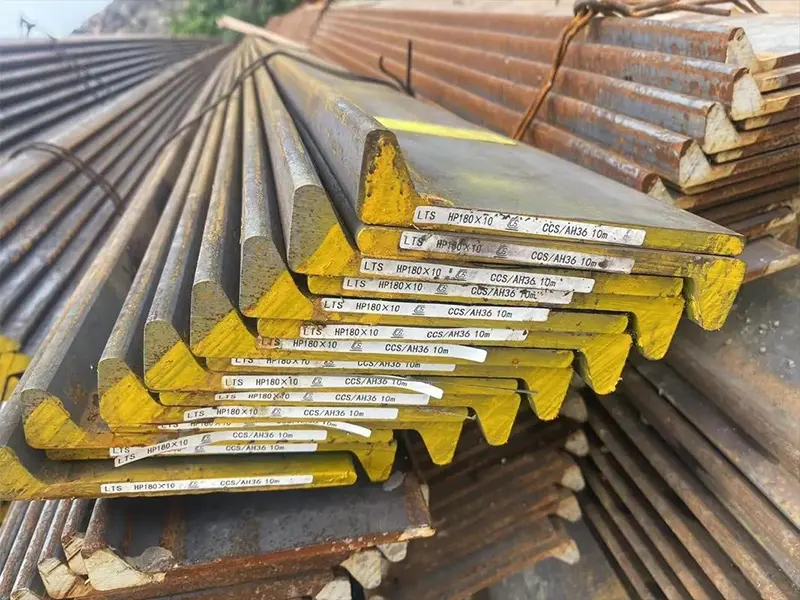
My conversations with fabricators and project contractors, especially in emerging markets like Vietnam and the Philippines, are changing. We are receiving more technical drawings for offshore wind components, not just ship hulls. The specifications are different, often requiring higher grades and stricter certifications. This shift represents a major new market segment. To understand its potential, we must start with the basic product itself and its role in this demanding application.
What is a bulb flat1?
Look at a steel profile that looks like a flat bar with a thick, rounded edge. This unique shape is not a design quirk. It is a precision-engineered solution for one of engineering’s oldest challenges: how to make something both strong and light.
A bulb flat1 is a specific type of rolled steel profile. Its cross-section resembles a flat bar with a solid, rounded bulb (or thickened edge) running continuously along one of its longer sides. This bulb is the key feature that gives the profile its superior structural properties compared to a simple flat bar.

The Anatomy of Efficiency: More Than Meets the Eye
To understand why bulb flats are so valuable for offshore wind, we need to break down their physical and engineering characteristics. The simplicity of its shape hides a sophisticated purpose.
The Physical Components:
- The Web: This is the flat, vertical part of the profile. It acts as the primary connector, providing the height of the section. It is welded to the primary plating or other structural members.
- The Bulb: This is the rounded, thickened end. It is not just an added piece; it is an integral part of the rolled section. The bulb acts as a natural flange.
The Engineering Principle: Section Modulus.
The performance of any beam (like a frame in a structure) under bending stress depends on its section modulus2. This is a geometric property that measures how effectively the shape distributes material away from its neutral axis (the central axis where stress is zero). Material placed further from the center contributes much more to bending resistance.
A simple flat bar has its material centered. A bulb flat1 takes the same basic concept and moves a significant amount of that material into the bulb, far from the center. This dramatically increases the section modulus2 without a proportional increase in weight or cross-sectional area.
Why Rolling Matters:
Bulb flats are hot-rolled3 in mills as a single, continuous profile. This is critical. It means:
- Consistency: The dimensions and material properties are uniform along the entire length, which is vital for predictable performance in a large structure.
- No Critical Weld: Unlike a built-up T-section (made by welding a flat bar to a plate), a bulb flat1 has no longitudinal weld in the high-stress flange area. This eliminates a potential point of failure and saves fabrication labor.
- Material Integrity: The rolling process refines the steel’s grain structure, enhancing its toughness.
The Offshore Wind Connection:
Offshore structures face constant cyclic loading from waves, wind, and currents. Fatigue resistance is paramount. A bulb flat1‘s clean, weld-free, and consistent profile is a major advantage. There are no weld toes (a common fatigue crack initiation point) along its length. This makes it an ideal choice for primary bracing members4 in jacket foundations, where reliability over a 25+ year lifespan is non-negotiable. When a wind farm developer specifies materials, they are not just buying steel; they are buying long-term structural integrity. The bulb flat1, as a ready-made, high-performance component, fits this need perfectly. Its definition is simple, but its value in complex marine engineering5 is immense.
What is the use of bulb bar1?
The term "bulb bar1" is often used interchangeably with "bulb flat," especially in certain regions and older specifications. Its use is singular and powerful: to provide maximum bending stiffness2 with minimum weight in marine and offshore structures3.
A bulb bar1 (or bulb flat) is used as a primary stiffening member. Its main application is in the construction of transverse frames in ships and as bracing members in offshore structures3 like wind turbine jackets, where its high strength-to-weight ratio4 efficiently resists bending and buckling forces.
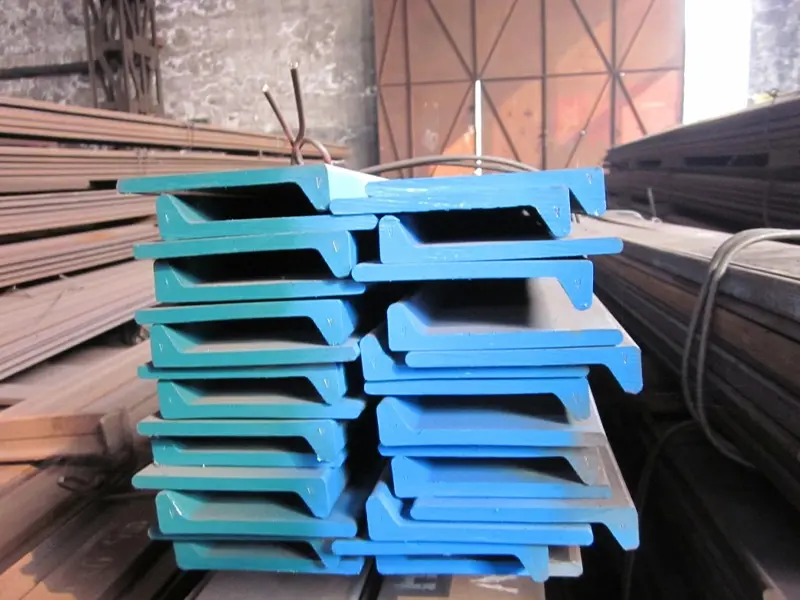
From Ship Frames to Wind Braces: The Versatile Role of the Bulb Bar
The use of the bulb bar1 has evolved from its traditional shipbuilding roots to become a cornerstone of modern offshore renewable energy. Its function remains fundamentally the same, but the context and requirements have become more demanding.
Traditional Use: The Backbone of Ships.
In shipbuilding, bulb bar1s are the vertical ribs (frames) inside the hull. They are welded to the hull plating. Their job is to prevent the thin shell of the ship from buckling under water pressure and global bending. They create a stiff grid that allows the ship to act as a single, rigid beam. The advantage here was always weight saving and construction speed compared to fabricated frames.
Modern Use: The Skeleton of Offshore Wind Jackets.
A fixed-bottom offshore wind turbine often stands on a "jacket" foundation—a lattice structure made of tubular legs connected by a network of braces. These braces are subject to immense and changing compressive and tensile forces. This is where bulb bar1s shine.
- As Primary Braces: Bulb bars are used as the main diagonal and horizontal bracing members between the jacket legs. Their high resistance to buckling (due to their high section modulus) makes them ideal for these long, slender compression members.
- In Transition Pieces: The section connecting the jacket to the turbine tower also uses stiffening rings and frames, where bulb bar1s are applicable.
- On Floating Platforms: For floating wind foundations (semi-submersibles, barges), the entire platform is essentially a marine structure. Bulb bars are used in the internal framing of pontoons and columns, just like in a ship.
The Specific Demands of Offshore Wind:
The use in offshore wind is not a simple copy-paste from shipbuilding. The requirements are often more severe:
- Higher Grades: Offshore wind jackets in the North Sea or North Atlantic may require steel grades5 with higher toughness, such as DH36, EH36, or even FH36, to withstand low-temperature service and dynamic loading.
- Fatigue Performance: The constant wave action creates billions of load cycles over the structure’s life. The material and the welds must have exceptional fatigue resistance. The bulb bar1‘s smooth, weld-free profile is a major benefit.
- Corrosion Protection: These structures are often protected by complex coating systems and sacrificial anodes. The surface quality of the bulb bar1 must be excellent to ensure coating adhesion.
- Certification: Projects usually require strict third-party inspection (like SGS or Bureau Veritas) and certification6 to international standards like EN 10225 or equivalent.
A Comparative Look at Application:
| Application Context | Primary Function of Bulb Bar | Key Performance Requirement | Typical Steel Grade |
|---|---|---|---|
| Ship Hull Frames | Stiffen hull plating, resist water pressure and global bending. | Strength, weldability, good toughness at operating temperature. | AH36, DH36 |
| Offshore Wind Jacket Braces | Resist axial compression/tension and buckling from wave/wind loads. | Very high buckling resistance, exceptional fatigue life, low-temperature toughness. | DH36, EH36, FH36 |
| Ship Decks & Bulkheads | Provide local stiffness to decks and walls. | Strength and weldability. | A, B, AH32 |
| Floating Wind Platform Framing | Act as internal stiffeners in columns/pontoons, similar to ship. | Strength, toughness, and fatigue resistance in a floating marine environment. | DH36, EH36 |
In essence, the bulb bar1 is a workhorse profile. Its "use" is to be the optimal solution wherever a strong, lightweight, and easily fabricated stiffener is needed. The offshore wind industry is now one of its most significant and growth-oriented users, pulling the product specifications toward higher performance thresholds. This shift directly impacts what we as suppliers must stock and what our mill partners must produce.
What are the different types of flat steel?
"Flat steel" sounds simple, but in the context of structural fabrication, it is a category with important distinctions. Choosing the right type is the difference between an optimal design and an inefficient or failed one.
The main different types of flat steel used in marine and offshore construction are: Standard Flat Bar1s, Bulb Flats (Bulb Bars), and Tee Bars (Rolled Tees). They are distinguished by their cross-sectional shape, which directly determines their structural efficiency2 and typical applications.
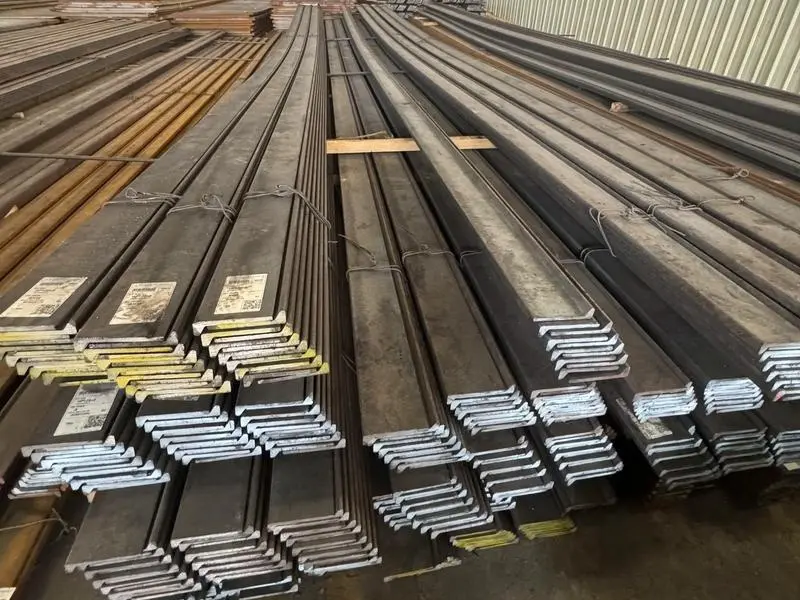
Navigating the Flat Steel Family: Shape Dictates Function
Understanding the differences between these types is crucial for engineers, procurement teams, and fabricators. Each type has a specific niche where it offers the best balance of performance, cost, and fabricability.
1. Standard Flat Bar1:
This is the most basic form. It has a simple rectangular cross-section.
- Characteristics: Defined by width and thickness. Easy to produce, readily available, and low cost per kilogram.
- Structural Performance: It has a low section modulus for its weight because its material is centered. It is weak in bending about its strong axis (the axis parallel to the width).
- Primary Uses: Light stiffening, brackets, gusset plates, trim, and non-critical structural connections. It is also used as raw material to build up more complex sections by welding.
- Offshore Wind Use: Used extensively for secondary structures, walkway supports, ladder frames, and small brackets. It is rarely used as a primary load-bearing member in major braces due to its inefficiency.
2. Bulb Flat (Bulb Bar)3:
As detailed, this is a flat bar with an integral bulb along one edge.
- Characteristics: The bulb acts as a built-in flange, moving material away from the center. It has a much higher section modulus and buckling resistance than a flat bar of similar weight.
- Structural Performance: Excellent in bending and compression. It behaves like a built-up T-section but without the weld.
- Primary Uses: Primary stiffeners and frames in ships (transverse frames). Primary bracing members in offshore jacket foundations. Any application where high bending stiffness4 with low weight is critical.
- Offshore Wind Use: The preferred choice for jacket brace members. Its efficiency reduces the total steel tonnage of the foundation, which is a major cost driver.
3. Rolled Tee Bar (Teel)5:
This is a profile shaped like the letter "T". It has a web and a wider, flat flange at the top.
- Characteristics: It is a symmetrical profile. The flange is wider than the bulb on a bulb flat. It is also hot-rolled as a single piece.
- Structural Performance: It has an even higher section modulus than a bulb flat of comparable weight because the flange material is distributed even further from the center. It is excellent in bending.
- Primary Uses: Strong edge stiffeners for plates, deck girders, and large built-up girders. It is common in shipbuilding for deck longitudinals and hatch coamings.
- Offshore Wind Use: Used in specific areas of transition pieces or in the fabrication of larger girders within offshore substations. It is less common than bulb flats for general bracing due to its higher cost and specific design needs.
Decision Matrix for Selection:
| Selection Criteria | Standard Flat Bar1 | Bulb Flat (Bulb Bar)3 | Rolled Tee Bar |
|---|---|---|---|
| Cost (per meter) | Lowest | Moderate | Highest |
| Bending Stiffness (per kg) | Low | Very High | Highest |
| Primary Application | Secondary structures, brackets, connections. | Primary frames & braces (Ships, Jackets). | Heavy edge stiffening, girders. |
| Fabrication Labor | High if used to build sections. | Low (ready-to-use). | Low (ready-to-use). |
| Availability | Very high, commodity product. | High, but specific sizes may require mill order. | Lower, more niche product. |
For the offshore wind market6, the bulb flat has emerged as the champion for the core structural work. It hits the sweet spot between the inefficiency of the flat bar and the over-specialization/cost of the tee bar for bracing applications. This clear functional hierarchy is why market growth for offshore wind directly and disproportionately benefits bulb flat producers and suppliers.
What is a flat bar1 used for?
In any major steel construction project, you will find piles of simple, rectangular steel bars. These flat bar1s are the unsung heroes, performing countless small but critical tasks that hold everything together.
A flat bar1 is used as a versatile raw material for fabrication2. Its primary uses include creating brackets, gussets, stiffeners for light-gauge plates, trim edges, and as a component to build up larger custom sections through welding. It is a fundamental stock item for any structural workshop.
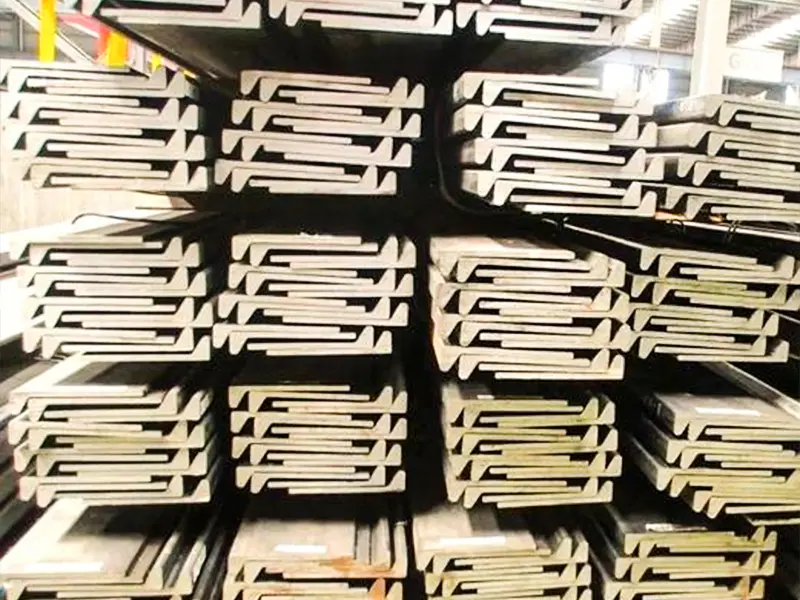
The Utility Player: Why the Humble Flat Bar Remains Indispensable
While bulb flats3 get the glory in primary design, the standard flat bar1 is the essential utility player in the workshop. Its uses are defined by its simplicity and adaptability.
Core Functions in Fabrication:
- Brackets and Gussets: This is perhaps its most common use. A bracket is a triangular or L-shaped piece used to connect two structural members at an angle (e.g., connecting a brace to a leg). A gusset is a plate used to reinforce a joint. Flat bars are cut to shape and welded in place to create these essential connecting elements. Their uniform thickness makes them easy to work with.
- Light Stiffening: For plates or sections that do not carry major loads, a simple flat bar1 welded on as a stiffener is sufficient and cost-effective. Examples include stiffening on access platforms, equipment shelves, or non-structural enclosures on an offshore platform.
- Trim and Edging: Flat bars are used to create finished edges on platforms, walkways, and stair treads to improve safety and aesthetics.
- Backing Bars: In welding, a flat bar1 is often placed behind a weld joint to ensure full penetration and a clean root pass. This is a crucial quality control step in critical welds.
The "Building Block" Function:
Flat bars are the Lego bricks of steel construction. They are welded together to create custom profiles that are not available as standard rolled sections. For example:
- A T-section can be made by welding a flat bar1 (the web) perpendicularly to another flat bar1 or plate (the flange).
- An Angle section can be built from two flat bar1s.
- A box section can be built from four flat bar1s.
However, this practice is labor-intensive and introduces welding distortion and potential defects. This is precisely why rolled profiles like bulb flats3 and tee bars exist—to provide these optimized shapes directly from the mill, saving time, labor, and improving quality.
Flat Bar vs. Bulb Flat in Offshore Wind: A Symbiotic Relationship.
On an offshore wind project, you will find both in abundance, but in different roles.
- Bulb Flat: Used for the primary structural braces (the large diagonal members) of the jacket. This is a design-driven, optimized choice.
- Flat Bar: Used for all the secondary steelwork. This includes:
- Boat landing frames.
- J-tube supports (for cables).
- Anode attachment brackets.
- Internal platform frames and handrail posts.
- Connection gussets at the nodes where bulb flat braces meet the tubular legs.
Procurement Considerations:
While bulb flats3 are ordered to precise grades and dimensions for specific drawings, flat bar1s are often ordered as general stock. A fabrication2 yard will keep an inventory of common flat bar1 sizes (e.g., 50mm x 10mm, 100mm x 12mm) in standard grades like S355JR (a common European structural grade) or AH36. They pull from this stock for various smaller tasks throughout the project.
The Supplier’s Perspective:
Our business caters to both needs. For a client building wind farm components, we might supply a large, custom order of DH36 bulb flats3 for the jacket braces, and a separate, smaller but recurring order for general S355 flat bar1s for their workshop stock. The flat bar1 business is less glamorous but provides steady, recurring revenue. It also builds the relationship. When we prove our reliability on the small, frequent flat bar1 orders, we become the trusted partner for the large, critical bulb flat contract. The use of the flat bar1 is foundational, supporting the entire fabrication2 ecosystem that allows the optimized bulb flat structures to be built efficiently and reliably.
Conclusion
The offshore wind boom is creating a robust, long-term market for bulb flat steel, driven by its irreplaceable role in building efficient, durable foundations. This growth elevates it from a shipbuilding component to a key material in the global energy transition.
-
Explore the diverse applications of flat bars in construction, from brackets to custom profiles, enhancing your understanding of their importance. ↩ ↩ ↩ ↩ ↩ ↩ ↩ ↩ ↩ ↩ ↩ ↩ ↩ ↩ ↩ ↩ ↩ ↩ ↩ ↩ ↩ ↩ ↩ ↩ ↩ ↩ ↩ ↩ ↩ ↩ ↩ ↩ ↩ ↩ ↩
-
Learn about the fabrication process involving flat bars, which is crucial for creating structural components in various projects. ↩ ↩ ↩ ↩ ↩ ↩ ↩
-
Learn about bulb flats, their optimized design, and how they complement flat bars in structural applications. ↩ ↩ ↩ ↩ ↩ ↩ ↩ ↩ ↩
-
Understanding bending stiffness is crucial for selecting the right flat steel for structural integrity. ↩ ↩ ↩
-
Learn about the unique benefits of Tee Bars in heavy edge stiffening and their specific uses. ↩ ↩ ↩
-
Gain insights into the market dynamics and how they benefit specific flat steel producers. ↩ ↩