
You are sourcing bulb flat steel for a new shipbuilding project. Global prices are shifting, and lead times are extending. You need to make a strategic decision. Understanding China’s role is not just about geography. It is about understanding the core of the global supply chain for this specialized marine component. Your project’s cost and timeline depend on this knowledge.
China holds a dominant and complex position in the global bulb flat steel market. It is the world’s largest steel producer, with a vast industrial ecosystem that includes mills capable of manufacturing niche products like certified marine bulb flats. This offers scale and competitive pricing but requires buyers to navigate carefully to ensure quality, certification, and reliable delivery from the right partners.
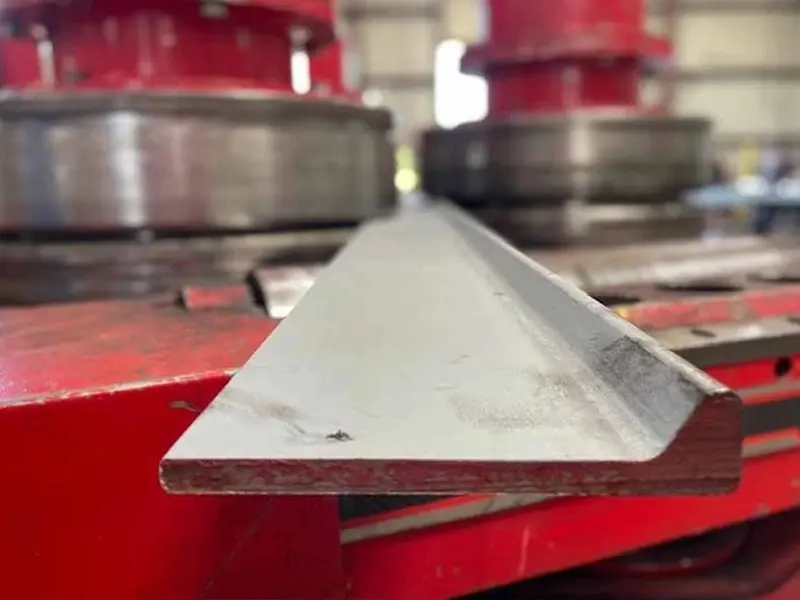
China’s sheer size in steel can be overwhelming. To understand its specific role for bulb flats, we need to zoom out first. We must look at the broader global steel landscape. This context shows why China matters and how its position shapes your procurement options.
Which country is no. 1 in steel production1?
You read news about steel tariffs and trade policies. These policies often focus on one country. This country sets the tone for the global market. If you are buying steel, you are directly or indirectly engaging with its industrial output. Knowing who leads production explains where material, capacity, and price pressures originate.
China2 is the undisputed number one country in steel production1. It produces more than half of the world’s crude steel annually. For example, in 2023, China produced about 1,019 million metric tons, which was over 50% of the global total. The next largest producers, like India and Japan, produce only a fraction of this volume.
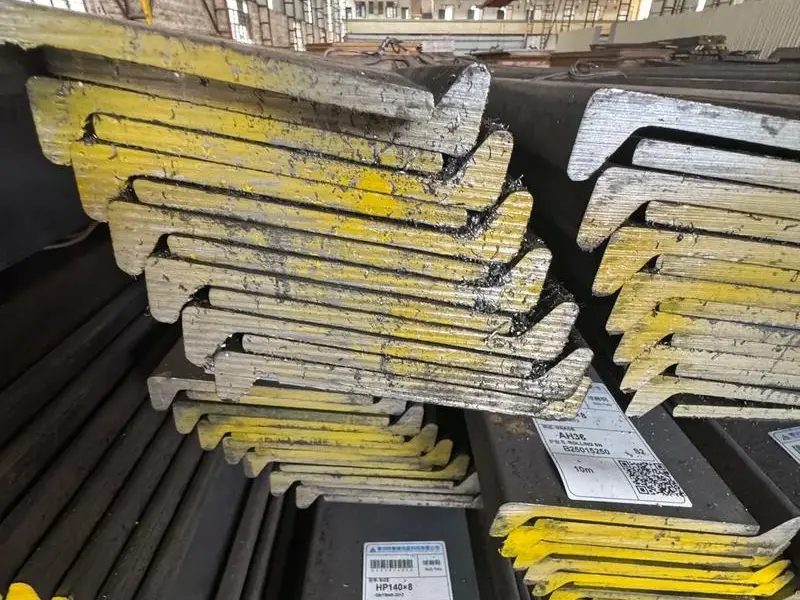
China2‘s Steel Dominance: Scale, Drivers, and Implications for Specialized Products
The number one position is about more than just volume. It creates a unique ecosystem that affects niche markets like marine bulb flats.
1. The Scale is Unmatched.
China2‘s annual steel output is greater than the combined output of the next nine countries (like India, Japan, USA, Russia). This scale comes from hundreds of mills, ranging from massive, state-of-the-art integrated plants to smaller electric arc furnace (EAF) mills. This creates a complete industrial chain, from iron ore processing to the rolling of finished sections.
2. Key Drivers of China2‘s Production Leadership.
- Domestic Demand: China2‘s own massive construction, infrastructure, shipbuilding, and manufacturing sectors consume most of the steel it produces. This internal market supports the scale of production.
- Government Policy & Investment: Historical government support in the form of infrastructure investment and industrial policy has built this capacity. Recent policy focuses on consolidating the industry, reducing pollution, and moving up the value chain.
- Integrated Supply Chain: China2 has developed extensive logistics, port facilities, and a skilled engineering base to support steelmaking. This reduces the cost and complexity of moving materials and finished products.
3. What This Means for Bulb Flat Buyers.
China2‘s production leadership has a direct impact on the availability of specialized products.
- Advantage: Capacity and Choice. Within this vast production base, there are mills that specialize in rolling shipbuilding profiles. The sheer number of mills means there is likely a supplier with the rolling equipment (the section mill) needed for bulb flats. This is not true in many other countries where such niche production may have disappeared.
- Challenge: Variability in Quality. The "China2 price" for commodity steel is famous. But for marine-grade bulb flats3, quality is non-negotiable. Not all Chinese mills have the technical expertise or the certification from classification societies (ABS, DNV, LR, etc.). The buyer’s task is to identify and partner with the certified, quality-focused mills within this large ecosystem.
- Logistical Efficiency: Producing in a major steel-producing nation often means easier access to ports and established export channels, potentially leading to competitive shipping rates to key markets in Asia, the Middle East, and beyond.
My Insight from the Field
A client from Romania was hesitant to source from China2. They had a bad experience with inconsistent quality from a Chinese supplier of standard plates. They needed ABS-certified4 bulb flats. We explained the difference. We showed them that we work exclusively with a select group of Chinese mills that are specially approved by major classification societies for marine profiles. These mills are a subset of the vast Chinese industry. They invest in the precise technology and quality control5 needed for shipbuilding. We arranged a virtual mill audit for them. Seeing the modern facilities and strict procedures changed their perception. They placed a trial order. The material passed their third-party inspection perfectly. This taught me that China2‘s number one position offers opportunity, but it requires the buyer (or their agent) to be a skilled navigator, not just a shopper.
How big is the global steel market1?
You are making a significant investment in marine steel2. It helps to understand the size of the overall market you are participating in. This is not just an academic exercise. The market’s size influences everything from price stability to the availability of new production technology and the strategic focus of major suppliers.
The global steel market1 is massive, valued at over $1 trillion USD3 annually. In physical terms, the world produces around 1.8 to 1.9 billion metric tons of crude steel each year. The market is cyclical, driven by global construction, automotive manufacturing, infrastructure investment, and industrial production. The marine steel2 segment, including bulb flats4, is a small but critical and high-value niche within this vast market.
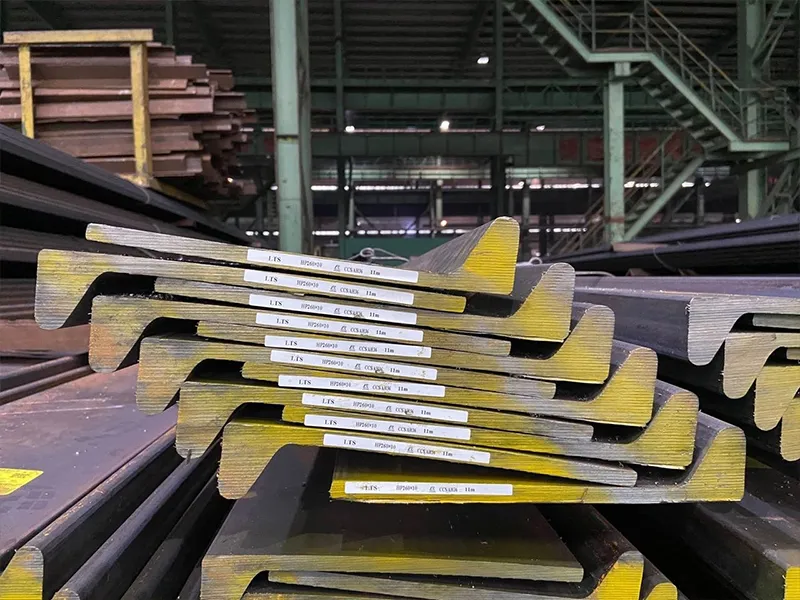
Contextualizing the Niche: Bulb Flats in a Trillion-Dollar Ocean
Understanding the scale of the overall market helps explain the dynamics of the niche segment for bulb flats4.
1. Breaking Down the $1 Trillion+ Market.
The market value includes the cost of the raw steel plus the value added through processing (like rolling into plates, coils, or sections). The physical production is staggering:
- 1.9 billion tons5 is roughly 250 kilograms of steel for every person on the planet each year.
- This steel is turned into products for buildings (50%+), cars (12%), machinery, appliances, and infrastructure.
- The shipbuilding sector6 consumes about 2-3% of global steel production. This includes plates, sections, and fittings.
2. The Marine Steel Niche Within the Megamarket.
Marine-grade steel, and bulb flats4 specifically, sit within this small shipbuilding segment.
- High Value, Low Volume: Marine steel commands a price premium over commodity steel due to its specialized properties (toughness, corrosion resistance) and mandatory certification. While its volume is a tiny slice of the global pie, its value per ton is much higher.
- Technology-Intensive: Producing certified marine steel2 requires advanced metallurgy and process control. Mills serving this niche are typically the more advanced players within a country’s steel industry.
- Market Sensitivity: The niche is highly sensitive to global shipbuilding cycles. A boom in ship orders can quickly tighten supply for marine profiles, even if the overall steel market is soft, because the specialized rolling capacity is limited.
3. China’s Role7 in This Global Picture.
Given China produces ~50% of the world’s steel, it naturally produces a similar proportion of the marine steel2 segment, if not more due to its own large shipbuilding industry.
- A Complete Ecosystem: China’s steel market is large enough to support entire supply chains for niche products internally. A mill can produce bulb flats4 for the domestic shipbuilding market and still have capacity for export.
- Export Orientation: Chinese mills and exporters are deeply integrated into global trade networks. This is why you find Chinese marine steel2 in projects from Vietnam to Qatar to Romania. The scale of the domestic market gives exporters a stable base, allowing them to be competitive internationally.
My Insight from the Field
I was discussing market dynamics with a buyer from a Mexican shipyard. He was concerned about price volatility8. I explained it this way: "Think of the global steel market1 as a huge ocean. The waves (prices) are caused by winds like Chinese demand or global construction. Our bulb flat market is like a specialized harbor within that ocean. When a big wave hits the ocean, our harbor feels it. But sometimes, our harbor has its own weather—like a sudden rush of ship orders—that changes conditions here even if the ocean is calm." This analogy helped him see the connection and the distinction. He realized that to manage his bulb flat costs, he needed a supplier who understood both the big ocean (global market) and the local harbor weather (shipbuilding cycle). This dual perspective is key to our role.
How big is the global tin market1?
This question seems unrelated to bulb flat steel. Tin is a metal used for coatings and alloys. But this comparison is actually very revealing. It highlights the sheer, overwhelming scale of the steel industry that China dominates. It shows why steel production2 defines global industrial power in a way few other materials do.
The global tin market1 is very small compared to the steel market. In 2023, global refined tin production was only about 380,000 metric tons. In contrast, the world produces over 1.9 billion tons of steel. This means the steel market is roughly 5,000 times larger by volume than the tin market. Steel is a foundational bulk material; tin is a specialized minor metal.
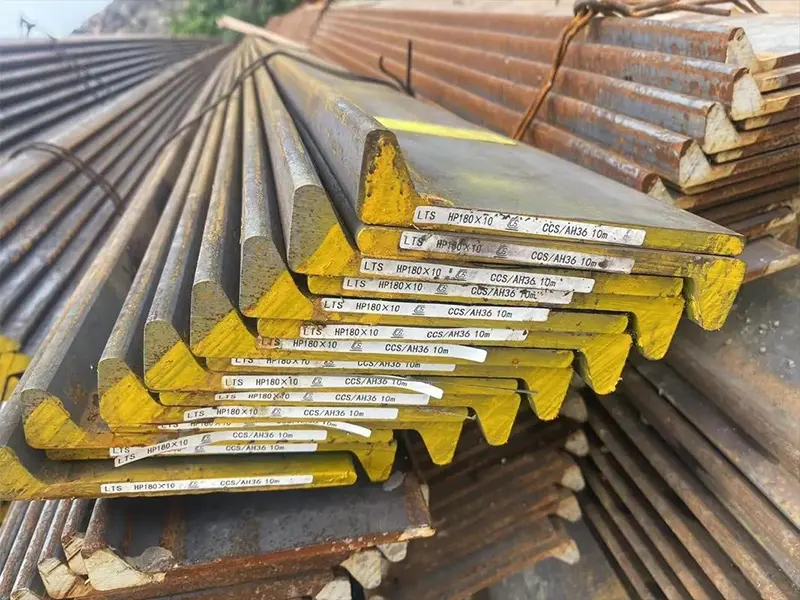
Steel as a Civilization-Scale Material: Why Volume Matters for Supply Security
Comparing steel to tin underscores why its supply chain is so complex and why China’s role is so significant.
1. The Logistical and Industrial Divide.
- Tin: 380,000 tons could be transported in a few dozen large bulk carrier ships. Its production is concentrated in a few countries like China, Indonesia, and Peru. It is a traded commodity on specialized metal exchanges.
- Steel: 1.9 billion tons requires a constant, global flow of raw materials (iron ore, coal) and a massive, distributed network of mills, fabricators, and transporters. Its production is a core indicator of national industrial capacity.
2. Implications for Bulb Flat Availability and Pricing.
The scale difference has practical consequences for buyers.
- Supply Chain Robustness: The enormous scale of the steel industry means there is always production happening somewhere. Even if one region has problems, others can potentially ramp up. This is less true for tiny markets like tin.
- Price Drivers: Steel prices are influenced by macro factors: construction demand in China, global iron ore prices, energy costs, and government policy. Tin prices are more influenced by specific technology demand (e.g., for solder in electronics) and supply disruptions at a few key mines.
- Niche within a Giant: Again, this highlights that bulb flats are a niche. But they are a niche within the world’s largest materials industry. This means the expertise and equipment to make them exist, but you must find them within the giant system.
3. China’s Position in Both Markets.
China is also the world’s largest producer and consumer of tin. This shows China’s dominance across multiple industrial metal sectors. For a bulb flat buyer, this reinforces a key point: China is not just a participant in these markets; it is very often the central player that sets supply and demand balances. Sourcing from China means tapping directly into the heart of global industrial metal production.
My Insight from the Field
A project manager from Saudi Arabia asked me why we focused on steel and not other metals. I used this comparison. I said, "If the global tin market1 is a large swimming pool, the global steel market is an entire ocean. Our business is built on navigating a specific current in that ocean—marine structural steel. The skills, partnerships, and scale needed to operate in the ‘ocean’ are entirely different from those needed for the ‘swimming pool.’" This helped him understand our specialization. It also explained why finding a reliable bulb flat supplier requires a partner deeply embedded in the steel "ocean," with the right connections to the specific "current" of shipbuilding profiles. A general metal trader might handle tin, but they often lack the deep mill relationships needed for reliable, certified steel sections.
What percentage of global steel production comes from eaf technology?
You hear about "green steel1" and new production methods. The technology used to make steel affects its cost, environmental footprint, and potentially its quality. For marine grades, the production route can matter. Understanding the mix of technologies helps you assess the industry’s direction and the sustainability profile of your supply chain.
Approximately 28-30% of global crude steel production comes from Electric Arc Furnace (EAF) technology2. The majority (~70%) is produced via the traditional Blast Furnace-Basic Oxygen Furnace (BF-BOF)3 route, which uses iron ore. The EAF share is higher in regions like the United States (70%+) and Europe (40%+), but lower in China (~10%) due to different resource availability and historical development.
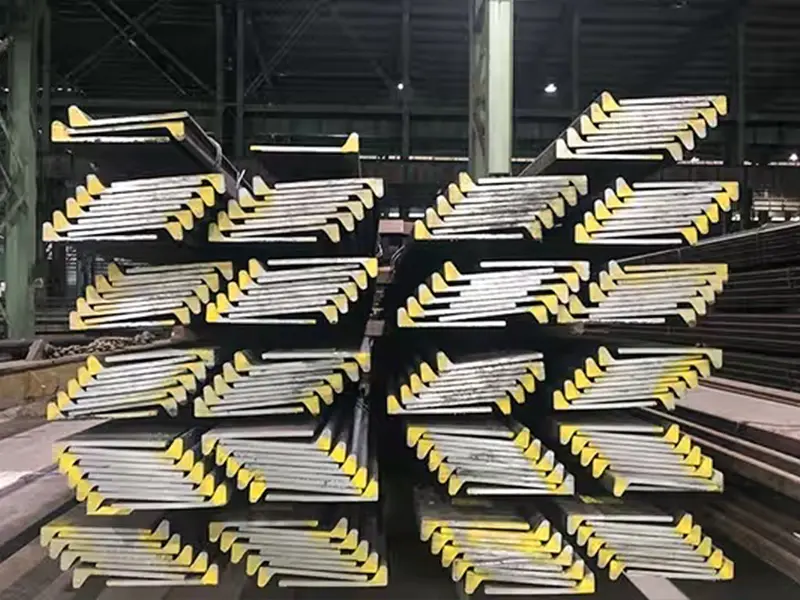
Technology Mix and Its Impact on Marine Steel Sourcing
The EAF/BOF split is crucial for understanding regional strengths, costs, and future trends, especially for quality-sensitive products.
1. The Two Main Production Routes.
- Blast Furnace – Basic Oxygen Furnace (BF-BOF): This is the integrated route. It starts with iron ore and coke. It produces new, or "virgin," steel from raw materials. It is capital-intensive and best suited for large-scale, continuous production of a wide range of steel grades, including high-quality flat products and plates. It is the dominant method in China.
- Electric Arc Furnace (EAF): This route melts recycled steel scrap4 using powerful electric arcs. It is more flexible, can be started and stopped more easily, and has a lower carbon footprint if the electricity is green. It is excellent for producing long products (rebar, sections) and some flat products.
2. Relevance to Marine Bulb Flat Steel.
- Quality and Certification: High-grade marine steel5 for hull structures is traditionally produced via the BF-BOF route. This allows for precise control over the chemical composition from raw materials, which is critical for achieving the required toughness and weldability. Producing the highest grades from 100% scrap in an EAF is more challenging due to potential residual elements (copper, tin) from the scrap mix.
- The Chinese Context: China’s steel industry is predominantly BF-BOF. This is partly because China was building its industry from scratch and had less historical scrap available. For marine bulb flats, this is often an advantage. The mills we partner with use the BF-BOF route to achieve the clean, precise chemistry needed for ABS/EH36 grades.
- The Global Trend: The push for decarbonization6 is driving investment in EAF technology and new processes like Hydrogen-Direct Reduced Iron (H-DRI) paired with EAF. For now, the bulk of certified marine plate and sections still comes from integrated BF-BOF mills or advanced EAF mills using carefully controlled scrap and other iron sources.
3. Table: How Production Technology Influences Your Sourcing Decision.
| Factor | BF-BOF (Integrated) Route | EAF (Recycling) Route |
|---|---|---|
| Primary Raw Material | Iron Ore, Coking Coal | Steel Scrap (or DRI) |
| Typical Output | High-volume slabs for plates, sheets, high-quality sections. | Rebar, structural sections, wire, some plates. |
| Advantage for Marine Steel | Excellent control over purity and chemistry. The standard for high-grade plates and bulb flats. | Lower carbon emissions (potentially), flexibility. |
| Challenge for Marine Steel | Higher carbon emissions from the process. | Requires extremely pure scrap to match BF-BOF quality for critical applications. |
| China’s Production Mix | ~90% of production. | ~10% of production, but growing. |
| Procurement Implication | Sourcing from China often means sourcing BF-BOF steel, which is suitable for high-spec marine grades. | In other regions, verify the mill’s capability to produce certified marine grades7 via EAF. |
My Insight from the Field
A European client asked us about the carbon footprint of our Chinese bulb flats. They were under pressure to show sustainable sourcing. We provided the mill’s environmental data and explained the BF-BOF process. We also explained the full life-cycle perspective: a ship made with high-quality steel lasts longer and is more fuel-efficient, offsetting some production emissions. More importantly, we connected them with a Chinese mill that was piloting a transition to using more recycled content in its BOF process and investing in carbon capture. This showed the client that the Chinese industry is not static. It is innovating. The lesson was that understanding the "EAF vs. BOF" question allows for a more sophisticated conversation about quality and sustainability, moving beyond simple assumptions.
Conclusion
China’s position is central, offering scale and capability for bulb flats, but success requires navigating its vast industry to find quality-focused, certified partners who understand global marine standards.
-
Discover the concept of green steel and its role in sustainable manufacturing practices. ↩ ↩ ↩ ↩ ↩ ↩ ↩ ↩ ↩
-
Explore this link to understand how EAF technology is revolutionizing steel production and its environmental benefits. ↩ ↩ ↩ ↩ ↩ ↩ ↩ ↩ ↩ ↩ ↩ ↩ ↩ ↩ ↩ ↩ ↩
-
Learn about the traditional BF-BOF method and its significance in global steel production. ↩ ↩ ↩
-
Learn about the significance of steel scrap in EAF production and its recycling benefits. ↩ ↩ ↩ ↩ ↩ ↩
-
Find out about marine steel, its unique properties, and its importance in shipbuilding. ↩ ↩ ↩
-
Understand the strategies being implemented for decarbonization in steel production and their impact. ↩ ↩
-
Discover what certified marine grades are and why they are crucial for high-quality marine applications. ↩ ↩
-
Learn about the causes of price fluctuations in the steel market and how to navigate them. ↩