
Are you selecting angle bars for a marine project and wondering if standard structural steel will suffice? Choosing the wrong type can lead to catastrophic failures at sea. I recently worked with a shipyard in Thailand that faced this exact dilemma when sourcing materials for a new bulk carrier.
The key difference is that marine angle bars are manufactured to specific classification society standards (like ABS or LR) for enhanced toughness, corrosion resistance, and precise chemistry to withstand harsh ocean environments, while general structural angle bars are produced to broader commercial standards (like ASTM A36) primarily for cost-effective strength in buildings and bridges on land. Using a structural angle in a marine application is a significant risk.
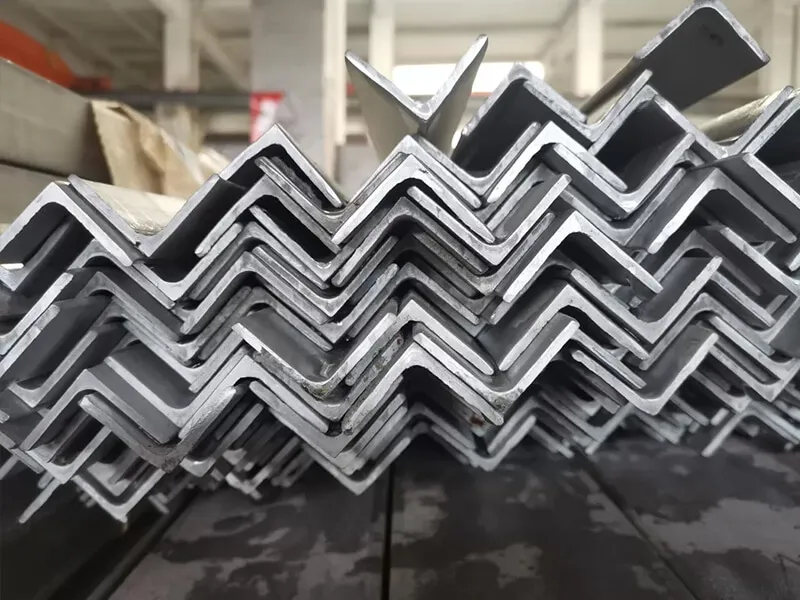
This distinction is not just about paperwork. It directly impacts safety, longevity, and compliance. Many of our B2B clients, such as project contractors in Qatar and Saudi Arabia, need to understand these differences deeply to make informed purchasing decisions and avoid costly rework. Let’s break down the comparison into clear, actionable parts, starting with the most fundamental question about their names.
What is the difference between bar angle and structural angle?
Many people use the terms "bar angle" and "structural angle" interchangeably, and this can cause confusion during procurement. A fabricator in Mexico once ordered what they called "structural angles" for a port facility, but they actually needed the specific properties of marine-grade "bar angles" for the sections exposed to seawater splash.
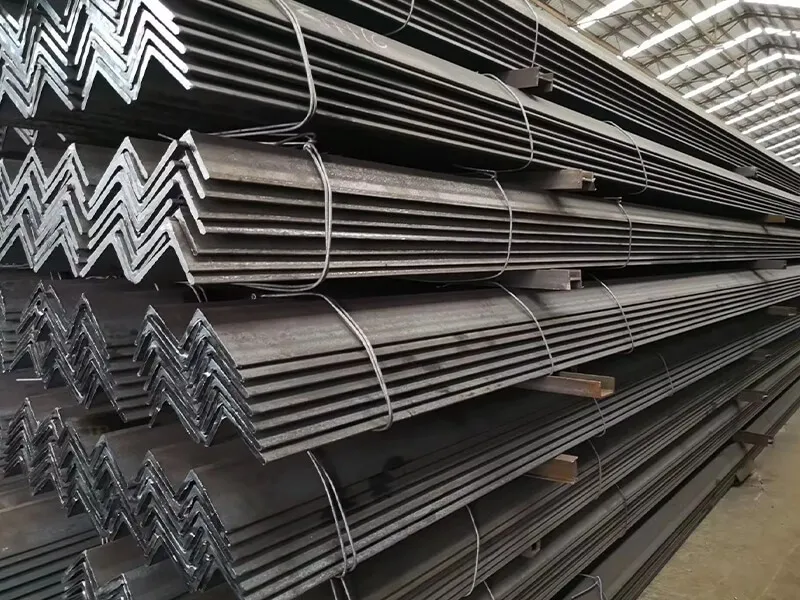
In common industry language, "bar angle" often refers to the physical product—the long, L-shaped steel bar itself, regardless of its specific grade or use. "Structural angle" is a functional term specifying that the angle bar is intended and certified for use in load-bearing structures, meeting defined strength and safety standards. All structural angles are bar angles, but not all bar angles qualify as structural angles.
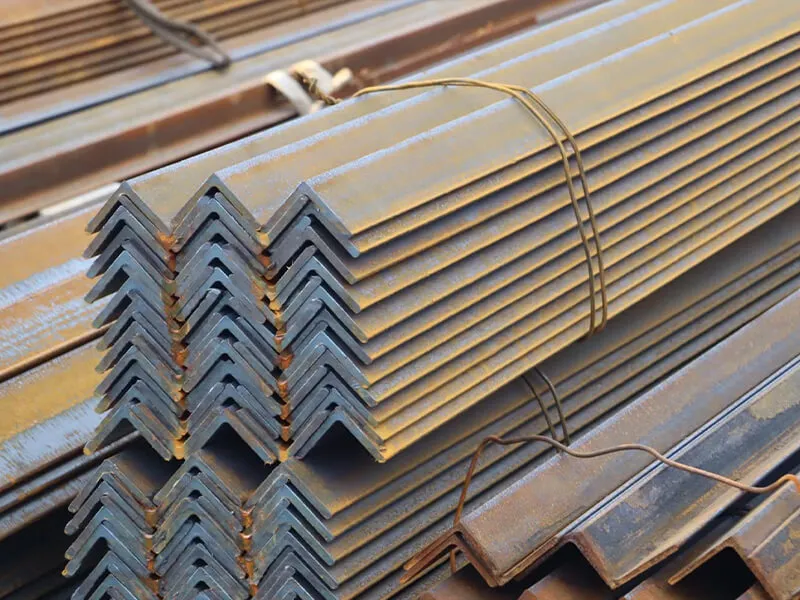
Clarifying Terminology and Core Purpose
The confusion stems from casual talk versus technical specifications. To make the right choice, you must look beyond the common names and focus on the material standards.
"Bar Angle" – The Generic Product Term
- This is the broadest category. It describes the shape: a length of steel with an L-shaped cross-section.
- When someone says "bar angle," they might be talking about any L-shaped steel, from a low-grade product for non-critical fencing to a high-grade material for a ship’s frame. The term does not, by itself, guarantee any specific mechanical properties.
- In our daily communication with wholesalers in the Philippines or Vietnam, we often use "angle bar" or "L-bar" to describe the product generally before specifying the grade.
"Structural Angle" – The Certified Application Term
- This term indicates the angle bar conforms to a published standard that defines its minimum strength, composition, and sometimes toughness. This certification is what allows engineers to specify it in structural calculations.
- Key standards include:
- ASTM A36: A common standard for structural steel in the USA, covering shapes, plates, and bars. It defines minimum yield and tensile strength.
- EN 10025-2 (S235JR, S355JR): European standards for hot-rolled structural steel.
- JIS G3192: Japanese standards for hot-rolled steel sections.
- When you buy a "structural angle," you are buying a product with a guaranteed performance envelope. The Mill Test Certificate (MTC) is your proof.
Here is a table to show how the intent differs:
| Aspect | "Bar Angle" (General Term) | "Structural Angle" (Specific Term) |
|---|---|---|
| Primary Focus | Describes the shape and form of the material. | Describes the function and capability of the material. |
| Implied Standards | May or may not conform to a formal structural standard. Could be a commercial quality product. | Must conform to a recognized structural standard (e.g., ASTM A36, EN 10025). |
| Typical Documentation | May only have a commercial invoice. A proper supplier should still provide an MTC. | Always supplied with a proper MTC matching the claimed standard (e.g., A36). |
| Common Use Cases | Non-critical uses: supports for light shelving, decorative frames, temporary bracing. | Load-bearing uses: building frames, bridge components, support beams in industrial facilities. |
| Procurement Clarity | Can be ambiguous. Requires further questioning about grade. | Clearly defines the required material performance for engineers and buyers. |
The practical takeaway is this: When you are sourcing for any project where the angle will bear load or be part of a certified structure, you must move beyond asking for a "bar angle." You must specify that you need a "structural angle" and then name the exact standard and grade, such as "ASTM A36 Structural Angle" or "S355JR Structural Angle." This precision eliminates risk. For our marine clients, the next step is even more specific: they need structural angles made to marine-class standards.
What is the difference between architectural angle and structural angle?
You might see angle bars used in a sleek building facade and also in the hidden frame of the same building. This highlights two different worlds: architecture and structure. A client in Saudi Arabia, building a seaside resort, needed angles for decorative railings (architectural) and for the underlying piers exposed to seawater (structural marine). The requirements were completely different.
Architectural angles prioritize visual appearance, surface finish, and formability for decorative purposes, with strength often being a secondary concern. Structural angles prioritize mechanical properties—yield strength, tensile strength, and toughness—to bear loads safely, with surface appearance being largely unimportant as they are usually hidden. Using an architectural angle to carry a structural load is dangerous.
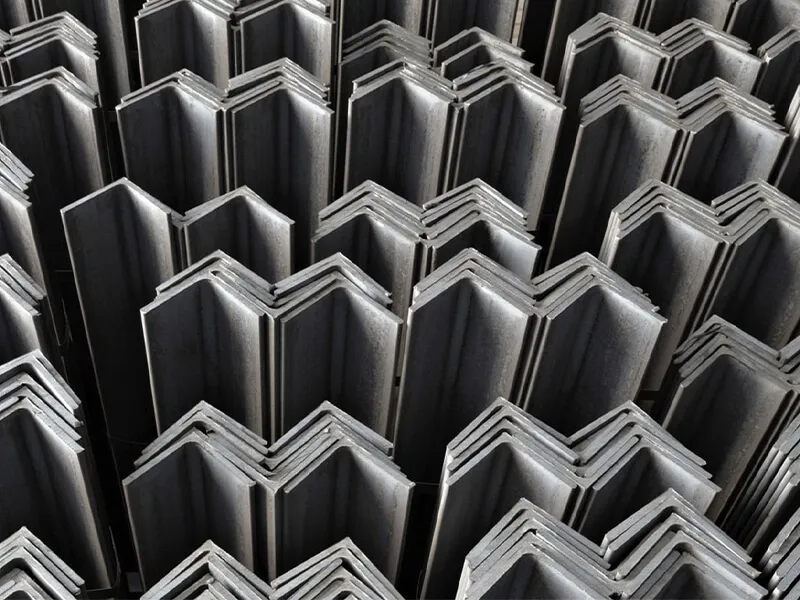
Form vs. Function: A Detailed Breakdown
The divergence between these two types begins at the steel mill and influences every step, from production to pricing.
Architectural Angles: The Focus on Aesthetics
- Material & Finish: These are often made from stainless steel (like 304 or 316) for corrosion resistance and a consistent, attractive look. Carbon steel angles for architecture may be hot-rolled but will undergo additional processing like pickling, grinding, or painting to achieve a clean, uniform surface.
- Tolerances: Dimensional tolerances might be tighter to ensure a perfect fit and alignment in visible applications, like glass curtain wall frames or decorative trims.
- Primary Standards: Standards focus on finish quality. For stainless steel, standards like ASTM A554 for welded stainless steel mechanical tubing might apply for certain forms, but the key specification is often the alloy grade (e.g., 316) and surface finish (e.g., No. 4 brush, mirror polish).
- Key Consideration: The main risk is corrosion or poor appearance in the finished project. A scratch or rust spot on an architectural feature is unacceptable.
Structural Angles: The Focus on Performance
- Material & Finish: These are typically hot-rolled carbon or low-alloy steel. The surface has mill scale—a dark blue-gray oxide layer formed during rolling. This scale is not removed and is often considered protective in non-marine environments. Surface imperfections like slight rolling marks are acceptable as they don’t affect strength.
- Tolerances: Tolerances are governed by structural shape standards (like ASTM A6) which allow for more variation in dimensions, as precise visual alignment is less critical than load capacity.
- Primary Standards: Standards are all about mechanical properties. ASTM A36, A572, or marine grades like ABS AH36 define minimum yield strength, tensile strength, and often chemical composition limits.
- Key Consideration: The main risk is structural failure. The material must perform under design loads, winds, earthquakes, or waves. Certification (the MTC) is non-negotiable.
This comparison table makes the contrast clear:
| Feature | Architectural Angle | Structural Angle |
|---|---|---|
| Main Priority | Visual Appeal & Finish | Load-Bearing Strength & Safety |
| Common Material | Stainless Steel, Coated/Painted Carbon Steel | Hot-rolled Carbon Steel (e.g., S355), Low-alloy Steel |
| Surface Condition | Clean, smooth, polished, uniform color. Free of scale and major imperfections. | Covered in mill scale. May have rolling marks, slight variations in color. Surface defects are allowed if they don’t reduce cross-section beyond tolerance. |
| Critical Documentation | Material certificates for alloy/coating, finish samples. | Mill Test Certificate (MTC) with mechanical & chemical test results. |
| Cost Driver | Material cost (e.g., stainless), additional finishing processes. | Material grade (strength level), testing, and certification costs. |
| Failure Mode if Misapplied | Cosmetic: Rust, staining, poor appearance leading to customer rejection. | Catastrophic: Bending, buckling, or fracture leading to potential collapse and safety hazards. |
For a marine project, you will almost always need a structural angle. However, you might also need architectural angles for interior fittings or decorative elements on the superstructure. The critical mistake is substituting one for the other in the wrong context. Our role is to help clients like shipbuilders in Romania and fabricators in Pakistan distinguish between these needs and source the correct, certified material for each specific application.
What are the different grade of angle bars?
Walking into a steel yard and just asking for "angle bars" is like walking into a pharmacy and asking for "medicine." The range is vast, and the wrong choice has consequences. A marine contractor in Myanmar once used a general-grade angle in a critical bracing application, only to find it cracking at the welds during fabrication because the chemistry was wrong for their welding procedure.
Angle bars are graded based on their yield strength1, chemical composition2, and impact toughness3. Common grade families include commercial quality (like ASTM A364), high-strength low-alloy (like ASTM A572 Gr. 505), weathering steel6s (like ASTM A588), and marine grades7 certified by classification societies8 (like ABS Grade A, AH36, or LR Grade D). The grade dictates where and how the angle can be safely used.
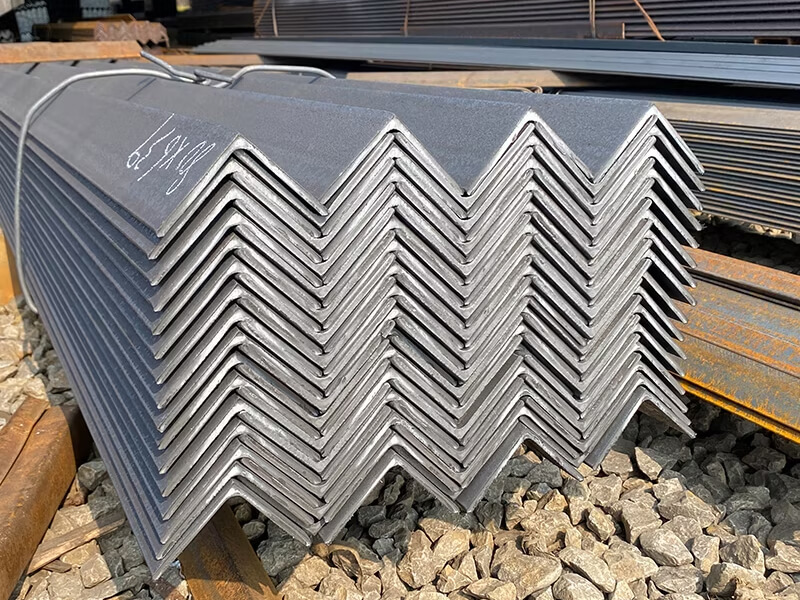
A Guide to Major Grade Classifications
Understanding grades is about understanding the language of steel standards. Each standard uses its own naming system, but they all communicate key performance metrics.
1. Commercial Quality / Mild Steel Grades:
- Example: ASTM A364. This is the most common structural steel grade in North America.
- Key Properties: Minimum yield strength1 of 36,000 psi (250 MPa). Good weldability and formability.
- Typical Use: General construction, building frames, non-critical support structures where high toughness is not required. It is not recommended for marine environments due to poor corrosion resistance.
2. High-Strength Low-Alloy (HSLA) Grades:
- Example: ASTM A572 Grade 50. Other examples include ASTM A992 for shapes.
- Key Properties: Minimum yield strength1 of 50,000 psi (345 MPa). Higher strength than A36, achieved through small additions of alloying elements like Vanadium or Niobium.
- Typical Use: Allows for lighter, more economical structures (smaller sections) in buildings, bridges, and trucks. Still not suitable for direct marine exposure unless coated.
3. Weathering Steel Grades:
- Example: ASTM A588 ("Corten").
- Key Properties: Similar strength to A572 Gr. 50. Its special chemistry forms a stable, protective rust patina when exposed to weather, which inhibits further corrosion.
- Typical Use: Architectural facades, uncoated bridges, and outdoor sculptures. It is for atmospheric corrosion, not for immersion or splash zones in saltwater.
4. Marine & Offshore Grades (The Critical Category for Marine Work):
- Governed by: Classification Societies (ABS, LR, DNV, BV, etc.).
- Naming: Usually a letter (A, B, D, E) indicating toughness level, sometimes with an "H" for high strength and a number (32, 36, 40) for yield strength1.
- Grade A: Basic hull structural steel.
- Grade D, E: Increased notch toughness9 for colder service temperatures.
- AH36, DH36: High-strength steel (355 MPa yield) with different toughness levels.
- Key Properties: Strictly controlled chemistry (especially carbon equivalent for weldability), mandatory impact testing at specified low temperatures (e.g., -20°C for Grade D), and often tighter inclusion control for better fatigue resistance.
- Typical Use: Ship hulls, offshore platforms, port structures, and any marine application where failure is not an option.
Here is a selection table connecting grade to environment:
| Project Environment & Requirement | Recommended Angle Bar Grade Family | Why It’s Suitable |
|---|---|---|
| Indoor warehouse racking, general fabrication. | Commercial Quality (e.g., ASTM A364, S235JR) | Cost-effective, readily available, sufficient strength for controlled environments. |
| Heavy industrial building, long-span bridge (land). | High-Strength Low-Alloy (e.g., A572 Gr. 50, S355J2) | Higher strength allows smaller, lighter sections, reducing material cost and weight. |
| Exposed architectural feature on a coastal building (no direct salt splash). | Weathering Steel (e.g., ASTM A588) | Develops a protective patina, reducing maintenance, with an attractive rustic appearance. |
| Ship’s internal frames, bulkhead stiffeners. | Marine Grade (e.g., ABS Grade A or B) | Certified toughness and consistent chemistry for reliable performance in a marine atmosphere inside the hull. |
| Ship’s hull plating frames, offshore platform splash zone. | Marine Grade, High-Toughness (e.g., ABS Grade D, DH36, or EH36) | Enhanced low-temperature toughness to resist brittle fracture in cold water and dynamic wave loading. |
When we supply to a project in Qatar or for an oil tanker build, we don’t just ship "S355." We confirm the exact classification society approval (ABS, LR, etc.) and ensure the MTC reports10 the impact test values. This grade-level detail is what separates marine angle bars from all others and provides the certainty our B2B clients demand.
What is the best steel for marine use?
There is no single "best" steel for all marine uses. The best choice is the one that precisely matches the specific environment, application, and regulatory requirements of your project. Recommending a generic "marine steel" is like recommending a generic "vehicle" for both city driving and heavy construction—it lacks the necessary precision.
For general marine applications, the best steels are those certified by marine classification societies like ABS, LR, or DNV. For corrosion resistance, grades like ABS AH36 or DH36 offer an excellent balance of strength and toughness. For extreme corrosion focus, stainless steel grades like 316L or duplex steels are used, but they are far more expensive and not typically needed for primary hull structures. The choice always involves a trade-off between performance, weldability, and cost.
Selecting Steel Based on the Marine Environment Zone
The marine environment is not uniform. We can break it down into zones, each with its own corrosive challenges. The "best" steel is different for each zone.
1. The Atmospheric Zone (Above the Splash):
- Environment: Exposed to salt-laden air but not direct seawater spray.
- Challenges: General atmospheric corrosion.
- Best Steel Options:
- Painted Carbon Steel: The most common and economical solution. Marine-grade angles (ABS Grade A/B) with a high-performance paint system (epoxy, polyurethane) are standard.
- Weathering Steel (A588): Can be used here if a maintenance-free patina is desired, but performance is inferior to painted systems in highly aggressive marine atmospheres.
- Aluminum Alloys: Often used for superstructures to save weight and for natural corrosion resistance.
2. The Splash & Tidal Zone (Most Aggressive):
- Environment: Alternately wet and dry, with high oxygen supply accelerating corrosion. This includes areas around the waterline and on offshore platform legs.
- Challenges: Extremely high corrosion rates, potential for fatigue from wave action.
- Best Steel Options:
- Higher Grade Marine Steel with Increased Protection: Using steels like AH36 or DH36 is base. However, the steel must be combined with robust protection.
- Protection Systems are Key: This zone requires extra thick paint coatings, sacrificial anode systems (zinc or aluminum anodes), or even applied coatings like thermal-sprayed aluminum (TSA). The steel’s quality ensures the protection system has a sound, weldable base to work on.
3. The Immersed Zone (Permanently Submerged):
- Environment: Continuously underwater.
- Challenges: Corrosion rates are lower than the splash zone due to limited oxygen. However, galvanic corrosion and fouling are issues.
- Best Steel Options:
- Standard Marine-Grade Steel with Cathodic Protection: ABS Grade A or B steels are typically sufficient here. They are almost always protected by a combination of paint and a sacrificial anode system. The anode system (e.g., zinc blocks welded to the hull) actively protects the steel by corroding in its place.
4. Special Applications:
- Cargo Tanks & Chemical Carriers: May require stainless steels (316L) or coated steels to handle corrosive cargoes like acids or chemicals.
- LNG Carrier Containment Systems: Require special nickel-alloy steels or stainless steels to withstand ultra-low temperatures (cryogenic service).
The decision matrix often looks like this:
| Application (Marine Example) | Primary Consideration | Recommended Steel Type | Critical Supporting Measure |
|---|---|---|---|
| Main Hull Framing (Bulk Carrier) | Strength, Toughness, Weldability, Cost | Marine-Grade Carbon Steel (e.g., ABS AH36) | Full classification society certification, proper welding procedures. |
| Handrails on Ship Deck (Exposed) | Corrosion Resistance, Appearance | Stainless Steel (316) or Galvanized Carbon Steel | Regular maintenance if painted carbon steel is used. |
| Offshore Platform Leg in Splash Zone | Extreme Corrosion & Fatigue Resistance | Marine-Grade Steel (e.g., API 2H Grade 50) | Plus thick anti-corrosion coating plus sacrificial anode system. |
| Ballast Water Tanks (Inside Hull) | Corrosion in confined, wet space | Marine-Grade Steel | Plus specialized tank coating (epoxy) approved for ballast tanks. |
For our clients, like the fabricator in Saudi Arabia, the "best" steel is the one that passes their project specifications and third-party inspection (like SGS) without issue, is delivered on time, and performs reliably in service. Our job is to provide the certified marine-grade angle bars and plates that form the trustworthy backbone of their marine structures, ensuring the material itself is never the weak link.
Conclusion
Choosing between marine and structural angle bars is a critical decision based on environment, certification, and required performance. For marine applications, always insist on classification society-certified grades to ensure safety, longevity, and compliance at sea.
-
Understanding yield strength is crucial for selecting the right steel grade for your project, ensuring safety and performance. ↩ ↩ ↩ ↩
-
Explore how chemical composition influences the properties of steel grades, impacting their suitability for various applications. ↩
-
Learn about impact toughness and its importance in ensuring steel can withstand sudden forces without failing. ↩
-
Discover the key properties of ASTM A36, the most common structural steel grade, and its applications. ↩ ↩ ↩
-
Find out why ASTM A572 Gr. 50 is favored for its high strength and economical design in construction. ↩
-
Explore the unique properties of weathering steel and how it can enhance architectural designs with its rust patina. ↩
-
Learn about marine grades of steel, their strict standards, and why they are essential for marine construction. ↩
-
Understand the role of classification societies in ensuring the quality and safety of marine steel grades. ↩
-
Discover the significance of notch toughness in steel, especially for applications in cold environments. ↩
-
Learn about Material Test Certificates (MTC) and their importance in verifying steel quality and compliance. ↩