
You see oil rigs and wind turbines out at sea. They stand on huge steel structures. But do you know what shapes hold them together?
Demand for marine angle steel in offshore engineering is growing fast. The main drivers are new offshore wind farms, oil and gas platforms, and marine support vessels. Higher strength grades and corrosion protection are also pushing the market.
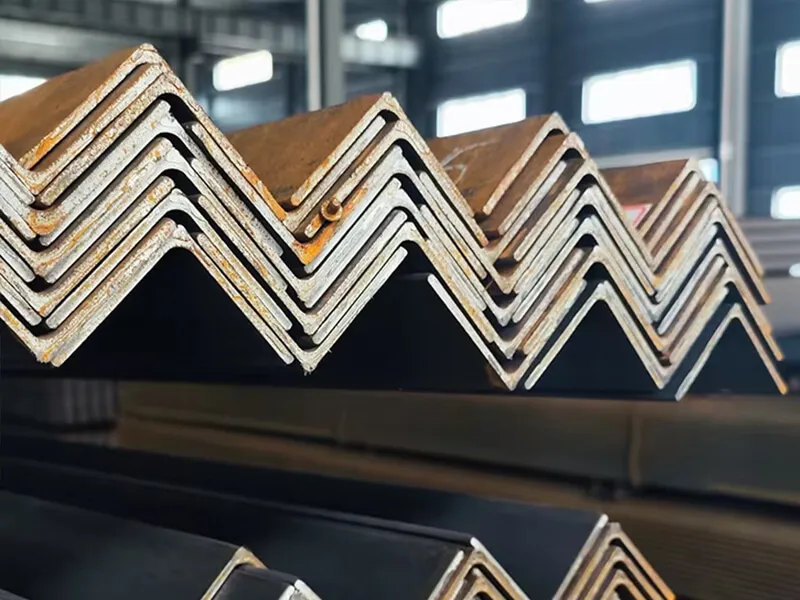
I am Zora Guo. My company supplies marine angle steel to offshore projects in Southeast Asia and the Middle East. I have seen demand increase over the last five years. Many buyers ask me: “Is this a temporary trend?” I do not think so. Let me explain what is driving the growth and where the opportunities are.
What Offshore Engineering Sectors (Oil Rigs, Wind Turbines, and Marine Platforms) Are Driving Marine Angle Steel Demand?
You think offshore steel is only for big oil platforms. But the market has changed. New sectors are growing. And all of them need angle steel.
The three main offshore sectors driving marine angle steel demand are oil and gas platforms (fixed and floating), offshore wind turbine foundations and substations, and marine support vessels like anchor handlers and crew boats. Each uses angle steel for structural framing, bracing, and stiffening.
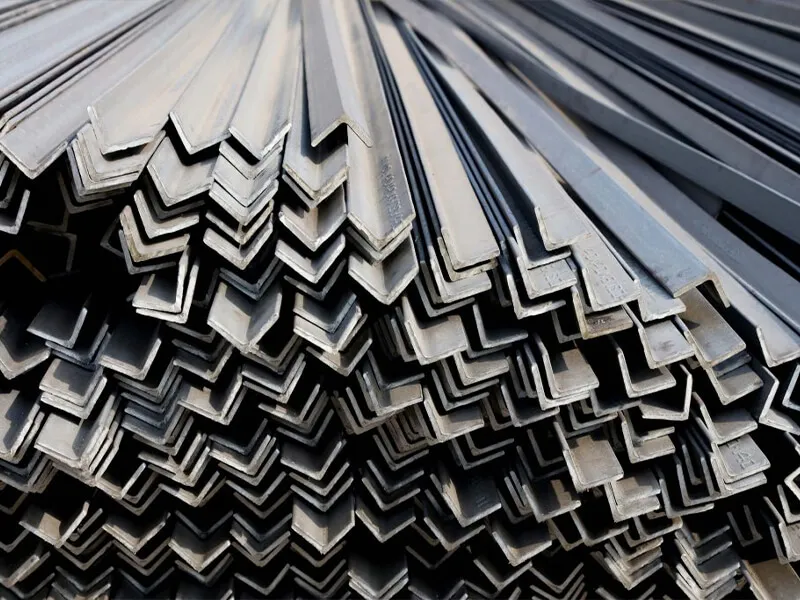
Let me break down each sector and how they use marine angle steel.
Sector 1: Oil and Gas Platforms (Fixed and Floating)
This is the traditional market. But it is still growing, especially in the Middle East and Africa. Oil platforms use massive amounts of steel. Angle steel is used for:
- Jacket structures – The lattice legs of fixed platforms. These are often made from large angle steel (L200x200x20 or bigger).
- Deck framing – On the topside modules, angle steel stiffens the deck plates.
- Helidecks – The helicopter landing platform uses angle steel beams.
- Stairs and ladders – Non‑structural but still a steady demand.
I supply angle steel to a fabricator in Qatar that builds offshore jackets. They told me: “For a single medium‑sized jacket, we use 800‑1,200 tons of angle steel. Mostly in grades AH36 and DH36 for higher strength.”
Sector 2: Offshore Wind Turbines
This is the fastest‑growing sector. Offshore wind farms need many structures. Each wind turbine has a foundation (monopile, jacket, or gravity base) and a transition piece. Then there are offshore substations (like small platforms).
Where angle steel is used in offshore wind:
- Jacket foundations – For water depths over 30 meters, steel jacket structures are common. They use angle steel for the diagonal bracing.
- Substation platforms – These are similar to small oil platforms. They need deck beams and stiffeners made from angle steel.
- Cable protection structures – Small frames that protect power cables near the turbine.
I attended an exhibition in Shanghai last year. A European wind developer told me that a single 500MW wind farm (around 40 turbines) uses about 15,000‑20,000 tons of structural steel. A good portion of that is angle steel for bracing and secondary structures.
Sector 3: Marine Support Vessels
Oil rigs and wind farms need supply boats, crew transfer vessels, anchor handlers, and construction vessels. These ships are built to offshore standards. They use angle steel for hull framing and stiffening.
| Typical vessels and their angle steel use: | Vessel type | Angle steel tonnage (approx) | Main grades |
|---|---|---|---|
| Crew transfer vessel (CTV) | 30‑50 tons | A, AH32 | |
| Platform supply vessel (PSV) | 200‑300 tons | AH36, D | |
| Anchor handling tug (AHT) | 250‑400 tons | DH36, E | |
| Offshore construction vessel (OCV) | 500‑800 tons | AH36, DH36 |
Demand Growth Numbers
I have seen data from industry reports. Here is a summary:
| Sector | Annual growth rate (estimated) | Angle steel share of structural steel |
|---|---|---|
| Offshore oil & gas (global) | 2‑4% | 15‑20% |
| Offshore wind (global) | 15‑20% | 10‑15% |
| Offshore support vessels (OSVs) | 5‑7% | 20‑25% |
Offshore wind is clearly the fastest. And many new wind farms are being planned in the North Sea, Southeast Asia, and the US East Coast.
How Are Higher Strength Grades and Corrosion‑Resistant Coatings Shaping the Material Specifications for Offshore Projects?
You need steel for a platform in the North Sea. The waves are harsh. The salt air is corrosive. You cannot use ordinary marine steel. You need something stronger and better protected.
Offshore projects are moving toward higher strength grades like DH36, EH36, and even S355ML. They also require corrosion‑resistant coatings or weathering steel. These specifications increase the cost per ton but reduce total project weight and maintenance. As a result, angle steel mills now produce more high‑grade material than ever before.
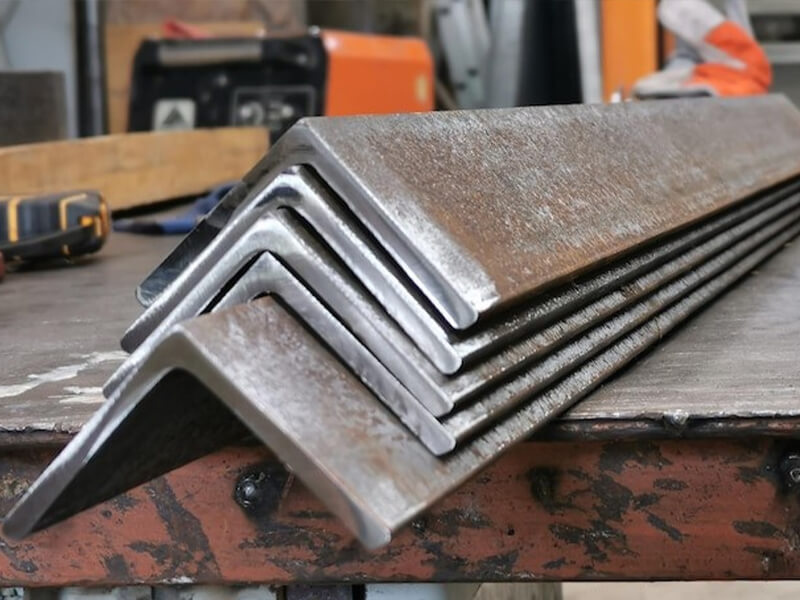
Let me explain what these grades mean and why they matter for offshore engineering.
Higher Strength Grades – Why They Are Needed
Offshore structures are heavy. Reducing weight is a big goal. Lighter structures cost less to install (smaller cranes, less transport). They also place less load on the seabed.
Common offshore steel grades for angle steel:
| Grade | Minimum yield strength (MPa) | Charpy temperature | Typical offshore use |
|---|---|---|---|
| AH32 | 315 | 0°C | Secondary structures, warm waters |
| DH32 | 315 | -20°C | Primary structures in moderate climates |
| EH36 | 355 | -40°C | Primary structures in North Sea, cold waters |
| S355ML (thermo‑mechanical) | 355 | -50°C | High‑demand areas, arctic conditions |
I have seen a shift from AH36 to DH36 and EH36. For example, a client in Romania built a black sea platform. The designer specified DH36 for all main angle steel frames. That gave them a 12% weight saving compared to using AH36, because the same load could be carried by a slightly smaller section.
Corrosion Protection – Coatings and Material Choices
Saltwater corrodes steel fast. An offshore structure can lose 1‑2mm of thickness per year without protection. So you need a system.
Common approaches:
- Heavy‑duty coating – Epoxy or polyurethane coatings applied at the fabricator’s shop. These last 10‑15 years.
- Galvanizing – Hot‑dip galvanizing gives good protection but is expensive for large sections.
- Cathodic protection – Sacrificial anodes (zinc or aluminum) attached to the structure. Often used together with coatings.
- Weathering steel (Cor‑Ten) – Not as common offshore because it needs wet‑dry cycles to form a protective rust layer. Underwater, it does not work well.
What this means for angle steel procurement:
- You must specify the coating system in your purchase order.
- Some mills can pre‑coat angle steel. But most shipyards or fabricators do the coating themselves after cutting and welding.
- For galvanizing, the angle steel must be completely clean (no mill scale). That costs extra.
Real Example – A Middle East Gas Platform
I supplied angle steel for a gas platform in the Persian Gulf (Saudi Arabia side). The specification was DH36 with a 300‑micron epoxy coating. The buyer (Gulf Metal Solutions, similar company) told me: “We used to buy A grade with shop primer only. After three years, the corrosion was bad. Now we spend 20% more on material but save 50% on yearly maintenance.” That is the new trend.
Impact on Supply
Higher grades mean fewer mills can produce the steel. Not every mill has the technology for EH36 or S355ML. So lead times are longer for these grades. I work with certified mills that can produce DH36 and EH36 angle steel. But I always tell my customers: “If you need high grades, plan 2‑3 months ahead.”
What Regional Markets – Such as the North Sea, Southeast Asia, and the Middle East – Are Experiencing the Fastest Growth?
You want to sell marine angle steel. Or you want to buy for a project. Where is the demand hottest? The answer has changed in the last five years.
The fastest‑growing regional markets for marine angle steel in offshore engineering are Southeast Asia (Vietnam, Indonesia, Philippines), the Middle East (Saudi Arabia, UAE, Qatar), and the North Sea (UK, Norway, Denmark). Southeast Asia is driven by offshore wind and oil refurbishment. The Middle East is driven by new gas platforms. The North Sea is driven by wind farm expansion.
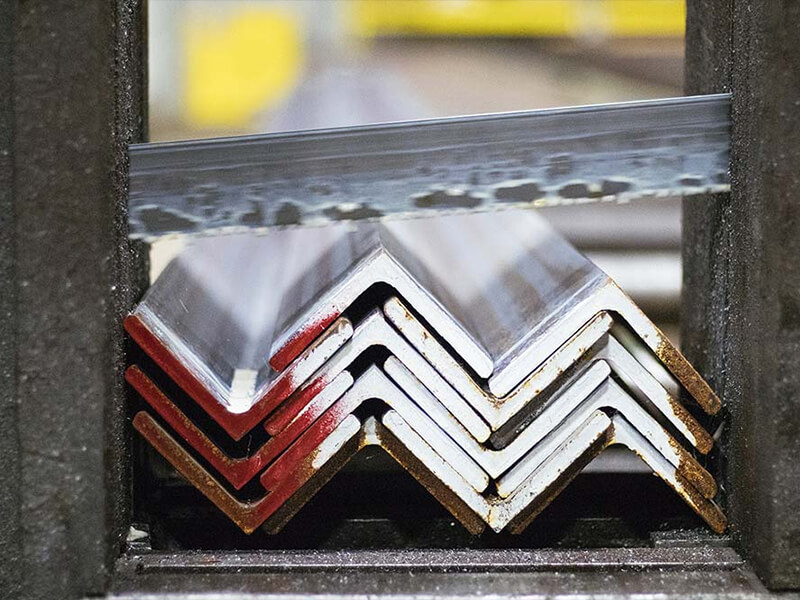
Let me share what I see from my own shipping records.
Southeast Asia – The New Hotspot
Vietnam, Indonesia, and the Philippines are investing heavily in offshore energy. Vietnam has offshore wind targets. Indonesia is building new gas infrastructure. The Philippines has many small offshore platforms for its growing energy needs.
Why Southeast Asia is growing fast:
- Low labor costs for fabrication attract international companies.
- Many new wind farm projects are being planned (Vietnam alone aims for 6GW offshore wind by 2030).
- Existing oil and gas fields need maintenance and upgrades.
I ship marine angle steel to Vietnam every month. My customers there are mostly fabricators building offshore modules for export to Australia and the Middle East. They tell me their order books are full for the next 12‑18 months.
The Middle East – Still Strong
The Middle East is not new. But demand has shifted from oil to gas. Saudi Arabia and Qatar are expanding gas production (e.g., North Field expansion in Qatar). This requires new offshore platforms and pipelines.
Specific drivers:
- Qatar’s North Field expansion – one of the world’s largest gas projects. Needs thousands of tons of structural steel.
- Saudi Arabia’s Marjan and Zuluf fields – offshore oil and gas increments.
- UAE’s lower carbon goals – more gas, less oil flaring.
I have a client in Saudi Arabia (Gulf Metal Solutions) who buys marine angle steel for offshore projects. Their sales rep told me: “We are busier now than before COVID. Every quarter we need two to three containers of angle steel in DH36.”
The North Sea – Wind Power Boom
The North Sea is the mature market for offshore wind. But growth is still strong. The UK, Denmark, Germany, and Norway are adding more wind capacity. Older platforms are also being decommissioned, but new wind farms more than make up for it.
Key projects:
- Dogger Bank Wind Farm (UK) – largest in the world.
- Hollandse Kust (Netherlands).
- Thor (Denmark).
These projects use steel jackets and transition pieces. Each jacket needs many tons of angle steel for diagonal bracing.
Comparison of Growth Rates
| Region | Main driver | Estimated annual growth (offshore steel) | Preferred steel grade |
|---|---|---|---|
| Southeast Asia | Offshore wind + gas maintenance | 10‑12% | AH32, DH32, AH36 |
| Middle East | New gas platforms | 6‑8% | DH36, EH36 |
| North Sea | Offshore wind expansion | 8‑10% | S355ML, EH36 |
| Other (Americas, Africa) | Oil & gas + early wind | 3‑5% | A, AH32 |
What This Means for Buyers
If you are a project contractor or a wholesaler, you should focus on stocking grades that match these regional demands. For Southeast Asia, keep AH32 and AH36 in stock. For Middle East, DH36 is popular. For Europe, you need higher grades like EH36 and S355ML.
How Do Global Energy Transition Investments in Offshore Wind and Natural Gas Infrastructure Boost Long‑Term Demand for Angle Steel?
The world is moving toward cleaner energy. But that does not mean less steel. In fact, it means more steel in different places.
Global energy transition investments are boosting long‑term demand for marine angle steel in two ways. First, offshore wind farms need large steel structures for foundations and substations. Second, natural gas is seen as a bridge fuel. New gas platforms and LNG terminals are being built. Both sectors rely heavily on angle steel for framing and bracing.
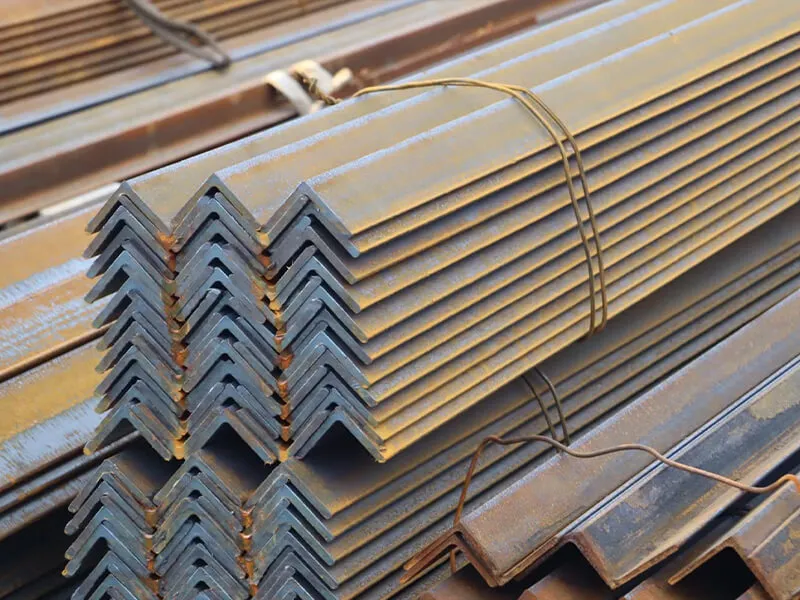
Let me explain the numbers.
Offshore Wind – The Big Driver
According to the Global Wind Energy Council, offshore wind capacity is expected to grow from about 60 GW today to over 300 GW by 2030. That is a five‑fold increase. Each GW of offshore wind requires roughly 15,000‑20,000 tons of steel for foundations and substations. Some of that steel is plate. But a significant portion (15‑25%) is structural sections like angle steel and bulb flat.
Simple calculation:
- 240 GW new capacity by 2030
- Steel per GW = 17,500 tons (mid‑range)
- Total new steel = 4.2 million tons
- Angle steel share (15%) = 630,000 tons
That is just for foundations. Add substations, cable protection, and other structures. The total angle steel demand from offshore wind alone could be over 1 million tons in this decade.
Natural Gas Infrastructure – Still Needed
While renewable energy grows, natural gas is still important. Many countries are using gas to replace coal. This means new gas platforms, pipelines, and LNG (liquefied natural gas) export terminals.
Examples of gas‑driven offshore steel demand:
- Qatar North Field expansion – 80 million tons per year LNG capacity increase. Requires many offshore platforms.
- Russia’s Arctic LNG 2 (though sanctions impact this).
- Mozambique LNG – offshore platforms in East Africa.
- US Gulf of Mexico – new gas platforms.
Each large gas platform can use 10,000‑20,000 tons of steel. A significant percentage is angle steel.
The Transition Effect – Why It Is Long Term
Energy transitions do not happen overnight. Offshore wind projects take 5‑7 years from planning to operation. Gas platforms have a life of 20‑30 years. So demand is not a spike. It is a steady, long‑term increase.
I have seen this in my own orders. In 2018, most of my marine angle steel went to shipbuilding (tankers and bulk carriers). In 2024, over 30% of my offshore‑bound angle steel goes to wind and gas projects. That share will likely reach 50% by 2028.
What to Stock for the Future
If you are a steel wholesaler or distributor, here is my advice. Stock these items for the growing offshore market:
| Product | Reason | Recommended stock level |
|---|---|---|
| L125x80x12 in DH36 | Common size for jacket bracing | High |
| L150x90x14 in EH36 | Used in cold regions (North Sea) | Medium |
| L200x100x16 in S355ML | High demand for large wind projects | Low, but on hand |
| Anti‑corrosion coated angle steel | Many buyers want pre‑coated | Growing |
Final Thought from a Customer
A buyer in Malaysia who supplies offshore fabricators told me: “Five years ago, we sold angle steel mostly to shipyards. Now our biggest customer is an offshore wind contractor. They order every three months. I do not see that stopping.”
That is the reality. Energy transition is not a threat to marine steel. It is an opportunity.
Conclusion
Offshore wind and gas infrastructure are driving strong, long‑term growth for marine angle steel. Higher grades and corrosion protection are becoming standard. Regional growth is fastest in Southeast Asia, Middle East, and North Sea.