
A shipyard in Saudi Arabia recently specified DNV certified steel for their new vessel. Understanding the DNV grade system helped them optimize material selection.
DNV marine steel grades include NV A, NV B, NV D, NV E, and NV F with increasing toughness levels from 0°C to -60°C impact testing. These grades correspond to 235-390 MPa yield strength and are widely accepted in European and global shipbuilding for vessels requiring Det Norske Veritas classification.
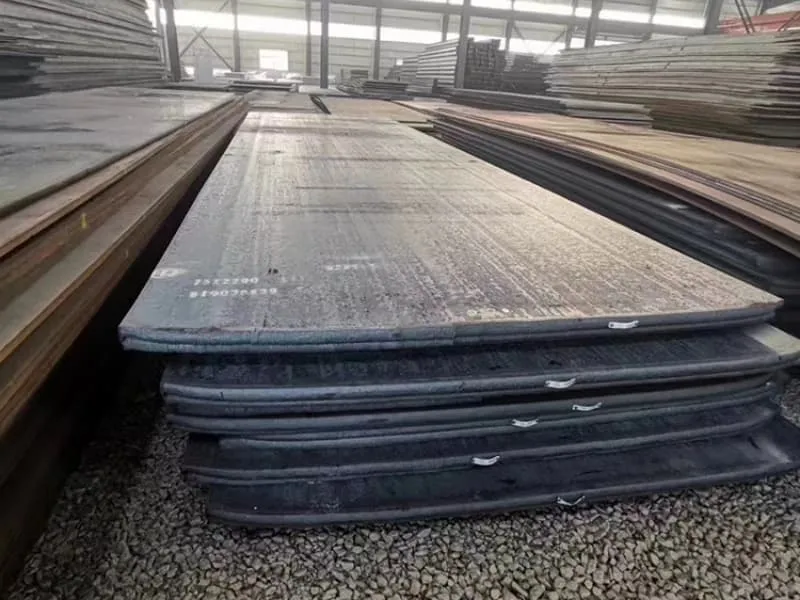
DNV certification ensures materials meet rigorous European standards. Let me explain the DNV grade system and its applications in shipbuilding.
What are the grades of DNV steel?
A naval architect from Qatar needed to understand DNV grade specifications for their European-bound vessel. The systematic approach helped their design process.
DNV steel grades are NV A (235 MPa), NV B (315 MPa), NV D (355 MPa), NV E (355 MPa), and NV F (390 MPa) with impact test temperatures from 0°C to -60°C. The letter indicates toughness level while numbers show yield strength, following DNV Rules for Ships for comprehensive material certification.
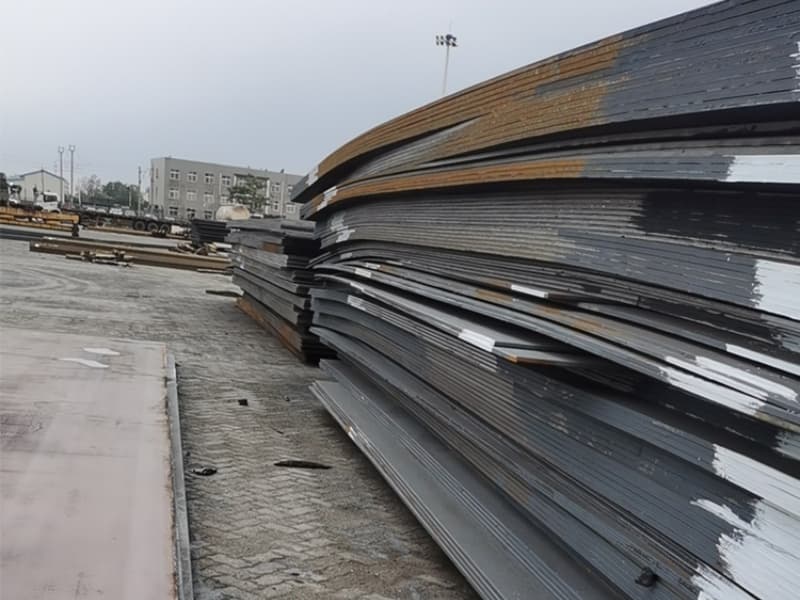
Comprehensive DNV Grade System
DNV (Det Norske Veritas) maintains a well-structured steel grading system that balances strength requirements with toughness characteristics for marine applications. Understanding this system helps in proper material specification and procurement.
Grade Nomenclature and Structure
DNV grades follow a logical naming convention. The "NV" prefix identifies Det Norske Veritas certification. The following letter indicates toughness characteristics. The yield strength is specified separately in megapascals. Additional suffixes may indicate special properties. The system provides clear information about material capabilities. This clarity supports informed material selection decisions.
Yield Strength Categories
DNV grades cover a range of yield strength levels. NV A provides 235 MPa minimum yield strength for less critical applications. NV B offers 315 MPa for intermediate strength requirements. NV D and NV E both provide 355 MPa yield strength with different toughness levels. NV F delivers 390 MPa for higher strength applications. The progression allows designers to match strength to structural needs.
Impact Toughness Requirements
Toughness characteristics differentiate DNV grades significantly. NV A requires Charpy V-notch testing at 0°C. NV B demands testing at 0°C with higher energy absorption. NV D specifies testing at -20°C for improved low-temperature performance. NV E requires testing at -40°C for arctic conditions. NV F maintains -60°C testing for extreme environments. These requirements ensure adequate fracture resistance.
Chemical Composition Controls
Each DNV grade has specific chemical composition limits. Carbon content is carefully controlled for weldability. Manganese levels are optimized for strength and toughness balance. Silicon content ensures proper deoxidation. Phosphorus and sulfur have strict maximum limits. Micro-alloying elements may be added for property enhancement. The composition controls ensure consistent performance.
Manufacturing Process Requirements
DNV certification involves specific manufacturing controls. Steel production must follow approved processes. Heat treatment may be required for certain grades. Testing must be witnessed by DNV surveyors. Documentation must be complete and accurate. Traceability must be maintained throughout production. These controls ensure material reliability.
Application Guidelines
DNV provides clear application recommendations. NV A serves for non-critical secondary structures. NV B works for general hull applications in temperate waters. NV D is suitable for main hull structures in cold waters. NV E serves arctic and ice-class vessels. NV F applies to specialized high-strength applications. Proper application ensures safety and performance.
DNV Grade Specifications
| Grade | Yield Strength | Impact Test Temperature | Minimum Impact Energy | Typical Applications |
|---|---|---|---|---|
| NV A | 235 MPa | 0°C | 27J | Secondary structures, non-critical |
| NV B | 315 MPa | 0°C | 31J | General hull structures |
| NV D | 355 MPa | -20°C | 34J | Main hull, cold waters |
| NV E | 355 MPa | -40°C | 34J | Arctic vessels, ice-class |
| NV F | 390 MPa | -60°C | 34J | Specialized, high-strength |
We supply DNV certified steel to clients requiring European classification. Our mills maintain current DNV approval and certification.
What are the different grades of steel plate?
A shipbuilder from Mexico needed comprehensive grade knowledge for their diverse projects. Understanding grade variations improved their material planning.
Steel plate grades include structural grades (A36, S235, S275), marine grades (AH36, DH36, EH36), higher-strength grades (FH, API 2H), and specialized grades for specific applications. DNV grades NV A through NV F cover the marine range with systematic toughness progression for different environmental conditions.
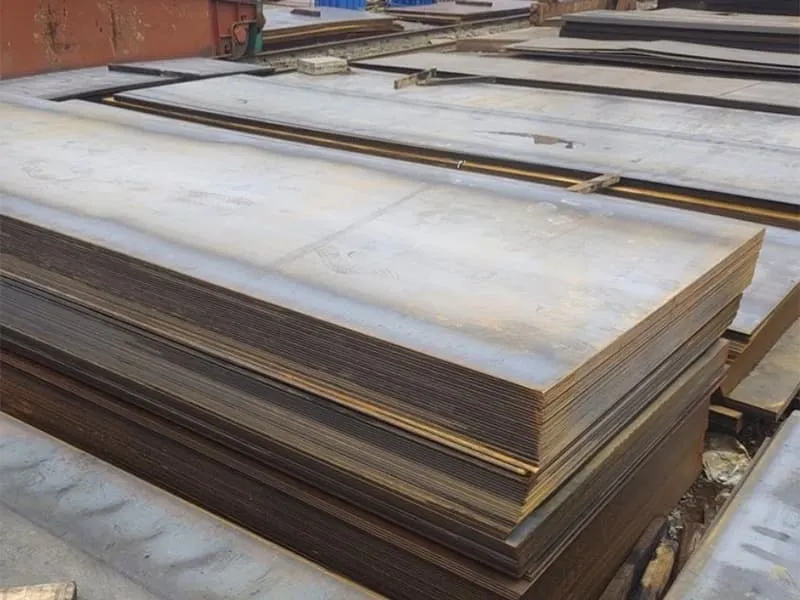
Comprehensive Steel Plate Grade Classification
Steel plate grades are systematically organized to cover diverse application requirements. Understanding this classification helps in proper material selection and specification.
Structural Steel Grades
General structural steels serve non-marine applications. A36 (USA) offers 250 MPa yield strength for buildings and bridges. S235 (Europe) provides 235 MPa minimum yield for general construction. S275 grades deliver 275 MPa yield strength with basic impact requirements. These grades work for terrestrial structures without marine environment challenges. The compositions prioritize weldability and formability over toughness.
Standard Marine Grades
Marine grades form the core of shipbuilding materials. AH36 provides 355 MPa yield strength with 0°C impact testing. DH36 offers the same strength with -20°C toughness requirements. EH36 maintains 355 MPa strength with -40°C impact resistance. These grades serve commercial vessels in different climate zones. The classification society approval ensures marine suitability.
Higher Strength Marine Grades
Advanced grades provide weight reduction opportunities. AH40 and DH40 offer 390 MPa yield strength. EH40 maintains this strength with -40°C toughness. FH grades may reach 460 MPa or higher yield strength. These grades allow thinner sections and weight savings. The applications include weight-critical vessel areas and specialized structures.
Specialized and Application-Specific Grades
Some grades address unique requirements. Ice-class steels have enhanced toughness for arctic operations. Corrosion-resistant grades include additional alloying elements. Fire-resistant steels maintain strength at elevated temperatures. Low-temperature steels serve cryogenic applications. Each special grade serves specific challenges beyond standard requirements.
Classification Society Grading Systems
Different societies use various grade designations. ABS uses AH, DH, EH series. DNV employs NV A through NV F system. LR follows Grade A through Grade E structure. BV uses similar but differently named grades. Understanding equivalencies helps in international projects. Most societies accept equivalent grades from other recognized organizations.
Grade Selection Considerations
Multiple factors influence grade selection. Structural importance determines minimum grade requirements. Operating environment affects toughness needs. Fabrication methods influence weldability requirements. Economic factors balance cost and performance. Regulatory requirements may dictate specific grades. The selection optimizes all these considerations.
Steel Plate Grade Comparison
| Grade Category | Common Designations | Yield Strength Range | Key Applications |
|---|---|---|---|
| Structural | A36, S235, S275 | 235-275 MPa | Buildings, bridges |
| Standard Marine | AH36, DH36, EH36 | 355 MPa | Commercial vessels |
| Higher Strength | AH40, DH40, EH40 | 390 MPa | Weight-critical structures |
| Specialized | Various | Varies | Specific applications |
| DNV Marine | NV A through NV F | 235-390 MPa | DNV-classed vessels |
We help clients select appropriate grades for their specific applications. Proper grade selection ensures optimal performance and regulatory compliance.
What is marine steel plate grade A?
A ship repair yard in Philippines asked about Grade A steel for maintenance work. Understanding this basic grade helped their repair planning.
Marine steel plate Grade A is the basic classification society grade with 235 MPa yield strength, used historically for non-critical areas and now largely superseded by higher grades. It has simple composition requirements and serves limited applications in modern shipbuilding where high toughness isn’t essential.
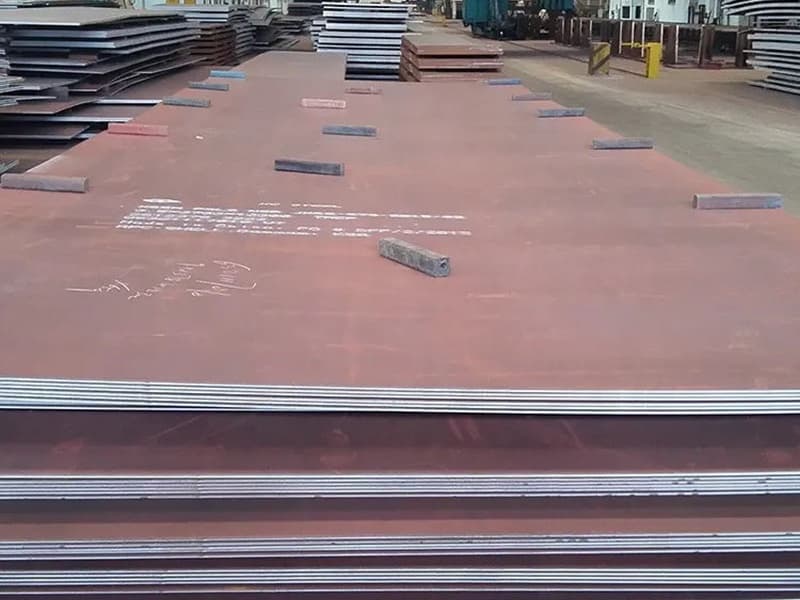
Grade A Marine Steel Characteristics
Grade A represents the foundation level in marine steel classification systems. While largely replaced in new construction, understanding its properties remains important for repair work and historical context.
Historical Context and Evolution
Grade A was extensively used in older ship designs and construction. The grade provided adequate performance for vessels operating in temperate waters. As ship sizes increased and operating conditions became more demanding, higher grades became necessary. Grade A now serves primarily in repair contexts and specific non-critical applications. Understanding its historical use helps in maintaining older vessels and selecting appropriate repair materials.
Chemical Composition Requirements
Grade A has relatively straightforward composition controls. Carbon content is typically limited to 0.21% maximum for normal strength steel. Manganese ranges from 0.60% to 0.90% depending on thickness and processing. Silicon is controlled below 0.35% for semi-killed steel variants. Phosphorus and sulfur are limited to 0.035% maximum each. The composition ensures basic strength and fabricability without special toughness enhancement.
Mechanical Property Specifications
Grade A offers 235 MPa minimum yield strength for plates up to 50mm thickness. Tensile strength ranges from 400 MPa to 520 MPa depending on thickness and processing. Elongation is typically 22% minimum in 50mm gauge length for thicknesses up to 16mm, decreasing slightly for thicker plates. Impact testing may not be required for many applications, though some specifications include basic Charpy requirements at +20°C.
Application Limitations and Modern Context
Grade A serves in less critical ship areas where high toughness isn’t essential. It may be used for non-structural components, internal fittings, and secondary structures. The grade is generally unsuitable for primary hull plating in modern vessel designs. Its use has decreased significantly with the widespread adoption of AH36 and higher grades. Understanding current limitations prevents improper application in new construction.
Comparison with Higher Grades
AH36 offers significantly enhanced properties compared to Grade A. Yield strength is 355 MPa versus 235 MPa, providing 50% higher load capacity. Toughness requirements are substantially more stringent in AH36 with mandatory impact testing. Composition controls are tighter for higher grades, particularly regarding phosphorus and sulfur limits. Fabrication characteristics are generally similar, though welding procedures may differ slightly.
Repair and Replacement Considerations
Many existing vessels, particularly older ones, contain Grade A steel. Repair work should ideally match the original material grade to maintain structural compatibility. When original grade material isn’t available, classification societies provide guidelines for using higher grades. Proper procedures must be followed for insert plates and repairs to maintain structural integrity. Documentation should accurately record all material substitutions and repairs.
Grade A Steel Applications in Modern Context
| Application | Suitability | Modern Alternative | Special Considerations |
|---|---|---|---|
| Non-structural components | Acceptable | AH32 or AH36 | Cost may favor modern grades |
| Secondary structures | Limited | AH32 | Strength requirements may dictate upgrade |
| Repair of older vessels | As original | Match original grade | Classification society approval needed |
| Temporary structures | Good | Various | Not recommended for permanent marine use |
| Non-critical internal | Acceptable | Commercial grades | Consider corrosion protection needs |
We supply appropriate steel grades for all applications, including Grade A when specifically required for repair work or special projects.
What is the difference between EH36 and DH36 steel?
A shipowner from Saudi Arabia needed to choose between EH36 and DH36 for their new arctic-bound vessel. The temperature requirements dictated their selection.
EH36 and DH36 steel differ primarily in impact test temperatures1 and low-temperature toughness2 requirements. EH36 requires Charpy V-notch testing3 at -40°C while DH36 tests at -20°C, making EH36 suitable for arctic operations and DH36 ideal for temperate waters, with both maintaining 355 MPa minimum yield strength.
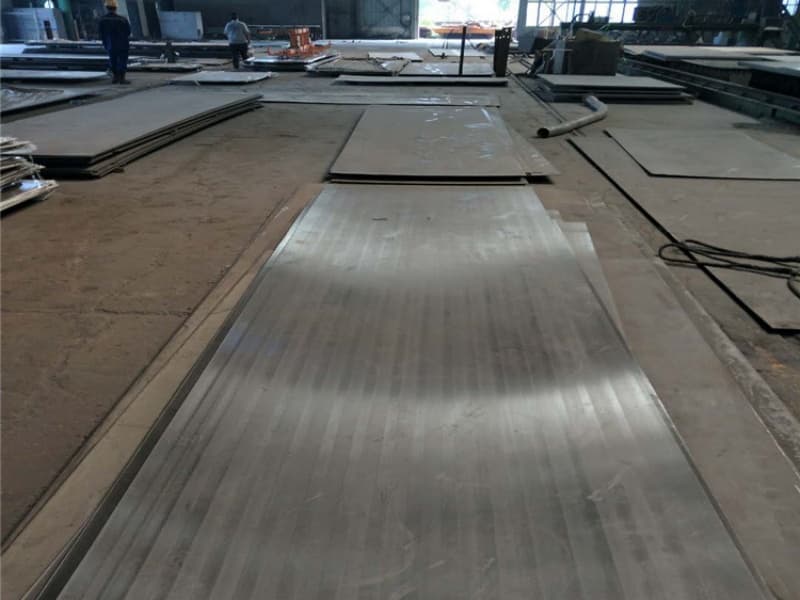
Detailed EH36 vs DH36 Analysis
The distinction between EH36 and DH36 involves specific technical differences that significantly affect their application suitability. Understanding these differences ensures proper material selection for varying environmental conditions.
Impact Toughness Requirements
The fundamental difference lies in impact test temperature specifications. DH36 requires minimum Charpy V-notch impact energy of 34 joules at -20°C test temperature. EH36 demands the same minimum energy absorption but at -40°C test temperature. This 20°C difference represents significantly enhanced low-temperature toughness2 in EH36. The enhanced toughness prevents brittle fracture in extreme cold conditions encountered in arctic operations. This difference directly affects the grade’s suitability for specific geographical operating areas.
Chemical Composition Variations
EH36 typically involves tighter composition controls than DH36. Carbon content in EH36 is often limited to 0.16% maximum compared to 0.18% in DH36. Manganese levels may be optimized differently for better low-temperature properties in EH36. Micro-alloying elements like niobium and vanadium usage may vary between the grades. Sulfur and phosphorus limits are generally consistent but may be marginally tighter in EH36. These compositional differences support the varying toughness requirements.
Manufacturing Process Differences
EH36 generally requires more stringent manufacturing controls than DH36. Controlled rolling parameters may be more precisely regulated for EH36 production. Accelerated cooling rates might be optimized differently for EH36’s enhanced toughness. Heat treatment practices could vary between the grades, though both are typically supplied in as-rolled condition. More rigorous testing and documentation are required for EH36 certification. These process variations contribute to the typical cost difference between the grades.
Application Environment Considerations
DH36 serves effectively in most marine environments except the coldest regions. It is suitable for vessels operating in tropical, subtropical, and temperate waters. DH36 works well for ships trading in the Mediterranean, Caribbean, and most Asian waters. EH36 becomes necessary for operations in arctic and subarctic regions. This includes vessels operating in the North Atlantic, Bering Sea, and Arctic waters. The selection should consider the minimum expected service temperature4 during operations.
Cost and Availability Factors
DH36 generally costs 8-12% less than EH36 due to less stringent production requirements. DH36 has wider availability from more mills worldwide, supporting shorter lead times. EH36 may have longer lead times due to specialized production requirements and lower production volumes. The price difference reflects the additional processing, testing, and quality assurance required for EH36. Projects must balance the performance benefits against budget constraints and schedule considerations.
Classification Society Acceptance5 and Testing
Both DH36 and EH36 are fully recognized by all major classification societies including ABS, DNV, LR, and BV. However, specific testing requirements and certification processes may vary slightly between societies. Some classification societies require additional testing or documentation for EH36 applications in extreme environments. The certification typically involves more rigorous surveyor involvement for EH36 production. Understanding these variations helps in material specification and procurement planning.
EH36 vs DH36 Detailed Comparison
| Parameter | DH36 Steel | EH36 Steel | Practical Implication |
|---|---|---|---|
| Impact Test Temperature | -20°C | -40°C | Service temperature capability |
| Minimum Impact Energy | 34J | 34J | Consistent fracture resistance level |
| Typical Carbon Content | ≤0.18% | ≤0.16% | Slight weldability difference6 |
| Production Cost | Base price | +8-12% | Project budget impact |
| Applications | Temperate waters | Arctic operations | Geographical suitability |
| Availability | Widely available | More limited | Sourcing flexibility |
| Classification Testing | Standard | Enhanced | Certification complexity |
We help clients in Vietnam and Thailand select between these grades based on their specific operating routes and environmental conditions. Proper selection ensures both safety and cost-effectiveness.
Conclusion
DNV marine steel grades provide a systematic approach to material selection based on strength and toughness requirements. Understanding grade differences ensures proper material specification for vessel safety and performance in different operating environments.
-
Understanding the impact test temperatures is crucial for selecting the right steel for specific environmental conditions. ↩
-
Exploring low-temperature toughness helps in understanding how materials perform in extreme cold, essential for arctic operations. ↩ ↩
-
Charpy V-notch testing is vital for assessing the toughness of steel, especially in cold environments. ↩
-
Knowing the minimum expected service temperature is essential for ensuring the steel’s performance in specific climates. ↩
-
Understanding classification society acceptance is crucial for ensuring compliance and safety in marine applications. ↩
-
Exploring weldability differences can help in planning fabrication processes and ensuring structural integrity. ↩