
Choosing the wrong steel for a ship section is like using glass for a hammer. It will fail, and the cost is not just material. It is the safety of the vessel and crew. A single material mistake can compromise the entire structure’s integrity.
The best marine steel varies by ship section. The hull needs high-strength, low-temperature-toughness steel like ABS AH36. The superstructure uses more weldable grades. For highly corrosive areas, marine-grade stainless steel like 316L is essential. The selection balances strength, corrosion resistance, weldability, and cost.
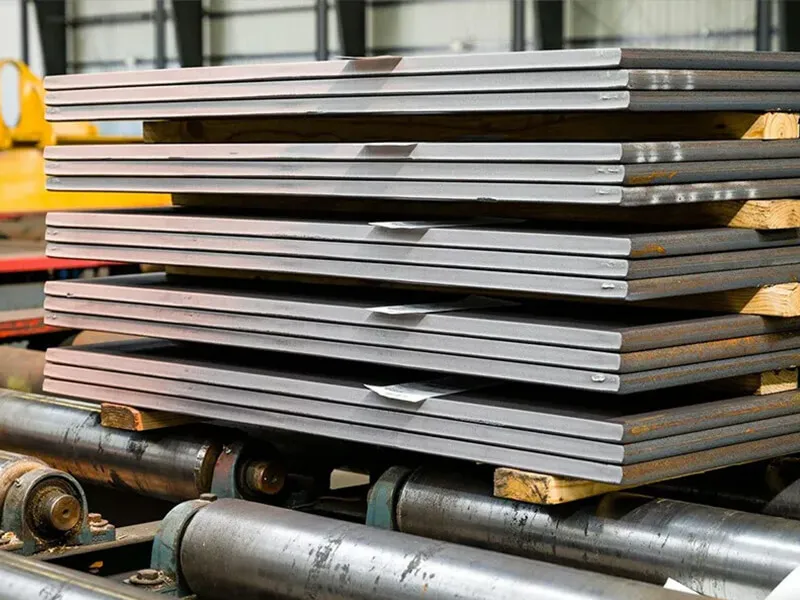
I have supplied steel for ships sailing from the Arabian Gulf to the South China Sea. Every project starts with one question: which steel goes where? The answer is not a single grade. It is a precise material map. Understanding this map prevents over-engineering and costly failures. Let’s explore the specific steel choices for each part of a ship, from the deep-sea pressures on the hull to the salt spray on the deck fittings.
Is 304 or 316 stainless steel1 marine grade?
You install shiny 304 stainless handrails on a new offshore supply vessel. Within a year, they are pitted and stained. The client is furious. This is a common and expensive mistake in marine environments. The choice between 304 and 316 is not about looks; it is about chemistry and survival.
For true marine-grade corrosion resistance2, 316 stainless steel1 is the correct choice, not 304. The key difference is the addition of molybdenum3 (2-3%) in 316, which dramatically increases its resistance to pitting and crevice corrosion from chlorides in seawater and salt air.
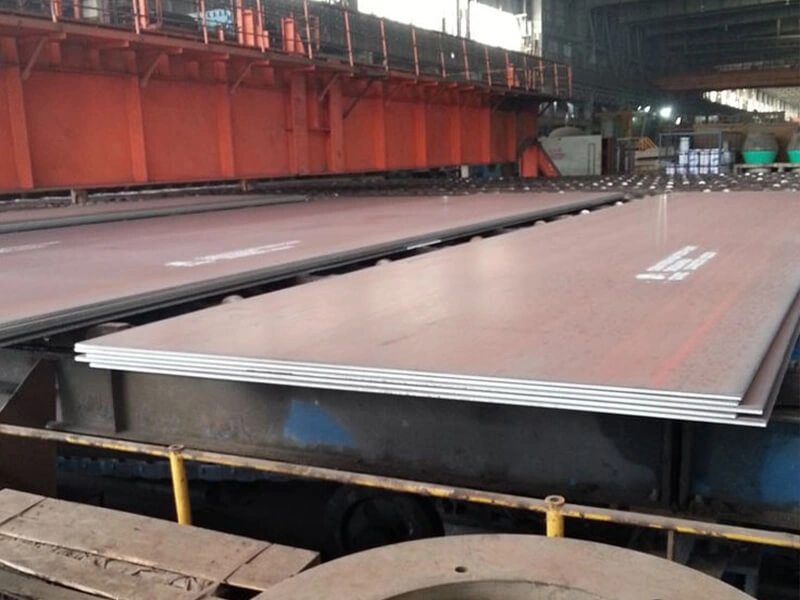
Many people think "stainless steel" means it never rusts. In marine conditions, this is not true. The salty, wet environment is extremely aggressive. We need to look at the specific properties that make 316 the workhorse for marine applications4.
The Critical Differences: 304 vs. 316 Stainless Steel in Marine Use
| Property / Element | AISI 304 Stainless Steel | AISI 316 Stainless Steel | Why It Matters for Marine Use |
|---|---|---|---|
| Key Alloying Addition | Chromium (18-20%), Nickel (8-10.5%) | Chromium (16-18%), Nickel (10-14%), Molybdenum (2-3%) | Molybdenum is the game-changer. It strengthens the protective oxide layer, especially against chlorides. |
| Corrosion Resistance | Good for general use. Resists fresh water and many chemicals. | Excellent. Far superior resistance to pitting and crevice corrosion from seawater and de-icing salts. | Pitting corrosion is a hidden danger. It creates small holes that penetrate deep into the metal, leading to sudden failure. 316 resists this. |
| Typical Marine Applications | Interior components, galley equipment, non-critical decorative trim in low-splash areas. | Deck fittings, handrails, cleats, propeller shafts, heat exchangers, components in splash zones and full immersion. | Using 304 in a splash zone guarantees premature failure. 316 is the minimum standard for exterior, exposed marine hardware. |
| Cost Factor | Lower cost. | Higher cost due to molybdenum3 content. | The higher initial cost of 316 prevents massive replacement and repair costs later. It is an investment in longevity. |
| Common Misconception | "It’s all stainless, so it’s fine for boats." | "316 is overkill." | This thinking leads to rusted fixtures, unsafe equipment, and angry clients. For marine, 316 is often the baseline. |
It is important to understand that even 316 has limits. In harsh conditions like warm, stagnant seawater or areas with poor oxygen flow (crevices), more specialized grades like 316L (low carbon for better weld zone corrosion resistance2) or duplex stainless steels might be needed. However, for the vast majority of marine applications4—from the railings on a cruise ship to the piping on a tanker—316/316L is the specified and proven choice.
I recall a project for a client in Qatar building mooring pontoons. They initially sourced 304 bolts and fasteners to save money. During a pre-delivery inspection, our recommended third-party surveyor pointed out the risk. We supplied them with 316L replacements. The client later confirmed that while the initial quote was higher, they avoided what would have been certain failure within two years. This is a classic example of a rational, results-driven buyer making the smart choice. They valued long-term performance over short-term savings. For us as suppliers, it is our job to provide this technical guidance, not just the product. When Gulf Metal Solutions in Saudi Arabia inquired about materials for deck fittings, we immediately discussed 316L options. This proactive advice builds trust and cements long-term partnerships.
What is the best steel for ship building?
A shipowner wants the "strongest" steel for his new bulk carrier to carry more cargo. But using the strongest steel1 everywhere makes the ship too stiff, too expensive, and difficult to weld. The "best" steel is not one type. It is the right grade for the right job, following class rules.
There is no single "best" steel for all shipbuilding. The optimal choice is a range of graded steels2 specified by classification societies3 like ABS, LR, or DNV. These grades (e.g., A, AH32, AH36, AH40) offer balanced properties of strength, toughness, and weldability4 tailored for different structural zones of the vessel.
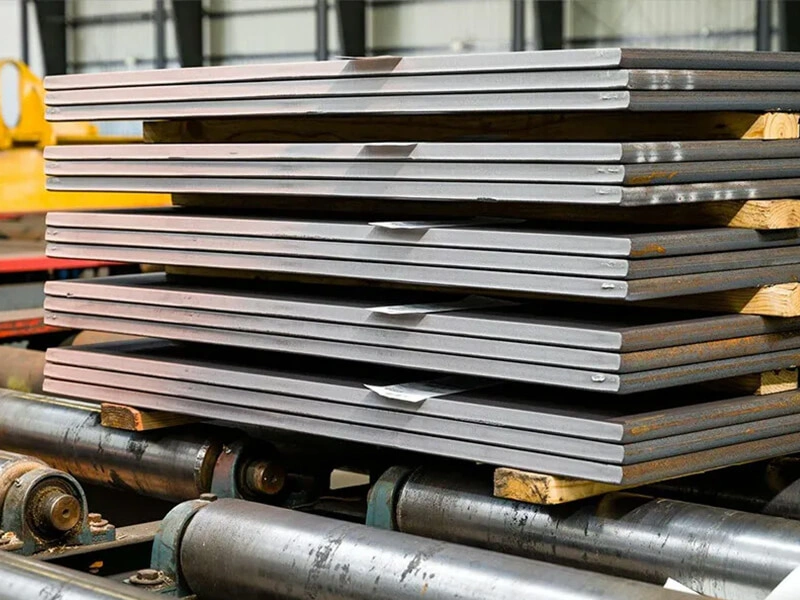
The search for the "best" steel misunderstands shipbuilding. A ship is a complex structure with varying stresses. The keel experiences different forces than the upper deck. The best approach is a systematic selection based on structural role and rules.
A Guide to Selecting the "Best" Steel for Major Ship Areas
| Ship Section / Component | Primary Requirements | Recommended Steel Grades & Types | Rationale for Selection |
|---|---|---|---|
| Bottom Shell & Keel (Hull) | Highest strength, excellent low-temperature toughness, fatigue resistance. | High-Strength Steel (HSS)5: ABS AH36, DH36, EH36. For ice-class vessels: Arctic grades like ABS AH40. | These areas bear the full weight of the ship and cargo, plus impact from waves. High strength allows for thinner plates (saving weight) while maintaining integrity. The "H" denotes high strength, and the number (36) indicates 36 ksi minimum yield strength. |
| Side Shell & Main Deck | Good strength, toughness, and weldability4. Must handle dynamic loads and some corrosion. | Normal Strength & HSS: ABS A, B, D, E grades for less critical areas; AH32/AH36 for high-stress areas like deck edges. | The side shell faces wave slap and corrosion. The deck handles cargo loads and bending stresses. A mix of grades optimizes cost and performance. |
| Internal Structures (Frames, Bulkheads) | Good weldability4, formability, and adequate strength. Often less demanding than outer hull. | Normal Strength Steel6: ABS A or B grades are common. Cost-effective for non-critical, high-volume parts. | These parts provide internal support and subdivision. They are shielded from direct seawater impact, so extreme toughness is less critical, allowing for more economical grades. |
| Superstructure | Lower weight is often prioritized. Good weldability4 to connect to the main deck. | Higher-grade Normal Strength or lower HSS: Often thinner plates of ABS A or AH32. Special attention to weldability4 to avoid cracks. | The superstructure is high on the ship, adding to stability issues. Reducing its weight lowers the ship’s center of gravity. |
| Special Components | Specific shapes for strength and efficiency. | Profile Steel: Bulb Flat Steel for stiffeners, L-shaped Angle Steel for brackets, flat bars for minor framing. | These rolled sections provide efficient structural support. Using certified bulb flats7, for example, ensures they have the same mechanical properties as the plates they are welded to. |
The selection process is governed by the classification society’s rules. The ship designer’s plans will specify the exact grade (e.g., AH36) and thickness for every single plate and beam in the vessel. As a supplier, our job is to match that specification exactly. We cannot substitute an "A" grade for an "AH36" even if the dimensions are the same, because the strength and impact properties are different.
Our long-term partnerships with certified mills in Shandong are crucial here. When a project contractor from the Philippines needs 500 tons of AH36 plate for a hull and a mix of A-grade angle steel for internal framing, we can source it all from our network with consistent quality. We ensure the Mill Test Certificate8 for the AH36 clearly shows the yield strength and -20°C impact values, while the certificate for the A-grade confirms its chemistry and tensile strength. This precise matching is what clients like Gulf Metal Solutions value. They are project-based fabricators; they cannot afford to have a surveyor reject a shipment because the paperwork or the material grade is wrong. Our stable quality and correct documentation solve that core pain point.
What type of steel would you recommend for a ship’s hull and why consider properties like corrosion resistance, strength, and weldability1?
A crack appears in the hull of a container ship mid-voyage. The investigation finds the steel was strong but not tough enough for the cold water. It also shows poor weld quality. This disaster stems from ignoring the balance of three key properties.
For a ship’s hull, I recommend using classification society-approved high-strength low-alloy (HSLA) steels2, specifically grades like ABS AH363 or DH36. These steels are engineered to provide the optimal balance of three critical properties: high strength for load-bearing, excellent low-temperature toughness4 to prevent brittle fracture, and good weldability1 to ensure sound, crack-free joints.
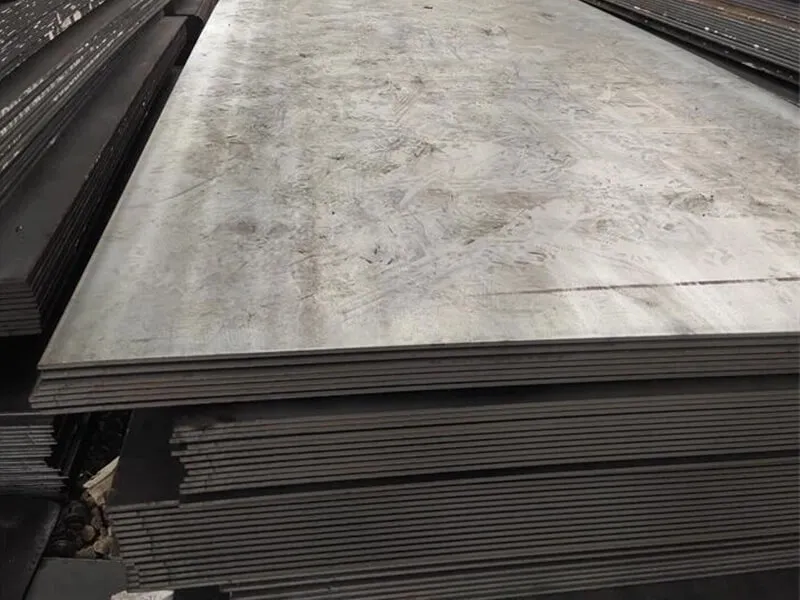
The hull is the ship’s backbone. It fights constant battles against immense water pressure, slamming waves, and corrosive seawater. Choosing hull steel is a three-dimensional problem. You cannot maximize one property without harming the others. We need to break down this balance.
The Hull Steel Trinity: Why Strength, Toughness, and Weldability Are Non-Negotiable
| Property | What It Means for the Hull | Consequences of Getting It Wrong | How HSLA Grades (e.g., AH36) Achieve It |
|---|---|---|---|
| Strength (Yield & Tensile) | The steel’s ability to withstand the immense static and dynamic loads of the ship’s weight, cargo, and wave impacts without permanently deforming. | A hull that is too weak will buckle, dent, or suffer structural failure in heavy seas. It limits cargo capacity and compromises safety. | Achieved through precise chemical composition (alloying with elements like Niobium, Vanadium) and controlled rolling/heat treatment processes at the mill. |
| Toughness (Impact Resistance) | The steel’s ability to absorb energy and resist cracking, especially at low temperatures. Measured by Charpy V-Notch tests5 at temperatures like -20°C or -40°C. | Brittle fracture. In cold waters, a small crack or notch can propagate rapidly through the hull, causing catastrophic splitting and sinking. This is a primary failure mode in marine history. | Fine-grained steel structure, achieved through controlled processing and alloying, ensures the steel remains ductile and "forgiving" even in freezing conditions. |
| Weldability | The ease with which the steel can be welded without causing defects like cracks in the weld or the Heat-Affected Zone (HAZ), and while retaining good properties in the joint. | Poor weldability1 leads to hidden cracks. These cracks become initiation points for fatigue and brittle fracture, undermining the strength of the entire hull structure. | Controlled Carbon Equivalent (CE) value. HSLA steels keep carbon and other hardening elements low, making them less prone to forming hard, brittle microstructures after welding. |
The relationship between these properties is a constant negotiation. Increasing strength by adding carbon can reduce weldability1 and toughness. Improving toughness requires a clean, fine-grained microstructure, which mill processes control. The magic of modern marine HSLA steels like AH36 is that metallurgists6 have learned to use small amounts of specific alloys and advanced rolling techniques to lift strength and toughness together while keeping weldability1 good.
In practical terms, this is why certification is vital. When you order ABS AH363 steel, you are not just ordering "strong steel." You are ordering steel with a guaranteed minimum yield strength (355 MPa), and a guaranteed ability to absorb a specific amount of energy at -20°C. You are also getting steel with a chemical composition that ensures a CE value within weldable limits.
Our clients, such as shipyards in Vietnam and Mexico, understand this balance deeply. They push for the highest strength-to-weight ratio7 to build bigger, more efficient ships. But they never compromise on the specified toughness. They rely on us, their supplier, to deliver material that is not just the right size, but also has the verified, certified properties that allow their welders to build a sound, reliable hull. This is the core of our value. We don’t just sell steel; we deliver certified material integrity that becomes part of a vessel’s lifelong safety record.
What is the best grade of stainless steel for marine use?
A luxury yacht owner insists on mirror-finish stainless steel fittings. He chooses a specialty grade for its look, but it corrodes quickly. The best grade is not always the most exotic or expensive one. It is the one that best matches the specific marine challenge it faces.
For general marine use, 316/316L stainless steel1 is the best and most widely used grade. For more aggressive environments like warm seawater, high chloride exposure, or where higher strength is needed, duplex stainless steels (e.g., 2205) or super duplex grades offer a superior solution.
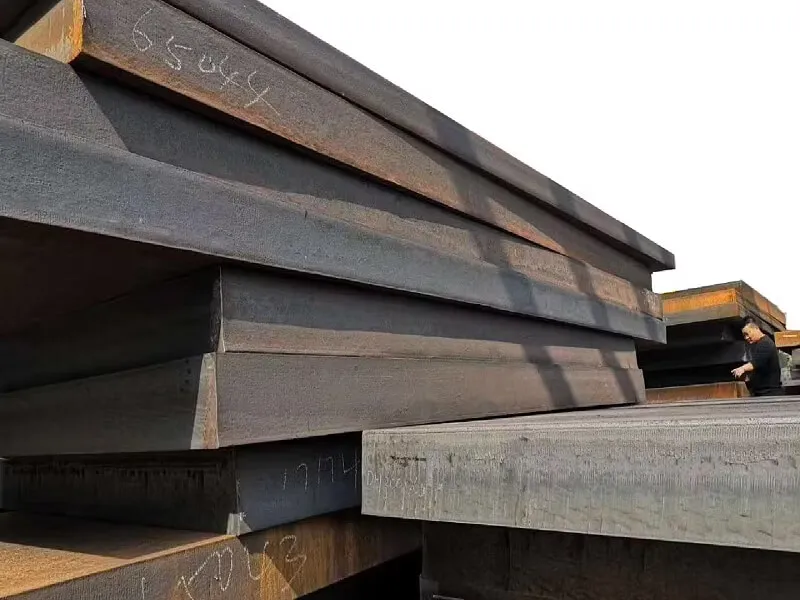
Stainless steel selection for marine use is a spectrum. We move from "good" to "best" based on the severity of the environment and the mechanical demands. Let’s compare the common candidates.
Marine Stainless Steel Grade Selection: From Standard to Specialist
| Grade | Key Composition | Best For / Typical Marine Applications | Limitations / Considerations |
|---|---|---|---|
| AISI 3162 / 316L | 16-18% Cr, 10-14% Ni, 2-3% Mo. "L" means low carbon. | The universal marine grade. Deck hardware, railings, fasteners, piping, propeller shafts, tank fittings, and most exposed components on commercial and recreational vessels. | Can suffer from crevice corrosion in stagnant, low-oxygen seawater (e.g., under fittings). Not suitable for extremely aggressive conditions or high-chloride, high-temperature environments. |
| Duplex 2205 | ~22% Cr, ~5% Ni, ~3% Mo, plus Nitrogen. A two-phase (austenite+ferrite) microstructure. | More aggressive environments: Heat exchangers, seawater piping systems, chemical tanker cargo tanks, offshore platform components. Offers roughly double the yield strength of 316. | Higher cost. Requires careful control of welding procedures to maintain the beneficial duplex microstructure in the weld zone. |
| Super Duplex3 (e.g., 2507) | ~25% Cr, ~7% Ni, ~4% Mo, high Nitrogen. | The most severe conditions: High-pressure seawater systems, offshore oil & gas umbilicals, desalination plants, areas with high risk of chloride stress corrosion cracking4. | Significant cost premium. Welding requires even greater expertise and may need post-weld heat treatment. |
| 6Mo Austenitic (e.g., 254 SMO) | High Mo (6%), high Ni, with Nitrogen. | An alternative to super duplex where exceptional corrosion resistance5 is needed but welding duplex is a concern. Used in very aggressive chemical environments. | Very high cost. Generally lower strength than duplex steels of similar corrosion resistance5. |
Choosing the "best" grade requires asking specific questions. What is the temperature of the seawater? Is the component fully immersed, in the splash zone, or just in the atmosphere? Is it under stress? Is welding required? For 95% of standard marine applications6—the fittings, rails, and hardware specified in ship plans—316L is the correct and cost-effective "best" choice. It provides an excellent balance of corrosion resistance5, mechanical properties, ease of fabrication, and availability.
However, for specialized projects, the equation changes. We recently supplied duplex 2205 plate to a client in Malaysia for fabricating modules on an FPSO (Floating Production Storage and Offloading vessel). The client’s engineers specified duplex for its combination of high strength (allowing thinner, lighter walls) and superior resistance to the warm, chloride-rich water. Our role was to source the certified material and provide the necessary processing documentation to ensure their welders had the right information.
This is a key insight for B2B buyers. The "best" grade is defined by the project specification and the environment. As a supplier, we must be able to provide the full range—from the workhorse 316L to the specialist duplex grades—all with proper certification and traceability. When a rational buyer like the one at Gulf Metal Solutions evaluates us, they look for this technical capability and supply chain reliability. They know that for their next project involving L-shaped steel or bulb flats for a corrosive environment, they can come to us for a technically sound recommendation and a reliable supply of the correctly graded material.
Conclusion
Selecting marine steel is a precise science of matching material properties to structural demands. From the high-strength hull plates to the corrosion-resistant deck fittings, every choice directly shapes the vessel’s safety, performance, and longevity.
-
Explore the advantages of 316/316L stainless steel, the most widely used grade for marine applications, known for its excellent corrosion resistance. ↩ ↩ ↩ ↩ ↩ ↩ ↩ ↩ ↩
-
Find out why AISI 316 is the go-to choice for marine hardware and its benefits in various applications. ↩ ↩ ↩ ↩ ↩
-
Discover the unique properties of Super Duplex stainless steel and its suitability for the most severe marine environments. ↩ ↩ ↩ ↩ ↩ ↩
-
Learn about chloride stress corrosion cracking and its implications for stainless steel used in marine environments. ↩ ↩ ↩ ↩ ↩ ↩ ↩ ↩ ↩
-
Understand the importance of corrosion resistance in stainless steel grades and how it affects marine applications. ↩ ↩ ↩ ↩ ↩
-
Explore the various marine applications of stainless steel and how different grades are utilized effectively. ↩ ↩ ↩
-
Understand how optimizing the strength-to-weight ratio can lead to more efficient and safer ship designs. ↩ ↩
-
Learn about the importance of Mill Test Certificates in ensuring material quality and compliance. ↩